• Home
  • Latest
  • Fortune 500
  • Finance
  • Tech
  • Leadership
  • Lifestyle
  • Rankings
  • Multimedia
Commentarydisruption

Pearson CEO: the AI job apocalypse is a Silicon Valley story. The data tells a different one

By
Omar Abbosh
Omar Abbosh
Down Arrow Button Icon
By
Omar Abbosh
Omar Abbosh
Down Arrow Button Icon
April 6, 2026, 1:04 PM ET
omar
Omar Abbosh, CEO of Pearson.courtesy of Pearson

If you listen to the loudest voices in the AI debate, our collective fate seems sealed. AI is coming for white-collar work. Jobs will disappear faster than workers can adapt. A workplace apocalypse is inevitable.

Recommended Video

Much of the noise is coming from one place: the technology industry itself. That’s understandable. Software engineering is one of the first professions where AI has delivered real, visible productivity gains. Output that once required teams now requires far fewer people. When disruption hits close to home, anxiety travels fast.

But extrapolating from one sector to the entire economy is a mistake. We should not, and cannot, accept what’s being sold as a foregone conclusion. If we intervene now, we can meaningfully reduce the blast radius of AI disruption. The first step is separating what we know from what we don’t know, which gives us a clearer path forward.

What We Actually Know

AI is already reshaping work. That change is real, and the transformation of software engineering jobs explains much of the current panic emanating from Silicon Valley. But despite the headlines, there is still little evidence that AI productivity is the primary driver of today’s broader labor market churn. Research published in January by Oxford Economics found the evidence of an AI-driven shakeup to be patchy at best. Labor economists and AI experts at the Wharton School have argued much the same thing, citing “AI-washing” of job losses. In fact, much of what we are seeing reflects familiar forces: economic cycles, over-hiring, and cost correction. 

Unemployment rates don’t lie: the U.S. rate sits at 4.4% (9.4% for 16-to-24-year-olds) — far below EU unemployment peaks in the 1990s, when rates hit 11% overall and exceeded 20% for young workers.

We also know that most organizations trying to deploy AI are discovering that the hardest problems are not technological. Data readiness, security, integrations, workflow redesign, and building human skills remain stubborn bottlenecks for true AI implementation. According to McKinsey, two-thirds of companies using AI have not scaled it across their enterprise. That diffusion will take time — a crucial point missing from most of the current debate.

There is also growing empirical evidence that poorly implemented AI simply increases work intensity — flooding organizations with output that still requires human attention, judgment, and correction. A recent Harvard Business Review study even coined the term “AI brain fry” to describe the information and workload fatigue that comes with too many AI tools at once. Automation can increase intensity and stress rather than productivity.

The bottom line: systems aren’t ready, and people aren’t ready to use AI well. The apocalypse is likely not coming as fast as you think.

What We Don’t Know

But AI transformation is coming, in some form, across nearly all industries — and genuine unknowns remain. We don’t yet know how demand will respond as AI compresses the cost of expertise. We don’t know how quickly different sectors will adapt. And we don’t yet know which new jobs and industries will emerge — although history tells us they will. Predictions that all white-collar work will be automated within a year or two aren’t realistic. But five years? In some domains, perhaps. In most others, regulation, safety concerns, and legacy infrastructure will slow adoption dramatically and keep people in the loop. What is coming is akin to the “process reengineering” wave of the 1990s, with AI agents being embedded into workflows.

The Real Risk Is Underinvesting in People

The real risk, then, is not runaway technology displacing workers en masse. It is failure to invest in people. If we blindly accept AI as a substitute for humans, the pessimists may be proven right. But if we treat it as a force that improves and amplifies what people can do, a very different — and more prosperous — future is possible.

That requires all of us to shift our focus and realize that every positive outcome in an AI economy is reliant on our investment in human capability. In the workplace, this means moving beyond narrow task automation toward deliberate job and workflow redesign — and embedding learning directly into people’s everyday work alongside tech deployment, rather than after the fact. In education, the priority should be prioritizing learning how to learn — building AI literacy across disciplines and age levels, supporting and training teachers, and creating career pathways that extend beyond traditional white-collar roles. And at a societal level, it means recognizing that in a world where AI can generate content, credentials, and even identities, trust becomes our most valuable currency. Institutions and credentials that can reliably assess, verify, and signal human skills will matter more than ever.

The story of AI does not have to be one of inevitable displacement. The current anxiety reflects who is feeling disruption first — not where the economy must end up. The companies that grow, create new jobs, and win aren’t the ones that implement AI the fastest; — they are the ones that implement learning the fastest.

The future of work in the AI era will not be decided by what machines can do. It will be decided by what people can do — and how seriously we invest in them.

The opinions expressed in Fortune.com commentary pieces are solely the views of their authors and do not necessarily reflect the opinions and beliefs of Fortune.


Join us at the Fortune Workplace Innovation Summit May 19–20, 2026, in Atlanta. The next era of workplace innovation is here—and the old playbook is being rewritten. At this exclusive, high-energy event, the world’s most innovative leaders will convene to explore how AI, humanity, and strategy converge to redefine, again, the future of work. Register now.
About the Author
By Omar Abbosh
See full bioRight Arrow Button Icon

Latest in Commentary

Finance
Lorem ipsum dolor sit amet, consectetur adipiscing elit, sed do eiusmod tempor incididunt ut labore et dolore magna aliqua. Ut enim ad minim veniam
By Fortune Editors
October 20, 2025
Finance
Lorem ipsum dolor sit amet, consectetur adipiscing elit, sed do eiusmod tempor incididunt ut labore et dolore magna aliqua. Ut enim ad minim veniam
By Fortune Editors
October 20, 2025
Finance
Lorem ipsum dolor sit amet, consectetur adipiscing elit, sed do eiusmod tempor incididunt ut labore et dolore magna aliqua. Ut enim ad minim veniam
By Fortune Editors
October 20, 2025
Finance
Lorem ipsum dolor sit amet, consectetur adipiscing elit, sed do eiusmod tempor incididunt ut labore et dolore magna aliqua. Ut enim ad minim veniam
By Fortune Editors
October 20, 2025
Finance
Lorem ipsum dolor sit amet, consectetur adipiscing elit, sed do eiusmod tempor incididunt ut labore et dolore magna aliqua. Ut enim ad minim veniam
By Fortune Editors
October 20, 2025
Finance
Lorem ipsum dolor sit amet, consectetur adipiscing elit, sed do eiusmod tempor incididunt ut labore et dolore magna aliqua. Ut enim ad minim veniam
By Fortune Editors
October 20, 2025

Most Popular

Finance
Lorem ipsum dolor sit amet, consectetur adipiscing elit, sed do eiusmod tempor incididunt ut labore et dolore magna aliqua. Ut enim ad minim veniam
By Fortune Editors
October 20, 2025
Finance
Lorem ipsum dolor sit amet, consectetur adipiscing elit, sed do eiusmod tempor incididunt ut labore et dolore magna aliqua. Ut enim ad minim veniam
By Fortune Editors
October 20, 2025
Finance
Lorem ipsum dolor sit amet, consectetur adipiscing elit, sed do eiusmod tempor incididunt ut labore et dolore magna aliqua. Ut enim ad minim veniam
By Fortune Editors
October 20, 2025
Finance
Lorem ipsum dolor sit amet, consectetur adipiscing elit, sed do eiusmod tempor incididunt ut labore et dolore magna aliqua. Ut enim ad minim veniam
By Fortune Editors
October 20, 2025
Finance
Lorem ipsum dolor sit amet, consectetur adipiscing elit, sed do eiusmod tempor incididunt ut labore et dolore magna aliqua. Ut enim ad minim veniam
By Fortune Editors
October 20, 2025
Finance
Lorem ipsum dolor sit amet, consectetur adipiscing elit, sed do eiusmod tempor incididunt ut labore et dolore magna aliqua. Ut enim ad minim veniam
By Fortune Editors
October 20, 2025
Fortune Secondary Logo
Rankings
  • 100 Best Companies
  • Fortune 500
  • Global 500
  • Fortune 500 Europe
  • Most Powerful Women
  • Future 50
  • World’s Most Admired Companies
  • See All Rankings
Sections
  • Finance
  • Fortune Crypto
  • Features
  • Leadership
  • Health
  • Commentary
  • Success
  • Retail
  • Mpw
  • Tech
  • Lifestyle
  • CEO Initiative
  • Asia
  • Politics
  • Conferences
  • Europe
  • Newsletters
  • Personal Finance
  • Environment
  • Magazine
  • Education
Customer Support
  • Frequently Asked Questions
  • Customer Service Portal
  • Privacy Policy
  • Terms Of Use
  • Single Issues For Purchase
  • International Print
Commercial Services
  • Advertising
  • Fortune Brand Studio
  • Fortune Analytics
  • Fortune Conferences
  • Business Development
  • Group Subscriptions
About Us
  • About Us
  • Editorial Calendar
  • Press Center
  • Work At Fortune
  • Diversity And Inclusion
  • Terms And Conditions
  • Site Map
  • About Us
  • Editorial Calendar
  • Press Center
  • Work At Fortune
  • Diversity And Inclusion
  • Terms And Conditions
  • Site Map
  • Facebook icon
  • Twitter icon
  • LinkedIn icon
  • Instagram icon
  • Pinterest icon
Omar Abbosh is Chief Executive Officer of Pearson, the world's lifelong learning company. He brings more than 30 years of experience driving growth, transformation, and innovation for leading multinational companies. Prior to Pearson he served as President of Microsoft Industry Solutions and before that as Chief Executive of Accenture's global Communications, Media & Technology business. He holds a degree in electronic engineering and information sciences from the University of Cambridge and an MBA from INSEAD.

Latest in Commentary

omar
Commentarydisruption
Pearson CEO: the AI job apocalypse is a Silicon Valley story. The data tells a different one
By Omar AbboshApril 6, 2026
3 hours ago
no kings
CommentaryLeadership
America’s CEOs have become reluctant guardians of democracy
By Jeffrey Sonnenfeld and Stephen HenriquesApril 6, 2026
4 hours ago
trump
CommentaryTariffs
Millions of Americans paid billions in tariffs later ruled illegal — and they won’t see a dime back
By Robert HormatsApril 6, 2026
7 hours ago
marketing
CommentaryMarketing
The corporate ‘storyteller’ is marketing’s newest messiah—and just as hollow as every buzzword before it
By Bruce StocklerApril 5, 2026
1 day ago
gecko
CommentaryInsurance
The billion-dollar bet that turned insurance into entertainment
By Stuart N. BrotmanApril 5, 2026
1 day ago
lexi
CommentaryVenture Capital
I’m a VC who bets on AI. What keeps me up at night isn’t the idea of these companies failing—quite the opposite
By Lexi NovitskeApril 5, 2026
2 days ago

Most Popular

The U.S. military set up an improvised airfield deep inside Iran to rescue the F-15 airman. Marines just practiced building one in the desert
Politics
The U.S. military set up an improvised airfield deep inside Iran to rescue the F-15 airman. Marines just practiced building one in the desert
By Fortune EditorsApril 5, 2026
1 day ago
A CIA deception campaign in Iran helped the spy agency uncover the location of the downed F-15 airman, who was hiding in a mountain crevice
Politics
A CIA deception campaign in Iran helped the spy agency uncover the location of the downed F-15 airman, who was hiding in a mountain crevice
By Fortune EditorsApril 5, 2026
22 hours ago
During the rescue of the F-15 airman in Iran, the U.S. military blew up two of its own transport planes that had to be left behind
Politics
During the rescue of the F-15 airman in Iran, the U.S. military blew up two of its own transport planes that had to be left behind
By Fortune EditorsApril 5, 2026
1 day ago
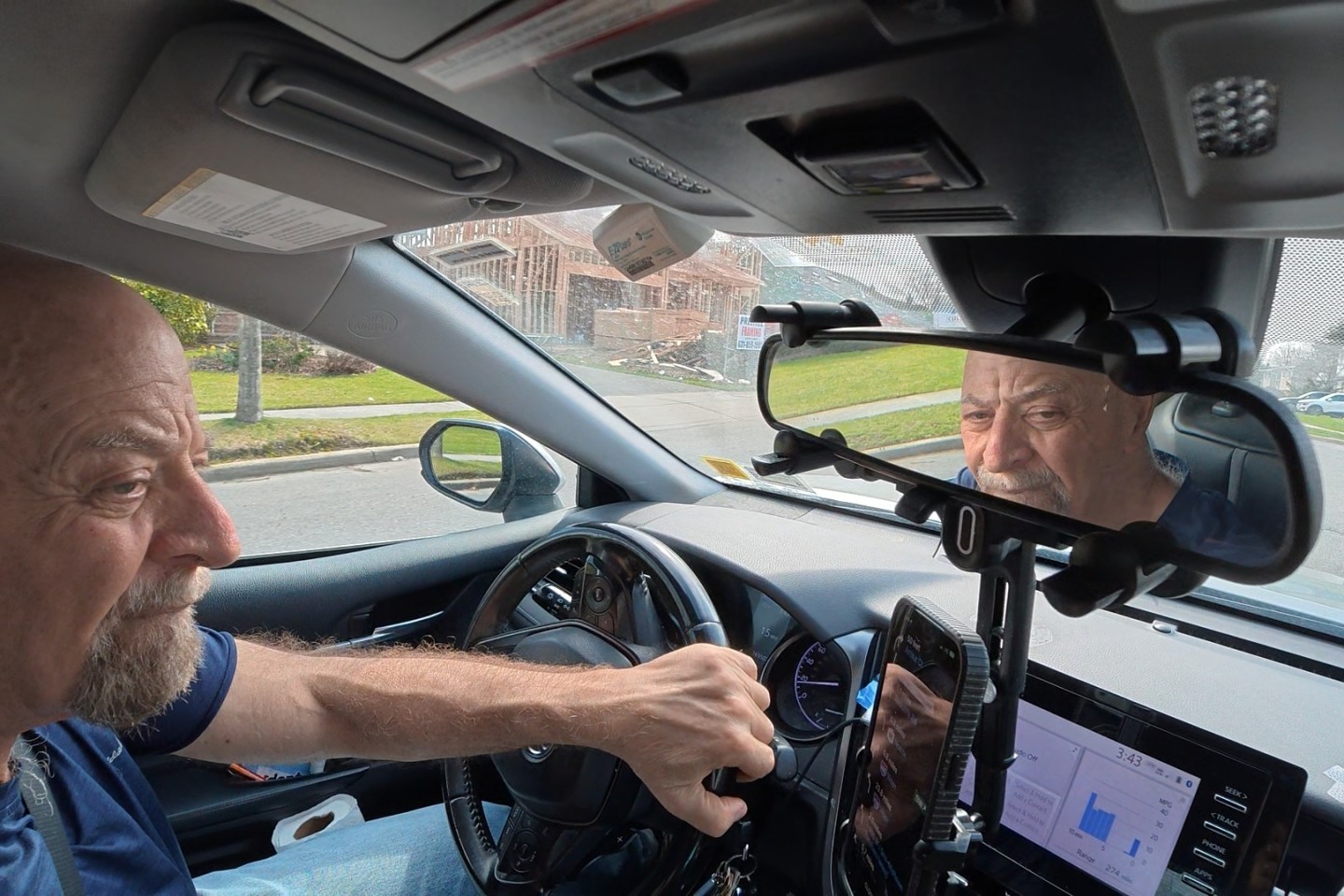
Meet a 74-year-old New Yorker who unretired to become an Uber driver: 'I'm amazed at what people will tell me'
Personal Finance
Meet a 74-year-old New Yorker who unretired to become an Uber driver: 'I'm amazed at what people will tell me'
By Fortune EditorsApril 4, 2026
2 days ago
Netflix cofounder says he stopped work at 5 p.m. every Tuesday for 30 years to stay 'sane,' no matter the crisis: 'Nothing got in the way of that'
Success
Netflix cofounder says he stopped work at 5 p.m. every Tuesday for 30 years to stay 'sane,' no matter the crisis: 'Nothing got in the way of that'
By Fortune EditorsApril 5, 2026
1 day ago
'It’s shocking how poorly prepared the administration is': DOGE gutted major energy personnel who warn the U.S. has lost key insights amid Iran war
Energy
'It’s shocking how poorly prepared the administration is': DOGE gutted major energy personnel who warn the U.S. has lost key insights amid Iran war
By Fortune EditorsApril 5, 2026
2 days ago

© 2026 Fortune Media IP Limited. All Rights Reserved. Use of this site constitutes acceptance of our Terms of Use and Privacy Policy | CA Notice at Collection and Privacy Notice | Do Not Sell/Share My Personal Information
FORTUNE is a trademark of Fortune Media IP Limited, registered in the U.S. and other countries. FORTUNE may receive compensation for some links to products and services on this website. Offers may be subject to change without notice.