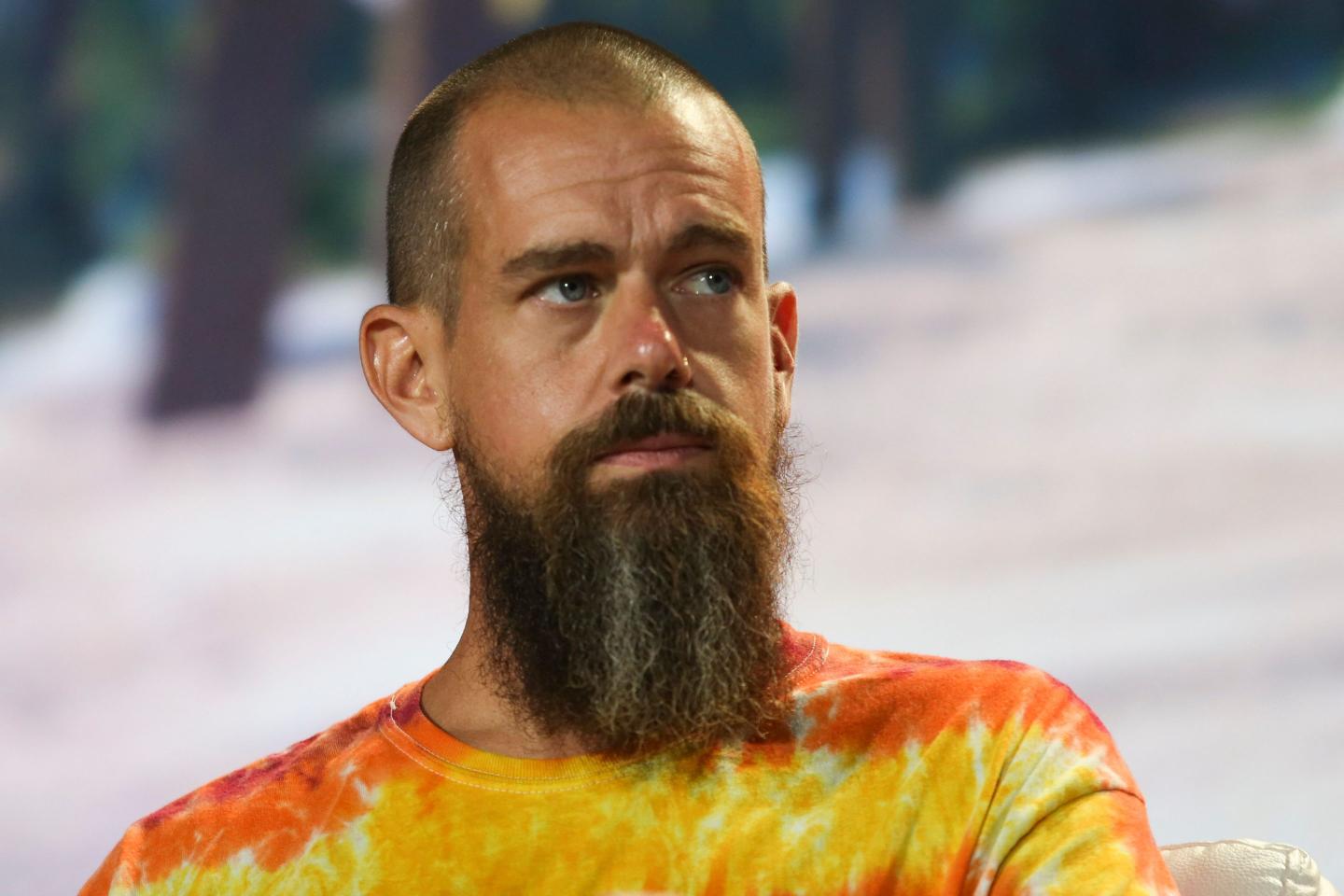
For years, companies have been flattening their organizations and cutting down middle management. Weeks after slashing his staff by 40%, Jack Dorsey, CEO of payments company Block, foresees middle management’s complete extinction.
In an essay published Tuesday, coauthored with Sequoia partner Roelof Botha and titled “From Hierarchy to Intelligence,” Dorsey questioned the conventional wisdom of widely used organizational structures.
“At Sequoia, we see that speed is the best predictor of startup success. Most companies are focused on AI as a productivity enhancer. Few are focused on the potential of AI to change how we work together,” they wrote.
In February, Block laid off 4,000 employees, or about 40% of its workforce. Dorsey made his reasoning clear: “We’re already seeing that the intelligence tools we’re creating and using, paired with smaller and flatter teams, are enabling a new way of working which fundamentally changes what it means to build and run a company,” he wrote in a Feb. 26 X post.
Dorsey and Botha are rejecting what they see as 2,000 years of hierarchical organizational structures, starting with the Roman army, that relied on middlemen to “route information, precompute decisions, and maintain alignment across a complex organization,” thereby slowing the flow of information. They argue companies today are still running on the same system.
“Most companies using AI today are giving everyone a copilot, which makes the existing structure work slightly better without changing it,” they wrote. “We’re after something different: a company built as an intelligence (or mini-AGI),” they wrote.
Block is not the only company that wants to axe middle management. In November, Amazon cut 14,000 corporate employees to “reduce bureaucracy” and “remove organizational layers.” Months before the layoffs, Amazon CEO Andy Jassy said the company is cutting “well-intentioned” middle managers who “want to put their fingerprint on everything” to allow employees to move faster and give them more ownership over their work. Meta’s AI team now has a 50-to-one employee-to-manager ratio following the company’s crusade against middle managers in recent years.
Their vision for a new organizational structure
Dorsey and Botha proposed companies need both a “world model” of their operations and a strong “customer signal.” Simply put, they believe companies need a way to record and track all decisions, discussions, plans, problems, and progress to build an ever-evolving “world model.” This system would replace the role of managers, who relay information across an organization. The second part of their plan is even more straightforward: Follow the money to determine the model’s success.
“Money is the most honest signal in the world,” they wrote. This approach may work particularly well for Block because it can track buyers through Cash App and sellers through Square in real time, and AI can process that information faster than humans.
“The traditional road map, where product managers hypothesize about what to build next, is any company’s ultimate limiting factor,” they wrote. “In this model, customer reality generates the backlog directly.”
If you’re wondering where Block’s remaining 6,000 employees sit in this new model, Dorsey and Botha have an answer for that: the edge, or “where the action is.” On the edge of their new system, people will be able to sense things the model can’t perceive, such as cultural context, trust, intuition, and “the feeling in the room.” What makes their proposal more than just a database is how humans will interact with it and use it without needing a chain of command, they wrote.
“We’re not making this decision because we’re in trouble,” Dorsey wrote in an X post on the day he announced the layoffs. “Our business is strong.”
The company reported a gross profit of $2.87 billion in Q4, up 24% year over year. Block’s shares rose about 3% immediately after the pair published the paper on March 31, but have fallen slightly in the days since. Over the past year, the company’s stock has fallen 9%.
“Block is in the early stages of this transition,” Dorsey and Botha wrote. “It will be a difficult one, and parts of it will likely break before they work.”