As of March 23, 2026, the global energy market is no longer governed by the invisible hand of economics; it is being strangled by the rigid, non-negotiable laws of engineering. While Brent crude futures experienced a violent flash crash on March 23, plunging over 15% to an intraday low of $96 per barrel after President Donald Trump announced a five-day pause on his ultimatum to strike Iranian power plants, Trump claimed that productive talks were underway — a claim Iran quickly denied — causing prices to instantly whiplash back above the $100 mark. Adding to the gravity of the situation, International Energy Agency chief Fatih Birol recently warned that the current 11-million-barrel-per-day deficit is worse than both of the 1970s oil shocks combined.
Furthermore, the global energy supply chain is rapidly degrading into a toll booth regime at the Strait of Hormuz, transforming historically open transit routes into hostile zones where safe passage demands political concessions or massive risk premiums. History is unforgiving to those who ignore structural chokepoints, as seen during the 1956 Suez Canal Crisis which crippled European supply lines overnight, and the Tanker War of the 1980s, which forced vessels to pay exorbitant insurance premiums or face destruction.
True market clarity will emerge only when we shift our focus from fleeting financial reactions to the physical engineering realities that power the globe. This extreme volatility provides a critical opportunity for industry leaders to look beyond surface-level price swings and focus on the fundamental constraints actually driving the market.
As a petroleum engineer, I am watching two ticking clocks that no amount of diplomatic pauses can reset. The first is a 25-day tank top threatening to freeze Middle Eastern production. The second is a 100-day sludge line that will poison the reserves oil-hungry nations are racing to drain. Beyond these thresholds, the global economy does not just slow down — it hits an engineering dead-end.
The 25-day storage countdown: tank top
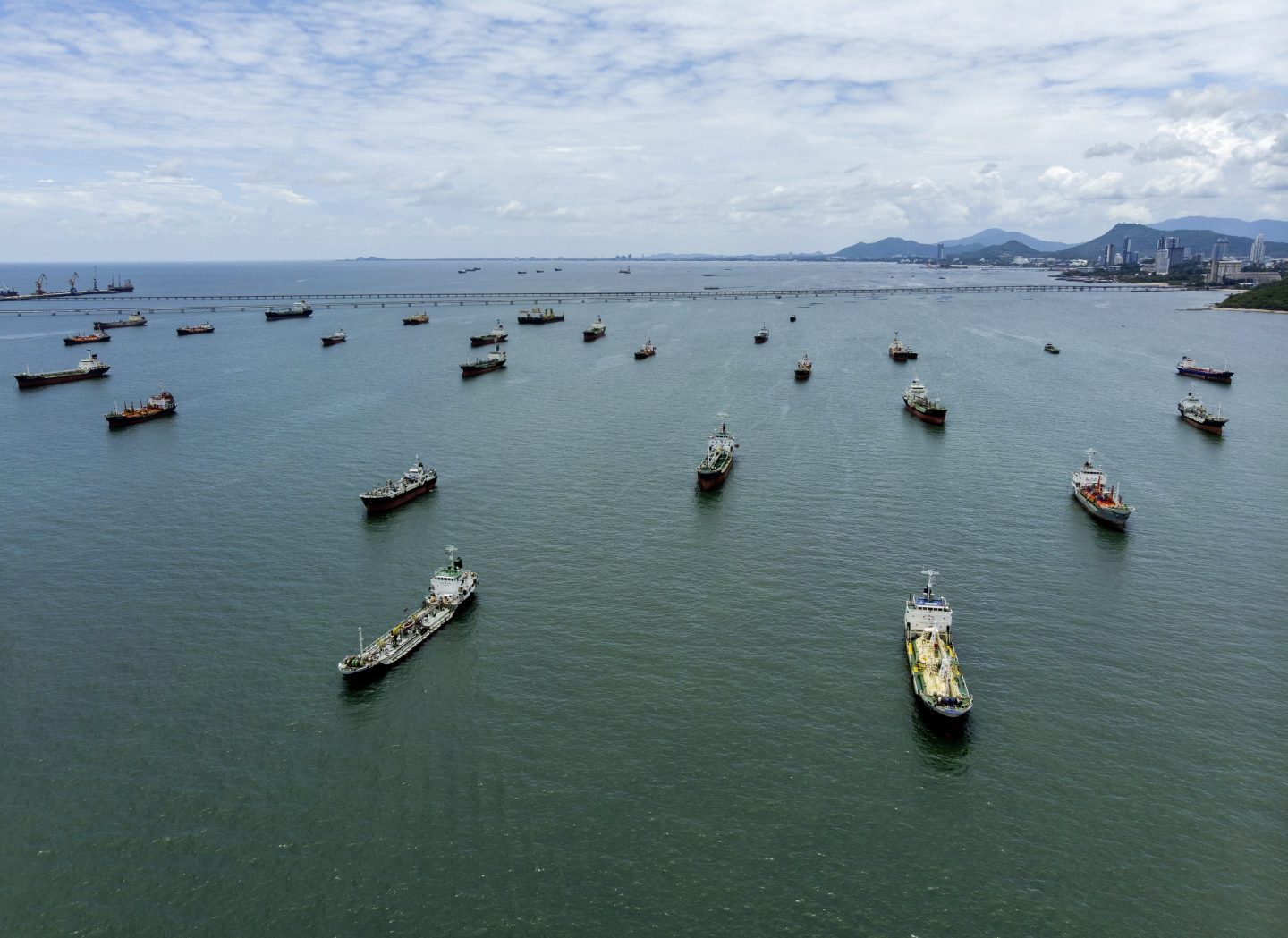
The conflict has physically split the energy world into two paralyzed halves. In the Middle East, the crisis is not a supply cut but a catastrophic supply accumulation. With Lloyd’s of London withdrawing war risk insurance and tanker traffic through the Strait of Hormuz dropping by 95%, nations like Saudi Arabia, Iraq, Kuwait, the UAE, Iran, and Qatar are suddenly drowning in nearly 20 million barrels of stranded oil every single day.
During this critical supply-accumulation phase, my primary focus as an engineer shifts to monitoring the tank top — the absolute maximum safe operating capacity of a storage hub. It is crucial to understand that this is a strict physical volume constraint. Once a storage tank reaches its top capacity, leaving only the necessary headspace for vapor and thermal expansion, the fluid flow must come to a complete halt.
Current industry intelligence confirms that total regional storage capacity in the Gulf stands at roughly 450 million barrels. Given the ongoing disruptions creating a massive surplus of trapped crude, the Middle East is on a strict 25-day countdown to an absolute system freeze. Key producers like Iraq have already reached maximum crude storage capacity, triggering a massive 70% collapse in production from their main southern oilfields, while Kuwait has been forced to declare force majeure. The entire physical network is running out of space right now, and the catastrophic well shut-ins we feared have already begun.
Beyond the surface storage, what truly keeps subsurface asset managers awake at night is the reservoir skin effect. You cannot simply flip a switch to halt fluid flow in a supergiant porous rock formation like Ghawar or Rumaila. An abrupt shut-in causes fines migration — when tiny particles of rock and clay within the porous materials become dislodged, settle, and severely plug the pore throats near the wellbore. This creates permanent skin damage around the well, fundamentally destroying its natural permeability and crippling its long-term productivity. If these complex, engineered underground systems are forced to go dark for even two to three weeks, the altered physics of the reservoir dictate that they may never return to their original flow rates.
The 100-day countdown: sludge line
On the other side of the blockade, oil-reliant nations — led by the U.S., China, India, and Japan — are pivoting to their Strategic Petroleum Reserves. On March 11, the IEA authorized a record-breaking 400-million-barrel release to bridge the gap. But the market has a massive misconception: traders believe these reserves can instantly replace the void. They cannot.
The problem begins with the fluid dynamics of our extraction infrastructure. The United States Strategic Petroleum Reserve has a verified physical maximum drawdown rate of around 4 million barrels per day — but achieving this is a massive engineering challenge. During the 2022 draining of the U.S. reserve, the United States could only sustain a pumping rate of roughly 1.2 million barrels per day for about a week. Even in the event of a globally coordinated release, the combined global strategic infrastructures can only deliver approximately 10 million barrels per day to the market — a permanent, unfillable deficit during a major supply disruption.
Compounding this volumetric constraint is a critical quality issue that most analysts overlook, by treating reserve oil as a uniform asset. In reality, the physics and chemistry within a salt cavern dictate a very different story. Decades of static storage lead to the unavoidable accumulation of heavy waxes, dense inorganic sediments, and highly corrosive hydrogen sulfide produced by sulfate-reducing bacteria — turning the bottom of the cavern into a chemical nightmare.
If we attempt to sustain maximum pumping rates to bridge a massive supply gap, we will inevitably hit this sludge line in less than 100 days. Drawing this degraded, sour crude is akin to pumping industrial poison through our midstream and downstream networks. Processing this bottom-of-the-barrel fluid will rapidly foul heat exchangers and irreversibly poison sensitive refinery catalysts — triggering a devastating secondary wave of forced maintenance downtime and refinery shutdowns that will paralyze the fuel supply in the exact nations that are desperately trying to survive the crisis.
Not a V-shaped recovery, but an L-shaped plateau
Financial markets often expect a V-shaped recovery, hoping that the moment a ceasefire is signed and the blockade is lifted, the geopolitical risk premium will evaporate instantly and send Brent crude tumbling back to the $70 floor within days. Today’s 10% price drop on the news of a five-day strike delay is a perfect example of this financial optimism. However, as a petroleum engineer, I can tell you that while financial markets move at the speed of light, physical molecules move through an infrastructure defined by inertia, degradation, and hydraulic friction.
Because the underlying physical infrastructure is fundamentally damaged, the capacity to recover is permanently lost. This structural plateau will lock the global oil market into triple-digit territory for the foreseeable future. The defining question for the economy is no longer how high prices will spike, but how long they will stay high.
There are three primary reasons we face an L-shaped plateau instead of a V-shaped recovery:
First is midstream hysteresis. When the 25-day storage wall forces a pipeline to stop, the system begins to degrade immediately. When crude oil flow stops, the loss of turbulence allows heavier asphaltenes and waxes to settle, and dropping temperatures can cause the stagnant oil to gel. Furthermore, the water typically present in flowing crude separates and pools at low elevation points, creating localized environments for rapid internal corrosion. Because of these physical and chemical hazards, no responsible midstream operator will simply restart a line that has been sitting dormant for weeks. They must first deploy robotic sensors — or integrity pigs — to inspect for blockages and wall thinning, — a necessary safety measure that introduces a strict 14-to-21-day logistical lag before full-scale delivery can safely resume.
Second is the current state of the strategic petroleum reserves. Governments are not just releasing oil; they are borrowing it from the future. Under current swap and exchange agreements, nations like the U.S., Japan, and India are legally or strategically committed to refilling their caverns starting in late 2026 and throughout 2027. Traders and speculators are already pricing this in — they know that as soon as the price dips, the world’s largest governments will step in as massive, price-insensitive buyers to replenish their empty salt caverns before the next crisis hits. This creates a hard floor under the market.
Third is the engineering reality of the cold-start problem, compounded by modern geopolitical risk. Financial optimists argue that millions of barrels currently trapped in floating storage will immediately flood the market the moment a ceasefire is signed. This fundamentally misunderstands physical infrastructure. Restarting a massive, stagnant network is often far more complex and dangerous than keeping it running under heavy stress. Furthermore, with the insurance market paralyzed by war risks, mobilizing a ghost fleet of tankers back into a former conflict zone will be a sluggish, highly regulated process. The global hydrocarbon supply chain is a highly interconnected, massive inertial machine, and overcoming this inertia will prevent the rapid recovery the market hopes for.
The final reckoning; policy vs. physics
When the 25-day producer overflow triggers a forced regional shut-in in the Middle East, and the 100-day massive consumer drawdown hits the sludge line, the market will face demand destruction on a scale equivalent to wiping out the entire daily oil demand of Japan, India, and Germany combined.
The daily global supply deficit of 10 million barrels forces a brutal hierarchy of energy allocation. The consequences of this sustained energy plateau will cascade rapidly through the global economy, forcing immediate shutdowns in energy-intensive sectors like petrochemicals, steel manufacturing, and aluminum smelting. This crisis is also bleeding into national security. — a recent West Point analysis warned that the Hormuz blockade is already strangling the U.S. defense industry due to the near-total disruption of critical minerals like sulfur and copper required for munitions and radar repair.
This industrial halt will be compounded by a global transportation freeze, as soaring jet and bunker fuel premiums ground commercial aviation and maritime shipping, effectively ending the era of low-cost, just-in-time logistics. Because modern food production relies heavily on diesel-intensive harvest cycles, a massive increase in fertilizer costs will transform this energy shortage into a global food security emergency. Ultimately, to prevent total societal collapse, governments will be forced to implement severe wartime rationing, restricting fuel exclusively to military logistics, emergency services, and vital agricultural supply chains.
The physics of midstream restarts and the mandatory refilling of global reserves dictate that triple-digit oil is not a temporary spike. — it is the new baseline. As the global economy sprints against a catastrophic countdown, CEOs, policymakers, and investors must stop hoping for a return to cheap oil anytime soon and instead prepare to navigate a long, restricted plateau.
We are reaching the edge of the map where financial theories fail — as real-world engineering buckles under the hard physical constraints of a system running out of room, running out of time, and running out of oil.
The views and opinions expressed in this article are those of the author and do not necessarily reflect the official policy or position of Texas A&M University, nor of Fortune.