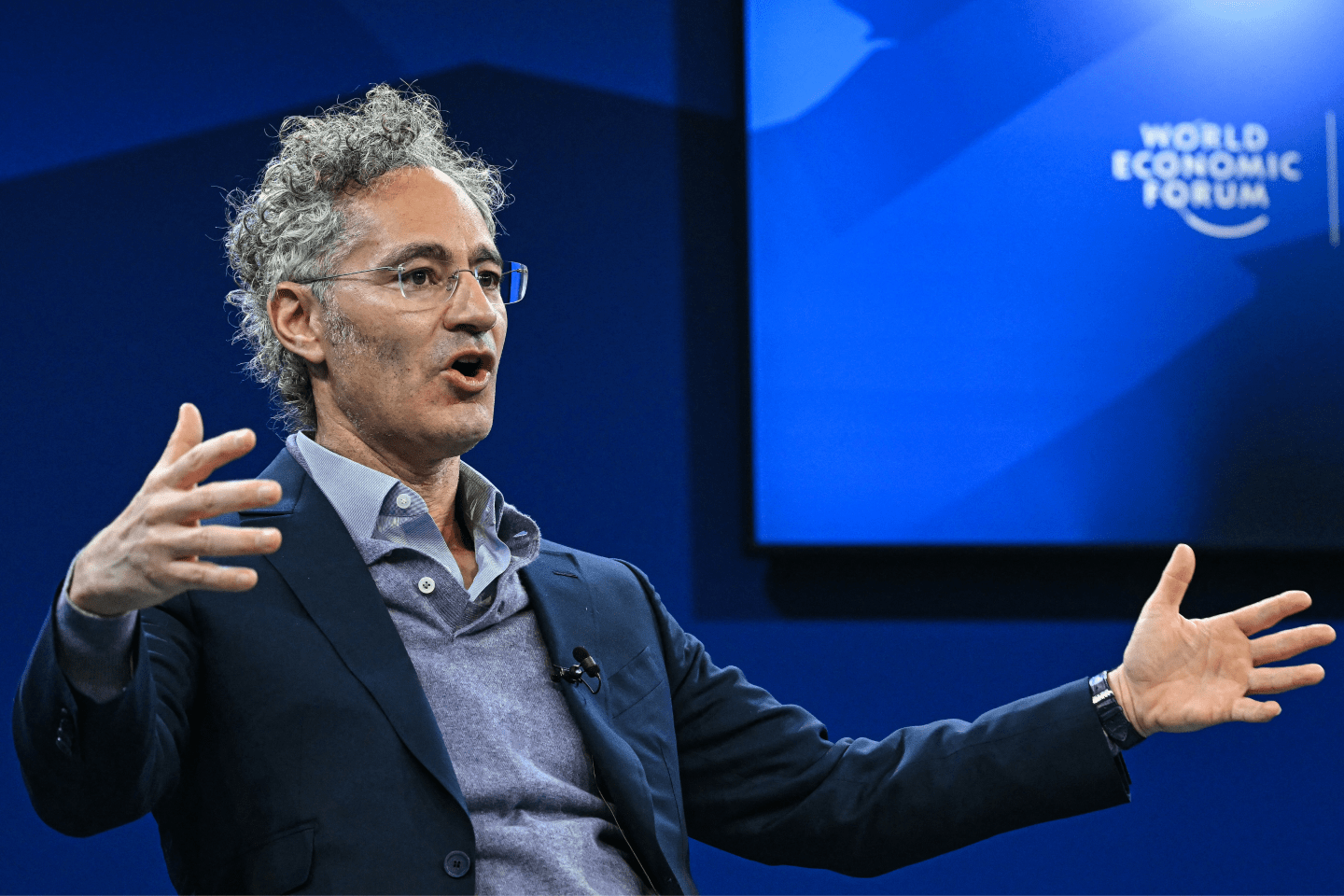

The job market is frozen in place, and it may still be a while until it thaws, said Nicholas Bloom, the Stanford economist whose research explained why millions left their jobs during the Great Resignation.
His advice for people with a job right now? “don’t leave it,” Bloom said during a webinar at the Harvard Kennedy School last week titled “The Economic Consequences of the Iran War.”
Employers, despite eye-catching exceptions, are laying off employees at a historically low rate but are still reluctant to hire, meanwhile employees are “job-hugging,” essentially not leaving their positions at the lowest rate in years—a combination that’s stalling the job market, Bloom told Fortune in an email.
Yet, employees who may not be satisfied with their job for any reason such as their location or problems with their manager should be extra cautious about leaving, Bloom added in the email.
“Folks that want to change jobs should line one up before quitting their current role. You don’t want to quit a job to find that what you thought would be easy – getting another job – turns out to be a massive struggle,” he wrote.
The top economist, who previously worked for both consulting firm McKinsey and the U.K. Treasury, said the Iran war and its effects have also played a role in the current icy job market.
“This jobs market slowdown is driven in large part by rising economic and policy uncertainty, with policies against trade, immigration and wars making conditions unpredictable,” he wrote in the email to Fortune. “This uncertainty leads business to slow hiring.”
Bloom’s comments on the stalled job market stand in contrast to his research during the Great Resignation when job hopping became the norm as workers sought out better benefits and higher pay while employers struggled to recruit talent. In November 2021 alone, a record 4.5 million people left their jobs, according to data from the Bureau of Labor Statistics.
While Bloom had predicted the rise of remote work since before the pandemic, he noted in research done during the Great Resignation in 2022 that hybrid work policies could reduce quitting rates at companies by 35%. Allowing two days of working from home during a six month trial of more than 1,000 employees at Trip.com improved worker satisfaction and internal communication rates while slashing its churn rate, he and his coauthors found.
The tables turn
The tables have now turned. While recent data has shown the economy is still growing, job openings fell to 7.1 million in November, according to the most recent JOLTS report by the Bureau of Labor Statistics. In February, employers shed 92,000 jobs, far above the 60,000 economists expected, while the unemployment rate ticked up to 4.4% from 4.3% in January.
Artificial intelligence is compounding the freeze, according to Bloom, particularly as some firms have used the technology as a reason to pause hiring. Earlier this month, Federal Reserve Chairman Jerome Powell said job creation is “pretty close to zero,” partly because of the increase in AI adoption that has led to layoffs and hiring pauses on the part of corporations. Large employers, he said, are talking less about expanding headcount. Instead, “much of the time they’re talking about AI and what it can do,” Powell told reporters during a press conference following the Fed’s interest rate decision earlier this month.
The Iran war has only added more uncertainty to the mix for workers. While oil prices are trading below the psychological level of $100 per barrel partly due to President Trump’s announcement earlier this week of a five-day pause on Iran strikes pending negotiations, a sustained increase in oil prices, as some analysts such as Goldman Sachs have predicted, could increase inflation and directly affect companies nationwide.
In the context of the oil market’s instability due to the Iran war, the Federal Reserve earlier this month opted to keep interest rates steady after having cut rates consistently since September. The Atlanta Federal Reserve Bank’s Market Probability Tracker now shows the possibility of a rate hike is more likely than a rate cut in the next three months.
For workers already struggling to find new jobs in a frozen labor market, the prospect of higher borrowing costs on top of geopolitical uncertainty could not have come at a worse time, as it directly affects businesses who already don’t want to make a costly mistake in overhiring.
“It’s costly to hire somebody and if you then discover, say, demand is lower than you expected [it’s] hard to reverse. So when you are uncertain you pause,” Bloom told CNBC in an interview.