
• Home
  • Latest
  • Fortune 500
  • Finance
  • Tech
  • Leadership
  • Lifestyle
  • Rankings
  • Multimedia
Economynational debt

‘We’re living on borrowed time’: As national debt hits $39 trillion, a top diplomat warns of a crisis America isn’t ready for

Nick Lichtenberg
By
Nick Lichtenberg
Nick Lichtenberg
Business Editor
Down Arrow Button Icon
Nick Lichtenberg
By
Nick Lichtenberg
Nick Lichtenberg
Business Editor
Down Arrow Button Icon
March 19, 2026, 12:19 PM ET
haass
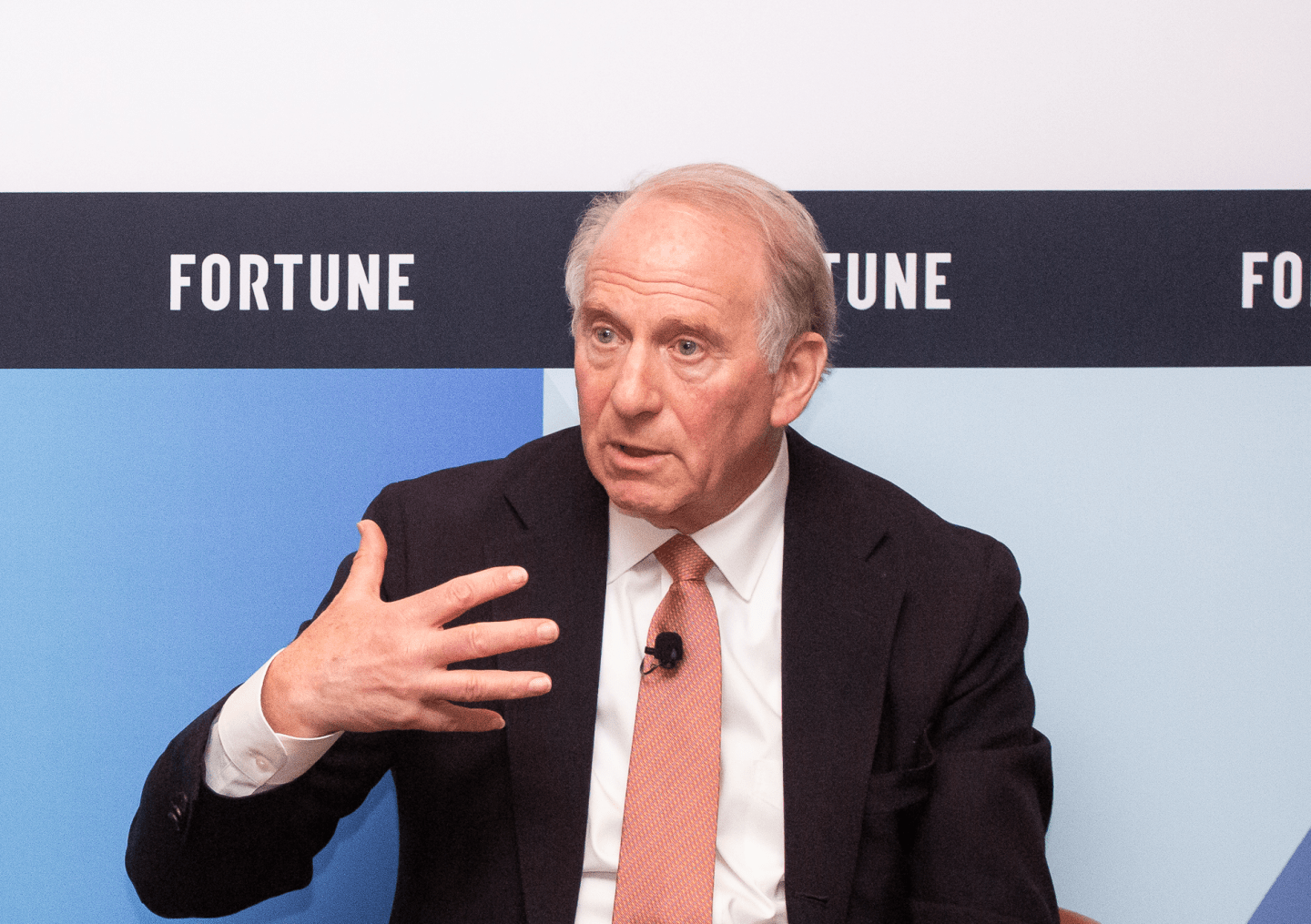
Richard Haass, Senior Counselor, Centerview Partners; President Emeritus, Council on Foreign Relations at the Fortune CEO Initiative dinner at Ci Siamo in New York CIty on March 18, 2026. Photograph by Rebecca Greenfield for Fortune.

The United States national debt crossed $39 trillion for the first time this week, arriving at the grim milestone less than five months after it hit $38 trillion — a pace of accumulation that budget watchdogs are now calling, with unusual unanimity, “unsustainable.” At Fortune‘s CEO Initiative dinner in New York on Wednesday night, one of America’s most respected foreign policy voices put the moment in stark terms: the debt isn’t just a balance sheet problem. It’s a threat to American power itself.

Recommended Video

Richard Haass, president emeritus of the Council on Foreign Relations after leading the organization for 20 years, and a senior State Department official under multiple administrations, pointed to his own thought leadership on the subject. Haass and Carolyn Kissane co-authored a paper for the Peter G. Peterson Foundation, warning about the national security implications of the ever-expanding debt. At the time, he told Fortune‘s Eva Roytburg that he felt “a little bit like Paul Revere,” but instead of the British coming, the crisis is coming. “It’s a slow-motion crisis.”

On Wednesday night, Haass told Fortune‘s Diane Brady that the angst over the national debt is massive but distant at the same time. “It’s one of those things that’s almost like the old law: It’s fine until the day it’s not. So I think we’re living on borrowed time.”​

He was careful to hedge on timing — “I’m just not smart enough to know whether it’s a month from now, a year from now, five years from now” — but his broader alarm was unambiguous. “I do think we’re eroding confidence in American competence and leadership.”

A Debt Clock That Doesn’t Stop

The numbers behind Haass’ concern are hard to dismiss. The Congressional Budget Office projects the federal deficit will reach $1.9 trillion in fiscal year 2026 and balloon to $3.1 trillion by 2036. Debt held by the public — now at $31.3 trillion — is on a path to hit 120% of GDP within a decade, eclipsing the previous all-time record set just after World War II. The Peterson Foundation projects the debt will cross $40 trillion before this fall’s midterm elections.

Perhaps most striking is what it costs just to carry the load. Net interest payments on the national debt have already exceeded $1 trillion in fiscal year 2026 — nearly triple the $345 billion paid in 2020 — and have surpassed defense spending in the first three months of the fiscal year alone. “Interest is the fastest-growing ‘program’ in the federal budget,” Michael A. Peterson, CEO of the Peter G. Peterson Foundation, previously told Fortune.

At the Fortune CEOi dinner, a CEO in attendance escalated the alarm further, noting that the $39 trillion gross figure masks an even more staggering liability. When unfunded entitlements in Social Security, Medicare, and other long-term obligations are factored in, the true fiscal gap approaches $100 trillion — a figure consistent with analysis from Penn Wharton Budget Model director Kent Smetters, one of America’s foremost fiscal economists. “If you actually nominalize that and put that debt to GDP, it’s 200% over,” the CEO said. “That’s a disaster.”

Smetters has previously estimated that, without major policy changes, U.S. Treasury debt could become unable to roll over its accumulated obligations within roughly 20 years.​

Haass’ warning: A national security lens

What sets Haass’ framing apart from standard fiscal hawkery is his insistence that the debt’s most dangerous consequence may not be economic at all — it’s strategic. His concern is the moment when the debt forces the hand of whoever runs the Federal Reserve next. “Some successor to Jay Powell is going to have to raise rates not to cool down an overheated economy, but because a Treasury auction is not going to go the right way,” he warned. At that point, the policy choices available to the United States become far less attractive than they are today.​

He was equally pointed about the politics. When this editor, who was in attendance, noted that Fortune‘s readers seem to have an especial concern with the debt story, Haass pushed back — not on the concern, but on whether the obsession has ever translated into meaningful political action.

“People say they’re obsessed with it, and their political behavior in no way reflects concerns about the debt,” he said.

This gap between stated anxiety and electoral behavior, Haass argued, is precisely what has allowed the problem to fester. Haass didn’t note the particular context of the milestone arriving roughly two weeks before the ten-year anniversary of President Trump’s 2016 campaign promise to eliminate the national debt within eight years; instead, the gross debt has roughly doubled from $19.9 trillion since then, including growth under the four years of President Joe Biden.​

The Counterargument: Symptom, Not Disease

Not everyone views the $39 trillion number with equal dread. Smetters himself noted that the gross debt figure has limited economic meaning — it includes intragovernmental obligations like the Social Security trust fund, essentially “the left hand of government owing the right hand.” The more meaningful number, debt held by the public, is $31.3 trillion. Still, Smetters told Fortune, “the fact that debt held by the public has now exceeded $31 trillion is not great.”

The deeper critique of the alarmist framing is structural: the United States issues debt in its own currency, and remains the world’s reserve currency issuer. When global investors panic, they still run to Treasuries, not away from them. Japan has run a debt-to-GDP ratio above 200% for years without the bond market collapse its critics have long predicted. Earlier in his interview with Brady, Haass highlighted the prime minister of Japan, Sanae Takaichi, as “one of the two or three most capable leaders in the world right now.” Saying that Japan has been “thinking hard about how it adapts to its changing demography,” he called it a really good example of leadership. The implication is that the United States offers a contrasting negative example.

The relevant question isn’t the size of the debt, but what conditions could finally break investor confidence — and those conditions have as much to do with governance and geopolitical credibility as with any balance sheet figure.

That’s the thread that ties Haass’ national security argument back to fiscal reality. The erosion of institutional expertise in Washington, the retreat from global engagement, the dysfunction that Haass himself catalogued at length on Wednesday night — these, he suggested, may be accelerating the debt’s timeline from manageable problem to genuine crisis. The debt is the symptom. The disease is political dysfunction. And right now, nobody in Washington is seriously treating either.

“At some point,” Haass said, “the chickens come home to roost.”

The Fortune 500 Innovation Forum will convene Fortune 500 executives, U.S. policy officials, top founders, and thought leaders to help define what’s next for the American economy, Nov. 16-17 in Detroit. Apply here.
About the Author
Nick Lichtenberg
By Nick LichtenbergBusiness Editor
LinkedIn icon

Nick Lichtenberg is business editor and was formerly Fortune's executive editor of global news.

See full bioRight Arrow Button Icon

Latest in Economy

Finance
Lorem ipsum dolor sit amet, consectetur adipiscing elit, sed do eiusmod tempor incididunt ut labore et dolore magna aliqua. Ut enim ad minim veniam
By Fortune Editors
October 20, 2025
Finance
Lorem ipsum dolor sit amet, consectetur adipiscing elit, sed do eiusmod tempor incididunt ut labore et dolore magna aliqua. Ut enim ad minim veniam
By Fortune Editors
October 20, 2025
Finance
Lorem ipsum dolor sit amet, consectetur adipiscing elit, sed do eiusmod tempor incididunt ut labore et dolore magna aliqua. Ut enim ad minim veniam
By Fortune Editors
October 20, 2025
Finance
Lorem ipsum dolor sit amet, consectetur adipiscing elit, sed do eiusmod tempor incididunt ut labore et dolore magna aliqua. Ut enim ad minim veniam
By Fortune Editors
October 20, 2025
Finance
Lorem ipsum dolor sit amet, consectetur adipiscing elit, sed do eiusmod tempor incididunt ut labore et dolore magna aliqua. Ut enim ad minim veniam
By Fortune Editors
October 20, 2025
Finance
Lorem ipsum dolor sit amet, consectetur adipiscing elit, sed do eiusmod tempor incididunt ut labore et dolore magna aliqua. Ut enim ad minim veniam
By Fortune Editors
October 20, 2025

Most Popular

Finance
Lorem ipsum dolor sit amet, consectetur adipiscing elit, sed do eiusmod tempor incididunt ut labore et dolore magna aliqua. Ut enim ad minim veniam
By Fortune Editors
October 20, 2025
Finance
Lorem ipsum dolor sit amet, consectetur adipiscing elit, sed do eiusmod tempor incididunt ut labore et dolore magna aliqua. Ut enim ad minim veniam
By Fortune Editors
October 20, 2025
Finance
Lorem ipsum dolor sit amet, consectetur adipiscing elit, sed do eiusmod tempor incididunt ut labore et dolore magna aliqua. Ut enim ad minim veniam
By Fortune Editors
October 20, 2025
Finance
Lorem ipsum dolor sit amet, consectetur adipiscing elit, sed do eiusmod tempor incididunt ut labore et dolore magna aliqua. Ut enim ad minim veniam
By Fortune Editors
October 20, 2025
Finance
Lorem ipsum dolor sit amet, consectetur adipiscing elit, sed do eiusmod tempor incididunt ut labore et dolore magna aliqua. Ut enim ad minim veniam
By Fortune Editors
October 20, 2025
Finance
Lorem ipsum dolor sit amet, consectetur adipiscing elit, sed do eiusmod tempor incididunt ut labore et dolore magna aliqua. Ut enim ad minim veniam
By Fortune Editors
October 20, 2025
Fortune Secondary Logo
Rankings
  • 100 Best Companies
  • Fortune 500
  • Global 500
  • Fortune 500 Europe
  • Most Powerful Women
  • Future 50
  • World’s Most Admired Companies
  • See All Rankings
Sections
  • Finance
  • Fortune Crypto
  • Features
  • Leadership
  • Health
  • Commentary
  • Success
  • Retail
  • Mpw
  • Tech
  • Lifestyle
  • CEO Initiative
  • Asia
  • Politics
  • Conferences
  • Europe
  • Newsletters
  • Personal Finance
  • Environment
  • Magazine
  • Education
Customer Support
  • Frequently Asked Questions
  • Customer Service Portal
  • Privacy Policy
  • Terms Of Use
  • Single Issues For Purchase
  • International Print
Commercial Services
  • Advertising
  • Fortune Brand Studio
  • Fortune Analytics
  • Fortune Conferences
  • Business Development
  • Group Subscriptions
About Us
  • About Us
  • Editorial Calendar
  • Press Center
  • Work At Fortune
  • Diversity And Inclusion
  • Terms And Conditions
  • Site Map
  • About Us
  • Editorial Calendar
  • Press Center
  • Work At Fortune
  • Diversity And Inclusion
  • Terms And Conditions
  • Site Map
  • Facebook icon
  • Twitter icon
  • LinkedIn icon
  • Instagram icon
  • Pinterest icon

Latest in Economy

broker
EconomyRecession
Goldman raises recession odds to 30% on higher inflation, lower GDP outlook as oil prices surge
By Nick LichtenbergMarch 25, 2026
39 minutes ago
shinkarovsky
Future of WorkJobs
The job market is so bad that ‘reverse recruiters’ are charging $1,500 a month just to help people look for jobs
By Jake AngeloMarch 25, 2026
2 hours ago
EconomyE-commerce
Why QVC is making such a big bet on TikTok
By Phil WahbaMarch 25, 2026
2 hours ago
trump
Energynational debt
Iran, the $39 trillion national debt and dedollarization: How Trump exposed America’s Achilles Heel in Hormuz
By Nick LichtenbergMarch 24, 2026
12 hours ago
A man in a green ERO vest walks through an airport terminal.
Politicsgovernment shutdown
ICE agents can make twice the salary of TSA employees—and economists warn their pay is more ‘shutdown proof’ than other government jobs
By Sasha RogelbergMarch 24, 2026
12 hours ago
Farmer standing in front a soybean farm
Economyfertilizer
Soaring fertilizer prices could pressure a U.S. agricultural industry that supports 50 million jobs and over $10 trillion in output
By Tristan BoveMarch 24, 2026
14 hours ago

Most Popular

Commentary
The Treasury just declared the U.S. insolvent. The media missed it
By Fortune EditorsMarch 23, 2026
2 days ago
Magazine
The youngest-ever female CEO of a Fortune 500 company is fighting Trump's cuts to keep Medicaid strong
By Fortune EditorsMarch 24, 2026
1 day ago
Economy
It took 200 years for national debt to hit $1 trillion. Annual interest alone now exceeds that—a 'crushing legacy we must reverse,' says budget chair
By Fortune EditorsMarch 23, 2026
2 days ago
Energy
Nobel laureate Paul Krugman calls it 'treason': $580 million in suspicious oil futures traded minutes before Trump's Iran reversal
By Fortune EditorsMarch 24, 2026
15 hours ago
Personal Finance
Current price of gold as of March 23, 2026
By Fortune EditorsMarch 23, 2026
2 days ago
Personal Finance
Current price of oil as of March 24, 2026
By Fortune EditorsMarch 24, 2026
21 hours ago

© 2026 Fortune Media IP Limited. All Rights Reserved. Use of this site constitutes acceptance of our Terms of Use and Privacy Policy | CA Notice at Collection and Privacy Notice | Do Not Sell/Share My Personal Information
FORTUNE is a trademark of Fortune Media IP Limited, registered in the U.S. and other countries. FORTUNE may receive compensation for some links to products and services on this website. Offers may be subject to change without notice.