• Home
  • Latest
  • Fortune 500
  • Finance
  • Tech
  • Leadership
  • Lifestyle
  • Rankings
  • Multimedia
AIchief executive officer (CEO)

CEOs are using one number in the AI age to decide how many people they still need

Nick Lichtenberg
By
Nick Lichtenberg
Nick Lichtenberg
Business Editor
Down Arrow Button Icon
Nick Lichtenberg
By
Nick Lichtenberg
Nick Lichtenberg
Business Editor
Down Arrow Button Icon
March 10, 2026, 12:00 AM ET
ceo
Everyone's watching one metric closely.Getty Images

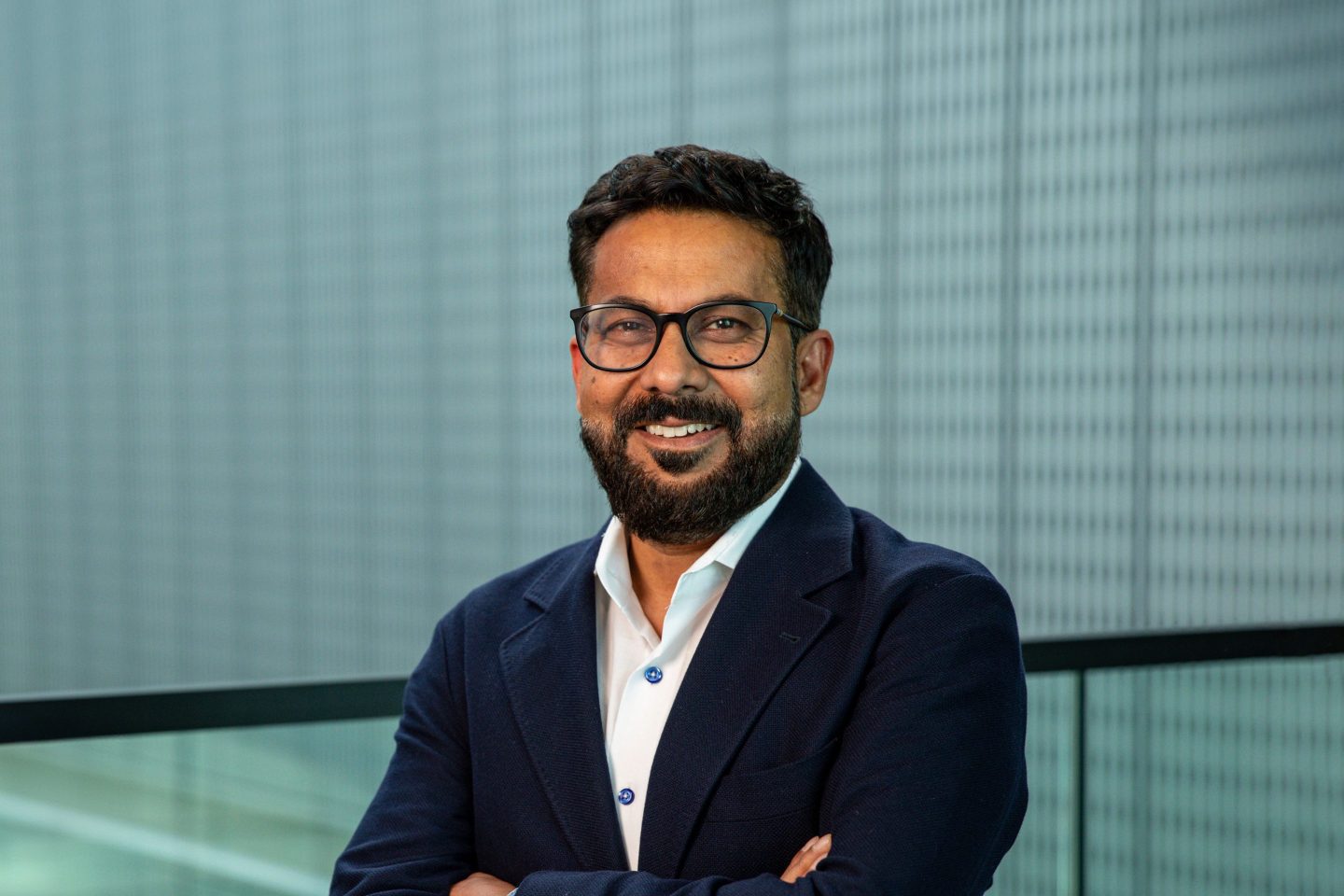
Tim Walsh knows the metric that is quietly reshaping how corporate America thinks about its workforce. It isn’t revenue per employee, which has anchored headcount decisions for decades. It isn’t productivity. It’s something Walsh, the chair CEO of KPMG U.S., calls labor cost margin — and understanding it reveals more about where AI is actually taking the economy than almost anything else being said out loud in boardrooms right now.

Recommended Video

“For every one of my engagements,” Walsh told Fortune, the question is “what is my mix of labor? What’s my mix of technology? And what’s the overall cost of delivering that engagement?”

He said he would expect the “labor cost in the mix” to go down, and for his technology costs within that same engagement to go up. “And at the end of the day, I’m going to be able to run a lot more volume through my business in ways that I couldn’t before.”

That logic — lower labor cost per unit of work, more total volume, net growth — is the quiet calculus running beneath nearly every major AI investment decision in corporate America today. And according to the 2026 KPMG U.S. CEO Outlook Pulse Survey, released Tuesday, the pace at which executives are moving toward that model is accelerating far faster than the public debate and hype around AI jobs has accounted for.​ It’s “dizzying” to do business in a genuine economic boom, he added.

They think the hype is real — just not yet

The survey, which polled 100 CEOs of large U.S. companies, found that 77% agreed with a statement that generative AI was overhyped over the past year, but also that its true disruptive potential over the next five to 10 years is likely to be under-hyped. It is a distinction that doesn’t much land in what Walsh called “the noise” of the broader conversation, which has oscillated between Silicon Valley triumphalism and doomsday predictions about mass unemployment. The CEOs that KPMG surveyed largely rejected both poles. What they are describing instead is something more structurally significant and harder to see coming: a gradual, then sudden, rewiring of how work gets done and who — or what — does it.​

“There is no doubt that every single layer within the labor pool is going to be disrupted,” Walsh said. “But anyone who tells you what it’s going to do or knows what the shape of it’s going to be isn’t being truthful, because it’s unclear at the moment.”​

The numbers in the survey support that uncertainty as well as the scale of the bet being made in spite of it. Nearly 80% of CEOs said they are allocating at least 5% of their total capital budgets to AI, and 41% are putting in at least 10%. Thirty-five percent are spending between 11% and 20% of their entire capital budget on the technology.

For context, that level of allocation rivals what companies were devoting to cloud infrastructure at the height of the cloud transition — and the cloud took a decade to fully reshape the economy.​

The jobs that are ‘a scary place to be right now’

The workforce picture that emerges is one of deliberate, if uncertain, transformation. Fifty-five percent of CEOs said AI will lead them to increase hiring over the next year. Walsh said his own headcount at KPMG is not down, but the composition of who he’s hiring has changed fundamentally.

“We’re hiring technologists in ways that we never did before,” he said. “We’re hiring people that we call orchestrators, people that are actually managing gigantic parts of our workflow to make sure they’re complete, they’re accurate, that they’re getting to the right output.” KPMG also told Fortune that it needs to hire for AI agent adoption strategists (responsible for aligning AI agents with strategy, design and workforce planning, and ensuring adoption among workers), AI agent orchestration engineers (connecting agents, tools and workflows, and defining autonomy and guardrails for agents), and AI agent operations managers (managing agents’ day-to-day performance, incidents and changes).

That is the new shape of white-collar work that is coming into focus: not elimination, but stratification. The jobs most at risk, Walsh said, are unambiguous. “You can look at those types of jobs that are repetitive tasks, people that are doing the same thing every single day, day in and day out. That’s a scary place to be right now.”

But he argued that most knowledge workers are not in that bucket. Work isn’t “just one thing” for this breed of white-collar worker. “It’s about building relationships. It’s about building business. It’s about taking judgments on what work I do … Not all of that just fits nicely into an automated solution.”​

Still, two-thirds of CEOs surveyed by KPMG admitted they have not yet actually redefined roles or career paths to account for AI, a striking admission given the scale of investment underway. The survey also found that 31% of CEOs cited their top concern about AI’s impact on leadership development as reduced opportunities for early-career employees to build judgment through real-world experience. The worry, in plain terms, is that companies may be training a generation of managers who have never had to figure anything out for themselves.​

The pressure to keep up

The metric Walsh is watching — labor cost margin — is essentially the financial expression of all of this. It captures the substitution of technology for labor, the expansion of capacity without proportional headcount growth, and ultimately the productivity gains that every CEO is under pressure to deliver. And that pressure is real, he agreed, as every CEO is under the microscope, expected to increase that labor cost margin.

“It’s stressful if you’re not investing, if you’re not keeping up,” Walsh said. “Because if you’re not keeping up, you have the risk of losing market share.”​

That competitive pressure — to automate faster than your rivals, to find productivity gains before investors demand to see them, to retrain a workforce for jobs that don’t fully exist yet — is the hidden texture of the AI moment that this survey captures. Sixty percent of CEOs identified the pace of AI innovation and risk management as the single biggest factor impacting their organization’s prosperity over the next three years. Not tariffs. Not interest rates. Not geopolitics.​

“It’s dizzying,” Walsh acknowledged, adding that he sees CEOs as very resilient in the mid-2020s.

The machines aren’t taking over. But the people running the largest companies in America are quietly, methodically, recalculating exactly how many humans they need, and the number they’re arriving at looks very different from the one they started with.


Join us at the Fortune Workplace Innovation Summit May 19–20, 2026, in Atlanta. The next era of workplace innovation is here—and the old playbook is being rewritten. At this exclusive, high-energy event, the world’s most innovative leaders will convene to explore how AI, humanity, and strategy converge to redefine, again, the future of work. Register now.
About the Author
Nick Lichtenberg
By Nick LichtenbergBusiness Editor
LinkedIn icon

Nick Lichtenberg is business editor and was formerly Fortune's executive editor of global news.

See full bioRight Arrow Button Icon

Latest in AI

Finance
Lorem ipsum dolor sit amet, consectetur adipiscing elit, sed do eiusmod tempor incididunt ut labore et dolore magna aliqua. Ut enim ad minim veniam
By Fortune Editors
October 20, 2025
Finance
Lorem ipsum dolor sit amet, consectetur adipiscing elit, sed do eiusmod tempor incididunt ut labore et dolore magna aliqua. Ut enim ad minim veniam
By Fortune Editors
October 20, 2025
Finance
Lorem ipsum dolor sit amet, consectetur adipiscing elit, sed do eiusmod tempor incididunt ut labore et dolore magna aliqua. Ut enim ad minim veniam
By Fortune Editors
October 20, 2025
Finance
Lorem ipsum dolor sit amet, consectetur adipiscing elit, sed do eiusmod tempor incididunt ut labore et dolore magna aliqua. Ut enim ad minim veniam
By Fortune Editors
October 20, 2025
Finance
Lorem ipsum dolor sit amet, consectetur adipiscing elit, sed do eiusmod tempor incididunt ut labore et dolore magna aliqua. Ut enim ad minim veniam
By Fortune Editors
October 20, 2025
Finance
Lorem ipsum dolor sit amet, consectetur adipiscing elit, sed do eiusmod tempor incididunt ut labore et dolore magna aliqua. Ut enim ad minim veniam
By Fortune Editors
October 20, 2025

Most Popular

Finance
Lorem ipsum dolor sit amet, consectetur adipiscing elit, sed do eiusmod tempor incididunt ut labore et dolore magna aliqua. Ut enim ad minim veniam
By Fortune Editors
October 20, 2025
Finance
Lorem ipsum dolor sit amet, consectetur adipiscing elit, sed do eiusmod tempor incididunt ut labore et dolore magna aliqua. Ut enim ad minim veniam
By Fortune Editors
October 20, 2025
Finance
Lorem ipsum dolor sit amet, consectetur adipiscing elit, sed do eiusmod tempor incididunt ut labore et dolore magna aliqua. Ut enim ad minim veniam
By Fortune Editors
October 20, 2025
Finance
Lorem ipsum dolor sit amet, consectetur adipiscing elit, sed do eiusmod tempor incididunt ut labore et dolore magna aliqua. Ut enim ad minim veniam
By Fortune Editors
October 20, 2025
Finance
Lorem ipsum dolor sit amet, consectetur adipiscing elit, sed do eiusmod tempor incididunt ut labore et dolore magna aliqua. Ut enim ad minim veniam
By Fortune Editors
October 20, 2025
Finance
Lorem ipsum dolor sit amet, consectetur adipiscing elit, sed do eiusmod tempor incididunt ut labore et dolore magna aliqua. Ut enim ad minim veniam
By Fortune Editors
October 20, 2025
Fortune Secondary Logo
Rankings
  • 100 Best Companies
  • Fortune 500
  • Global 500
  • Fortune 500 Europe
  • Most Powerful Women
  • Future 50
  • World’s Most Admired Companies
  • See All Rankings
Sections
  • Finance
  • Fortune Crypto
  • Features
  • Leadership
  • Health
  • Commentary
  • Success
  • Retail
  • Mpw
  • Tech
  • Lifestyle
  • CEO Initiative
  • Asia
  • Politics
  • Conferences
  • Europe
  • Newsletters
  • Personal Finance
  • Environment
  • Magazine
  • Education
Customer Support
  • Frequently Asked Questions
  • Customer Service Portal
  • Privacy Policy
  • Terms Of Use
  • Single Issues For Purchase
  • International Print
Commercial Services
  • Advertising
  • Fortune Brand Studio
  • Fortune Analytics
  • Fortune Conferences
  • Business Development
  • Group Subscriptions
About Us
  • About Us
  • Editorial Calendar
  • Press Center
  • Work At Fortune
  • Diversity And Inclusion
  • Terms And Conditions
  • Site Map
Fortune Secondary Logo
  • About Us
  • Editorial Calendar
  • Press Center
  • Work At Fortune
  • Diversity And Inclusion
  • Terms And Conditions
  • Site Map
  • Facebook icon
  • Twitter icon
  • LinkedIn icon
  • Instagram icon
  • Pinterest icon

Latest in AI

Mastercard logo seen displayed on a smartphone with an Artificial intelligence (AI) chip and symbol in the background.
BankingFinance
Most small businesses can’t afford a full-time finance chief. So Mastercard is debuting a ‘virtual CFO’ built with AI
By Sheryl EstradaMarch 10, 2026
13 minutes ago
tired
CommentaryProductivity
AI can double output. Human biology can’t
By Scott HutchesonMarch 10, 2026
2 hours ago
sharma
CommentaryRisk
The AI risk that few organizations are governing
By Raj SharmaMarch 10, 2026
2 hours ago
Two men in white button downs under black zip ups.
Startups & VentureHealth
This Harvard dropout took a company public before 30. Now he’s raising $205M to fix the business side of medicine
By Catherina GioinoMarch 10, 2026
4 hours ago
ceo
AIchief executive officer (CEO)
CEOs are using one number in the AI age to decide how many people they still need
By Nick LichtenbergMarch 10, 2026
8 hours ago
Man with facial hair looking to the side wearing a suit and tie.
InvestingLarry Ellison
Oracle is under pressure from more than $100 billion in debt and massive layoffs as it pushes ahead with Larry Ellison’s 3-step transformation 
By Amanda GerutMarch 9, 2026
12 hours ago

Most Popular

placeholder alt text
Real Estate
Billionaires Elon Musk and Mark Zuckerberg used mortgages to buy multimillion-dollar mansions. Here’s why that’s a savvy financial decision
By Sydney LakeMarch 9, 2026
21 hours ago
placeholder alt text
Energy
Trump promised to fill America’s oil reserves ‘right to the top.’ A year later, oil has exceeded $100 and they’re still less than 60% full
By Tristan BoveMarch 9, 2026
19 hours ago
placeholder alt text
Personal Finance
Current price of silver as of Monday, March 9, 2026
By Joseph HostetlerMarch 9, 2026
23 hours ago
placeholder alt text
Energy
Oil over $100, markets in free fall, and Iran's new supreme leader is Trump's 'worst case' scenario
By Jim EdwardsMarch 9, 2026
1 day ago
placeholder alt text
Middle East
Like Trump, Iran’s new supreme leader is a real estate mogul, with a house on ‘Billionaires’ Row,’ a villa in Dubai, and upscale European hotels
By Jason MaMarch 9, 2026
18 hours ago
placeholder alt text
Investing
Oracle is under pressure from more than $100 billion in debt and massive layoffs as it pushes ahead with Larry Ellison's 3-step transformation 
By Amanda GerutMarch 9, 2026
12 hours ago

© 2026 Fortune Media IP Limited. All Rights Reserved. Use of this site constitutes acceptance of our Terms of Use and Privacy Policy | CA Notice at Collection and Privacy Notice | Do Not Sell/Share My Personal Information
FORTUNE is a trademark of Fortune Media IP Limited, registered in the U.S. and other countries. FORTUNE may receive compensation for some links to products and services on this website. Offers may be subject to change without notice.