Good morning. It’s GDC week here in San Francisco. That’s the Game Developers Conference, the annual video game industry gathering that’s been held in the SF Bay Area since 1988—an eternity in game years (Nintendo’s NES console was still in its heyday at the time).
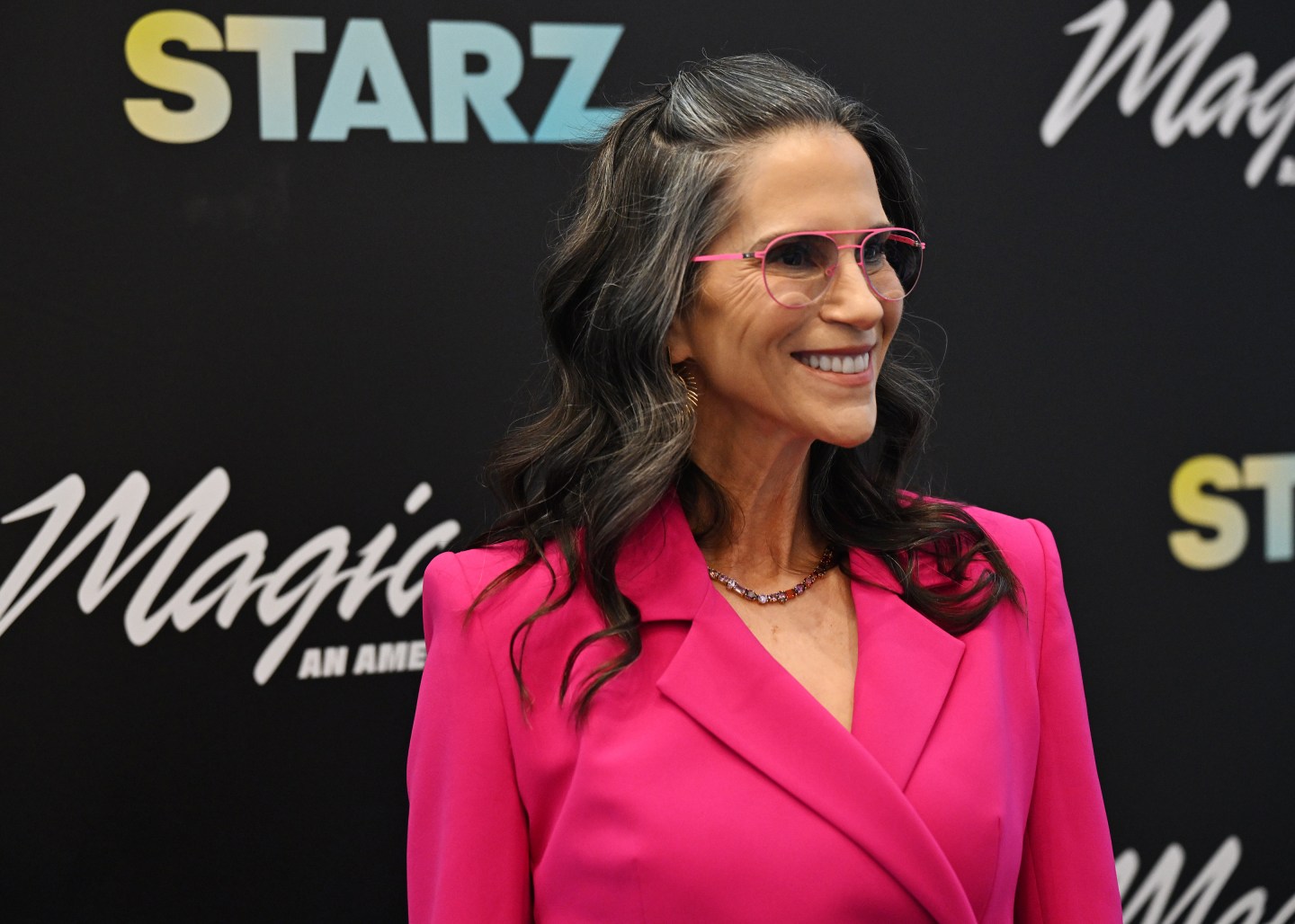
These days, the conference is called the GDC Festival of Gaming, a festive rebrand that seems designed to send a message to that other shindig that kicks off in Austin later this week, SXSW. Speaking of changes, Bluesky has a new CEO. Bluesky, if you haven’t been paying attention, is the microblogging platform that was incubated as a research project inside Twitter, but spun into an independent company which became popular when Twitter became X. Anyway, Jay Graber, Bluesky’s founding CEO is handing the reins to Toni Shneider, while Graber becomes the Chief Innovation Officer. Shneider, who is a VC at True Ventures, will occupy the role on an interim basis while the company searches for a permanent CEO.
It’s hard to know how Bluesky’s 40 million users compares to X’s users base, since the Elon Musk-owned company doesn’t disclose user numbers (Twitter had about 300 million users at its peak). But there’s one metric by which Graber has outplayed Twitter. She lasted more than four years as CEO. By this time in Twitter’s history, the company was already onto its third CEO.
Today’s tech news below.
Alexei Oreskovic
@lexnfx
alexei.oreskovic@fortune.com
Want to send thoughts or suggestions to Fortune Tech? Drop a line here.
Was this newsletter forwarded to you? Subscribe here!
Anthropic sues Pentagon

Anthropic is suing the Department of War and other federal agencies after the Trump administration formally designated the company a “supply-chain risk” late last week.
The lawsuit, filed Monday in the U.S. District Court for the Northern District of California, calls the administration’s actions “unprecedented and unlawful” and claims they threaten to harm “Anthropic irreparably.”
It’s the latest development in an ongoing disagreement between the Pentagon and Anthropic over the Trump administration’s use of its AI technology, with big implications for the control of AI overall and the relationship between business and government.
Anthropic had refused Pentagon demands to remove contractual restrictions on using its AI for domestic mass surveillance and autonomous weapons, prompting the administration to cancel the company’s government contracts and label it a national security risk.
An Anthropic spokesperson told Fortune that “seeking judicial review does not change our long-standing commitment to harnessing AI to protect our national security, but this is a necessary step to protect our business, our customers, and our partners. We will continue to pursue every path toward resolution, including dialogue with the government.”
Legal experts have already questioned whether the designation is likely to hold up in court. Lawyers Michael Endrias and Alan Z. Rozenshtein called it “political theater: a show of force that will not stick,” arguing the government cannot credibly claim an emergency threat while simultaneously planning a six-month phaseout of the technology.
Lest anyone think this fight has shifted entirely to the courtroom though, Axios reported late Monday that President Trump is considering issuing an executive order to eradicate Anthropic from the federal government.—Beatrice Nolan
Amazon data centers under attack
Last week, three data centers operated by Amazon Web Services (AWS), two in the United Arab Emirates and one in Bahrain, were struck by Iranian drones or missiles. The attacks forced the facilities offline and led to service outages affecting banking, payments, delivery apps, and enterprise software across the region.
It's believed to be the first time data centers have been deliberately targeted for air strikes in a conflict. Experts say it almost certainly won’t be the last. Data centers are rapidly emerging as vital strategic assets—and vulnerable targets.
Chris McGuire, an AI and technology competition expert who worked on technology policy at the National Security Council under the Biden administration, told the Guardian that data centers built in the Middle East might need to consider measures to guard against aerial attacks. “If you’re actually going to double down the Middle East, maybe it means missile defense on data centers,” he said.—Jeremy Kahn
Microsoft launches new Copilot Cowork agents
Microsoft has announced a new set of products to get enterprise customers to build AI agents on its platform, including a new Copilot Cowork product built on top of Anthropic’s AI product Claude Cowork and a new business productivity software bundle that includes its own AI offerings.
The new products, which Microsoft is calling “Wave 3 of Microsoft 365 Copilot,” come as the software giant seeks to combat increased competition in the AI agent space from rival business productivity software companies, such as Salesforce, as well as from frontier AI companies like OpenAI and Anthropic, which received billions of dollars in strategic investments from Microsoft but are nonetheless increasingly pursuing the U.S. tech giant’s traditional customer base. Microsoft also faces competition for AI agents from open-source offerings like OpenClaw.
Copilot Cowork uses Anthropic’s Claude model as the AI powering its reasoning. While Microsoft initially built all of its Copilot offering around OpenAI’s models, it has now shifted to a flexible approach that allows customers to pick any model to power their AI assistants and agents. “Every 60 days at least, there’s a new king of the hill,” Microsoft’s chief marketing officer for AI at Work Jared Spataro told Fortune. “There’s so much demand for a platform that doesn’t feel like, ‘I have to skip over to the next vendor.’” Full story here.—JK
More tech
—Nvidia is prepping an agent platform. Enter NemoClaw.
—Get ready for Oracle earnings. Larry Ellison's 3-point play in the spotlight
—OpenAI acquires Promptfoo. Who doesn't have an AI security startup with that name?
—Apple's smart home display delayed. The curse of Siri strikes again.
—Joseph Stiglitz' AI warning. The Nobel laureate is worried about the information ecosystem.
—HP raises financial outlook. Riding the AI wave.