
• Home
  • Latest
  • Fortune 500
  • Finance
  • Tech
  • Leadership
  • Lifestyle
  • Rankings
  • Multimedia

Trendingnow

1

MacKenzie Scott alone accounted for one-third of America's $19.2 billion in megagifts last year

2

Now worth $200 million, Sarah Jessica Parker credits being ‘one of eight kids that struggled financially’ for her hunger, ambition, and work ethic

3

Ikea’s billionaire founder was so frugal that he bought clothes from flea markets and took free salt and pepper from restaurants

1

MacKenzie Scott alone accounted for one-third of America's $19.2 billion in megagifts last year

2

Now worth $200 million, Sarah Jessica Parker credits being ‘one of eight kids that struggled financially’ for her hunger, ambition, and work ethic

3

Ikea’s billionaire founder was so frugal that he bought clothes from flea markets and took free salt and pepper from restaurants
AIJobs

Joseph Stiglitz says buckle up before the great AI ‘reallocation’ era arrives

Catherina Gioino
By
Catherina Gioino
Catherina Gioino
News Editor
Down Arrow Button Icon
Catherina Gioino
By
Catherina Gioino
Catherina Gioino
News Editor
Down Arrow Button Icon
March 8, 2026, 7:03 AM ET
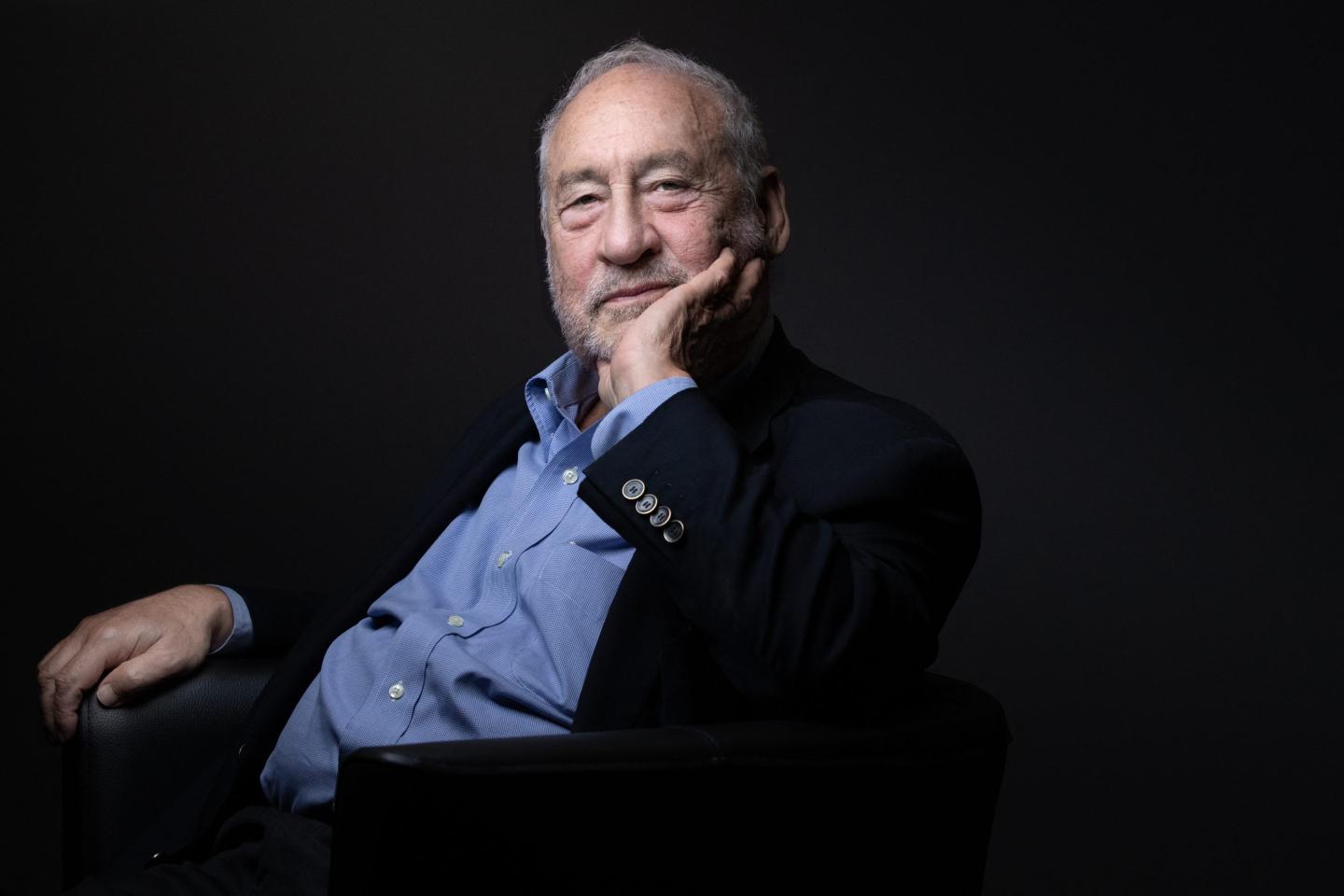
Nobel Prize–winning professor Joseph Stiglitz warns an AI bubble may burst, but in the long term, people will use AI to assist in their jobs.
Nobel Prize–winning professor Joseph Stiglitz warns an AI bubble may burst, but in the long term, people will use AI to assist in their jobs.JOEL SAGET—AFP/Getty Images
Add Fortune on Google for similar content.

Joseph Stiglitz wants you to hold two ideas in your head at the same time. The first: An AI bubble is building; it will likely burst; it will hurt the macroeconomy; and workers will bear the cost of a displacement we have no institutions to manage. The second: Survive that transition and the technology that threatens your job today may end up becoming your most useful coworker.

Recommended Video

“Our economy is right now being supported by AI investment—the AI bubble,” Stiglitz told Fortune in a recent interview. “Like, a third of the growth, or the non-growth, that we had last year was based on AI. So this AI bubble is having positive macroeconomic effects in the short run. I believe that it is a bubble in two ways.

“There’s both a short run and a long run,” he said. The problem, Stiglitz argued, is that almost everyone in the public debate is only hearing one of them.

If there’s a bubble, it will have an explosive burst

Stiglitz, who won the Nobel Prize in economics and wrote about the structural failures of modern capitalism in his 2024 book, The Road to Freedom: Economics and the Good Society, believes the current wave of AI investment rests on a foundation that cannot hold. 

“The market believes that there are going to be high returns to these investments. That is predicated on two assumptions: that AI will be technologically successful and that there will be limited competition,” he said. 

The problem is that global competition in AI is already fierce, from U.S. tech giants to Chinese firms: “Because if it’s technologically successful, but there’s a lot of competition, profits will be driven down to zero, and they will not get the returns that they expect.”

When that realization hits, the fallout will not be gentle. “If I’m right, and there is this bubble,” Stiglitz warned, “then the breaking of any bubble is really bad in the short term for the macroeconomy.”

That collapse, if it comes, would arrive while AI is simultaneously displacing workers across the economy—a worst-of-both-worlds scenario that Stiglitz does not think is far-fetched.

“We do not have the macro or micro framework for managing that kind of displacement,” he said. No active labor market policies. No large-scale retraining infrastructure. No industrial strategy to create the next round of good jobs in the places where old ones are disappearing. “It would require large retraining programs and so forth,” he noted, programs that do not currently exist at anything close to the scale needed.

The displacement gap

Stiglitz has seen what happens when societies lack those tools.

“When in the Great Depression, it was partly a success of agriculture,” he said. “We increased productivity enormously. We didn’t need as many farmers, but we had no ability to move people out of the rural sector—and we finally did it in World War II. But it was government intervention as a result of the war that resolved that problem. We don’t have the institutional framework for doing that.”

The parallel is not comforting. If AI succeeds at automating large portions of routine cognitive work—the research, the drafting, the analysis, the administrative processing that fills millions of office jobs—and the economy has no mechanism to redirect that labor, the result is not just a productivity story. It is a human one. “The foundations of a strong macroeconomy are almost inconsistent,” Stiglitz said. “I just can’t see how it can happen.”

He’s clear that AI will “make a particularly large difference in some routine white-collar jobs”—the very jobs filled by workers who tend to sit behind desks, carry college degrees, and feel farthest from the disruptions that hammered manufacturing workers a generation ago. This sense of safety many knowledge workers feel may soon be under threat.

Act two: The long game

But here is where Stiglitz’s argument pivots, and where it becomes more interesting than either that of the doomsayers or the boosters. Zoom out far enough, past the bubble and the displacement shock, and AI begins to look less like a replacement for human workers and more like a tool that makes them better at what they already do.

Take education. Stiglitz estimated it represents roughly 14% of the labor force, and he is unequivocal about what AI can and cannot do there. “It’s not going to replace teachers. It may help them do better lesson plans. It may help them tailor education better, but it’s not going to replace the teachers. We know enough about how students learn that the human interaction still seems to be very important.”

Health care tells a similar story, though with a sharper political edge. The U.S. health care sector represents nearly 20% of GDP and is, by global standards, spectacularly inefficient, spending far more than comparable countries for worse outcomes. While boosters argue AI will fix this, Stiglitz disagreed.

“Is AI going to solve that problem? No. We know precisely why our health care system is inefficient, and it has to do with rent seeking, with lack of competition, with the fact that we don’t have a public health system. It’s the politics. Is AI going to solve that political problem?”

AI can improve record-keeping, accelerate drug development, and sharpen diagnostic tools. What it cannot do is restructure the insurance industry, dismantle hospital monopolies, or make the political choices that a dysfunctional system requires. The problem was never a lack of computing power.

And then there is the plumber—perhaps the most vivid example Stiglitz offers of what the future actually looks like in practice. Stiglitz, who likens his own use of AI as “IA,” for intelligence assisting, says AI will supplement our labor in the future, and plumbing is a prime example. 

Far from being displaced, the plumber gets smarter. “It will help the plumbers maybe do their job better. They can feed in the symptoms of the problem, and it will give the diagnostics, and it’s probably a broken pipe in the wall, and may help them do their job better. That’s the intelligence assisting part.”

He paused, then added the line that captures his entire long-term argument: “But you still would need the plumber.”

The catch

The hopeful second act only materializes under the condition that societies survive the first act with their institutions intact. If the short-term bubble burst triggers mass displacement into an economy with no safety net, no retraining programs, and a government deliberately stripped of the capacity to intervene, the long-term IA vision becomes unreachable—not because the technology fails, but because the human infrastructure required to deploy it fairly was dismantled before it was needed.

Stiglitz’s warning is not that AI will destroy the future of work. It is that the transition between now and that future is the most dangerous part, and we are walking into it without a map.

Subscribe to Fortune Gulf Brief. Every Tuesday, this new newsletter delivers clear-eyed, authoritative intelligence on the deals, decisions, policies, and power shifts shaping one of the world’s most consequential regions, written for the people who need to act on it. Sign up here.
About the Author
Catherina Gioino
By Catherina GioinoNews Editor
Instagram iconLinkedIn iconTwitter icon

Catherina covers markets, the economy, energy, tech, and AI.

See full bioRight Arrow Button Icon
Add Fortune on Google for similar content.

Latest in AI

Finance
Lorem ipsum dolor sit amet, consectetur adipiscing elit, sed do eiusmod tempor incididunt ut labore et dolore magna aliqua. Ut enim ad minim veniam
By Fortune Editors
October 20, 2025
Finance
Lorem ipsum dolor sit amet, consectetur adipiscing elit, sed do eiusmod tempor incididunt ut labore et dolore magna aliqua. Ut enim ad minim veniam
By Fortune Editors
October 20, 2025
Finance
Lorem ipsum dolor sit amet, consectetur adipiscing elit, sed do eiusmod tempor incididunt ut labore et dolore magna aliqua. Ut enim ad minim veniam
By Fortune Editors
October 20, 2025
Finance
Lorem ipsum dolor sit amet, consectetur adipiscing elit, sed do eiusmod tempor incididunt ut labore et dolore magna aliqua. Ut enim ad minim veniam
By Fortune Editors
October 20, 2025
Finance
Lorem ipsum dolor sit amet, consectetur adipiscing elit, sed do eiusmod tempor incididunt ut labore et dolore magna aliqua. Ut enim ad minim veniam
By Fortune Editors
October 20, 2025
Finance
Lorem ipsum dolor sit amet, consectetur adipiscing elit, sed do eiusmod tempor incididunt ut labore et dolore magna aliqua. Ut enim ad minim veniam
By Fortune Editors
October 20, 2025

Most Popular

Finance
Lorem ipsum dolor sit amet, consectetur adipiscing elit, sed do eiusmod tempor incididunt ut labore et dolore magna aliqua. Ut enim ad minim veniam
By Fortune Editors
October 20, 2025
Finance
Lorem ipsum dolor sit amet, consectetur adipiscing elit, sed do eiusmod tempor incididunt ut labore et dolore magna aliqua. Ut enim ad minim veniam
By Fortune Editors
October 20, 2025
Finance
Lorem ipsum dolor sit amet, consectetur adipiscing elit, sed do eiusmod tempor incididunt ut labore et dolore magna aliqua. Ut enim ad minim veniam
By Fortune Editors
October 20, 2025
Finance
Lorem ipsum dolor sit amet, consectetur adipiscing elit, sed do eiusmod tempor incididunt ut labore et dolore magna aliqua. Ut enim ad minim veniam
By Fortune Editors
October 20, 2025
Finance
Lorem ipsum dolor sit amet, consectetur adipiscing elit, sed do eiusmod tempor incididunt ut labore et dolore magna aliqua. Ut enim ad minim veniam
By Fortune Editors
October 20, 2025
Finance
Lorem ipsum dolor sit amet, consectetur adipiscing elit, sed do eiusmod tempor incididunt ut labore et dolore magna aliqua. Ut enim ad minim veniam
By Fortune Editors
October 20, 2025
Fortune Secondary Logo
Rankings
  • 100 Best Companies
  • Fortune 500
  • Global 500
  • Fortune 500 Europe
  • Most Powerful Women
  • World's Most Admired Companies
  • See All Rankings
  • Lists Calendar
Sections
  • Finance
  • Fortune Crypto
  • Features
  • Leadership
  • Health
  • Commentary
  • Success
  • Retail
  • Mpw
  • Tech
  • Lifestyle
  • CEO Initiative
  • Asia
  • Politics
  • Conferences
  • Europe
  • Newsletters
  • Personal Finance
  • Environment
  • Magazine
  • Education
Customer Support
  • Frequently Asked Questions
  • Customer Service Portal
  • Privacy Policy
  • Terms Of Use
  • Single Issues For Purchase
  • International Print
Commercial Services
  • Advertising
  • Fortune Brand Studio
  • Fortune Analytics
  • Fortune Conferences
  • Business Development
  • Group Subscriptions
About Us
  • About Us
  • Press Center
  • Work At Fortune
  • Terms And Conditions
  • Site Map
  • About Us
  • Press Center
  • Work At Fortune
  • Terms And Conditions
  • Site Map
  • Facebook icon
  • Twitter icon
  • LinkedIn icon
  • Instagram icon
  • Pinterest icon

Latest in AI

cuban
AIJobs
Everyone agrees that you hate AI, but only Mark Cuban sees why Silicon Valley is powerless to fix it
By Nick LichtenbergJune 26, 2026
20 minutes ago
Meet Micron, the under-the-radar chipmaker that just reported a 346% sales surge and helped stop a global AI selloff
AITech
Meet Micron, the under-the-radar chipmaker that just reported a 346% sales surge and helped stop a global AI selloff
By Marco Quiroz-GutierrezJune 26, 2026
26 minutes ago
gas
LawAntitrust
Gas station owners have found a use case for AI, lawsuit says: colluding to fix prices
By R.J. Rico and The Associated PressJune 25, 2026
9 hours ago
g
AIunemployment
One of the Democratic Party’s brightest stars is co-founding a group to help with the coming AI jobs earthquake
By Josh Boak and The Associated PressJune 25, 2026
9 hours ago
GTA 6 release date is finally here—but the $80 price tag and missing disc have gamers furious
Arts & EntertainmentGaming
GTA 6 release date is finally here—but the $80 price tag and missing disc have gamers furious
By Whizy Kim and Tech BrewJune 25, 2026
13 hours ago
stock
InvestingMarkets
How one chip stock reversed the global tech selloff, exposed AI’s ‘memory tax’ and made the case for an entire valuation regime change
By Nick LichtenbergJune 25, 2026
15 hours ago

Most Popular

MacKenzie Scott alone accounted for one-third of America's $19.2 billion in megagifts last year
Success
MacKenzie Scott alone accounted for one-third of America's $19.2 billion in megagifts last year
By Sydney LakeJune 25, 2026
1 day ago
Now worth $200 million, Sarah Jessica Parker credits being ‘one of eight kids that struggled financially’ for her hunger, ambition, and work ethic
Success
Now worth $200 million, Sarah Jessica Parker credits being ‘one of eight kids that struggled financially’ for her hunger, ambition, and work ethic
By Orianna Rosa RoyleJune 24, 2026
2 days ago
Ikea’s billionaire founder was so frugal that he bought clothes from flea markets and took free salt and pepper from restaurants
Success
Ikea’s billionaire founder was so frugal that he bought clothes from flea markets and took free salt and pepper from restaurants
By Orianna Rosa RoyleJune 25, 2026
1 day ago
Current price of silver as of Thursday, June 25, 2026
Personal Finance
Current price of silver as of Thursday, June 25, 2026
By Joseph HostetlerJune 25, 2026
19 hours ago
Current price of oil as of June 25, 2026
Personal Finance
Current price of oil as of June 25, 2026
By Joseph HostetlerJune 25, 2026
19 hours ago
Trump turns on Big Oil donors who spent nearly $100 million to get him elected—now he wants the DOJ to investigate them for price gouging
Economy
Trump turns on Big Oil donors who spent nearly $100 million to get him elected—now he wants the DOJ to investigate them for price gouging
By Tristan BoveJune 25, 2026
11 hours ago

© 2026 Fortune Media IP Limited. All Rights Reserved. Use of this site constitutes acceptance of our Terms of Use and Privacy Policy | CA Notice at Collection and Privacy Notice | Do Not Sell/Share My Personal Information
FORTUNE is a trademark of Fortune Media IP Limited, registered in the U.S. and other countries. FORTUNE may receive compensation for some links to products and services on this website. Offers may be subject to change without notice.