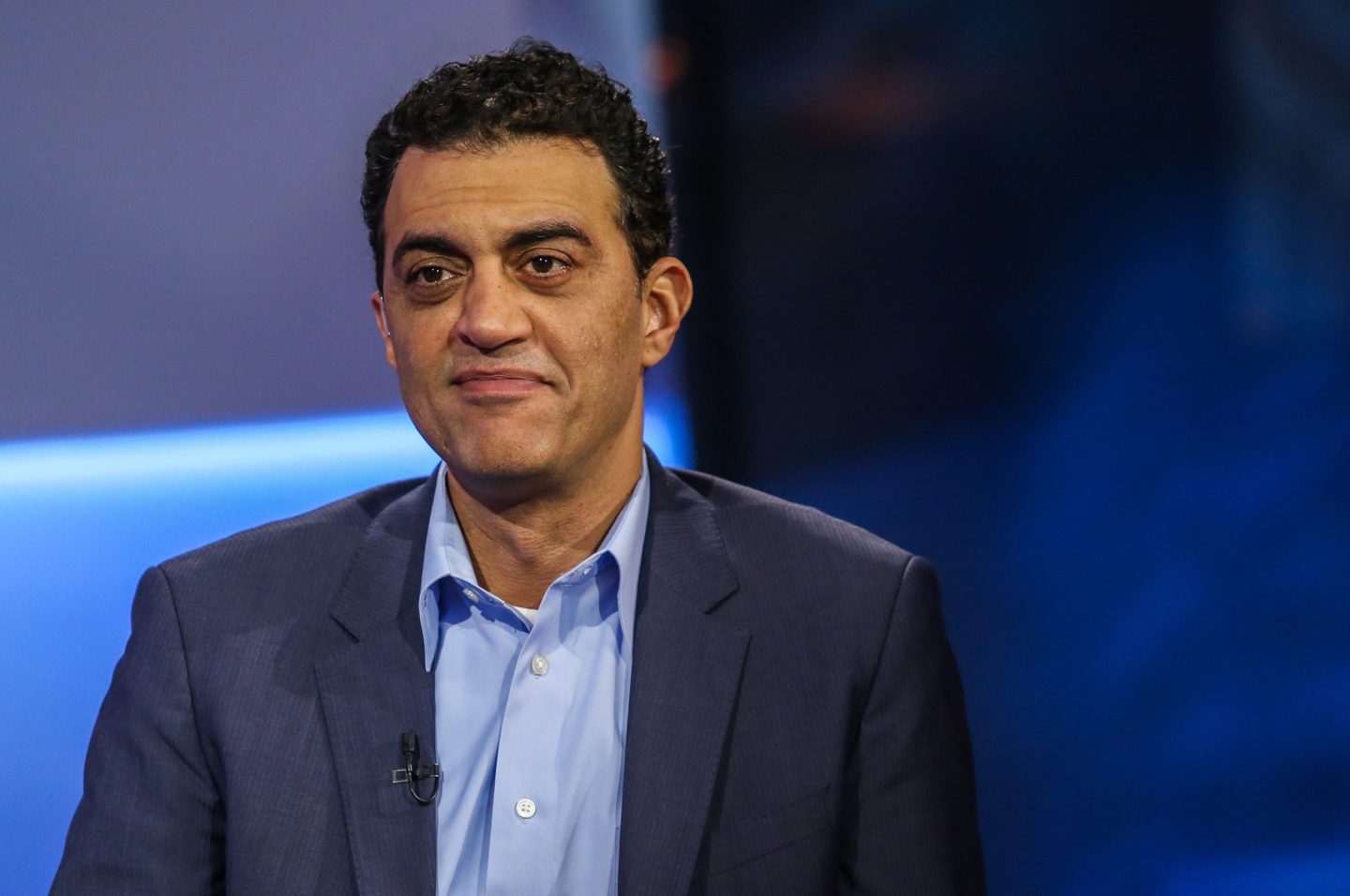
For more than two decades, Emil Michael has operated at the fault line between Silicon Valley ambition and American geopolitical power, helping scale one of tech’s most disruptive companies before returning to government to shape how artificial intelligence will be used in war. The self-proclaimed “one of the best deal guys” has now become the Pentagon’s most aggressive public combatant in its escalating standoff with Anthropic.
On Friday February 27 the conflict seemed to escalate to a boiling point with Trump posting to Truth Social, “I am directing EVERY Federal Agency in the United States Government to IMMEDIATELY CEASE all use of Anthropic’s technology. We don’t need it, we don’t want it, and will not do business with them again!” The post went on to describe a 6 months phase out period, and unspecified threats to Anthropic should it not cooperate.
Thus far Michael has embraced President Donald Trump’s edicts, including the demand that the renamed Department of War become an “AI‑first” organization, publicly arguing that whoever moves fastest on AI will dominate future conflicts. “Speed defines victory in the AI era, and the War Department will match the velocity of America’s AI industry,” he said in remarks outlining a new tech strategy that centers AI alongside hypersonics and directed‑energy weapons. “We’re pulling in the best talent, the most cutting‑edge technology, and embedding the top frontier AI models into the workforce—all at a rapid wartime pace.” A Department of War spokesperson underscored to Fortune that Michaels is “leading the mandate to secure U.S. military technological dominance. Emil’s team is moving at unprecedented speed to deliver new advanced capabilities to the warfighter, as reflected in his engagement with hundreds of industry partners during his first nine months as Under Secretary.”
Anthropic was supposed to be the crown jewel of the Pentagon’s AI push. Its Claude model is one of the few large language systems cleared for certain classified environments and is already deeply embedded in defense workflows through contractors like Palantir. Pulling it out could take months, according to a report by Defense One, making the startup not just a vendor but a critical node in the military’s emerging AI infrastructure.
But Anthropic also imposed limits that Michael views as fundamentally incompatible with warfighting. The company’s internal “Claude Constitution” and contract terms prohibit uses such as mass surveillance of Americans or fully autonomous lethal systems—even for government customers. When Michael and other officials sought to renegotiate those terms as part of a roughly $200 million defense deal, they insisted Claude be available for “all lawful purposes.” Michael framed the demand bluntly: “You can’t have an AI company sell AI to the Department of War and [not] let it do Department of War things.”
The battle between the DOW and Anthropic raises two important questions: How will the Trump Administration and AI giants work together going forward? And who is Michaels, the man who is making decisions on behalf of the biggest AI customer on the planet?
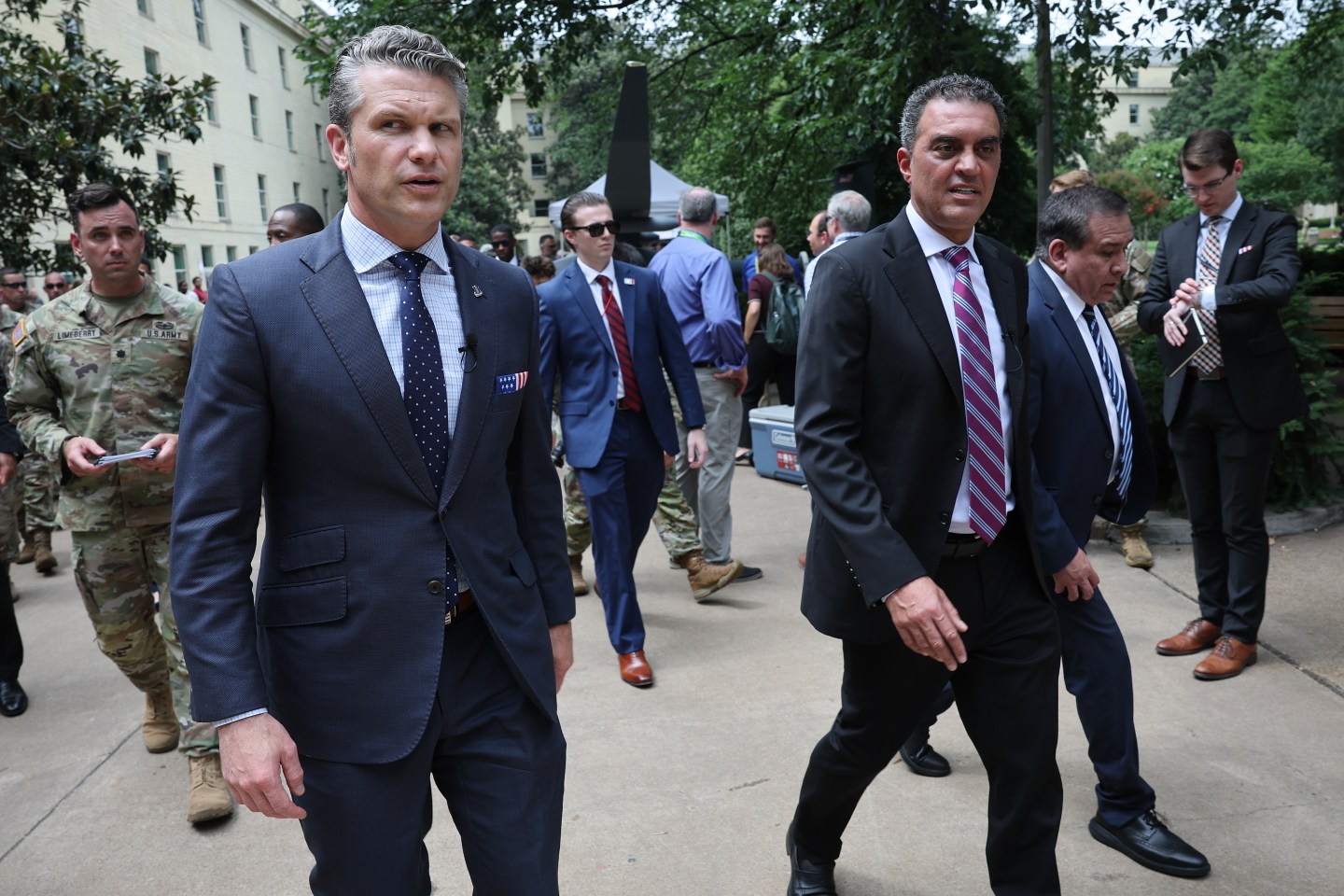
Who is Emil Michael?
Born in Egypt but raised in the United States, Michael attended Harvard University as an undergraduate and earned a law degree from Stanford. He began his career with a quick stint at Goldman Sachs, as an associate in the communications, media and entertainment investment banking group, before jumping into tech at Tellme Networks in 1999, a voice-recognition company which he helped run before it was acquired by Microsoft in 2007 for roughly $800 million.
His move to the startup world was inspired by Clayton Christensen’s “The Innovator’s Dilemma” which argues that market leaders, by nature, are often set up to fail. “This thesis made me really understand how the technology industry was going to be much bigger, much faster than most thought in the late ’90s,” he told Authority Magazine in 2021. “This made me take the risk of working at my first start-up because I believed that big companies were at risk of being disrupted due to the advent of the internet and mobile phones.”
From there, Michael took a less conventional path than many Silicon Valley executives by moving into government, serving from 2009 to 2011 as a White House fellow under President Barack Obama, serving as special assistant to then–Defense Secretary Robert Gates at the U.S. Department of Defense where he managed projects in Afghanistan, Iraq, and Pakistan and oversaw the efforts aimed at reducing bureaucracy to provide resources to soldiers.
Michael returned to Silicon Valley where, following a brief run at social media analytics company Klout, he joined Uber in 2013 as chief business officer and a close lieutenant to CEO Travis Kalanick. Over the next four years, he helped orchestrate one of the most aggressive expansions in corporate history where the company raised nearly $15 billion, and saw its valuation soar to roughly $70 billion.
During his time at Uber, Michael became a member of Pentagon’s Defense Business Board, an advisory group that shares best practices from the private sector with government agencies. At the time of his appointment, he was the only board member with tech startup experience.
Michael left Uber in 2017, but made some news of his own along the way. Three years before his departure, Michael made headlines after BuzzFeed reported that he had “outlined the notion of spending ‘a million dollars'” to hire four top opposition researchers and four journalists to look into the personal lives of journalists who covered Uber and its executives. That same year, while in Seoul, South Korea for work, Michael and several Uber executives (including Kalanik) visited a “hostess-escort karaoke bar” where female hostesses were presented to the group, according to accounts later reported to Uber’s human resources department. Four men selected hostesses and remained at the venue to sing karaoke. At least one female Uber manager in the group said the situation made her uncomfortable and filed a complaint with HR roughly a year later. The story of Michael’s HR complaint surfaced three months before he left Uber. An investigation by Business Insider reported that Michaels resigned in the wake of U.S. Attorney General Eric Holder’s investigation into Uber’s workplace—which prompted the company to implement dozens of policy and leadership changes. (A spokesperson for the Department of War declined to comment on Michael’s conduct.)
Michael returns to Washington, with a mission at the Department of War
Michael since apologized for both incidents, took a brief detour as a SPAC CEO, but found himself back in Washington when Donald Trump tapped him in December 2024 to become undersecretary of defense for research and engineering—effectively the Pentagon’s chief technology officer. The Senate confirmed him in 2025, installing a Silicon Valley‑trained business executive at the center of how the Defense Department thinks about AI, autonomy, and advanced weapons systems.
His portfolio dovetails with Trump‑era efforts to centralize AI governance at the federal level and prioritize American AI, including an executive order aimed at overriding stricter state rules and pushing agencies to classify and tightly manage “high impact” AI systems by 2026. Public biographies from the Department of War emphasize his record raising tens of billions in private capital and forging global partnerships as proof he can corral the private sector into serving U.S. strategic aims.
In an internal memo cutting the Pentagon’s long list of priority technologies down to six, he wrote that the previous list “did not provide the focus that the threat environment of today requires,” and declared that “in alignment with President Trump’s Artificial Intelligence (AI) Action Plan, the Department of War must become an ‘AI‑First’ organization.”
When Anthropic CEO Dario Amodei balked at the Pentagon’s demands, warning the proposed language the DOD wanted could allow safeguards to be bypassed, Michael responded by taking the fight public. He accused Amodei of having a “God complex,” called him “a liar,” and warned that no private company should be able to dictate the military’s options. The Pentagon, he insisted, “will ALWAYS follow the law but will not yield to the desires of any profit-driven tech firm.”
Now the standoff has reached a breaking point. Anthropic faces both Trump’s social media directive to scrub Anthropic from federal agencies (a demand it is unclear if he can enforce) and a Friday 5 p.m. Eastern deadline to accept the Pentagon’s terms or risk losing its contract entirely—a move that could force the military to rip out one of its most advanced AI systems and send a chilling message across Silicon Valley. The 5pm Friday deadline when Congress is not in session prevents that arm of the government intervening in a showdown that AI scholar Gary Marcus wrote “may literally be life or death for all of us.”
For Michael, the battle appears to reflect a belief forged across his career—from Uber’s global expansion battles to the Pentagon’s AI buildup—that control over transformative technology cannot remain in private hands when national security is at stake. The question now is how far he’s willing to go to achieve that end.