• Home
  • Latest
  • Fortune 500
  • Finance
  • Tech
  • Leadership
  • Lifestyle
  • Rankings
  • Multimedia
EuropeRussia
Europe

Russia’s violation of NATO airspace surged 200% in 2025, a warning of what may be coming

By
Frederic Lemieux
Frederic Lemieux
and
The Conversation
The Conversation
Down Arrow Button Icon
By
Frederic Lemieux
Frederic Lemieux
and
The Conversation
The Conversation
Down Arrow Button Icon
February 19, 2026, 12:00 PM ET
putin
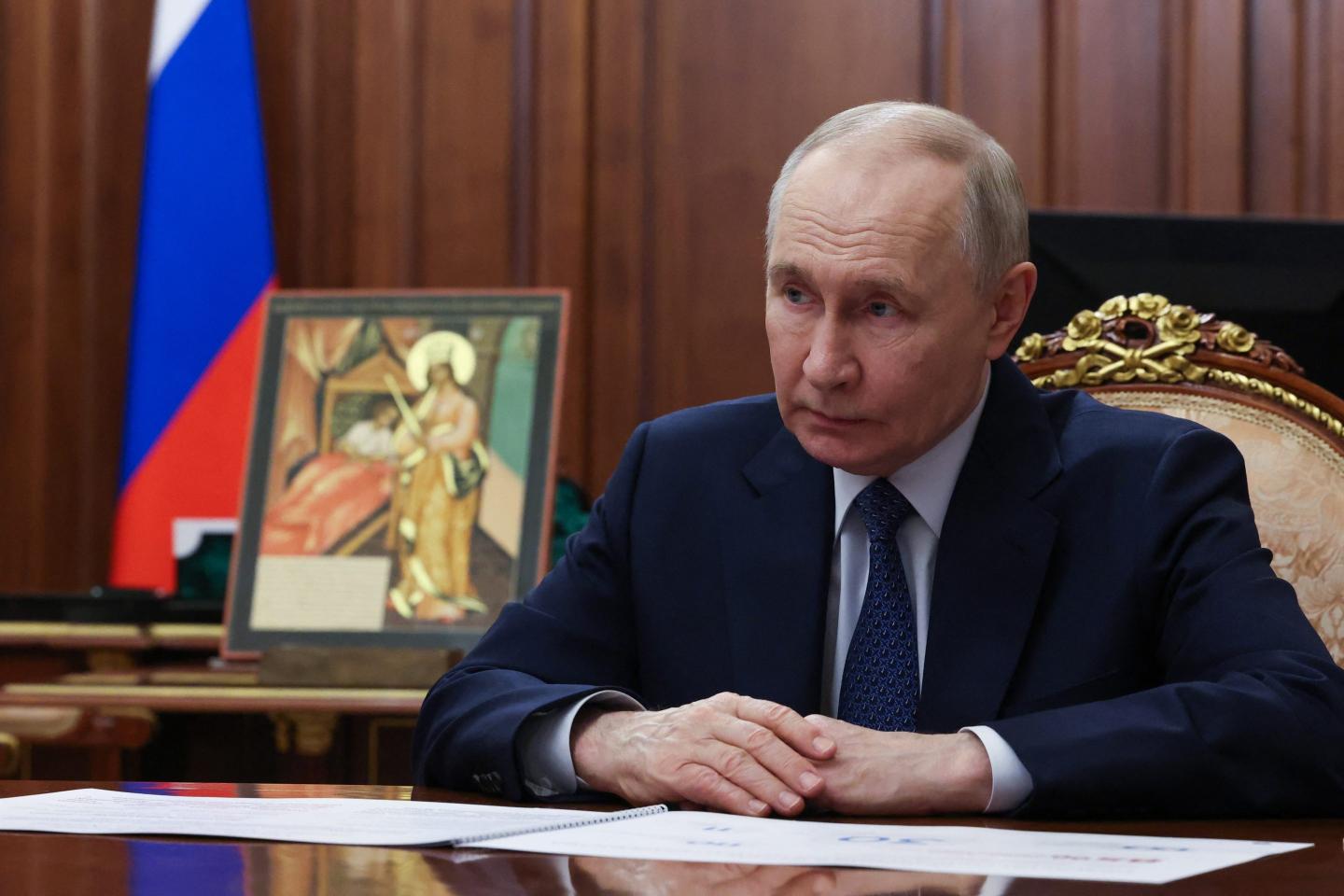
In this pool photograph distributed by the Russian state agency Sputnik, Russia's President Vladimir Putin attends a meeting with Archpriest Alexander Tkachenko (not pictured), Chairman of the Board at the Circle of Kindness Foundation, in Moscow on February 13, 2026. Vyacheslav PROKOFYEV / POOL / AFP via Getty Images

Russian aircraft, drones and missiles have violated NATO airspace dozens of times since the full-scale invasion of Ukraine began in February 2022.

Recommended Video

Individually, many of these incidents appear minor: a drone crash here, a brief fighter incursion there, a missile discovered only after the fact.

But taken together, I believe the numbers tell a far more troubling story.

To get a full picture of the scale of violations, I conducted a systematic review of Russian airspace violations against NATO members from 2022 through the end of 2025.

It reveals not just an increase but a sharp acceleration accompanied by rising severity and widening geographic scope. In 2025 alone, NATO members recorded 18 confirmed Russian airspace violations – three times as many as in 2024 and more than half of all incidents recorded over the four-year period. This was not a gradual escalation; it was a dramatic change.

Picking up pace

I identified airspace violations through a systematic review of international news media coverage, corroborated with official NATO press releases and cross-validated against operational assessments and geospatial reporting from the Institute for the Study of War. Included were violations of airspace by drones heavily suspected to be Russian but that could not be 100% confirmed.

Between 2022 and 2024, the annual number of violations rose steadily but modestly. There were four incidents in 2022, five in 2023 and six in 2024.

That corresponds to year-on-year increases of roughly 25% and 20%. In 2025, the count jumped from six to 18, a 200% increase in a single year. And that pace has continued into 2026 – as of Feb. 18 there have been at least two violations of NATO airspace by Russia.

Such a surge is statistically and strategically significant. It strongly suggests that Russian airspace violations are no longer episodic spillovers from the war in Ukraine, but part of a sustained pattern of pressure directed at NATO itself.

The character of these incidents has also changed. In 2022, all four violations were what I classify as low-intensity events: brief incursions into Swedish airspace by Russian fighters, the crash of an Orlan-10 reconnaissance drone in Romania and the later discovery of a Russian cruise missile in Poland. These incidents were serious but short-lived and geographically limited.

By 2023, violations had become more repetitive. Romania alone experienced multiple drone incursions and debris discoveries over several months, often triggering fighter scrambles. All five incidents that year fell into a midrange severity category: more persistent than before but still largely confined to border regions.

The transition toward higher-intensity incursions became clearer in 2024. Of the six violations that year, half involved high-severity characteristics such as deeper penetration of a NATO country or broader geographic exposure.

A Russian cruise missile crossed into Polish airspace, drones entered Romania on multiple consecutive nights, and a Russian drone crashed well inside Latvian territory. These incidents expanded both the depth and the geographic footprint of violations.

Then came 2025. Of the 18 violations recorded that year, a clear majority qualify as high-severity events. These include a Russian drone that penetrated nearly 60 miles (100 kilometers) into Polish territory before crashing near Osiny without prior radar detection; a drone that remained inside Romanian airspace for approximately four hours, crossing multiple counties before crashing in Vaslui; and a massive 21-drone swarm over Poland on Sept. 9-10 that forced the closure of major civilian airports in Warsaw, Rzeszów and Lublin.

Manned aircraft also returned in force. Russian MiG-31 interceptors flew over Estonia for about 12 minutes with transponders – onboard devices that automatically respond to radar signals by transmitting an aircraft’s identity and altitude, enabling air traffic control and air defense systems to track it – switched off. In October, a Russian Su-30 fighter accompanied by an Il-78 refueling tanker violated Lithuanian airspace – an unmistakable signal of endurance and deliberate mission planning.

In December, suspected Russian drones were shot down and later recovered in Turkey on multiple dates, indicating a persistent provocation rather than a one-off incursion.

Perhaps most strikingly, Western Europe was seemingly no longer exempt. On Dec. 4, 2025, five unidentified drones flew over France’s Île Longue naval base, home to the country’s nuclear ballistic missile submarines. French personnel reportedly fired at the suspected Russian drones.

Just weeks later, on Christmas Day, Polish fighters intercepted a Russian reconnaissance aircraft over the Baltic Sea.

Grey-zone tactics

Severity and frequency are not the only dimensions that changed. Geographical reach has, too.

In 2022, Russian violations affected three NATO members. By 2024, that number had grown to four. In 2025, it expanded to six: Romania, Poland, Estonia, Lithuania, Turkey and France.

Pressure was applied simultaneously in the Black Sea region, the Baltic states and Western Europe.

This widening scope matters because it undermines the idea that these incidents are localized accidents. Instead, they resemble a distributed pattern of Russia probing across NATO’s eastern and southern flanks and into its strategic core.

NATO’s political response reflects this shift. For the first time since the war began, members invoked Article 4 of the North Atlantic Treaty, the mechanism for collective consultation when a member feels its security is threatened.

Poland did so after the September 2025 drone swarm, and Estonia followed after the MiG-31 incursion later that month. Although only two of the 18 incidents triggered Article 4, their timing is revealing: No such invocations occurred in the previous three years combined.

From a strategic standpoint, the danger lies less in any single violation than in their cumulative effect. Airspace incursions sit in a grey zone between peace and open conflict. They impose operational and psychological costs, test air defense systems and provide valuable intelligence on NATO’s detection thresholds and response times, all while staying below the legal threshold of armed attack.

Testing NATO’s resolve

The data from 2025 and early 2026 show that this grey-zone activity has intensified dramatically. A threefold increase in one year, coupled with a shift toward deeper, longer and more disruptive incidents across multiple theaters, points to a deliberate campaign rather than accidental spillover.

For NATO, the implication is clear. Monitoring individual incidents is no longer sufficient. What now matters is the rate of acceleration, the severity profile and the geographic dispersion of violations.

If current trends persist as the war in Ukraine enters its fifth year, the alliance’s greatest challenge may not be responding to a single dramatic breach but managing the mounting pressure created by many smaller ones – each calibrated to test resolve without triggering open conflict.

Frederic Lemieux, Professor of the Practice and Faculty Director of the Master’s in Applied Intelligence, Georgetown University

This article is republished from The Conversation under a Creative Commons license. Read the original article.

The Conversation
On May 28, senior tech leaders from Fortune 500 Europe companies such as Orange and Mars will gather for a candid exchange on applied AI. Apply to attend and receive Fortune’s editorial takeaways.
About the Authors
By Frederic Lemieux
See full bioRight Arrow Button Icon
By The Conversation
See full bioRight Arrow Button Icon

Latest in Europe

Finance
Lorem ipsum dolor sit amet, consectetur adipiscing elit, sed do eiusmod tempor incididunt ut labore et dolore magna aliqua. Ut enim ad minim veniam
By Fortune Editors
October 20, 2025
Finance
Lorem ipsum dolor sit amet, consectetur adipiscing elit, sed do eiusmod tempor incididunt ut labore et dolore magna aliqua. Ut enim ad minim veniam
By Fortune Editors
October 20, 2025
Finance
Lorem ipsum dolor sit amet, consectetur adipiscing elit, sed do eiusmod tempor incididunt ut labore et dolore magna aliqua. Ut enim ad minim veniam
By Fortune Editors
October 20, 2025
Finance
Lorem ipsum dolor sit amet, consectetur adipiscing elit, sed do eiusmod tempor incididunt ut labore et dolore magna aliqua. Ut enim ad minim veniam
By Fortune Editors
October 20, 2025
Finance
Lorem ipsum dolor sit amet, consectetur adipiscing elit, sed do eiusmod tempor incididunt ut labore et dolore magna aliqua. Ut enim ad minim veniam
By Fortune Editors
October 20, 2025
Finance
Lorem ipsum dolor sit amet, consectetur adipiscing elit, sed do eiusmod tempor incididunt ut labore et dolore magna aliqua. Ut enim ad minim veniam
By Fortune Editors
October 20, 2025

Most Popular

Finance
Lorem ipsum dolor sit amet, consectetur adipiscing elit, sed do eiusmod tempor incididunt ut labore et dolore magna aliqua. Ut enim ad minim veniam
By Fortune Editors
October 20, 2025
Finance
Lorem ipsum dolor sit amet, consectetur adipiscing elit, sed do eiusmod tempor incididunt ut labore et dolore magna aliqua. Ut enim ad minim veniam
By Fortune Editors
October 20, 2025
Finance
Lorem ipsum dolor sit amet, consectetur adipiscing elit, sed do eiusmod tempor incididunt ut labore et dolore magna aliqua. Ut enim ad minim veniam
By Fortune Editors
October 20, 2025
Finance
Lorem ipsum dolor sit amet, consectetur adipiscing elit, sed do eiusmod tempor incididunt ut labore et dolore magna aliqua. Ut enim ad minim veniam
By Fortune Editors
October 20, 2025
Finance
Lorem ipsum dolor sit amet, consectetur adipiscing elit, sed do eiusmod tempor incididunt ut labore et dolore magna aliqua. Ut enim ad minim veniam
By Fortune Editors
October 20, 2025
Finance
Lorem ipsum dolor sit amet, consectetur adipiscing elit, sed do eiusmod tempor incididunt ut labore et dolore magna aliqua. Ut enim ad minim veniam
By Fortune Editors
October 20, 2025
Fortune Secondary Logo
Rankings
  • 100 Best Companies
  • Fortune 500
  • Global 500
  • Fortune 500 Europe
  • Most Powerful Women
  • World's Most Admired Companies
  • See All Rankings
  • Lists Calendar
Sections
  • Finance
  • Fortune Crypto
  • Features
  • Leadership
  • Health
  • Commentary
  • Success
  • Retail
  • Mpw
  • Tech
  • Lifestyle
  • CEO Initiative
  • Asia
  • Politics
  • Conferences
  • Europe
  • Newsletters
  • Personal Finance
  • Environment
  • Magazine
  • Education
Customer Support
  • Frequently Asked Questions
  • Customer Service Portal
  • Privacy Policy
  • Terms Of Use
  • Single Issues For Purchase
  • International Print
Commercial Services
  • Advertising
  • Fortune Brand Studio
  • Fortune Analytics
  • Fortune Conferences
  • Business Development
  • Group Subscriptions
About Us
  • About Us
  • Press Center
  • Work At Fortune
  • Terms And Conditions
  • Site Map
  • About Us
  • Press Center
  • Work At Fortune
  • Terms And Conditions
  • Site Map
  • Facebook icon
  • Twitter icon
  • LinkedIn icon
  • Instagram icon
  • Pinterest icon

Latest in Europe

Svein Tore Holsether, chief executive officer of Yara International
EuropeLetter from London
“Full blast”—Yara CEO says there is only one way to respond to the crisis in the Gulf: do everything better
By Kamal AhmedMay 7, 2026
1 day ago
Ryanair CEO Michael O'Leary
Travel & LeisureAviation
It’s always happy hour at the airport bar, but Ryanair’s CEO is calling for a crackdown on 6am tipples: ‘Who needs to be drinking beer at that time?’
By Tristan BoveMay 6, 2026
2 days ago
pope
EuropeWhite House
Trump accuses Pope of comforting Iran: ‘I think he’s endangering a lot of Catholics and a lot of people’
By Matthew Lee, Nicole Winfield and The Associated PressMay 6, 2026
2 days ago
The war with Iran is ‘over’ but the jet fuel crisis is about to begin
EnergyMarkets
The war with Iran is ‘over’ but the jet fuel crisis is about to begin
By Jim EdwardsMay 6, 2026
3 days ago
Europe’s jet fuel supplies should fall below the key 23-day shortage threshold in June, so plan your travel accordingly
EnergyFlights
Europe’s jet fuel supplies should fall below the key 23-day shortage threshold in June, so plan your travel accordingly
By Jordan BlumMay 6, 2026
3 days ago
Gen Alpha is using makeup to pass age verification tech online. One mom caught her son using an eyebrow pencil
CybersecuritySocial Media
Gen Alpha is using makeup to pass age verification tech online. One mom caught her son using an eyebrow pencil
By Catherina GioinoMay 5, 2026
3 days ago

Most Popular

California farmers must destroy 420,000 peach trees after Del Monte closes its canneries and cancels more than $550 million in long-term contracts
North America
California farmers must destroy 420,000 peach trees after Del Monte closes its canneries and cancels more than $550 million in long-term contracts
By Sasha RogelbergMay 7, 2026
1 day ago
'Blue dot fever' plagues musicians like Post Malone, Meghan Trainor, and Zayn as a growing list of artists cancel tours due to lagging ticket sales
Arts & Entertainment
'Blue dot fever' plagues musicians like Post Malone, Meghan Trainor, and Zayn as a growing list of artists cancel tours due to lagging ticket sales
By Dave Lozo and Morning BrewMay 7, 2026
1 day ago
A Michigan farm town voted down plans for a giant OpenAI-Oracle data center. Weeks later, construction began
Magazine
A Michigan farm town voted down plans for a giant OpenAI-Oracle data center. Weeks later, construction began
By Sharon GoldmanMay 6, 2026
3 days ago
U.S. Treasury will have to borrow $2 trillion this year just to continue functioning—more than $166 billion every month
Economy
U.S. Treasury will have to borrow $2 trillion this year just to continue functioning—more than $166 billion every month
By Eleanor PringleMay 7, 2026
1 day ago
Airbnb CEO Brian Chesky warns two types of people won’t survive the AI era: ‘pure people managers’ and workers who resist change
Success
Airbnb CEO Brian Chesky warns two types of people won’t survive the AI era: ‘pure people managers’ and workers who resist change
By Emma BurleighMay 7, 2026
1 day ago
Current price of oil as of May 7, 2026
Personal Finance
Current price of oil as of May 7, 2026
By Joseph HostetlerMay 7, 2026
1 day ago

© 2026 Fortune Media IP Limited. All Rights Reserved. Use of this site constitutes acceptance of our Terms of Use and Privacy Policy | CA Notice at Collection and Privacy Notice | Do Not Sell/Share My Personal Information
FORTUNE is a trademark of Fortune Media IP Limited, registered in the U.S. and other countries. FORTUNE may receive compensation for some links to products and services on this website. Offers may be subject to change without notice.