
• Home
  • Latest
  • Fortune 500
  • Finance
  • Tech
  • Leadership
  • Lifestyle
  • Rankings
  • Multimedia
AIDario Amodei

Anthropic CEO Dario Amodei’s 20,000-word essay on how AI ‘will test’ humanity is a must-read—but more for his remedies than his warnings

Jeremy Kahn
By
Jeremy Kahn
Jeremy Kahn
Editor, AI
Down Arrow Button Icon
Jeremy Kahn
By
Jeremy Kahn
Jeremy Kahn
Editor, AI
Down Arrow Button Icon
January 27, 2026, 1:25 PM ET
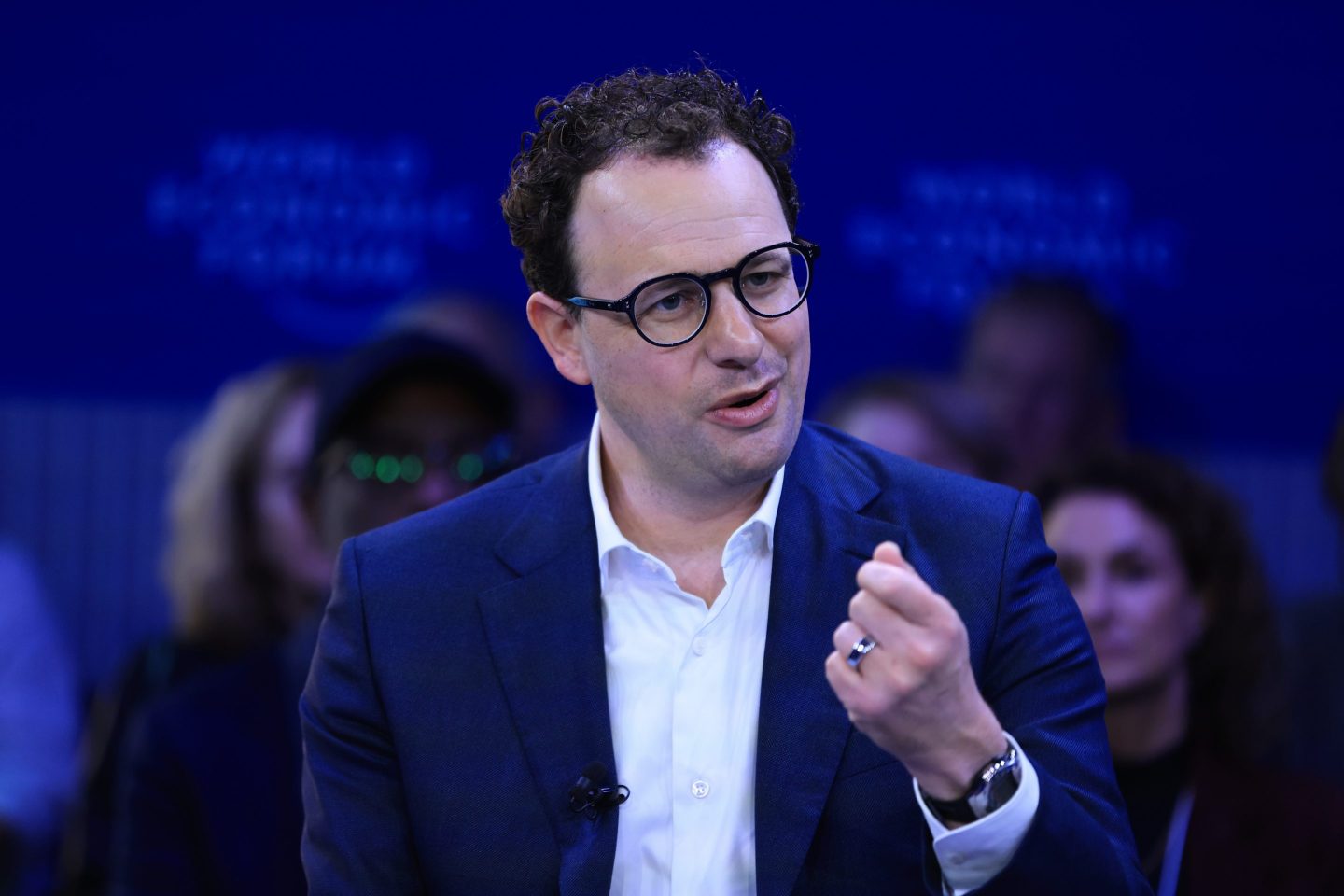
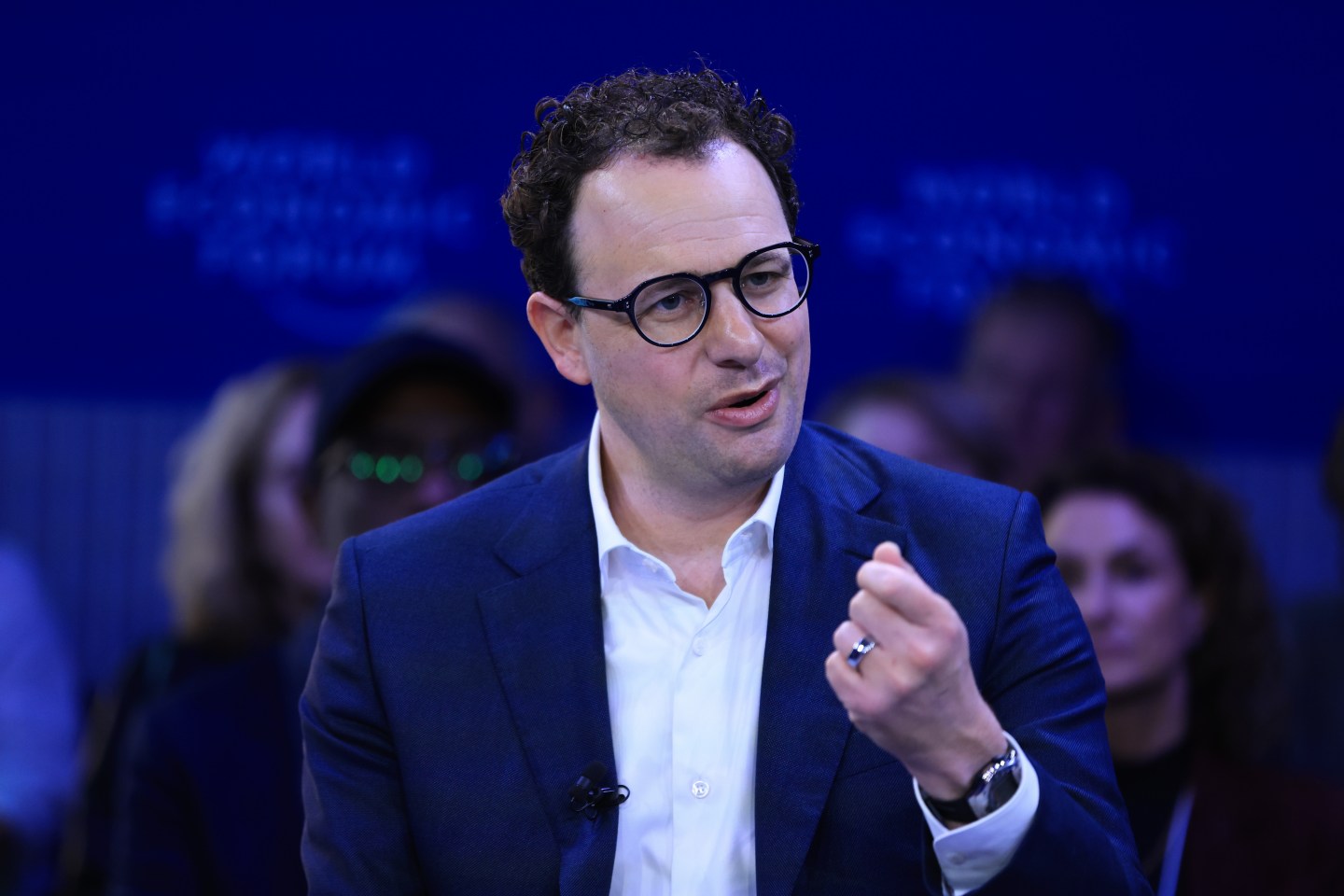
Anthropic CEO Dario Amodei
Anthropic CEO Dario Amodei at the World Economic Forum meeting in Davos, Switzerland, last week. Yesterday, Amodei published a 20,000-word warning about AI’s imminent risks. Chris Ratcliffe—Bloomberg/Getty Images

Dario Amodei, CEO of AI company Anthropic, dropped a 20,000 word essay on Monday called “The Adolescence of Technology,” in which he warned that AI was about to “test who we are as a species” and that “humanity is about to be handed almost unimaginable power, and it is deeply unclear whether our social, political, and technological systems possess the maturity to wield it.”

The essay, which was published on Amodei’s personal blog, has generated a tremendous amount of buzz on social media. But it is worth pointing out what is and isn’t new here.

Amodei has been concerned about the catastrophic risks of AI for years. He has warned about the risks of AI helping people develop bioweapons or chemical weapons. He has warned about powerful AI escaping human control. He has warned about potential widespread job losses as AI becomes more capable and is adopted by more industries. And he has warned about the dangers of concentrated power and wealth as AI adoption grows.

In his latest essay, Amodei reiterates all of these concerns—although sometimes in starker language and sometimes with shorter timelines for when he believes these risks will materialize. Headlines about his essay have, somewhat understandably, focused on Amodei’s blunt delineation of AI risks.

Among AI companies, Anthropic is known for having perhaps the greatest focus on AI safety—a focus that it has found has actually helped it gain commercial traction among big companies, as Fortune detailed in its January cover story on Amodei’s company. This is because many of the steps Anthropic has taken to make sure its models don’t pose catastrophic risks to humanity have also made these models more reliable and controllable—features that most businesses value.

So in many ways, Amodei’s essay is as much a novella-length marketing message, as it is an impassioned prophecy and call to action.

Which is not to say that Amodei is being insincere. It is merely to point out that his essay works on multiple levels, and that what he thinks is needed to secure humanity’s future as AI advances also aligns well with Anthropic’s existing brand positioning in the market. It is telling, for example, the number of times Amodei mentions the “constitution” it has developed for its AI model Claude as an important factor mitigating various risks—from bioterrorism to the risk that the model will escape human control. This constitution, which Anthropic just updated, is one thing that differentiates Anthropic’s AI models from those offered by its competitors, such as OpenAI, Google, Meta, and Elon Musk’s xAI.

Recommended Video

More newsworthy than some of the risks Amodei points to in the essay are the specific remedies he calls for. He says, for instance, that wealthy individuals have an obligation to help society cope with the potential economic effects AI may have, including helping those who may lose their livelihoods to AI. He says that all of Anthropic’s cofounders have committed to donating 80% of their wealth to philanthropy. He also says that Anthropic’s employees have individually pledged billions of dollars of Anthropic shares to charities, and that Anthropic is matching those donations.

He criticizes others in Silicon Valley for not doing likewise, saying “it is sad to me that many wealthy individuals (especially in the tech industry) have recently adopted a cynical and nihilistic attitude that philanthropy is inevitably fraudulent or useless.”

Amodei says that AI companies, such as his own, should work with enterprise customers to steer them toward AI deployments that derive value from new business lines and revenue growth, not merely through labor savings. “Enterprises often have a choice between ‘cost savings’ (doing the same thing with fewer people) and ‘innovation’ (doing more with the same number of people),” Amodei writes. “The market will inevitably produce both eventually, and any competitive AI company will have to serve some of both, but there may be some room to steer companies towards innovation when possible, and it may buy us some time. Anthropic is actively thinking about this.”

He also says that businesses have an obligation to be creative about how to reassign employees whose existing jobs are being disrupted by AI, rather than simply firing them. He broaches the idea that “in the long term, in a world with enormous total wealth, in which many companies increase greatly in value due to increased productivity and capital concentration, it may be feasible to pay human employees even long after they are no longer providing economic value in the traditional sense.” And he says that Anthropic is considering several “possible pathways” for its own employees that it will share publicly in the future.

Finally, Amodei calls for government intervention to redistribute wealth. He says the most obvious way to do this would be with a progressive tax system, one that could be general or targeted specifically at the outsize profits he thinks AI companies will soon be making. (Of course, currently, Anthropic and most other companies focused only on building AI models are hugely unprofitable. But Anthropic told its investors last year that it was on track to break even by the end of 2028.)

To those wealthy interests who would oppose such a tax, Amodei says he has a “pragmatic argument to the world’s billionaires that it’s in their interest to support a good version of [the tax]: If they don’t support a good version, they’ll inevitably get a bad version designed by a mob.”

Headlines about Amodei’s essay have inevitably focused on his prediction that 50% of entry-level white-collar jobs will be eliminated within one to five years. Amodei made the same prediction onstage at the World Economic Forum meeting in Davos last week, but his remarks were eclipsed by much of the coverage of U.S. President Donald Trump’s speech at the conference.

Amodei also writes in his essay that AI as capable as all humans will arrive within the next two years, which may be his most explicit prediction yet of when this major milestone in the history of both computers and humans will occur. (Amodei says that it will take a while for this human-level AI capability to diffuse throughout society, which is why he thinks it will displace only 50% of entry-level knowledge workers within five years.)

The science-fiction writer William Gibson famously quipped that “the future is already here, it is just not evenly distributed.” And it is worth noting that in the past Amodei has not always been entirely prescient about AI’s impacts, even though he’s been largely accurate in predicting the arrival of certain AI capabilities.

For instance, early last year, Amodei said that within six to nine months, AI would be writing up to 90% of software code. Well, it turned out that this was largely true in the case of Anthropic itself—the company recently said its Claude Cowork tool was almost completely written by Claude itself—but not accurate for code overall. In most other businesses, the amount of code written by AI has been about 20% to 40%—but that figure is increasing and is up from basically 0% just three years ago. So Amodei may not be an infallible seer, but he is worth paying attention to. 

Join us at the Fortune Workplace Innovation Summit May 19–20, 2026, in Atlanta. The next era of workplace innovation is here—and the old playbook is being rewritten. At this exclusive, high-energy event, the world’s most innovative leaders will convene to explore how AI, humanity, and strategy converge to redefine, again, the future of work. Register now.
About the Author
Jeremy Kahn
By Jeremy KahnEditor, AI
LinkedIn iconTwitter icon

Jeremy Kahn is the AI editor at Fortune, spearheading the publication's coverage of artificial intelligence. He also co-authors Eye on AI, Fortune’s flagship AI newsletter.

See full bioRight Arrow Button Icon

Latest in AI

Finance
Lorem ipsum dolor sit amet, consectetur adipiscing elit, sed do eiusmod tempor incididunt ut labore et dolore magna aliqua. Ut enim ad minim veniam
By Fortune Editors
October 20, 2025
Finance
Lorem ipsum dolor sit amet, consectetur adipiscing elit, sed do eiusmod tempor incididunt ut labore et dolore magna aliqua. Ut enim ad minim veniam
By Fortune Editors
October 20, 2025
Finance
Lorem ipsum dolor sit amet, consectetur adipiscing elit, sed do eiusmod tempor incididunt ut labore et dolore magna aliqua. Ut enim ad minim veniam
By Fortune Editors
October 20, 2025
Finance
Lorem ipsum dolor sit amet, consectetur adipiscing elit, sed do eiusmod tempor incididunt ut labore et dolore magna aliqua. Ut enim ad minim veniam
By Fortune Editors
October 20, 2025
Finance
Lorem ipsum dolor sit amet, consectetur adipiscing elit, sed do eiusmod tempor incididunt ut labore et dolore magna aliqua. Ut enim ad minim veniam
By Fortune Editors
October 20, 2025
Finance
Lorem ipsum dolor sit amet, consectetur adipiscing elit, sed do eiusmod tempor incididunt ut labore et dolore magna aliqua. Ut enim ad minim veniam
By Fortune Editors
October 20, 2025

Most Popular

Finance
Lorem ipsum dolor sit amet, consectetur adipiscing elit, sed do eiusmod tempor incididunt ut labore et dolore magna aliqua. Ut enim ad minim veniam
By Fortune Editors
October 20, 2025
Finance
Lorem ipsum dolor sit amet, consectetur adipiscing elit, sed do eiusmod tempor incididunt ut labore et dolore magna aliqua. Ut enim ad minim veniam
By Fortune Editors
October 20, 2025
Finance
Lorem ipsum dolor sit amet, consectetur adipiscing elit, sed do eiusmod tempor incididunt ut labore et dolore magna aliqua. Ut enim ad minim veniam
By Fortune Editors
October 20, 2025
Finance
Lorem ipsum dolor sit amet, consectetur adipiscing elit, sed do eiusmod tempor incididunt ut labore et dolore magna aliqua. Ut enim ad minim veniam
By Fortune Editors
October 20, 2025
Finance
Lorem ipsum dolor sit amet, consectetur adipiscing elit, sed do eiusmod tempor incididunt ut labore et dolore magna aliqua. Ut enim ad minim veniam
By Fortune Editors
October 20, 2025
Finance
Lorem ipsum dolor sit amet, consectetur adipiscing elit, sed do eiusmod tempor incididunt ut labore et dolore magna aliqua. Ut enim ad minim veniam
By Fortune Editors
October 20, 2025
Rankings
  • 100 Best Companies
  • Fortune 500
  • Global 500
  • Fortune 500 Europe
  • Most Powerful Women
  • Future 50
  • World’s Most Admired Companies
  • See All Rankings
Sections
  • Finance
  • Leadership
  • Success
  • Tech
  • Asia
  • Europe
  • Environment
  • Fortune Crypto
  • Health
  • Retail
  • Lifestyle
  • Politics
  • Newsletters
  • Magazine
  • Features
  • Commentary
  • Mpw
  • CEO Initiative
  • Conferences
  • Personal Finance
  • Education
Customer Support
  • Frequently Asked Questions
  • Customer Service Portal
  • Privacy Policy
  • Terms Of Use
  • Single Issues For Purchase
  • International Print
Commercial Services
  • Advertising
  • Fortune Brand Studio
  • Fortune Analytics
  • Fortune Conferences
  • Business Development
About Us
  • About Us
  • Editorial Calendar
  • Press Center
  • Work At Fortune
  • Diversity And Inclusion
  • Terms And Conditions
  • Site Map
  • Facebook icon
  • Twitter icon
  • LinkedIn icon
  • Instagram icon
  • Pinterest icon

Most Popular

placeholder alt text
Success
Despite running $75 billion automaker General Motors, CEO Mary Barra still responds to ‘every single letter’ she gets by hand
By Preston ForeJanuary 26, 2026
1 day ago
placeholder alt text
Commentary
Yes, you're getting a bigger tax refund. Your kids won't thank you for the $3 trillion it's adding to the deficit
By Daniel BunnJanuary 26, 2026
1 day ago
placeholder alt text
Economy
An unusual Fed ‘rate check’ triggered a free fall in the U.S. dollar and investors are fleeing into gold
By Jim EdwardsJanuary 26, 2026
1 day ago
placeholder alt text
Personal Finance
Current price of silver as of Monday, January 26, 2026
By Joseph HostetlerJanuary 26, 2026
1 day ago
placeholder alt text
Success
'The Bermuda Triangle of Talent': 27-year-old Oxford grad turned down McKinsey and Morgan Stanley to find out why Gen Z’s smartest keep selling out
By Eva RoytburgJanuary 25, 2026
2 days ago
placeholder alt text
Personal Finance
Sweden abolished its wealth tax 20 years ago. Then it became a 'paradise for the super-rich'
By Miranda Sheild Johansson and The ConversationJanuary 22, 2026
5 days ago

© 2026 Fortune Media IP Limited. All Rights Reserved. Use of this site constitutes acceptance of our Terms of Use and Privacy Policy | CA Notice at Collection and Privacy Notice | Do Not Sell/Share My Personal Information
FORTUNE is a trademark of Fortune Media IP Limited, registered in the U.S. and other countries. FORTUNE may receive compensation for some links to products and services on this website. Offers may be subject to change without notice.


Latest in AI

Anthropic CEO Dario Amodei
AIEye on AI
At Davos, CEOs said AI isn’t coming for jobs as fast as Anthropic CEO Dario Amodei thinks
By Jeremy KahnJanuary 27, 2026
57 minutes ago
Corning CEO Wendell Weeks.
AIData centers
A Meta deal just turned this 175-year-old company into a linchpin of the AI data center boom
By Sharon GoldmanJanuary 27, 2026
2 hours ago
Anthropic CEO Dario Amodei
AIDario Amodei
Anthropic CEO Dario Amodei’s 20,000-word essay on how AI ‘will test’ humanity is a must-read—but more for his remedies than his warnings
By Jeremy KahnJanuary 27, 2026
4 hours ago
trump
CybersecuritySocial Media
The White House vows ‘the memes will continue,’ but misinformation experts say please, make it stop
By Kaitlyn Huamani and The Associated PressJanuary 27, 2026
4 hours ago
AITech
‘Country of geniuses in a data center’: Every AI cluster will have the brainpower of 50 million Nobel Prize winners, Anthropic CEO says
By Marco Quiroz-GutierrezJanuary 27, 2026
5 hours ago
Photo of Dario Amodei
SuccessWealth
Anthropic’s billionaire cofounders are giving away 80% of their wealth: ‘The thing to worry about is a level of wealth concentration that will break society’
By Preston ForeJanuary 27, 2026
6 hours ago