• Home
  • Latest
  • Fortune 500
  • Finance
  • Tech
  • Leadership
  • Lifestyle
  • Rankings
  • Multimedia
North AmericaAnimals

For 15 years, a neuroscientist has studied raccoon intelligence in Central Virginia. Then a drunk one passed out in a nearby liquor store

By
Kelly Lambert
Kelly Lambert
and
The Conversation
The Conversation
Down Arrow Button Icon
By
Kelly Lambert
Kelly Lambert
and
The Conversation
The Conversation
Down Arrow Button Icon
January 16, 2026, 2:06 PM ET
raccoon
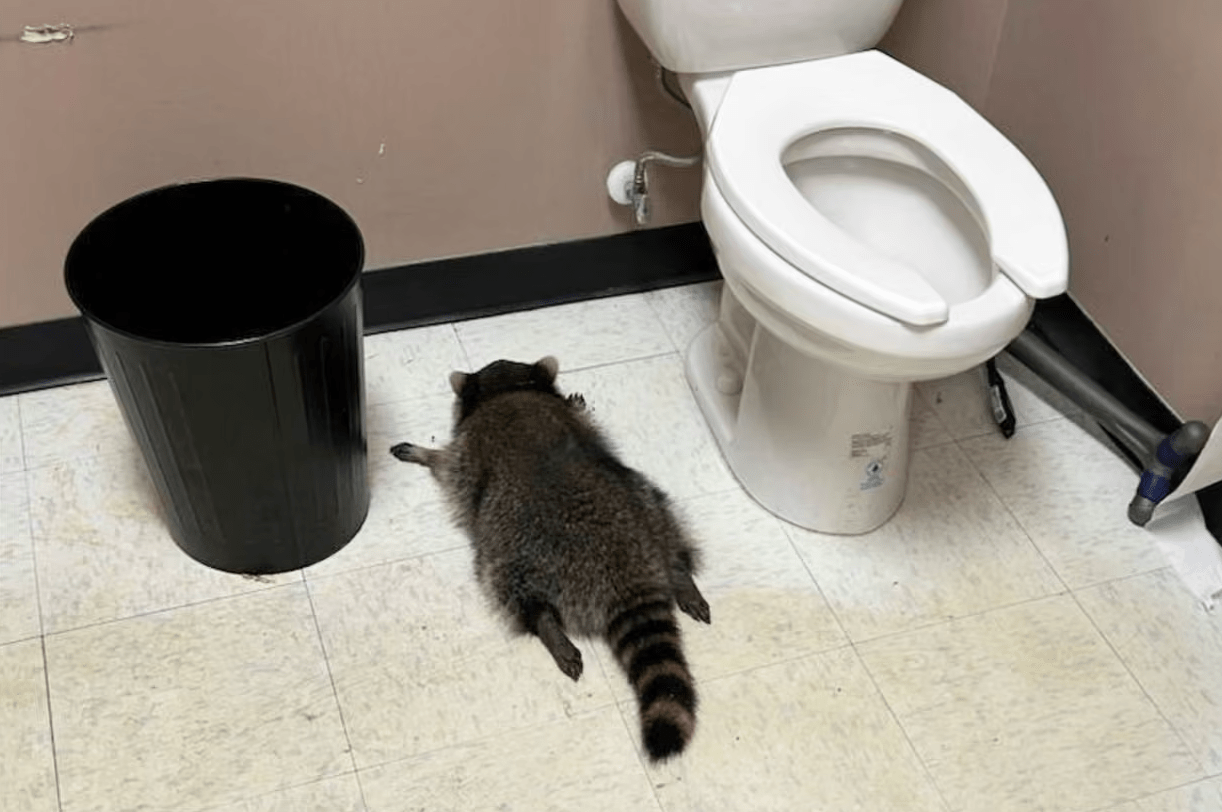
The viral blacked-out raccoon in Ashland, Virginia.Associated Press

When a curious raccoon broke into an Ashland, Virginia, liquor store in December 2025, sampled the stock and passed out on the bathroom floor, the story went viral within minutes. The local animal shelter’s Facebook post was picked up by national and international outlets and quickly inspired raccoon-themed cocktails, “trashed panda” merchandise and even a cameo on “Saturday Night Live.”

Recommended Video

For me, the story hit close to home. The store that hosted this inebriated bandit sits just blocks from the small behavioral neuroscience laboratory where I began investigating raccoon brains about 15 years ago. Although the so-called drunken raccoon made questionable decisions after breaking into the liquor store, the species – Procyon lotor – is known for its impressive intelligence, curiosity and problem-solving skills.

Despite being one of the most intriguing mammals living alongside humans, raccoons have avoided the scientific spotlight. Why aren’t more neuroscientists and psychologists studying raccoons? What have researchers missed about the mammalian brain by focusing on rodents instead?

Why raccoons aren’t lab staples

In the U.S., it is estimated that laboratories use more than 100 million rodents, including mice and rats, each year. Rodents are ideal for research because they reproduce easily and adapt well to confinement. Scientists have tailored extensive research tools to study them. Long before rats dominated psychology labs, raccoons were actually a leading candidate for animal models of problem-solving and intelligence.

That ended when scientists realized they’d met their cognitive match. In one study, researchers reported that all raccoon participants escaped through the laboratory ventilation system.

Unsurprisingly, scientists promptly shifted to rodents. Practicality – not scientific suitability – ultimately crowned the rat as king of the laboratory. I have studied rats for decades, and I can confirm that none have ever disappeared into the ceiling.

Neither pet nor pest

Humans have an ambivalent relationship with raccoons. They appear too wild to be domesticated, too endearing to be treated purely as pests and too ubiquitous to be considered exotic wildlife. Even President Calvin Coolidge, who famously received a raccoon intended for the dinner table from a supporter in Mississippi, ended up keeping it as a beloved White House pet.

And the role confusion continues today with glimpses of humanlike behaviors in raccoons as they enter our living spaces. One report described raccoons interacting with playground equipment at a child care center on Canada’s west coast in ways similar to human children, and even breaking into classrooms as if they were auditing the morning lesson.

Raccoon climbing a metal ladder
Raccoons know how to get around. RLO’Leary/Moment Open

Inspired by Montessori education principles, I visited a raccoon rehabilitation center in Saskatoon, Canada, called Bandit Ranch Rehab a few years ago. After introducing young raccoons to slinkies, puzzles and blocks, I sat in awe as they interacted with these objects with the focused enthusiasm of preschoolers on a mission.

This interspecies confusion seems to be mutual. Recent evidence suggests that urban raccoons are becoming increasingly tolerant of humans, especially when it suits them. But they are quick to leave when curiosity or opportunity calls.

Raccoon imagination

The drunken Ashland raccoon captured global attention because it fit the narrative people have projected onto the species: mischievous, opportunistic, clever and more than a little humanlike. But their sophisticated brains and mental capacities, aligning more with primates than other mammals, are even more intriguing.

Early behavioral research suggested that raccoons can learn a task, walk away and later return to solve it accurately – as if having mentally rehearsed the solution. In contrast, other species, including dogs and rats, needed to maintain continuous focus. Scientists have speculated that raccoons have mental imagery capabilities similar to humans.

Person kneeling on ground holding notebook, while a raccoon stands on its hind legs to also look at the notebook
Raccoons had some notes for the author’s student, too. Kelly Lambert, CC BY-NC-SA

When a rogue raccoon scaled a 25-story skyscraper in Minneapolis several years ago, I couldn’t help but wonder what that animal was anticipating at the top. Do raccoons form internal representations of future outcomes? And if so, how much agency and foresight do they bring to their decisions?

To answer these questions, I have collaborated with wildlife biologists, veterinarians and neuroscientists around the country to study what may be one of the most underestimated and understudied brains in the animal kingdom.

What’s going on inside the raccoon brain?

Working with neuroscientist Suzana Herculano-Houzel, my laboratory at the University of Richmond has found that raccoons pack an astonishing number of neurons – an amount comparable to primates – into their brains. Scaled up to size, a raccoon brain would contain roughly the same number of neurons as a human brain.

We also found that raccoons possess specialized fast-conducting brain cells known as von Economo neurons, which are also found in humans, other great apes and a few additional large-brained mammals. In apes, these neurons appear in both the insula – a part of the brain important for processing internal body states – and the anterior cingulate, which plays a key role in emotional regulation. In raccoons, these neurons are present only in the insula and not in the anterior cingulate.

This neural arrangement may help explain the species’ striking combination of clever problem-solving and rapid decision-making during exploration – frequently leading to risky behaviors that can have unfortunate consequences. These findings raise the possibility that raccoon neuroscience could offer useful insights into the neural foundations of impulse control and distracted attention.

Two sets of raccoon paws held in a human hand
The dexterity of raccoon hands enables their humanlike escapades. Zocha_K/iStock via Getty Images Plus

In collaboration with ecologist Sara Benson-Abram’s research team, we also found that raccoons with more sophisticated cognitive abilities had more neural cells in the hippocampus, reinforcing the idea that their learning and memory capacities map onto similar brain systems as those in people. Taxi drivers in London, who frequently use their knowledge of the 25,000 streets in London, also have a larger hippocampal area.

In addition to their impressive brains, raccoons’ dexterous hands play a key role in their cognitively creative escapades. Indeed, researchers have found that raccoon forepaws are mapped onto their cerebral cortex – the outer layer of the brain – in a similar manner as human hands. Both take up a lot of real estate in the brain. As journalist Carl Zimmer wrote, “The hand is where the mind meets the world.”

What raccoons can teach us about the human brain

As I argue in my upcoming book “Wild Brains,” understanding raccoon intelligence requires observing them in the environments they choose – not confining them to the small, simple spaces that suit rats and mice. So-called living laboratories that monitor wildlife without restricting their behavior may be scientists’ best chance at unlocking the secrets of this species’ remarkable mind.

In my graduate training, I was taught to avoid anthropomorphizing animal research subjects – to resist the temptation to project human thoughts and emotions onto nonhuman minds, because human brains likely contribute to uniquely human cognitive and emotional experiences. But primatologist Frans de Waal later introduced the useful counterpoint of anthropodenial: the mistaken assumption that animals cannot share emotional or cognitive capacities with humans simply because they are not human.

The drunken Ashland raccoon captured global attention not just because the story was funny, but because it felt familiar. People recognized something of themselves in this curious, impulsive, problem-solving animal navigating a very human environment. A willingness to lean away from anthropodenial – while remaining grounded in rigorous science – may open new paths for understanding raccoon intelligence and, ultimately, the wonderfully complex human brain.

Kelly Lambert, Professor of Behavioral Neuroscience, University of Richmond

This article is republished from The Conversation under a Creative Commons license. Read the original article.

The Conversation
The Fortune 500 Innovation Forum will convene Fortune 500 executives, U.S. policy officials, top founders, and thought leaders to help define what’s next for the American economy, Nov. 16-17 in Detroit. Apply here.
About the Authors
By Kelly Lambert
See full bioRight Arrow Button Icon
By The Conversation
See full bioRight Arrow Button Icon

Latest in North America

Finance
Lorem ipsum dolor sit amet, consectetur adipiscing elit, sed do eiusmod tempor incididunt ut labore et dolore magna aliqua. Ut enim ad minim veniam
By Fortune Editors
October 20, 2025
Finance
Lorem ipsum dolor sit amet, consectetur adipiscing elit, sed do eiusmod tempor incididunt ut labore et dolore magna aliqua. Ut enim ad minim veniam
By Fortune Editors
October 20, 2025
Finance
Lorem ipsum dolor sit amet, consectetur adipiscing elit, sed do eiusmod tempor incididunt ut labore et dolore magna aliqua. Ut enim ad minim veniam
By Fortune Editors
October 20, 2025
Finance
Lorem ipsum dolor sit amet, consectetur adipiscing elit, sed do eiusmod tempor incididunt ut labore et dolore magna aliqua. Ut enim ad minim veniam
By Fortune Editors
October 20, 2025
Finance
Lorem ipsum dolor sit amet, consectetur adipiscing elit, sed do eiusmod tempor incididunt ut labore et dolore magna aliqua. Ut enim ad minim veniam
By Fortune Editors
October 20, 2025
Finance
Lorem ipsum dolor sit amet, consectetur adipiscing elit, sed do eiusmod tempor incididunt ut labore et dolore magna aliqua. Ut enim ad minim veniam
By Fortune Editors
October 20, 2025

Most Popular

Finance
Lorem ipsum dolor sit amet, consectetur adipiscing elit, sed do eiusmod tempor incididunt ut labore et dolore magna aliqua. Ut enim ad minim veniam
By Fortune Editors
October 20, 2025
Finance
Lorem ipsum dolor sit amet, consectetur adipiscing elit, sed do eiusmod tempor incididunt ut labore et dolore magna aliqua. Ut enim ad minim veniam
By Fortune Editors
October 20, 2025
Finance
Lorem ipsum dolor sit amet, consectetur adipiscing elit, sed do eiusmod tempor incididunt ut labore et dolore magna aliqua. Ut enim ad minim veniam
By Fortune Editors
October 20, 2025
Finance
Lorem ipsum dolor sit amet, consectetur adipiscing elit, sed do eiusmod tempor incididunt ut labore et dolore magna aliqua. Ut enim ad minim veniam
By Fortune Editors
October 20, 2025
Finance
Lorem ipsum dolor sit amet, consectetur adipiscing elit, sed do eiusmod tempor incididunt ut labore et dolore magna aliqua. Ut enim ad minim veniam
By Fortune Editors
October 20, 2025
Finance
Lorem ipsum dolor sit amet, consectetur adipiscing elit, sed do eiusmod tempor incididunt ut labore et dolore magna aliqua. Ut enim ad minim veniam
By Fortune Editors
October 20, 2025
Fortune Secondary Logo
Rankings
  • 100 Best Companies
  • Fortune 500
  • Global 500
  • Fortune 500 Europe
  • Most Powerful Women
  • World's Most Admired Companies
  • See All Rankings
  • Lists Calendar
Sections
  • Finance
  • Fortune Crypto
  • Features
  • Leadership
  • Health
  • Commentary
  • Success
  • Retail
  • Mpw
  • Tech
  • Lifestyle
  • CEO Initiative
  • Asia
  • Politics
  • Conferences
  • Europe
  • Newsletters
  • Personal Finance
  • Environment
  • Magazine
  • Education
Customer Support
  • Frequently Asked Questions
  • Customer Service Portal
  • Privacy Policy
  • Terms Of Use
  • Single Issues For Purchase
  • International Print
Commercial Services
  • Advertising
  • Fortune Brand Studio
  • Fortune Analytics
  • Fortune Conferences
  • Business Development
  • Group Subscriptions
About Us
  • About Us
  • Press Center
  • Work At Fortune
  • Terms And Conditions
  • Site Map
  • About Us
  • Press Center
  • Work At Fortune
  • Terms And Conditions
  • Site Map
  • Facebook icon
  • Twitter icon
  • LinkedIn icon
  • Instagram icon
  • Pinterest icon

Latest in North America

You’re probably safe from the Hantavirus outbreak, but here’s what you absolutely must not do, experts say
PoliticsCoronavirus
You’re probably safe from the Hantavirus outbreak, but here’s what you absolutely must not do, experts say
By Catherina GioinoMay 8, 2026
14 hours ago
Man driving and looking shocked.
Economygas prices
Driving less, canceling vacations, and tightening budgets: All the ways Americans are coping with soaring gas prices
By Tristan BoveMay 8, 2026
16 hours ago
Airfare is up 15%, gas is past $4, and SAP Concur data shows business travel is quietly breaking
Travel & Leisuregas prices
Airfare is up 15%, gas is past $4, and SAP Concur data shows business travel is quietly breaking
By Catherina GioinoMay 8, 2026
18 hours ago
Tired hispanic man in a professional suit feeling sad while waiting for the appointment of a job interview at a recruitment office
EconomyJobs
The job market is healing for everyone—except in the office
By Eva RoytburgMay 8, 2026
20 hours ago
eisenhower office
PoliticsDonald Trump
Trump wants to repaint a historic landmark. Preservationists say it will destroy it—and cost taxpayers $7.5m
By The Associated Press and Darlene SupervilleMay 8, 2026
21 hours ago
UFOs
North AmericaPentagon
Pentagon begins releasing new files on UFOs, telling public to draw their own conclusions
By Collin Binkley, Seung Min Kim and The Associated PressMay 8, 2026
22 hours ago

Most Popular

California farmers must destroy 420,000 peach trees after Del Monte closes its canneries and cancels more than $550 million in long-term contracts
North America
California farmers must destroy 420,000 peach trees after Del Monte closes its canneries and cancels more than $550 million in long-term contracts
By Sasha RogelbergMay 7, 2026
2 days ago
'Blue dot fever' plagues musicians like Post Malone, Meghan Trainor, and Zayn as a growing list of artists cancel tours due to lagging ticket sales
Arts & Entertainment
'Blue dot fever' plagues musicians like Post Malone, Meghan Trainor, and Zayn as a growing list of artists cancel tours due to lagging ticket sales
By Dave Lozo and Morning BrewMay 7, 2026
2 days ago
A Michigan farm town voted down plans for a giant OpenAI-Oracle data center. Weeks later, construction began
Magazine
A Michigan farm town voted down plans for a giant OpenAI-Oracle data center. Weeks later, construction began
By Sharon GoldmanMay 6, 2026
3 days ago
Current price of oil as of May 8, 2026
Personal Finance
Current price of oil as of May 8, 2026
By Joseph HostetlerMay 8, 2026
22 hours ago
U.S. Treasury will have to borrow $2 trillion this year just to continue functioning—more than $166 billion every month
Economy
U.S. Treasury will have to borrow $2 trillion this year just to continue functioning—more than $166 billion every month
By Eleanor PringleMay 7, 2026
2 days ago
Airbnb CEO Brian Chesky warns two types of people won’t survive the AI era: ‘pure people managers’ and workers who resist change
Success
Airbnb CEO Brian Chesky warns two types of people won’t survive the AI era: ‘pure people managers’ and workers who resist change
By Emma BurleighMay 7, 2026
2 days ago

© 2026 Fortune Media IP Limited. All Rights Reserved. Use of this site constitutes acceptance of our Terms of Use and Privacy Policy | CA Notice at Collection and Privacy Notice | Do Not Sell/Share My Personal Information
FORTUNE is a trademark of Fortune Media IP Limited, registered in the U.S. and other countries. FORTUNE may receive compensation for some links to products and services on this website. Offers may be subject to change without notice.