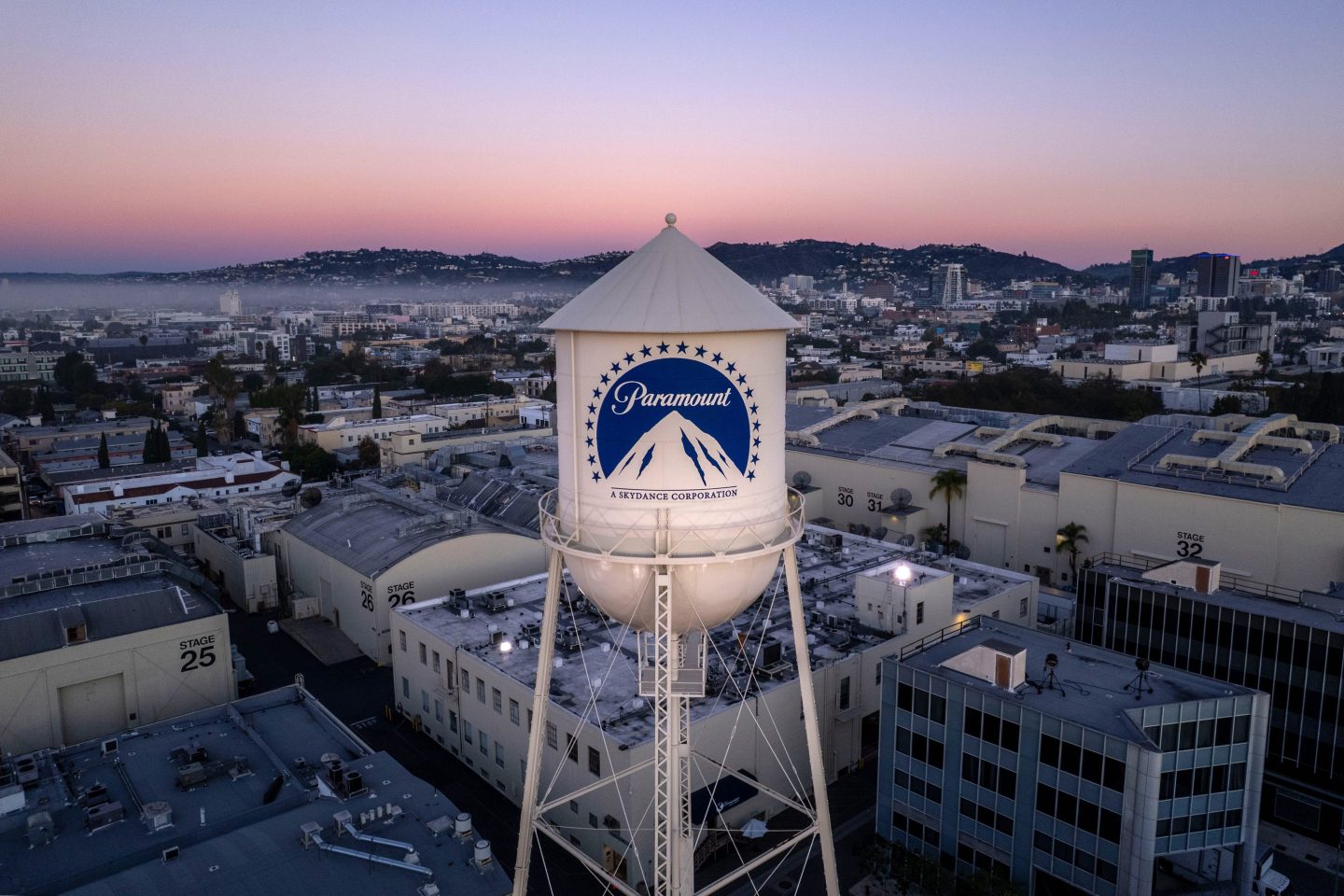
Eight strikes and Paramount’s out. Wait—isn’t it supposed to be three strikes? Paramount CEO David Ellison apparently did not get the memo. Ellison received official word last week that his company’s takeover bid for Warner Bros. Discovery had been rejected for the eighth time—and it won’t be trying a ninth time, as Ellison has just filed suit against WBD in Delaware, seeking greater financial disclosure around its preference for Netflix’s bid.
It is becoming difficult not to wonder whether Ellison really should have called it quits after the third offer back in October—his last unsolicited, bungled bid before Warner CEO David Zaslav launched a bidding process for the storied studio company.
Since Zaslav put Warner up for sale, Paramount has continued to submit what it claims is not its “best and final offer,” despite multiple requests by Warner’s board to do exactly that. Getting a good deal is one thing, but continuously presenting a second-best offer diminishes credibility, not only with the target company but also with Wall Street. More importantly, as Netflix and Warner advance with the merger that resulted from Zaslav’s auction process, the delay makes it all the more costly and operationally difficult for Zaslav to renege on his binding agreement.
Heads, I win. Tails, you lose
While Paramount is reportedly becoming frustrated with the process, many expect another attempt from Ellison, as rumors swirl that Zaslav could be persuaded by an offer of $34 per share—an increase of about $10 billion—up from its current $30-per-share offer. But therein lies the challenge for Paramount and reflects Netflix’s adept strategic maneuvering. Netflix Co-CEOs Ted Sarandos and Greg Peters have positioned the streaming giant in a heads-I-win, tails-you-lose scenario, no matter the outcome of the Warner bidding war.
Say Paramount ultimately loses: then Netflix has acquired a highly decorated legacy studio, along with some of the best creative talent in the industry, to augment its impressive but relatively nascent studio operations, especially in films, where the streamer has yet to win an Academy Award for Best Picture. Sarandos and Peters would gain access to one of the most in-demand content libraries from HBO and Warner Bros., including The Sopranos, The Wire, Succession, The White Lotus, the Harry Potter franchise, DC Universe content, Studio Ghibli films, and A24 movies, and further fuel it with the billions in cash flow being generated annually.
Paramount would be left searching for a second-best target as it struggles under an asset base weakened by myriad complex issues. What the leadership of CBS News, under Editor-in-Chief Bari Weiss, seems to be most capable of producing is a steady stream of questionable decisions, controversies, and gaffes. Most consequential has been the undercurrent of political bias aimed at pleasing President Trump, for the long-term benefit of David Ellison’s father, Oracle Founder Larry Ellison, who maintains a close relationship with the president. The losses of CBS News and Stations President Wendy McMahon and longtime 60 Minutes Executive Producer Bill Owens, both of whom resigned over disagreements with the Trump lawsuit settlement, were felt across the organization. The latest hiccup in the newsroom stemmed from the new anchor of CBS Evening News framing the January 6, 2021, insurrection as a partisan squabble.
Streaming, too, has suffered from the planned departure of Taylor Sheridan, whose content has underpinned Paramount+ with hits such as Yellowstone, Landman, 1923, and Tulsa King. Paramount Pictures Studios has seen many Oscar nominations, but few have translated into top-category wins. The future looks complicated after recent layoffs saw the departure of key executives overseeing creative relationships.
The other side of the coin toss would see Paramount outbid Netflix for Warner. Never mind speculation on the winning share price for now; at even $30 per share, this would burden the newly formed media giant with nearly $55 billion in new debt—and $90 billion in total debt, far exceeding anything Paramount has ever managed. Already impeded by a junk credit rating and just cash flow positive, Paramount would struggle as a combined entity under a leverage ratio that would resemble the significant debt burden that Warner Bros. assumed after merging with Discovery in 2022—effectively releveraging Warner right after it substantially paid down debt during the course of three years of difficult austerity.
Paired with Ellison’s apparent plan to leverage intellectual property as the primary value driver, rather than investing in big-budget original content, the signals point to yet another historic production house at risk of decimation under the guise of financial engineering. As one industry source told the Hollywood Reporter, “They [Paramount] have no interest in anything but down-the-middle IP. It’s all about commerciality.” But that “down-the-middle IP” is not even viewed “as being comparable to Disney’s or [Warner’s],” according to TD Cowen analyst Doug Creutz. Investments in tired, overdone hits, such as Transformers, Star Trek, and World War Z, will yield fatigued returns.
Ellison emphasized his plan to invest in “high-quality storytelling and cutting-edge technology” in an open letter outlining his strategic vision. But at what cost if talent and assets are not managed appropriately? Paramount’s most valuable creative asset, Taylor Sheridan, quickly announced his exit after the Skydance merger was complete, citing strained relationships with the new leadership, a desire for more creative control, and disputes over projects. Another self-inflicted loss came from a decision widely viewed as political appeasement of the Trump administration, when Paramount cancelled Stephen Colbert’s The Late Show, despite it being the number one late-night show year after year. The show went on to win its first Emmy for Outstanding Talk Series in September after the cancellation announcement. Layer on at least a $108 billion debt-financed hostile takeover of Warner, and two iconic studios would be left focused solely on paying down debt, unable to significantly invest in content creation for years.
Hollywood history is a trail littered with cautionary tales
Buying a movie studio is hardly buying secure, hard assets. The importance of the backlot sets, sound stages, and even the rapidly depreciating film libraries is overstated. The talent and partnerships are the genuine but highly perishable assets due to personnel flight from poor management and a poor reputation.
There are many examples of cautionary takeover tales, such as the collapse of RKO, one of the most successful, creative mega-studios, after its 1948 purchase by eccentric aviation industrialist Howard Hughes, followed by its flip to General Tire ownership in 1955. The studio boasted hits from Hollywood’s Golden Age, classic films such as Citizen Kane, King Kong, Bringing Up Baby, and musicals with Fred Astaire and Ginger Rogers, such as Top Hat, alongside classics like It’s a Wonderful Life, Notorious, The Magnificent Ambersons, and even Walt Disney’s early animated features. RKO was also celebrated for its rich array of production styles, from noir to musicals, starring legends including Katharine Hepburn, Cary Grant, and Robert Mitchum. Hughes alienated the top stars quickly and fired three-quarters of the staff. Under General Tire, production and distribution were shut down within just two years of the purchase. Its renowned directors, from Cecil B. DeMille and David O. Selznick to George Kukor, fled to competitors.
Similarly, Kirk Kerkorian’s decades-long dismantling of MGM during the 1970s and ’80s offers a classic lesson in content economics. Kerkorian liquidated the studio’s production infrastructure, fired half the staff, closed distribution offices, and sold the legendary pre-1986 library to Ted Turner. A hollow MGM brand was left with no capacity to generate new content. Turner’s library acquisition proved enormously valuable for programming on TNT and Turner Classic Movies (which Sarandos reportedly covets as part of the current Warner deal). MGM became nearly worthless once Kerkorian severed relationships with directors, producers, and the kind of creative talent that distinguishes a living studio from a static archive. Kerkorian came to discover that content libraries, no matter how storied, function as a depreciating asset. Without production partnerships, operational capabilities, and free cash flow to replenish it, long-term value depends not on owning yesterday’s hits but on maintaining the talent infrastructure for tomorrow’s major productions.
While the original United Artists suffered similar talent flight with ownership changes, the more recent Columbia Pictures ownership saga should be a more vivid memory for current media moguls. Sony’s acquisition of Columbia in 1989 led to a more than 90% writedown of the $3.2 billion purchase price from the Japanese firm only five years later, coming after it invested billions of dollars to bring in talented executives, redevelop studio properties, and embed new technologies. The studio crumbled as seasoned executives left, movies in production were shelved, talent fled to competitors, and revenues plummeted. One UBS Securities analyst chalked the problem up to Sony not knowing “how to run it properly.”
New York Post Columnist Charles Gasparino suggests the tide is turning in Paramount’s favor after the precipitous decline in the stock price of the newly spun-off Versant, which has been used as a corollary to the valuation of the Warner linear cable business that Netflix is notably declining to purchase under the binding agreement. The lower Versant’s valuation multiples, the better for Paramount—or so the thinking goes. Simultaneously, Paramount is hoping to talk down Netflix stock, which has suffered from recent market headwinds. Of course, it should also be noted that Larry Ellison lost over one-third of the value of his own Oracle equity due to parallel market volatility.
Just as many regulatory concerns with a Paramount bid
In response to Paramount’s antitrust assertions in the case of a Netflix-Warner combination, Netflix leadership has presented several compelling counter-arguments. In fact, Sarandos and Peters are so confident in their position that they have committed to paying a $5.8 billion breakup fee to Warner if the government blocks the deal. Netflix, as the largest streaming service by subscriber count, would acquire the fourth-largest in Warner’s HBO Max.
But as Peters argued on CNBC, subscriber additions are smaller than many might expect, as more than 75% of HBO Max members also subscribe to Netflix. Moreover, the industry must be properly defined in a full multimedia context, where Netflix faces formidable competition from YouTube, as Nielsen reported that it was the dominant force in TV viewership for October. (Paramount had the fourth-largest TV audience, also outperforming a combined Netflix-Warner.)
A third argument, which industry analysts have acknowledged but lawyers seem to have mostly ignored, is how TikTok fits into the Ellison family portfolio of assets. TikTok’s U.S. operations are now a separate legal entity, but Larry Ellison’s ownership stake is large enough to warrant expectations of some sort of business integration and cooperation on marketing, content, and distribution. TikTok has captured the attention of more than one-third of all US adults and more than 60% of the highly desirable 19-to-29-year-old segment. Nielsen ratings do not account for average time spent on social media, which is now over 2.5 hours per day—40 minutes more than on broadcast and cable TV. Note that the social media hourly rate doubles among Gen Z. The Ellisons’ control of the fourth-largest TV audience and their significant interest in the most popular social media app would warrant their own examination.
Paramount acquiring Warner would encounter just as much scrutiny from the Department of Justice, the Federal Trade Commission, and Congress—and may face even more, considering Democratic state attorneys general will oppose any deal they perceive as being improperly influenced by Trump. Paramount Pictures Studios’ acquisition of Warner Bros. Studios would leave an industry already suffering from consolidation with one less major studio. Under the politicized Ellison leadership, executive and creative talent losses would expand to Warner’s assets, including the prized and closely watched CNN, extending the CBS credibility crisis to another vaunted news source.
Finally, while the three Middle Eastern sovereign wealth funds backing Paramount’s bid—Saudi Arabia’s Public Investment Fund, Abu Dhabi’s L’imad Holding Company, and Qatar Investment Authority are contributing more than half of the equity offered in the deal—have forgone governance rights to avoid CFIUS review, concerns here are credible. The Warner board, political leaders, and others have questioned the implications of these funds’ informal influence over what would be the largest integrated media company in history, by content volume.
The chief legal barrier to foreign ownership of U.S. broadcasters is Section 310(b) of the Communications Act, which overtly establishes limits of no more than 20% direct ownership by foreign entities in a licensee and no more than 25% indirect ownership in a U.S. company controlling a licensee. U.S. oil companies and US airlines, in parallel laws, have seen large foreign stakes denied by the government.
The coin has already been flipped, and Netflix holds both sides. Whether Sarandos and Peters walk away with Warner’s crown jewels or watch Paramount stagger under $90 billion in debt while hemorrhaging creative talent, Netflix will remain a dominant force in the battle for attention, a war fought not in boardrooms but in the daily habits of hundreds of millions of viewers. Paramount’s relentless bidding reveals a leadership convinced that legacy content libraries are a durable advantage, yet the MGM precedent suggests otherwise. Paramount might outbid Netflix, but the price of victory—measured in debt service, talent exodus, and institutional credibility—could be the costliest in Hollywood history.
We have read this script before. Media investors should revisit the demise of MGM, Columbia, RKO, and other such creative enterprises, when industrial capital muscled its way in, only to drive out the talent that made these assets valuable. A little analysis and self-reflection on the character of this sector would be wise. As Johnny Carson once quipped, “In Hollywood, if you don’t have a shrink, people think you’re crazy.”
The opinions expressed in Fortune.com commentary pieces are solely the views of their authors and do not necessarily reflect the opinions and beliefs of Fortune.