
• Home
  • Latest
  • Fortune 500
  • Finance
  • Tech
  • Leadership
  • Lifestyle
  • Rankings
  • Multimedia
Commentaryenterprise technology

AI isn’t failing your company. Your operating model is

By
Katerin Le Folcalvez
Down Arrow Button Icon
By
Katerin Le Folcalvez
Down Arrow Button Icon
January 8, 2026, 11:30 AM ET
Katerin Le Folcalvez is a Partner at Insigniam and Elixirr, with more than 25 years of experience advising senior executives on large-scale transformation and breakthrough performance across global industries. Based in Paris, France, Ms. Le Folcalvez is known for her strategic insight and ability to turn complexity into sustained competitive advantage.
A woman stands in front of a whiteboard speaking to a table of people.
AI does not repair execution gaps. It magnifies them. MoMo Productions—Getty Images

Across industries, executives are pouring unprecedented capital into data platforms, analytics, and artificial intelligence. The promise is compelling. Better insight. Faster decisions. Measurable growth. Yet the outcome is often familiar and frustrating. Major AI programs underperform. Productivity gains stall. Decision quality improves on paper but not in practice.

Recommended Video

The issue is rarely the technology itself. More often, it is the system into which that technology is introduced.

AI does not repair execution gaps. It magnifies them. When culture, decision rights, and everyday workflows are misaligned, advanced technology exposes weaknesses that were previously hidden or manageable. In many organizations, the faster the insights arrive, the more clearly the organization’s constraints are revealed.

Most operating models still reflect an earlier era. Information moved slowly. Authority was centralized. Decisions were escalated upward, often by default. Those structures once offered stability. Today, they quietly undermine speed and accountability.

AI thrives on clarity. It demands timely decisions, clear ownership, and trust in data. When those conditions are absent, performance deteriorates quickly.

The cost of standing still

An operating model determines how work gets done. It governs who decides, how information flows, how teams coordinate, and how success is measured. While strategies evolve and technologies advance, operating models often change the least. Over time, layers accumulate. Exceptions multiply. Accountability blurs.

The friction is subtle at first. Then it compounds.

AI tools surface insights in real time, but decision authority remains ambiguous. Analytics highlight opportunities, yet incentives still reward risk avoidance. Collaboration is encouraged rhetorically, while processes reinforce functional silos. Instead of accelerating execution, technology adds strain.

In these environments, AI becomes a stress test. It does not create dysfunction, but it brings existing dysfunction into sharper focus. Where trust is weak, data is questioned. Where accountability is unclear, insights stall. Where leaders hesitate to shift authority, decisions bottleneck.

Why execution breaks down

Execution failures are rarely caused by a lack of ambition or investment. They occur because the operating model was never designed to support the behaviors required for sustained performance.

Three breakdowns appear repeatedly.

The first involves decision rights. AI enables faster, more distributed decision-making. Many organizations, however, continue to rely on centralized approvals. Insights move faster than leaders can process them, creating delays that negate the value of speed.

The second breakdown is procedural. New tools are layered onto legacy workflows. Employees adapt by working around systems rather than through them. Complexity increases. Friction becomes normalized.

The third breakdown is cultural. Data challenges intuition. Automation disrupts established roles. Without norms that support learning, accountability, and adaptation, insight is treated as advisory rather than actionable.

Under stable conditions, these gaps are survivable. Under the pressure created by advanced analytics and automation, they become structural liabilities.

Growth Is structural, not technical

Sustained growth does not come from technology alone. It comes from alignment. Structure, behavior, and accountability must reinforce one another.

Organizations that extract real value from AI approach the challenge differently. They do not focus exclusively on tools. They examine how decisions are made and where they stall. They clarify ownership of outcomes. They redesign workflows so insight leads directly to action. Cultural expectations are reinforced alongside procedural change.

This is not about replacing judgment with algorithms. It is about ensuring judgment is exercised at the right level, at the right time, with the right information.

When operating models are aligned, AI sharpens focus and accelerates learning. When they are not, AI increases noise and amplifies risk.

The strategic blind spot

Operating models are often treated as internal mechanics. Strategy and technology take priority. Structure is adjusted later, if at all. That sequence is costly.

Operating models shape what strategies can be executed and what technologies can realistically deliver. They are not passive infrastructure. They actively influence performance.

In an environment where advantage depends on speed and follow-through, the question is no longer whether to invest in AI. The more relevant question is whether the organization is built to act on what AI reveals.

For many enterprises, the answer is uncomfortable.

Rethinking how work gets done

Revisiting an operating model does not require dismantling the organization. It requires confronting reality. Where do decisions slow down. Where does accountability dissolve. Where do incentives conflict with stated priorities.

It means examining decision bottlenecks rather than reporting lines. It means aligning rewards to outcomes rather than activity. It means designing workflows around value creation instead of functional convenience. It also means addressing cultural norms that quietly undermine ownership.

Technology will continue to advance. AI will become faster, more accessible, and more deeply embedded in daily work. Organizations that leave their operating models untouched will move faster without moving forward.

Those that do the harder work of alignment will experience something different. AI will not feel like a gamble. It will feel like leverage.

Not because the technology changed, but because the organization did.

The opinions expressed in Fortune.com commentary pieces are solely the views of their authors and do not necessarily reflect the opinions and beliefs of Fortune.
Join us at the Fortune Workplace Innovation Summit May 19–20, 2026, in Atlanta. The next era of workplace innovation is here—and the old playbook is being rewritten. At this exclusive, high-energy event, the world’s most innovative leaders will convene to explore how AI, humanity, and strategy converge to redefine, again, the future of work. Register now.
About the Author
By Katerin Le Folcalvez
See full bioRight Arrow Button Icon

Latest in Commentary

Finance
Lorem ipsum dolor sit amet, consectetur adipiscing elit, sed do eiusmod tempor incididunt ut labore et dolore magna aliqua. Ut enim ad minim veniam
By Fortune Editors
October 20, 2025
Finance
Lorem ipsum dolor sit amet, consectetur adipiscing elit, sed do eiusmod tempor incididunt ut labore et dolore magna aliqua. Ut enim ad minim veniam
By Fortune Editors
October 20, 2025
Finance
Lorem ipsum dolor sit amet, consectetur adipiscing elit, sed do eiusmod tempor incididunt ut labore et dolore magna aliqua. Ut enim ad minim veniam
By Fortune Editors
October 20, 2025
Finance
Lorem ipsum dolor sit amet, consectetur adipiscing elit, sed do eiusmod tempor incididunt ut labore et dolore magna aliqua. Ut enim ad minim veniam
By Fortune Editors
October 20, 2025
Finance
Lorem ipsum dolor sit amet, consectetur adipiscing elit, sed do eiusmod tempor incididunt ut labore et dolore magna aliqua. Ut enim ad minim veniam
By Fortune Editors
October 20, 2025
Finance
Lorem ipsum dolor sit amet, consectetur adipiscing elit, sed do eiusmod tempor incididunt ut labore et dolore magna aliqua. Ut enim ad minim veniam
By Fortune Editors
October 20, 2025

Most Popular

Finance
Lorem ipsum dolor sit amet, consectetur adipiscing elit, sed do eiusmod tempor incididunt ut labore et dolore magna aliqua. Ut enim ad minim veniam
By Fortune Editors
October 20, 2025
Finance
Lorem ipsum dolor sit amet, consectetur adipiscing elit, sed do eiusmod tempor incididunt ut labore et dolore magna aliqua. Ut enim ad minim veniam
By Fortune Editors
October 20, 2025
Finance
Lorem ipsum dolor sit amet, consectetur adipiscing elit, sed do eiusmod tempor incididunt ut labore et dolore magna aliqua. Ut enim ad minim veniam
By Fortune Editors
October 20, 2025
Finance
Lorem ipsum dolor sit amet, consectetur adipiscing elit, sed do eiusmod tempor incididunt ut labore et dolore magna aliqua. Ut enim ad minim veniam
By Fortune Editors
October 20, 2025
Finance
Lorem ipsum dolor sit amet, consectetur adipiscing elit, sed do eiusmod tempor incididunt ut labore et dolore magna aliqua. Ut enim ad minim veniam
By Fortune Editors
October 20, 2025
Finance
Lorem ipsum dolor sit amet, consectetur adipiscing elit, sed do eiusmod tempor incididunt ut labore et dolore magna aliqua. Ut enim ad minim veniam
By Fortune Editors
October 20, 2025
Fortune Secondary Logo
Rankings
  • 100 Best Companies
  • Fortune 500
  • Global 500
  • Fortune 500 Europe
  • Most Powerful Women
  • Future 50
  • World’s Most Admired Companies
  • See All Rankings
Sections
  • Finance
  • Fortune Crypto
  • Features
  • Leadership
  • Health
  • Commentary
  • Success
  • Retail
  • Mpw
  • Tech
  • Lifestyle
  • CEO Initiative
  • Asia
  • Politics
  • Conferences
  • Europe
  • Newsletters
  • Personal Finance
  • Environment
  • Magazine
  • Education
Customer Support
  • Frequently Asked Questions
  • Customer Service Portal
  • Privacy Policy
  • Terms Of Use
  • Single Issues For Purchase
  • International Print
Commercial Services
  • Advertising
  • Fortune Brand Studio
  • Fortune Analytics
  • Fortune Conferences
  • Business Development
  • Group Subscriptions
About Us
  • About Us
  • Editorial Calendar
  • Press Center
  • Work At Fortune
  • Diversity And Inclusion
  • Terms And Conditions
  • Site Map
  • About Us
  • Editorial Calendar
  • Press Center
  • Work At Fortune
  • Diversity And Inclusion
  • Terms And Conditions
  • Site Map
  • Facebook icon
  • Twitter icon
  • LinkedIn icon
  • Instagram icon
  • Pinterest icon

Latest in Commentary

EuropeLetter from London
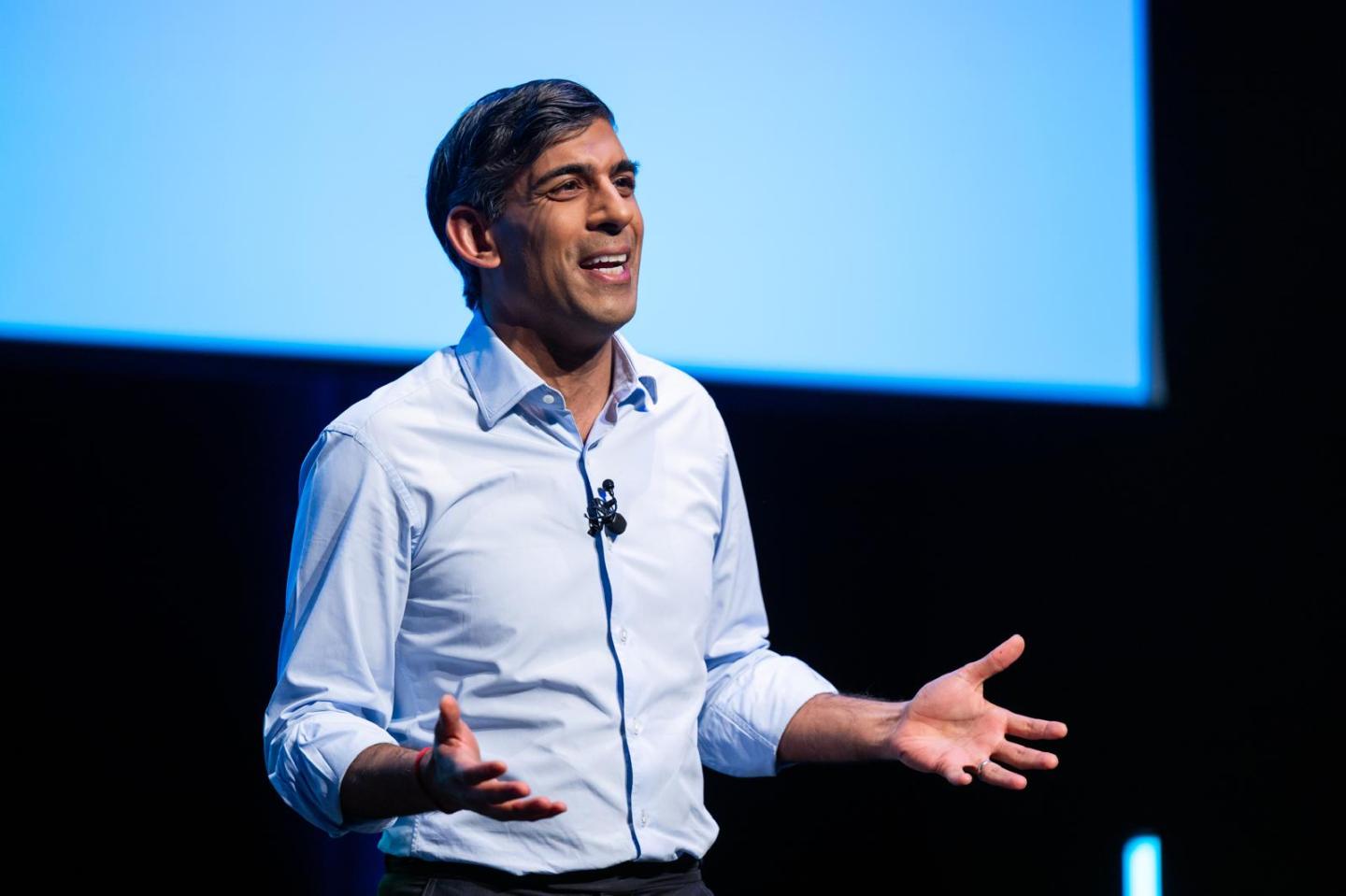
Rishi Sunak is giving advice to CEOs on AI. Here are his golden rules
By Kamal AhmedMarch 25, 2026
10 hours ago
retirement
CommentaryRetirement
Our retirement system gets a C-plus; policymakers have an opportunity to make it A grade
By Chris MahoneyMarch 25, 2026
17 hours ago
david-f
CommentaryVenture Capital
Europe has survived 3 energy shocks in 4 years. The only way out is to stop buying power from its enemies
By David FrykmanMarch 25, 2026
18 hours ago
fauci
CommentaryCOVID-19 vaccines
How COVID turned America against science — and what it will take to win it back
By David Blumenthal and James A. MoroneMarch 24, 2026
2 days ago
alex
Commentarydisruption
AI’s disruption is a choice, not a forecast
By Alex StephanyMarch 24, 2026
2 days ago
trump
Commentarynational debt
The Treasury just declared the U.S. insolvent. The media missed it
By Steve H. Hanke and David M. WalkerMarch 23, 2026
2 days ago

Most Popular

Magazine
The youngest-ever female CEO of a Fortune 500 company is fighting Trump's cuts to keep Medicaid strong
By Fortune EditorsMarch 24, 2026
2 days ago
Commentary
The Treasury just declared the U.S. insolvent. The media missed it
By Fortune EditorsMarch 23, 2026
2 days ago
Success
Palantir’s billionaire CEO says only two kinds of people will succeed in the AI era: trade workers — ‘or you’re neurodivergent’
By Fortune EditorsMarch 24, 2026
1 day ago
Success
The job market is so bad that ‘reverse recruiters’ are charging $1,500 a month just to help people look for jobs
By Fortune EditorsMarch 25, 2026
18 hours ago
Energy
Nobel laureate Paul Krugman calls it 'treason': $580 million in suspicious oil futures traded minutes before Trump's Iran reversal
By Fortune EditorsMarch 24, 2026
1 day ago
Success
JPMorgan has started monitoring the keystrokes, video calls, and meetings of its junior investment bankers—and they say it's for employee well-being
By Fortune EditorsMarch 24, 2026
1 day ago

© 2026 Fortune Media IP Limited. All Rights Reserved. Use of this site constitutes acceptance of our Terms of Use and Privacy Policy | CA Notice at Collection and Privacy Notice | Do Not Sell/Share My Personal Information
FORTUNE is a trademark of Fortune Media IP Limited, registered in the U.S. and other countries. FORTUNE may receive compensation for some links to products and services on this website. Offers may be subject to change without notice.