• Home
  • Latest
  • Fortune 500
  • Finance
  • Tech
  • Leadership
  • Lifestyle
  • Rankings
  • Multimedia
CommentaryRobots

Beyond the CES hype: why home robots need the self-driving car playbook

By
Jason Corso
Jason Corso
Down Arrow Button Icon
By
Jason Corso
Jason Corso
Down Arrow Button Icon
January 6, 2026, 8:00 AM ET
Dr. Jason Corso is Co-founder and Chief Science Officer at Voxel51, and Toyota Professor of AI and Electrical Engineering & Computer Science at the University of Michigan. A veteran in the field of computer vision, Dr. Corso has dedicated over 20 years to academic research on video understanding, robotics and data science.
CES
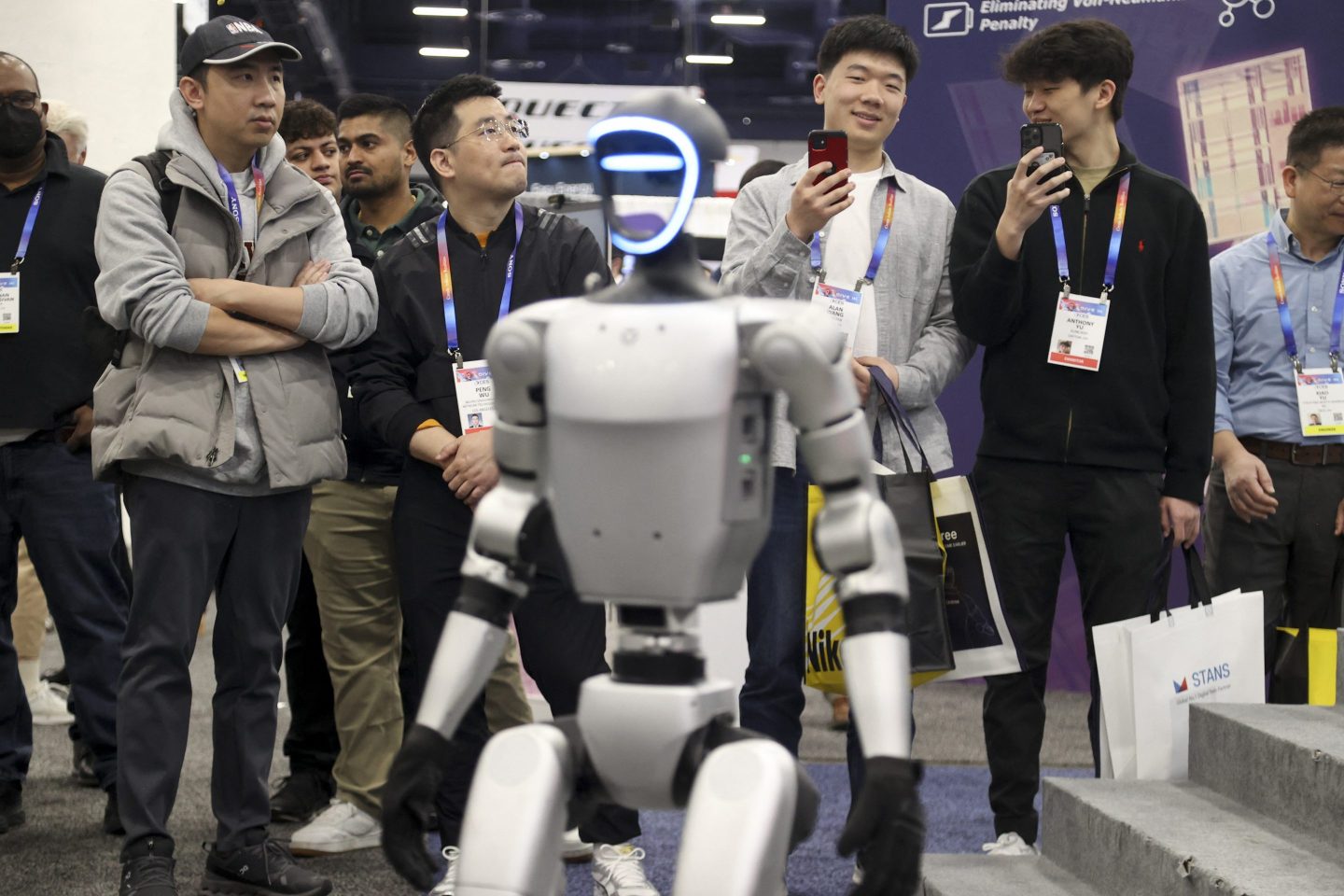
Attendees watch as a robot walks around during a demonstration at the Unitree Robotics booth during the Consumer Electronics Show (CES) in Las Vegas, Nevada, on January 9, 2025. IAN MAULE/AFP via Getty Images

With CES 2026 upon us and some predicting that the first affordable home robot will set off a technological race to market this year, those walking the conference floor in Las Vegas this week can expect thrilling robot demos and big promises we’ve been hearing since the 1960s. The explosion of AI has thrown the humanoid home robot hype machine into full tilt, and to be fair, an AI home revolution is indeed underway. 

Recommended Video

While we’ve embraced Roombas, smart thermostats, and AI-powered security systems like Ring doorbells for years, significant issues remain, such as data availability, privacy, and social acceptance, before we achieve Jetson-era assistants who will not only fold our laundry and help us care for our children and aging parents, but be trusted to do so.  

As our cars continue to gain more autonomy, it would seem the time is ripe for home robots. After all, if the AI, sensors, computing hardware, and other components required for autonomy have become powerful and safe enough for the road, why can’t they take on the home?

I’ve been around computers since receiving my Commodore 64 as a kid. Now, as an AI and robotics professor and a founder of an AI startup, I’m exploring how computer-based systems interact with our world. While we have come far, there are many technological hurdles the industry must overcome to deliver fully autonomous humanoid robots.

The Autonomy Myth

For all the hype and advances in AI programming, over 46 percent of companies fail to turn their exciting, demo-ready proofs of concepts into something usable in the real world—in part because systems lack the data and experience to complete their AI training. In the home robotics space, being an early adopter puts a large portion of that training onus on users (paying users in fact) while also bringing up larger issues of privacy and safety.

Like autonomous cars and systems on the road, home robots must function safely and efficiently 99.999% of the time because one mistake could lead to catastrophic results such as a stovetop burner being left on, a missed pill, or a fall in the shower. In addition to being trained on the massive amounts of data captured by cameras, sensors, and experiments in the real world, home robots must also be prepared to perceive, reason, and act in the face of unexpected scenarios. 

This ability to adapt to real-world and unexpected situations has been a thorn in the side of autonomous cars on the road (remember that they were supposed to be available in 2020).While synthetic data, simulations, and experience help fill these holes, teams like Waymo’s Fleet Response also keep humans in the loop to help the AI make decisions and act fast when faced with scenarios that confound or confuse them.

Robots coming into our private homes will run into far more unexpected scenarios that range from each building’s unique physical map to the culture—the so-called patterns of life—of those who live there. No matter how much training is done off-site, setting up and continuously training for our environments today means sending to the cloud rich personal data about everything from when we sit down to eat to how we resolve conflicts with our parents and children. 

Amidst the ongoing privacy issues surrounding door cameras and the backlash over social media giants exploiting user data to train their own models, today’s robots invite both passive and active observers into our homes and leave our data exposed to bad actors.

Take the automotive road to success by solving one problem at a time

Working to resolve this privacy issue is one of the exciting challenges before the industry today. Even as we strive to find solutions here, developers and early adopters anxious for home robots that can actually deliver today can take a lesson from the automotive industry’s success. 

Ten years ago, our cars had basic cruise control, and today, that early AI assistance has evolved into adaptive cruise control, lane following systems, and more. Autonomous cars are, in fact, several AI systems working in concert. 

While the auto industry has been peeling off problems and use cases, one by one, we have not woven this sort of progress into the home. Over two decades after Roombas first entered our homes, most of our smart devices—Alexa assistants, Ring doorbells, and AI chatbots—still don’t physically interact with or move through the world around us.

The right refrigerator might notify us when we’re low on milk and even create a grocery order for us to approve, but there’s still no robot to unpack the groceries, let alone do our ironing or hang up our clothes—two of the many promises featured way back in this 1960s BBC predictions video.

Going up? Social acceptance is essential in stepping up new technology

While many of us would love to hand off our housework and even, at times, our kids to a trusty robot, the industry needs to do more than make them safe and reliable while being respectful of social expectations around privacy. Innovators also have to convince us to trust them.

Today, we take passenger elevators for granted, but as the very first autonomous vehicle, they were radical when introduced in the 19th century. Humans could suddenly step into a box, perhaps hear gears grind, and then exit the box on a different floor—and even as safety features were innovated, that was terrifying. That’s why when this remarkable feat became as easy as the push of a button, human operators remained on board.

Elevator operators are now a sign of prestige, but in the early days of this technology, their presence was essential to building trust and acceptance to evolve the social norm.

Similarly, while it’s hard to avoid stories about AI backlash since ChatGPT exploded, the technology has quietly been assisting us for years via services like credit card fraud detection. Credit card companies implemented protective algorithms without advertising the fact, and avoided backlash from users by bringing the human back into the equation once transactions were flagged for review.

In the home, another human is not the answer, which brings us back to the most challenging piece of the puzzle. While the home robotics industry can find success by addressing smaller problems that require less data and compute, innovators must also solve the much larger problem of how to acquire and protect the data that will fuel, train, and inform our trusty helpers.

We may not have to wait 50 years to catch up to the Jetsons, but the path is certainly longer and more complex than the home robot demos you’ll see at CES suggest. When walking the halls this week, don’t ignore the less exciting but useful window washer, bartender, or snowblower. Be inspired by the promise of those walking robots, even as we focus on the challenges that lie ahead. 

The opinions expressed in Fortune.com commentary pieces are solely the views of their authors and do not necessarily reflect the opinions and beliefs of Fortune.


Join us at the Fortune Workplace Innovation Summit May 19–20, 2026, in Atlanta. The next era of workplace innovation is here—and the old playbook is being rewritten. At this exclusive, high-energy event, the world’s most innovative leaders will convene to explore how AI, humanity, and strategy converge to redefine, again, the future of work. Register now.
About the Author
By Jason Corso
See full bioRight Arrow Button Icon

Latest in Commentary

Finance
Lorem ipsum dolor sit amet, consectetur adipiscing elit, sed do eiusmod tempor incididunt ut labore et dolore magna aliqua. Ut enim ad minim veniam
By Fortune Editors
October 20, 2025
Finance
Lorem ipsum dolor sit amet, consectetur adipiscing elit, sed do eiusmod tempor incididunt ut labore et dolore magna aliqua. Ut enim ad minim veniam
By Fortune Editors
October 20, 2025
Finance
Lorem ipsum dolor sit amet, consectetur adipiscing elit, sed do eiusmod tempor incididunt ut labore et dolore magna aliqua. Ut enim ad minim veniam
By Fortune Editors
October 20, 2025
Finance
Lorem ipsum dolor sit amet, consectetur adipiscing elit, sed do eiusmod tempor incididunt ut labore et dolore magna aliqua. Ut enim ad minim veniam
By Fortune Editors
October 20, 2025
Finance
Lorem ipsum dolor sit amet, consectetur adipiscing elit, sed do eiusmod tempor incididunt ut labore et dolore magna aliqua. Ut enim ad minim veniam
By Fortune Editors
October 20, 2025
Finance
Lorem ipsum dolor sit amet, consectetur adipiscing elit, sed do eiusmod tempor incididunt ut labore et dolore magna aliqua. Ut enim ad minim veniam
By Fortune Editors
October 20, 2025

Most Popular

Finance
Lorem ipsum dolor sit amet, consectetur adipiscing elit, sed do eiusmod tempor incididunt ut labore et dolore magna aliqua. Ut enim ad minim veniam
By Fortune Editors
October 20, 2025
Finance
Lorem ipsum dolor sit amet, consectetur adipiscing elit, sed do eiusmod tempor incididunt ut labore et dolore magna aliqua. Ut enim ad minim veniam
By Fortune Editors
October 20, 2025
Finance
Lorem ipsum dolor sit amet, consectetur adipiscing elit, sed do eiusmod tempor incididunt ut labore et dolore magna aliqua. Ut enim ad minim veniam
By Fortune Editors
October 20, 2025
Finance
Lorem ipsum dolor sit amet, consectetur adipiscing elit, sed do eiusmod tempor incididunt ut labore et dolore magna aliqua. Ut enim ad minim veniam
By Fortune Editors
October 20, 2025
Finance
Lorem ipsum dolor sit amet, consectetur adipiscing elit, sed do eiusmod tempor incididunt ut labore et dolore magna aliqua. Ut enim ad minim veniam
By Fortune Editors
October 20, 2025
Finance
Lorem ipsum dolor sit amet, consectetur adipiscing elit, sed do eiusmod tempor incididunt ut labore et dolore magna aliqua. Ut enim ad minim veniam
By Fortune Editors
October 20, 2025
Rankings
  • 100 Best Companies
  • Fortune 500
  • Global 500
  • Fortune 500 Europe
  • Most Powerful Women
  • Future 50
  • World’s Most Admired Companies
  • See All Rankings
Sections
  • Finance
  • Leadership
  • Success
  • Tech
  • Asia
  • Europe
  • Environment
  • Fortune Crypto
  • Health
  • Retail
  • Lifestyle
  • Politics
  • Newsletters
  • Magazine
  • Features
  • Commentary
  • Mpw
  • CEO Initiative
  • Conferences
  • Personal Finance
  • Education
Customer Support
  • Frequently Asked Questions
  • Customer Service Portal
  • Privacy Policy
  • Terms Of Use
  • Single Issues For Purchase
  • International Print
Commercial Services
  • Advertising
  • Fortune Brand Studio
  • Fortune Analytics
  • Fortune Conferences
  • Business Development
About Us
  • About Us
  • Editorial Calendar
  • Press Center
  • Work At Fortune
  • Diversity And Inclusion
  • Terms And Conditions
  • Site Map

Latest in Commentary

Jamie Dimon
CommentaryCorporate Governance
Jamie Dimon’s bombshell on proxy advisory delivers a body blow to the firms he called ‘incompetent’
By Richard TorrenzanoJanuary 7, 2026
5 hours ago
fraser
CommentaryLeadership
The 7 most overlooked CEOs in 2025—and the 5 to watch in 2026
By Jeffrey Sonnenfeld and Stephen HenriquesJanuary 7, 2026
9 hours ago
christian klein
CommentarySoftware
The most honest prediction for 2026: nobody knows what’s next
By Christian KleinJanuary 7, 2026
12 hours ago
CES
CommentaryRobots
Beyond the CES hype: why home robots need the self-driving car playbook
By Jason CorsoJanuary 6, 2026
1 day ago
AsiaTariffs and trade
Countries must move beyond seeing AI as a race, where one side must beat the other
By Boris Babic and Brian WongJanuary 3, 2026
4 days ago
trump
CommentaryVenezuela
5 takeaways on Venezuela in the aftermath of Maduro: A memo to CEOs
By Jeffrey SonnenfeldJanuary 3, 2026
4 days ago

© 2025 Fortune Media IP Limited. All Rights Reserved. Use of this site constitutes acceptance of our Terms of Use and Privacy Policy | CA Notice at Collection and Privacy Notice | Do Not Sell/Share My Personal Information
FORTUNE is a trademark of Fortune Media IP Limited, registered in the U.S. and other countries. FORTUNE may receive compensation for some links to products and services on this website. Offers may be subject to change without notice.


Most Popular

placeholder alt text
Law
Amazon is cutting checks to millions of customers as part of a $2.5 billion FTC settlement. Here's who qualifies and how to get paid
By Sydney LakeJanuary 6, 2026
1 day ago
placeholder alt text
Economy
Mark Cuban on the $38 trillion national debt and the absurdity of U.S. healthcare: we wouldn't pay for potato chips like this
By Nick LichtenbergJanuary 6, 2026
1 day ago
placeholder alt text
Personal Finance
Janet Yellen warns the $38 trillion national debt is testing a red line economists have feared for decades
By Eva RoytburgJanuary 5, 2026
2 days ago
placeholder alt text
Future of Work
'Employers are increasingly turning to degree and GPA' in hiring: Recruiters retreat from ‘talent is everywhere,’ double down on top colleges
By Jake AngeloJanuary 6, 2026
1 day ago
placeholder alt text
Success
The college-to-office path is dead: CEO of the world’s biggest recruiter says Gen Z grads need to consider trade and hospitality jobs that don't even require degrees
By Orianna Rosa RoyleJanuary 6, 2026
1 day ago
placeholder alt text
Success
Blackstone exec says elite Ivy League degrees aren’t good enough—new analysts need to 'work harder' and be nice 
By Ashley LutzJanuary 5, 2026
2 days ago