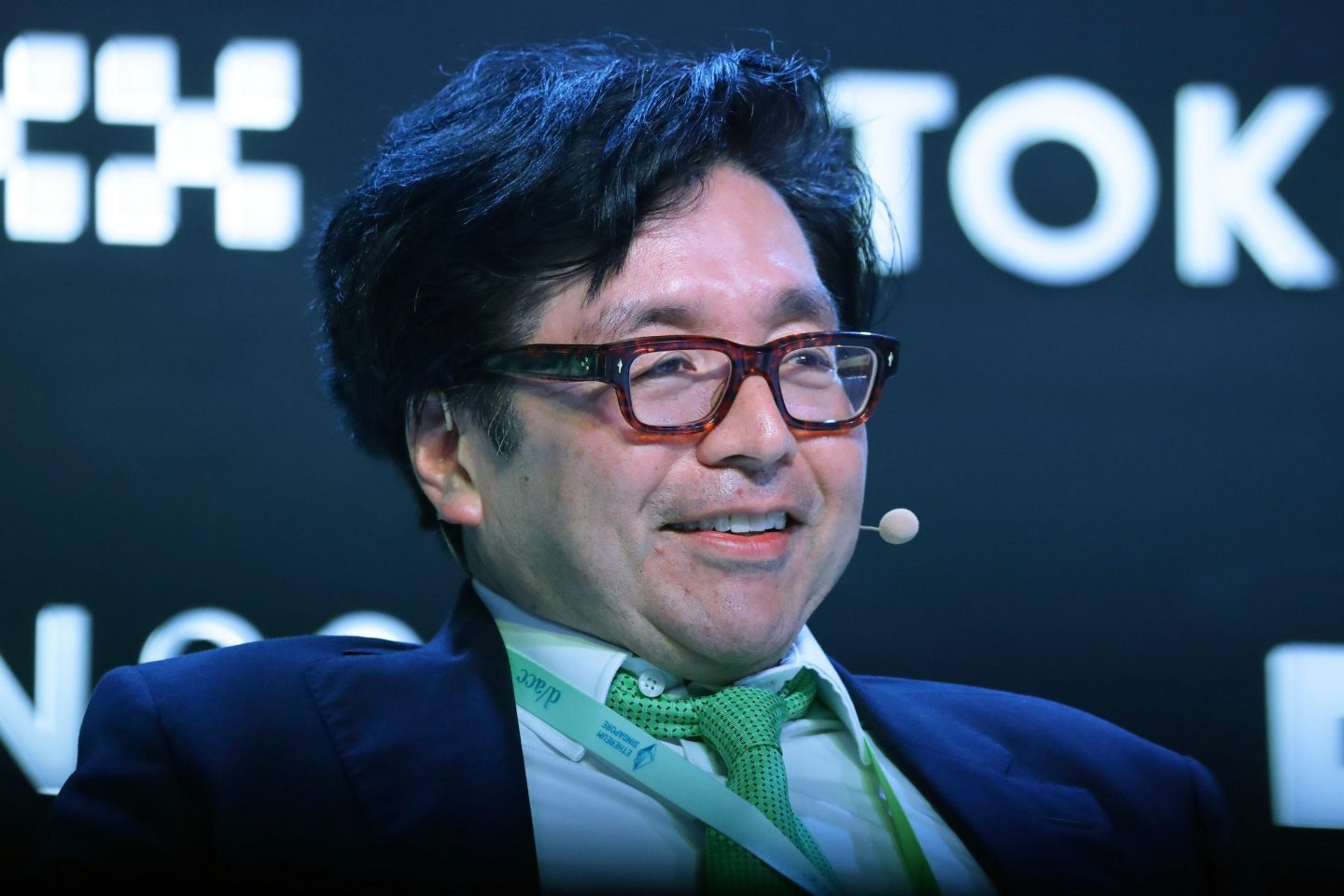
Investors can be forgiven for feeling nervous after navigating what Fundstrat Global Advisors’ head of research Tom Lee calls a series of “extinction events” over the last four years. However, according to the top analyst, the very trauma of these recent crises has suppressed the economy and investor sentiment, creating a coiled spring for a bullish 2026.
Speaking on The Prof G Markets Pod, Lee argued that the market’s resilience in the face of relentless shocks is a signal of underlying strength. He identified six “extinction events” rattling the market, including the COVID-19 pandemic, the supply-chain crisis, the fastest inflation cycle in history, and then the fastest series of Federal Reserve rate hikes in history. Additionally, Lee pointed to instability involving tariffs and geopolitical tensions, such as the U.S. strikes involving Iran, as events that have collectively “made investors very nervous about… investing in full risk, because these are, what, six black swans that happened in four years,” he said, referring to the famous markets theory by Nassim Nicholas Taleb.
Lee made his remarks before the U.S. strike on Venezuela, yet another example of geopolitical tensions scrambling markets. He doubled down in a Jan. 5 appearance on CNBC’s Squawk Box, saying that 2026 is shaping up to be a year with strong fundamentals in markets, while emphasizing that the market needs to digest three years of annual gains over 15%.
The ‘wall of worry’ and a market correction
Lee talked to podcast hosts Ed Elson and Scott Galloway about his philosophy. “Markets climb a wall of worry,” he said, arguing that they “don’t peak when people are bearish,” but rather when euphoria takes over and prices no longer respond to good news. Currently, skepticism remains high, which Lee views as a contrarian buy signal.
However, the road to a prosperous year may be paved with volatility. Lee predicted a “miniature bear market” or a significant drawdown, before the recovery fully takes hold. He explained that the stock market’s three consecutive years of big returns are a rare occurrence that historically suggests a need to consolidate gains. “I think that we end up a bullish outcome despite all the skepticism,” Lee said, noting that a 2026 pullback would likely be a buying opportunity rather than the end of the cycle.
The third labor shortage epoch
A key ingredient in Lee’s recipe for 2026 is the technology sector, driven by a massive demographic shift. He argued the U.S. is in a long-term labor shortage era. “We entered the third epoch, or era of labor shortage, which started in 2018 and it’s going to last to 2035,” he predicted, necessitating heavy technology spending to replace missing workers.
He compared the current AI boom to the introduction of flash-frozen foods in the 1920s, which, per Fundstrat research, ultimately reduced farm labor from 40% of the workforce to 2% while lowering food costs. In a similar way, he said he thinks AI will create efficiency rather than economic ruin.
“Let’s say there was a CNBC in 1920 and these economists were saying, ‘frozen food, if it comes along and it’s going to wipe out 95% of all farmers, this is going to wipe out the U.S. economy. The U.S. economy can’t survive frozen food,'” Lee noted, making his point about current hysteria about AI job displacement. “Instead it freed up time, right? And it created, it allowed people to be repurposed, and it created a completely new labor force.”
Addressing fears of an AI bubble, Lee drew a parallel to the dot-com era. He pointed out that if an investor bought the “internet basket” in 1999 and held it until today, they would have outperformed the S&P 500, even though most of the stocks in that basket went to zero. Similarly, Lee estimated that while 90% of AI stocks may perform worse than expected, the sector as a basket will likely outperform the broader market.
When asked directly about his reputation as a “permabull,” Lee replied that he was first labeled with the term back in 2009, and history proves him right. “Here’s what’s interesting 16 years later … the optimists have won.”
Betting on resilience remains the right play, he said, and if you look closely, markets have that heading into 2026. “America, as long as it’s a place of innovation—and we are, because we’re at the center of AI—I think it’s pretty bullish,” Lee said, while acknowledging the key point raised by the show’s hosts: “there’s a chance that this AI is a disaster for labor markets, and if it is, the U.S. will be the least scathed but everyone’s going to go down.”