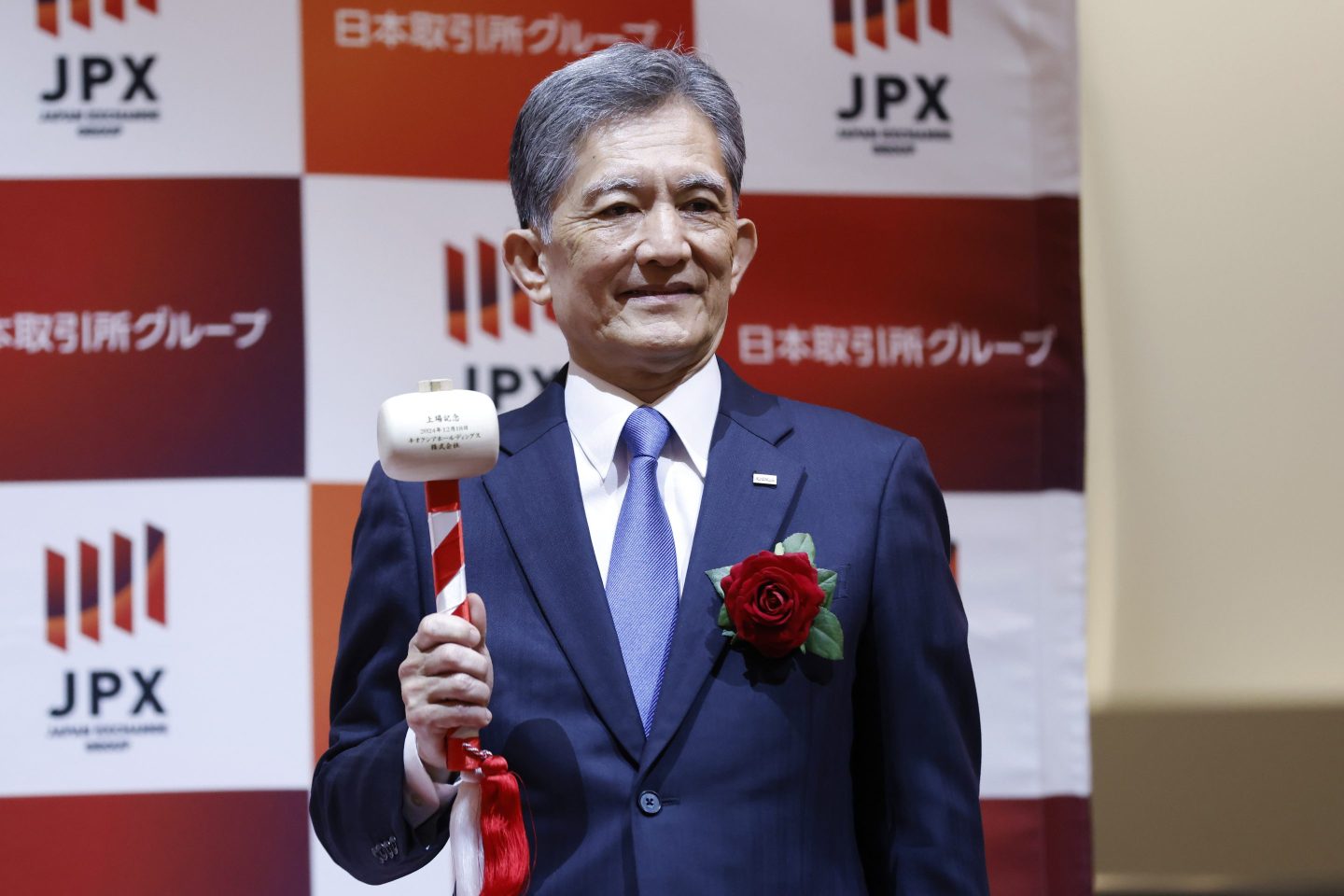
The world’s hottest (AI) stock this year wasn’t Nvidia, Microsoft, or any Silicon Valley giant. It was Kioxia Holdings, a Tokyo-listed maker of memory chips that rode artificial intelligence’s (AI) exploding demand for data storage to extraordinary market gains.
Kioxia’s shares surged about 540% in 2025, outperforming every company in the MSCI World Index, including Alphabet, Google’s parent. The company, which only went public in December, now carries a market value of roughly ¥5.7 trillion, or $36 billion. Its customers include hyperscale heavyweights including Apple and Microsoft, according to Bloomberg.
The rally reflects a less glamorous but increasingly critical bottleneck in the AI boom: memory. AI systems don’t just need powerful chips to “think,” they also need somewhere to store enormous amounts of data. NAND flash is the type of chip that holds information even when devices are turned off, and it’s used everywhere from data centers to smartphones. And as tech giants race to build AI data centers and train ever-larger models, they’re buying far more of these memory chips than manufacturers can make. Market trackers told NPR that demand for memory already exceeds supply by about 10%, creating shortages and pushing prices higher.
Prices are already responding. Researchers estimate that buyers paid about 50% more quarter-over-quarter for standard DRAM in recent months, with rush orders costing multiples of that. Further increases are expected, with little relief in sight going into the new year. The shortage is spilling beyond AI and also pushing up costs for smartphones, PCs, gaming devices, and other consumer electronics that rely on the same chips.
That dynamic has turned the few memory maker companies into unlikely winners. Investors are betting that rising prices and sustained demand will translate directly into stronger revenue for companies like Kioxia.
The stock’s meteoric rise hasn’t been all smooth. Kioxia tumbled more than 20% in a single session in November after quarterly results failed to meet lofty expectations, reviving concerns of a bubble of enthusiasm around AI-linked stocks that may have run ahead of fundamentals.
In fact, one year ago, when Kioxia first came to market, the company was either “barely noticed” or quietly dismissed. Investors were still nursing losses from a semiconductor downturn and the chipmaker’s heavy debt load made it an awkward fit for a market obsessed with GPU-fueled growth. Kioxia’s IPO, the culmination of a long and troubled private-equity saga that took three tries, looked less like a bellwether for the AI age than a late arrival from the previous, dying cycle.
What changed wasn’t sentiment toward Kioxia so much as the realization that artificial intelligence indeed runs on memory as much as compute. As hyperscalers rushed to build out data centers, shortages emerged, and the unglamorous parts of the AI stack suddenly mattered again. In that shift, a company once written off became one of the market’s clearest beneficiaries.