Good morning. Here’s a suggestion to take you into the weekend: Don’t let AI run your vending machine.
Against its better judgment, the Wall Street Journal let AI agents powered by Anthropic’s Claude take the proverbial wheel…and it went completely off the rails.
Things the snack machine purchased: A game console, stun guns, pepper spray, cigarettes, underwear, and a live fish.
Goods the machine gave away for free: All of them (in a two-hour “economic experiment”).
Blame the ill-equipped AI if you’d like; blame the conspiring humans who led it to perdition, too. In the meantime: Can a guy get a snack around here?
Today’s tech news below. —Andrew Nusca
Want to send thoughts or suggestions to Fortune Tech? Drop a line here.
TikTok finally agrees to divest its U.S. unit
We have a deal. (Reportedly.)
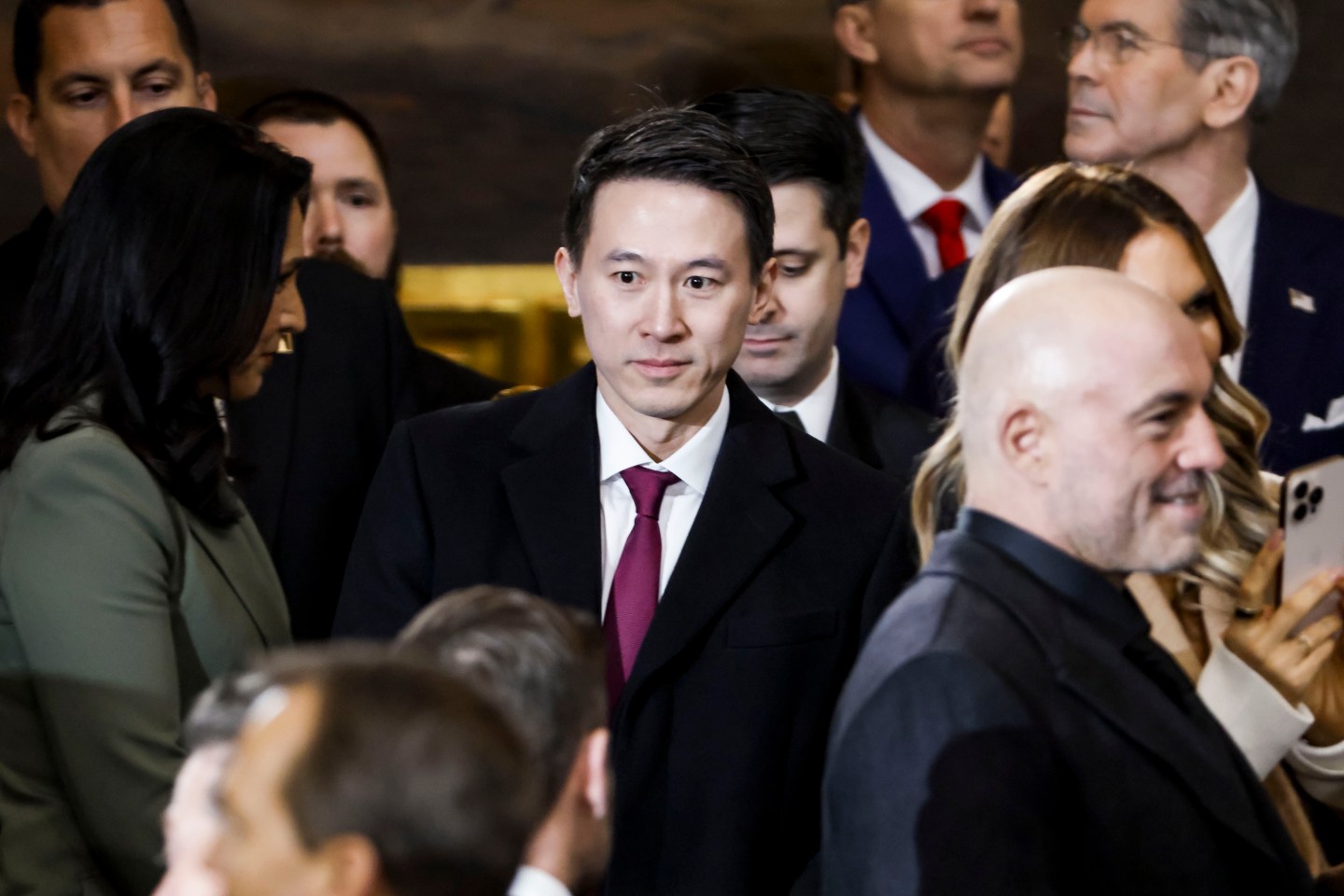
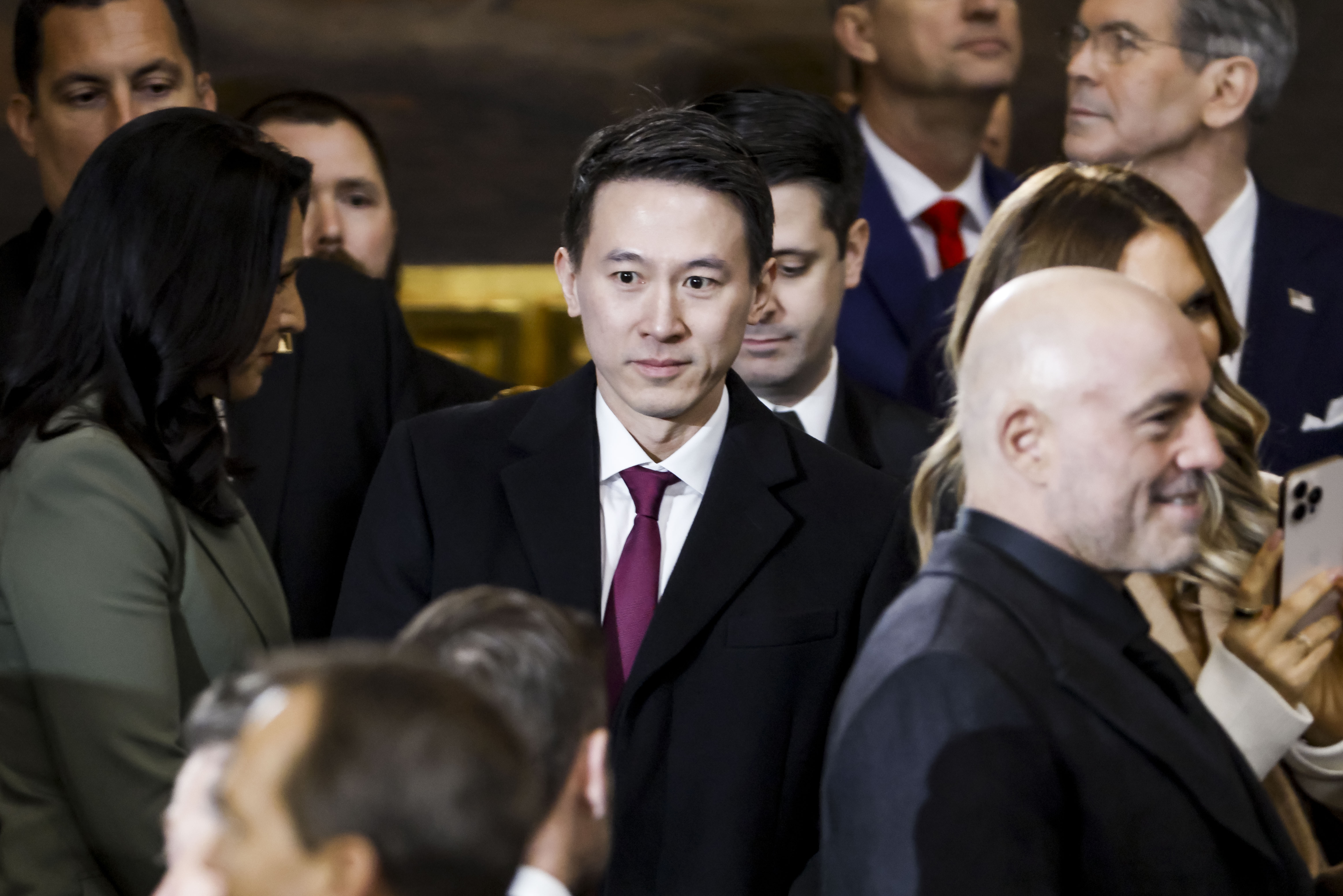
The popular video service TikTok has finally, actually, seriously signed a deal to sell its U.S. business to American investors in a bid to evade a U.S. ban that has been dogging it since President Biden was in office, according to an internal memo viewed by several news organizations.
Oracle, Silver Lake, and the Emirati state-owned investment firm MGX will each own 15% stakes of the venture. TikTok’s Beijing-based parent company, ByteDance, will retain about 20%. Another 30% will be held by affiliates of existing ByteDance investors, according to the memo.
The deal is expected to close on Jan. 22.
As for national security concerns: TikTok U.S. will be run by a new, seven-member board of directors that is majority-American.
Further, U.S. user data will be stored locally in a system run by Oracle. TikTok’s special-sauce algorithm will be retrained on U.S. user data to ensure content on the service is “free from outside manipulation,” the memo reads.
It has been a long road. The service briefly went dark as the bipartisan divest-or-ban order took effect in January 2025, then bounced back after Donald Trump issued a legally dubious executive order to avoid enforcing the law until he could strike a deal.
It took three more executive orders—in April, then June, then September—to make that happen, even as the White House launched its own TikTok account in August and its occupant declared himself a fan of the service. —AN
Sony and Tencent reach settlement over ‘Motiram’ game
You might have missed it, but two of the biggest gaming companies on the planet have been locked in a lawsuit over an alleged copycat title.
Japan’s Sony sued China’s Tencent in July to prevent the release of Light of Motiram, a title released last year that Sony said was a “slavish clone” (but tell us how you really feel) of its popular Horizon action RPG series.
Horizon debuted in 2017 and is estimated to have collectively sold 40 million (and counting) units.
Players generally agreed with the assessment. “Tencent's Light of Motiram is such a Horizon Zero Dawn rip-off, they're hard to tell apart,” one gamer wrote on Reddit. “So...how exactly did the developers think that this would get by copyright law?” another one asked.
Fair enough. But would a judge agree?
Turns out that didn’t matter. The two companies this week reached a confidential settlement and the case—filed in U.S. District Court for the Northern District of California—has been dismissed with prejudice, meaning it can’t be re-litigated, according to a court document filed on Wednesday.
One thing that’s no secret: Light of Motiram is no longer listed for sale on Steam and in the Epic Games Store. —AN
North Korean hackers stole $2 billion of crypto this year
A massive amount of crypto was robbed this year, and most of it went to North Korea.
The nation accounted for roughly 59% of the more than $3.4 billion in stolen crypto, according to a Chainalysis report released yesterday.
“North Korea’s sophistication and efficacy in laundering the proceeds from these incidents is continuing to improve,” said Andrew Fierman, head of national security intelligence at Chainalysis. “The industry needs to continue ensuring that they have better security controls.”
The report comes at a time when investing in crypto has become mainstream. More people own crypto, and because crypto transactions are irreversible, individuals and exchanges are increasingly becoming targets.
This year, North Korea broke its own record of yearly money stolen in crypto, and it did so in creative ways.
The country had its own citizens work as IT employees at crypto companies, where they used AI to pretend they were working from another country, like the U.S. These employees then gained access to privileged information and caused large-scale breaches.
North Koreans also used a method called social engineering, where they sent emails and text messages to people with crypto. If those individuals clicked on the wrong link, the hacker could access their private wallets.
The biggest crypto hack in history occurred in February, when Bybit, one of the largest crypto exchanges, lost $1.4 billion. The FBI quickly declared North Korea responsible for the theft. That attack accounted for roughly 40% of the total amount of crypto heists this year.
Chainalysis found that large-scale attacks dominated in 2025, as more than two-thirds of stolen funds came from just three hacks. —Carlos Garcia
More tech
—Meta is working on “Mango,” a new AI image and video model.
—Kevin Mandia’s latest. Buzzy cybersecurity startup Armadin is reportedly fundraising at a $600 million valuation.
—FCC is “not an independent agency,” Chairman Brendan Carr tells a Senate committee.
—Instacart pays $60 million to settle FTC allegations that it used deceptive tactics to get and keep customers.
—Yann LeCun’s latest. The outgoing Meta AI chief is reportedly fundraising for his new AI venture at a €3B valuation.
—Xbox sales plunge. Sales reportedly fell 70% year over year, worse than competing consoles, to an all-time low in November.
—Rivian launches “universal hands-free” driving for second-generation R1 EVs.