Good morning. A “Manhattan Project” for AI in China? Believe it.
According to a new Reuters report, Chinese scientists have built what the Americans have spent years trying to prevent: an industrial machine that can manufacture the most advanced semiconductors available.
For now, it’s just a prototype. But its very existence, realized by engineers who once worked at Dutch chip equipment maker ASML, suggests that “China may be years closer to achieving semiconductor independence than analysts anticipated.”
What was that about tariffs again? Today’s tech news below. —Andrew Nusca
Want to send thoughts or suggestions to Fortune Tech? Drop a line here.
Amazon shakes up its AI leadership
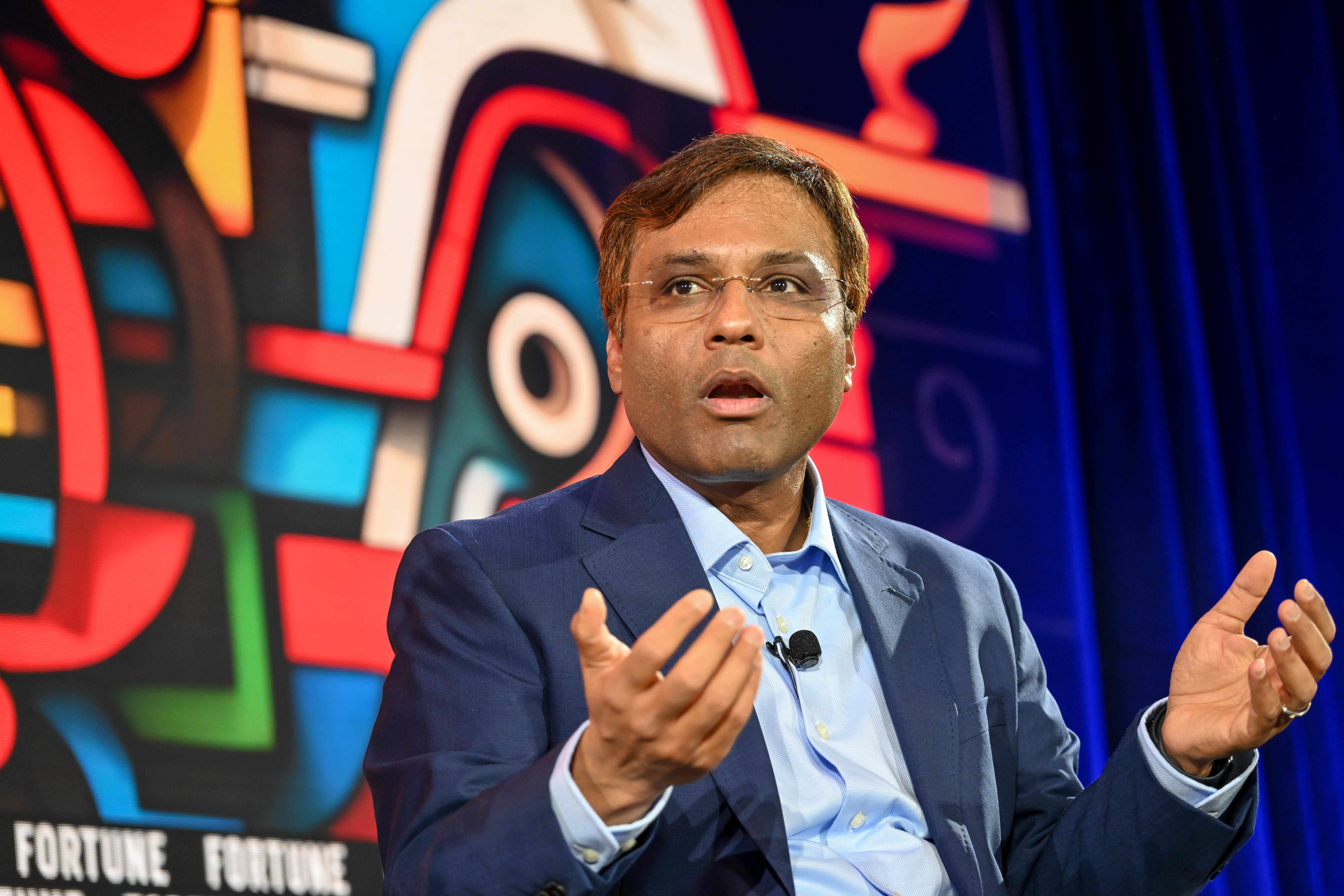
Amazon CEO Andy Jassy dropped an AI bombshell on employees yesterday, announcing that Rohit Prasad—who has led Amazon’s AGI team since 2023, overseeing the development of the company’s Nova models—will depart at the end of the year.
Prasad previously served as the head scientist behind Amazon’s Alexa voice assistant, a role he held from the product’s earliest days.
Replacing him is longtime Amazon Web Services (AWS) executive Peter DeSantis, who will lead a new organization that drives the development of its AI models, custom computer chips (which include its Graviton, Trainium, and Nitro chips), and quantum computing efforts.
DeSantis will report directly to Jassy.
As part of the changes, Pieter Abbeel, an Amazon Distinguished Scientist in robotics who is also an AI and robotics professor at UC Berkeley, will lead the company’s frontier model research team. Abbeel came to Amazon in 2024 along with other cofounders of his robotics startup Covariant.
The news of Prasad’s departure comes as somewhat of a surprise, given that he was recently at Amazon’s re:Invent conference discussing the latest Nova models. (He also spoke at Fortune Brainstorm AI 2024.)
However, over the past two years, there has been significant media coverage suggesting that Amazon’s Alexa AI and AGI-related efforts have struggled and fallen behind competitors. —Sharon Goldman
Oracle’s plans for its largest data center have stalled
Oracle shares dropped 5% yesterday after a new report suggested the company’s plans for its largest-ever data center were in limbo.
Blue Owl Capital will not back a $10 billion deal to build a 1 gigawatt cloud computing facility in Saline Township, Mich., about 50 miles west of Detroit, according to a Financial Times report, after negotiations with lenders and Oracle stalled.
Blue Owl has been the primary backer for Oracle’s major computing projects in the U.S., including facilities in New Mexico and Texas.
Construction on the Michigan data center, which is intended to serve Stargate partner OpenAI, is scheduled to begin in the first quarter of next year.
Oracle told Reuters that the project remains “on schedule”—without Blue Owl.
Who’s the winning equity partner? It could be Blackstone, according to the FT, but a deal is not yet done.
Hanging in the balance: Investor sentiment for the more than $100 billion in net debt on Oracle’s books and the historic levels of spending on AI infrastructure by it and most of its Big Tech peers. —AN
And the Oscars go to…YouTube
It’s a little bit ironic. Don’t you think?
The Academy of Motion Picture Arts and Sciences announced this week that it would move its Academy Awards—that is, the Oscars—away from Disney-owned ABC and toward Google-owned YouTube.
The world’s most-watched awards telecast will carry on at ABC, where it has aired since 1976, through 2028. But then the film fest will bolt to YouTube through 2033.
The deal isn’t limited to the Oscars ceremony. YouTube will air “other Academy events and programs” including the Oscar nominations, Governors Awards, Student Academy Awards, Scientific and Technical Awards, and a variety of film programs and podcasts.
Viewership of the Oscars on ABC has fallen nearly every year since 2014, according to Nielsen data.
There was some drama behind the decision, according to the Hollywood Reporter: Disney was reportedly “unwilling to overpay” for something that didn’t generate cash like it used to, and was frustrated by the Academy’s reluctance to “meet it halfway” on things like telecast length.
Ball’s in your court, YouTube. —AN
More tech
—Meta tests throttling Facebook biz pages. Two links per month, unless you pay $15.
—Micron posts blowout Q1 earnings. Double the expected profit and more, thanks to rising memory chip prices.
—Coursera acquires Udemy. Two edtech rivals combine in a deal valued at $2.5 billion.
—Warner Bros to shareholders: Reject Paramount’s bid. An “illusory” non-binding offer that’s inferior to Netflix’s, it argues.
—OpenAI is reportedly in talks with Amazon, a top Anthropic investor, to raise $10 billion at a $500 billion valuation.
—U.S. game console sales plummet. The worst November in two decades, in part thanks to tariffs and rising component costs.
—Alexander Wang on Mark Zuckerberg: “Suffocating” micromanagement, insiders tell the Financial Times.