Good morning. Once again, switching things up in celebration of our fifth annual Fortune Brainstorm AI, which concluded yesterday in San Francisco.
Below, three more highlights from Days 1 and 2 of our gathering, plus the day’s tech news in “More tech.” —Andrew Nusca
Want to send thoughts or suggestions to Fortune Tech? Drop a line here.
How Databricks could achieve a trillion-dollar valuation
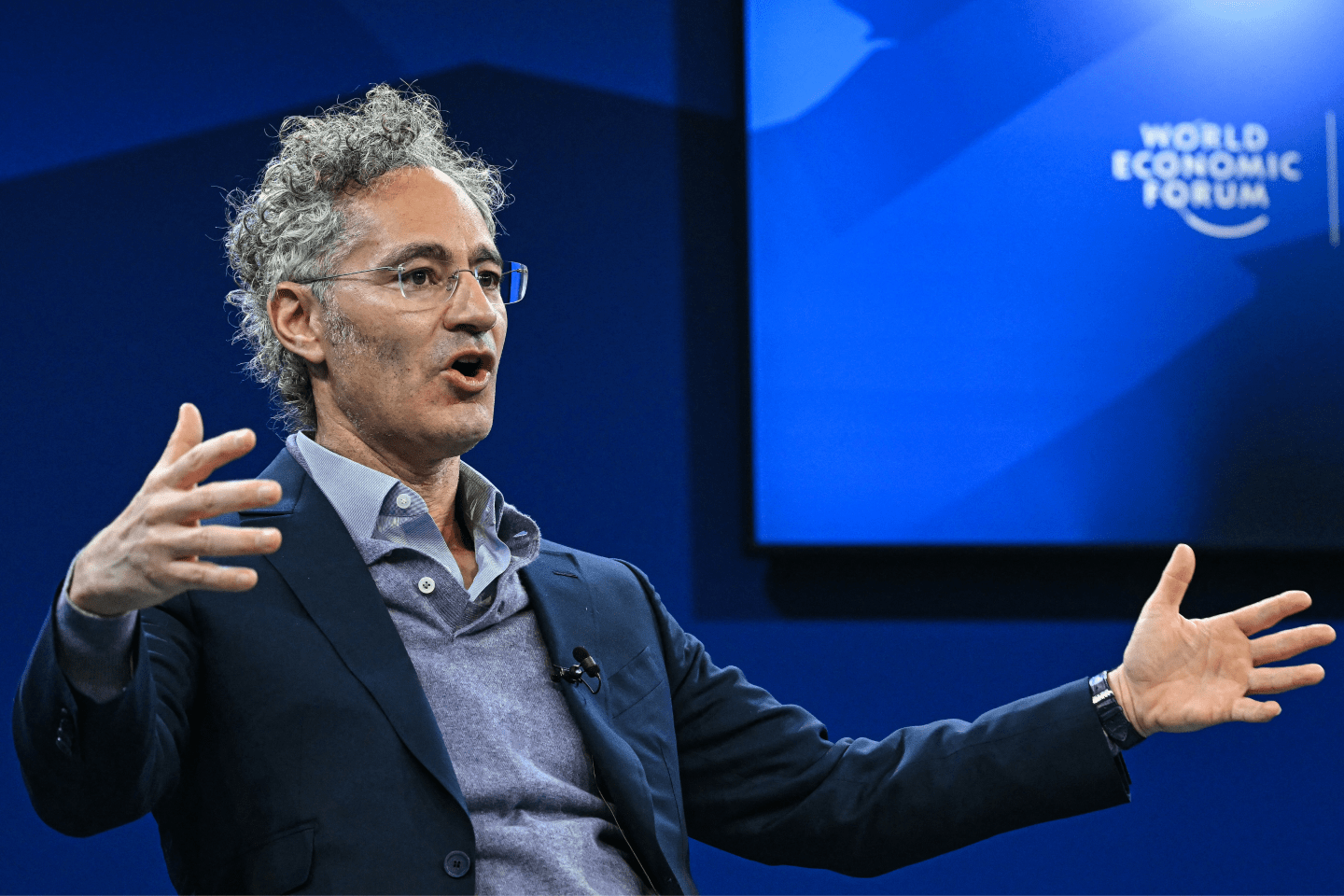
Ali Ghodsi, the CEO and cofounder of data intelligence company Databricks, is betting his privately held startup can be the latest addition to the trillion-dollar valuation club, of which only the world’s biggest tech companies are current members.
At Fortune Brainstorm AI in San Francisco on Tuesday, he explained how it would happen, laying out a “trifecta” of growth areas to ignite the company’s next leg of growth.
The first is entering the transactional database market, the traditional territory of large enterprise players like Oracle, which Ghodsi said has remained largely “the same for 40 years.”
The second growth area is Agent Bricks, Databricks’ platform for building AI agents that work with proprietary enterprise data.
“It’s a commodity now to have AI that has general knowledge,” Ghodsi said, but “it’s very elusive to get AI that really works and understands that proprietary data that’s inside the enterprise.”
Finally, the third growth area involves building applications on top of this infrastructure, with developers using AI tools to quickly build applications that run on Lakebase and which are then powered by AI agents.
When might Databricks attain its trillion-dollar goal? A potential IPO is one piece of the puzzle.
“We will go public at some point,” he said, adding that a 2026 debut would “maybe” happen. “But to us, it’s not a really big deal.” —Beatrice Nolan
Despite see-sawing stock, CoreWeave IPO was ‘incredibly successful’
CoreWeave has been rocked by dizzying stock swings—with its stock currently trading 52% below its post-IPO high—and a frequent target of market commentators.
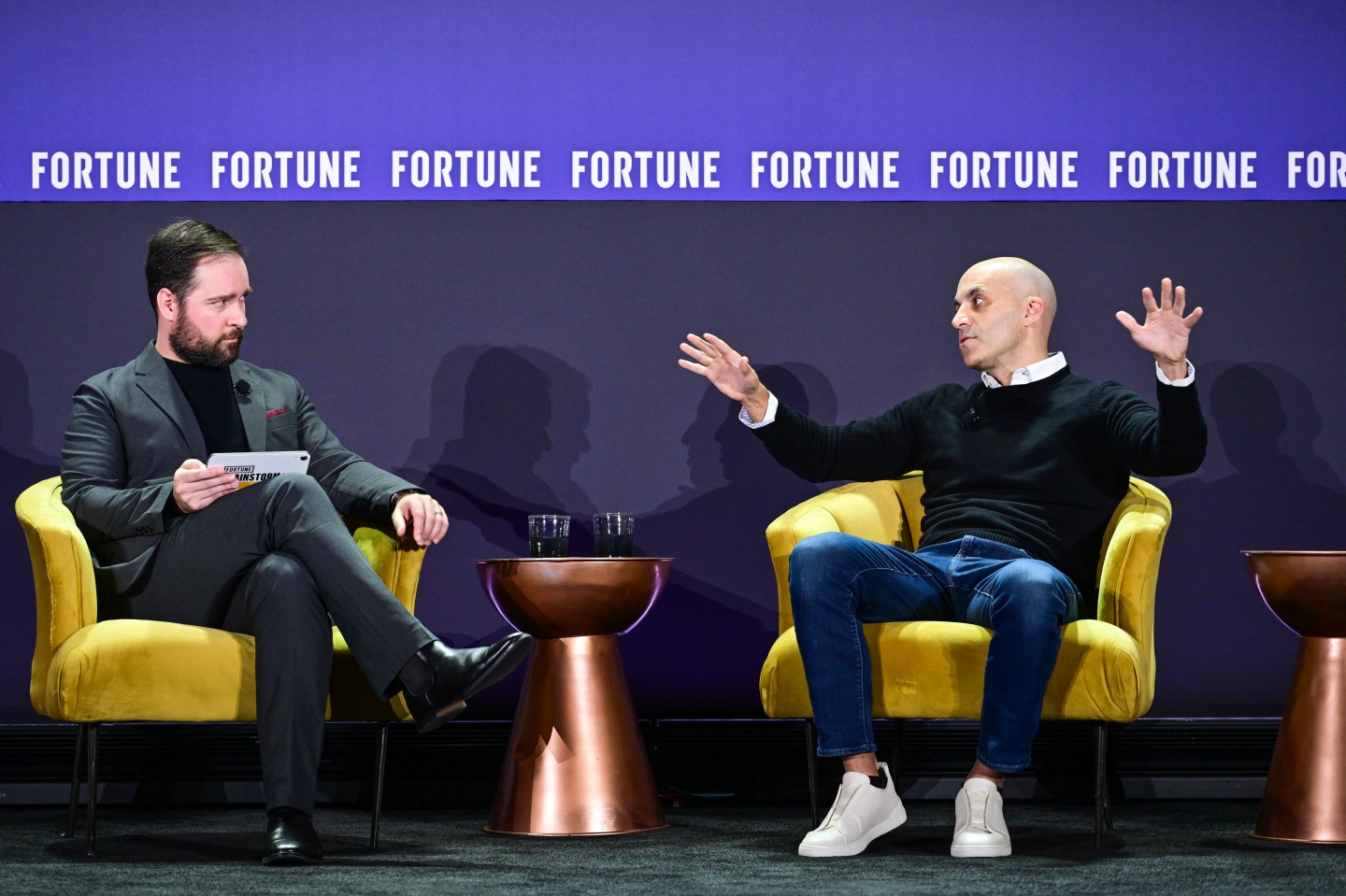
But CEO Michael Intrator says the company’s move to the public markets has been “incredibly successful”—and he takes the public’s mixed reaction in stride.
“When you introduce new models, introduce a new way of doing business, disrupt what has been a static environment, it’s going to take some people some time,” Intrator said Tuesday at Fortune Brainstorm AI in San Francisco.
But more people are beginning to understand CoreWeave’s business model, he added.
CoreWeave, which priced its IPO at $40 per share, has experienced frequent severe up-and-down price swings in the eight months since its debut. At its closing price of $90.66 on Tuesday, the stock remains well above its IPO price.
As Fortune reported last month, CoreWeave’s rapid rise has been fueled by an aggressive, debt-heavy strategy to stand up data centers at unprecedented speed for AI customers.
For now, the bet is still paying off. In its third-quarter results released in November, the company said its revenue backlog nearly doubled in a single quarter—to $55.6 billion from $30 billion—reflecting long-term commitments from marquee clients. Both earnings and revenue came in ahead of Wall Street expectations.
“I feel like it’s incumbent on CoreWeave to introduce a new business model on how the cloud is going to be built and run,” Intrator said. “And that’s what we’re doing.” —Sharon Goldman
Physical AI robots will automate ‘large sections’ of factory work, Arm CEO says
AI-powered humanoid robots could take over large sections of factory work within the next five to 10 years, transforming the manufacturing industry, predicts Arm CEO Rene Haas.
One of the key forces pushing humanoid robots into factories is their advantage over robotic arms and other automation machinery in use today, Haas said Monday at Fortune Brainstorm AI in San Francisco.
Traditional factory robots are purpose-built machines designed for a single task, with both hardware and software optimized for that specific function. General-purpose humanoid robots, by contrast, combined with increasingly sophisticated “physical AI” that helps navigate the real world, will be able to take on different jobs on the fly with quick modifications to their instructions.
“I think in the next five years, you’re going to see large sections of factory work replaced by robots,” Haas said, “and part of the reason for that is that these physical AI robots can be reprogrammed into different tasks.”
He added: “One of the issues you’d had with factory robots in the past is that if it was a pick and place machine for a factory, they’re just optimized for one task—the software was for one task, the hardware is for one task. Now, if you design a general-purpose humanoid that the software is all AI and it learns by doing, it’s going to completely replace a large set of factory workers.”
What happens to those workers and the broader job market as AI and robots proliferate in businesses? Haas didn’t say, but suggested that widespread physical AI adoption could help level the global competitive playing field.
“Physical AI,” he said, “will be a great enabler.” —Beatrice Nolan
More tech
—SpaceX IPO prepares for liftoff. A $30+ billion fundraise at a $1.5 trillion valuation is reportedly coming in “mid-to-late 2026.”
—Australia social media ban takes effect. Platforms must remove under-16 users or risk fines of up to AU$49.5 million.
—Instacart tests user-based pricing. Same item, same store, same time, different prices.
—China won’t make Nvidia H200 access easy, even if the U.S. allows sales of it.
—OpenAI hires Denise Dresser. The Slack CEO will become OpenAI’s chief revenue officer.
—From supersonic planes to cloud computing. Boom repurposes its natural gas turbine for AI data centers.
—Nvidia CEO reportedly told Trump: We’ll lose the global AI race if we don’t pre-empt state AI regulations.