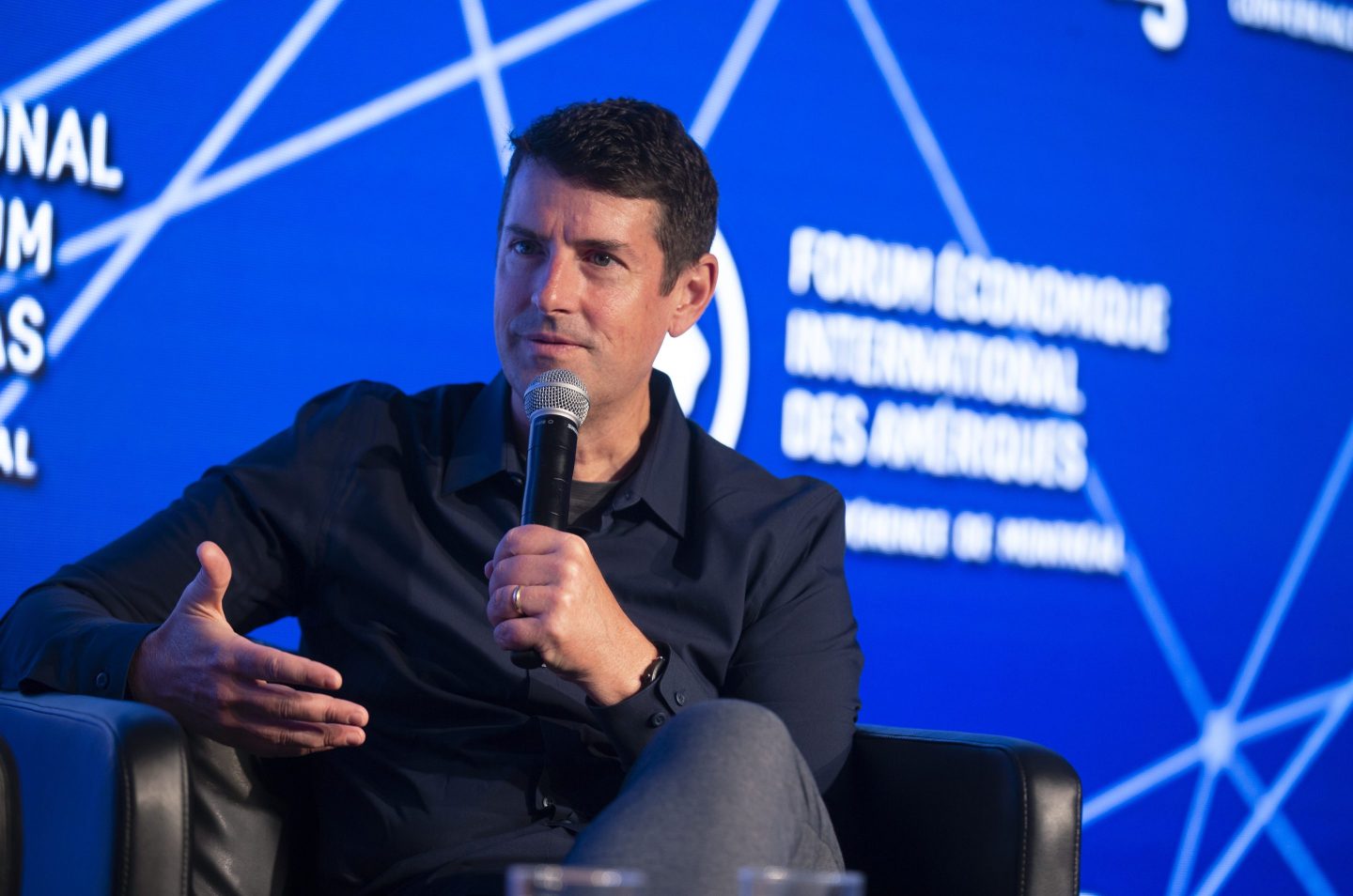

For years, YouTube star Hank Green has stuck to the same straightforward investing wisdom touted by legends like Warren Buffett: Put your money in an S&P 500 index fund and leave it alone.
It’s advice that has paid off handsomely for millions of investors: This year alone, the index is up roughly some 16% and averaged more than 20% in gains over the past three years and roughly 14.6% over the past two decades. In most cases, it has easily beaten investors who try to pick individual stocks like Tesla or Meta.
But as Wall Street frets over a possible AI-driven bubble—with voices from Big Short investor Michael Burry to economist Mohamed El-Erian sounding alarms—Green isn’t waiting around to see what happens. He’s already rethinking how much of his own wealth is tied to Big Tech.
A major reason: The S&P 500 is more concentrated than ever. The top 10 companies—including Nvidia, Apple, Microsoft, Amazon, Google, and Meta—make up nearly 40% of the entire index. And nearly all of them are pouring billions into AI.
“I feel like my money is more exposed than I would like it to be,” Green said in a video that’s racked up over 1.6 million views. “I feel like by virtue of having a lot of my money in the S&P 500, I am now kind of betting on a big AI future. And that’s not a future that I definitely think is going to happen.”
So Green is hedging. He’s taking 25% of the money he previously invested in S&P 500 index funds—a meaningful chunk for a self-made millionaire—and moving it into a more diversified set of assets, including:
- S&P 500 value index funds, which tilt toward companies with lower valuations and less AI-driven hype.
- Mid-cap stocks, which he believes could benefit if smaller firms catch more of AI’s productivity gains.
- International index funds, offering exposure outside the U.S. tech-heavy market.
Green’s thesis is simple: Even if AI transforms the economy, the biggest winners may ultimately not be the mega-cap companies building the models.
“I think that these giant companies providing the AI models will actually be competing with each other for those customers in part by competing on price,” Green said. “And that might mean that the value delivered to small companies will be bigger than value delivered to the big AI companies. Who knows, though? I just think that’s a thing that could happen.”
And if his concerns are overblown? He’s fine with that, too.
“If I’m wrong, 75% of my money is still in the safe place that everybody says your money should be, which is the S&P 500.”
YouTuber’s message to his Gen Z and Gen Alpha viewers: The stock market isn’t a ‘Ponzi scheme’
Gen Z continues to trail other generations in financial know-how—from saving and investing to understanding risk, according to TIAA. Moreover, one in four admit they are not confident in their financial knowledge and skill—a stark admission considering that one in seven Gen Z credit card users have maxed out their credit cards and many young people hold thousands in student loan debt.
As a self-described “middle-aged, 45-year-old successful person,” Green said he’s trying to model what thoughtful, long-term decision-making actually looks like. And part of that effort includes dispelling one big misconception shared among some of his audience:
“I get these comments from people who are like, I can’t believe that you’re participating in this Ponzi scheme,” Green told Fortune. “I do want to alienate those people, because I don’t believe that the stock market is a Ponzi scheme. I do think that it’s overvalued right now, but I think that it’s tied to real value that’s really created in the world.”
His broader point: Investing isn’t about vibes or just dumping money into the hot stock of the week; rather, it’s something to seriously research.
“A lot of people think that investing is like getting a Robinhood account and buying Tesla,” Green added. “And I’m like, ‘Nope, you’ve got to get a Fidelity account and buy a low-cost index fund everybody and or just keep it in your 401(k) and let the people who manage it manage it’—which is what a lot of people do, which is also fine.”
His younger viewers are paying attention. One popular comment summed it up: “As a young person entering the point in my life where I’m starting to think about investing, I really appreciate you talking through your logic and giving a ton of disclaimers rather than telling me I should buy buy buy exactly what you buy buy buy.” The comment has already racked up more than 4,700 likes.
Financial advisors agree: Portfolio diversification is king
While Green doesn’t come from a financial background, experts from the world of investing said they agree largely with his rationale: Having a diversified portfolio is the way to go—especially if you have worries about an AI bubble.
“Unlike many dotcom companies, today’s tech giants generally have substantial revenue, cash reserves, and established business models beyond just AI,” certified financial planner Bo Hanson, host of The Money Guy Show, said in a video analyzing Green’s take.
“Still, the concentration risk remains a valid concern for investors that are seeking diversification. However, this is precisely why we advise against putting all investments solely in the S&P 500, especially if you have a shorter time horizon.”
Hanson added wise investors spread their money across various asset classes, including small-caps, international, and bonds, in order to reduce portfolio volatility and provide more consistent returns across various market environments.
It’s sentiment echoed by Doug Ornstein, director at TIAA Wealth Management, who said it’s important to realize that not every investment needs to chase growth.
“Particularly as you get older, having guaranteed income streams becomes crucial. Products like annuities can provide reliable payments regardless of market swings, creating a foundation of financial security,” Ornstein told Fortune. “Think of it as building a floor beneath your portfolio—one that market volatility can’t touch.”