• Home
  • Latest
  • Fortune 500
  • Finance
  • Tech
  • Leadership
  • Lifestyle
  • Rankings
  • Multimedia

Trendingnow

1

After forcing workers back to the office, Goldman Sachs and JPMorgan Chase are now letting their staff work remotely—but only for the World Cup

2

Markets tumble worldwide as Fed resets expectations: $400 billion wiped off SpaceX stock

3

Current price of oil as of June 23, 2026

1

After forcing workers back to the office, Goldman Sachs and JPMorgan Chase are now letting their staff work remotely—but only for the World Cup

2

Markets tumble worldwide as Fed resets expectations: $400 billion wiped off SpaceX stock

3

Current price of oil as of June 23, 2026
AINvidia

Nvidia CFO admits the $100 billion OpenAI megadeal ‘still’ isn’t signed—two months after it helped fuel an AI rally

By
Eva Roytburg
Eva Roytburg
Fellow, News
Down Arrow Button Icon
By
Eva Roytburg
Eva Roytburg
Fellow, News
Down Arrow Button Icon
December 2, 2025, 12:30 PM ET
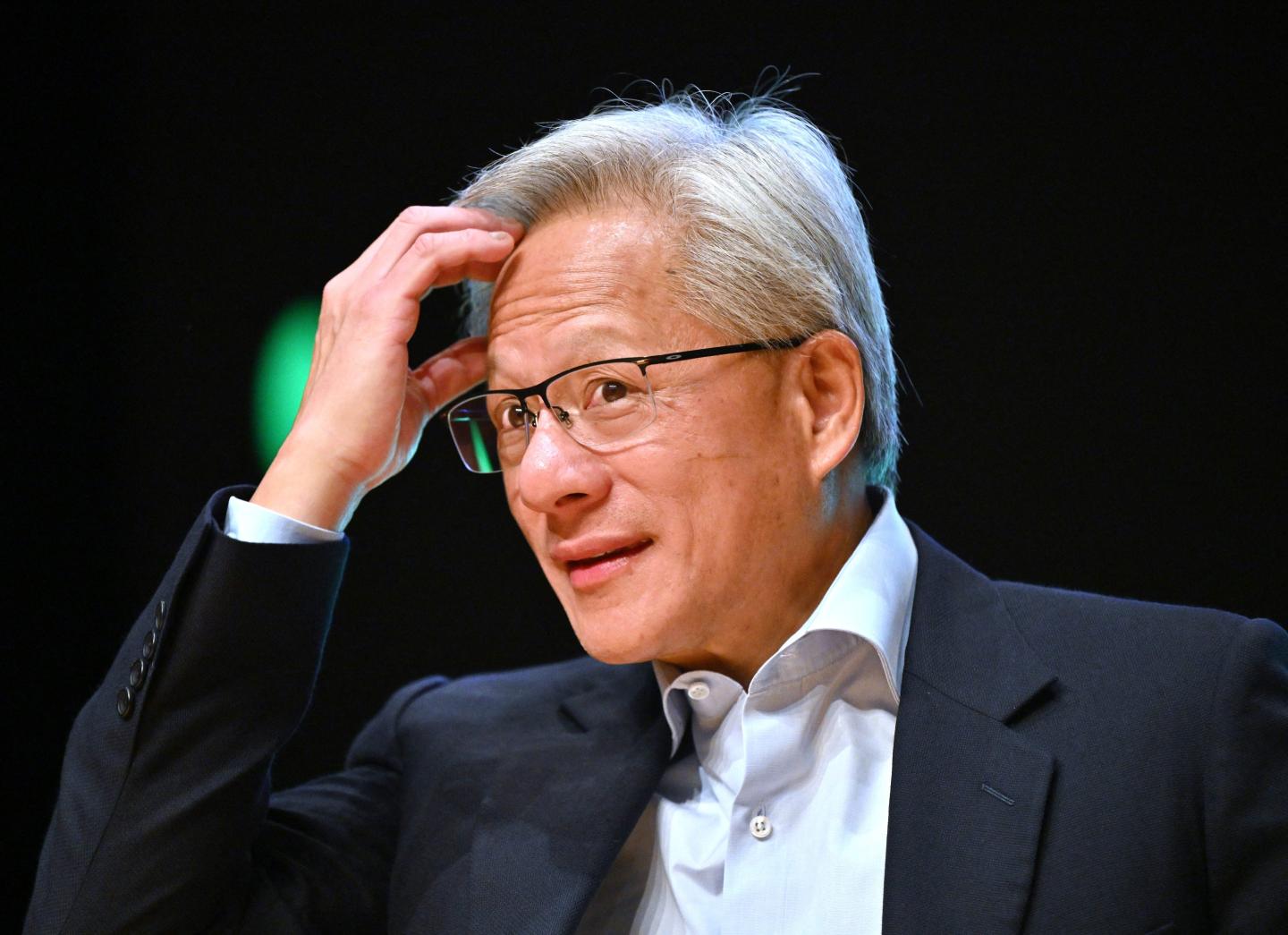
Nvidia founder and CEO Jensen Huang reacts during a press conference at the Asia-Pacific Economic Cooperation (APEC) CEO Summit in Gyeongju on October 31, 2025.
Nvidia cofounder and CEO Jensen Huang at the Asia-Pacific Economic Cooperation (APEC) CEO Summit in Gyeongju, South Korea, Oct. 31, 2025.JUNG YEON-JE—AFP/Getty Images
Add Fortune on Google for similar content.

Two months after Nvidia and OpenAI unveiled their eye-popping plan to deploy at least 10 gigawatts of Nvidia systems—and up to $100 billion in investments—the chipmaker now admits the deal isn’t actually final.

Recommended Video

Speaking Tuesday at the UBS Global Technology and AI Conference in Scottsdale, Nvidia EVP and CFO Colette Kress told investors that the much-hyped OpenAI partnership is still at the letter-of-intent stage.

“We still haven’t completed a definitive agreement,” Kress said when asked how much of the 10-gigawatt commitment is actually locked in.

That’s a striking clarification for a deal that Nvidia CEO Jensen Huang once called “the biggest AI infrastructure project in history.” Analysts had estimated that the deal could generate as much as $500 billion in revenue for the AI chipmaker. 

When the companies announced the partnership in September, they outlined a plan to deploy millions of Nvidia GPUs over several years, backed by up to 10 gigawatts of data center capacity. Nvidia pledged to invest up to $100 billion in OpenAI as each tranche comes online. The news helped fuel an AI-infrastructure rally, sending Nvidia shares up 4% and reinforcing the narrative that the two companies are joined at the hip.

Kress’s comments suggest something more tentative, even months after the framework was released. 

A megadeal that isn’t in the numbers—yet

It’s unclear why the deal hasn’t been executed, but Nvidia’s latest 10-Q offers clues. The filing states plainly that “there is no assurance that any investment will be completed on expected terms, if at all,” referring not only to the OpenAI arrangement but also to Nvidia’s planned $10 billion investment in Anthropic and its $5 billion commitment to Intel.

In a lengthy “Risk Factors” section, Nvidia spells out the fragile architecture underpinning megadeals like this one. The company stresses that the story is only as real as the world’s ability to build and power the data centers required to run its systems. Nvidia must order GPUs, HBM memory, networking gear, and other components more than a year in advance, often via non-cancelable, prepaid contracts. If customers scale back, delay financing, or change direction, Nvidia warns it may end up with “excess inventory,” “cancellation penalties,” or “inventory provisions or impairments.” Past mismatches between supply and demand have “significantly harmed our financial results,” the filing notes.

The biggest swing factor seems to be the physical world: Nvidia says the availability of “data center capacity, energy, and capital” is critical for customers to deploy the AI systems they’ve verbally committed to. Power build-out is described as a “multiyear process” that faces “regulatory, technical, and construction challenges.” If customers can’t secure enough electricity or financing, Nvidia warns, it could “delay customer deployments or reduce the scale” of AI adoption.

Nvidia also admits that its own pace of innovation makes planning harder. It has moved to an annual cadence of new architectures—Hopper, Blackwell, Vera Rubin—while still supporting prior generations. It notes that a faster architecture pace “may magnify the challenges” of predicting demand and can lead to “reduced demand for current generation” products. 

These admissions nod to the warnings of AI bears like investor of Big Short fame Michael Burry, who has alleged that Nvidia and other chipmakers are overextending the useful lives of their chips and that the chips’ eventual depreciation will cause breakdowns in the investment cycle. However, Huang has said that chips from six years ago are still running at full pace. 

The company also nodded explicitly to past boom-bust cycles tied to “trendy” use cases like crypto mining, warning that new AI workloads could create similar spikes and crashes that are hard to forecast and can flood the gray market with secondhand GPUs.

Despite the lack of a deal, Kress stressed that Nvidia’s relationship with OpenAI remains “a very strong partnership,” more than a decade old. OpenAI, she said, considers Nvidia its “preferred partner” for compute. But she added that Nvidia’s current sales outlook does not rely on the new megadeal.

The roughly $500 billion of Blackwell and Vera Rubin system demand Nvidia has guided for 2025–26 “doesn’t include any of the work we’re doing right now on the next part of the agreement with OpenAI,” she said. For now, OpenAI’s purchases flow indirectly through cloud partners like Microsoft and Oracle rather than through the new direct arrangement laid out in the letter of intent.

OpenAI “does want to go direct,” Kress said. “But again, we’re still working on a definitive agreement.”

Nvidia insists the moat is intact

On competitive dynamics, Kress was unequivocal. Markets lately have been cheering Google’s TPU—which has a smaller use case than the GPU but requires less power—as a potential competitor to Nvidia’s GPU. Asked whether those types of chips, called ASICs, are narrowing Nvidia’s lead, she responded: “Absolutely not.”

“Our focus right now is helping all different model builders, but also helping so many enterprises with a full stack,” she said. Nvidia’s defensive moat, she argued, isn’t any individual chip but the entire platform: hardware, CUDA, and a constantly expanding library of industry-specific software. That stack, she said, is why older architectures remain heavily used even as Blackwell becomes the new standard.

“Everybody is on our platform,” Kress said. “All models are on our platform, both in the cloud as well as on-prem.”

Subscribe to Fortune Gulf Brief. Every Tuesday, this new newsletter delivers clear-eyed, authoritative intelligence on the deals, decisions, policies, and power shifts shaping one of the world’s most consequential regions, written for the people who need to act on it. Sign up here.
About the Author
By Eva RoytburgFellow, News
Instagram iconLinkedIn icon

Eva covers macroeconomics, market-moving news, and the forces shaping the global economy.

See full bioRight Arrow Button Icon
Add Fortune on Google for similar content.

Latest in AI

Finance
Lorem ipsum dolor sit amet, consectetur adipiscing elit, sed do eiusmod tempor incididunt ut labore et dolore magna aliqua. Ut enim ad minim veniam
By Fortune Editors
October 20, 2025
Finance
Lorem ipsum dolor sit amet, consectetur adipiscing elit, sed do eiusmod tempor incididunt ut labore et dolore magna aliqua. Ut enim ad minim veniam
By Fortune Editors
October 20, 2025
Finance
Lorem ipsum dolor sit amet, consectetur adipiscing elit, sed do eiusmod tempor incididunt ut labore et dolore magna aliqua. Ut enim ad minim veniam
By Fortune Editors
October 20, 2025
Finance
Lorem ipsum dolor sit amet, consectetur adipiscing elit, sed do eiusmod tempor incididunt ut labore et dolore magna aliqua. Ut enim ad minim veniam
By Fortune Editors
October 20, 2025
Finance
Lorem ipsum dolor sit amet, consectetur adipiscing elit, sed do eiusmod tempor incididunt ut labore et dolore magna aliqua. Ut enim ad minim veniam
By Fortune Editors
October 20, 2025
Finance
Lorem ipsum dolor sit amet, consectetur adipiscing elit, sed do eiusmod tempor incididunt ut labore et dolore magna aliqua. Ut enim ad minim veniam
By Fortune Editors
October 20, 2025

Most Popular

Finance
Lorem ipsum dolor sit amet, consectetur adipiscing elit, sed do eiusmod tempor incididunt ut labore et dolore magna aliqua. Ut enim ad minim veniam
By Fortune Editors
October 20, 2025
Finance
Lorem ipsum dolor sit amet, consectetur adipiscing elit, sed do eiusmod tempor incididunt ut labore et dolore magna aliqua. Ut enim ad minim veniam
By Fortune Editors
October 20, 2025
Finance
Lorem ipsum dolor sit amet, consectetur adipiscing elit, sed do eiusmod tempor incididunt ut labore et dolore magna aliqua. Ut enim ad minim veniam
By Fortune Editors
October 20, 2025
Finance
Lorem ipsum dolor sit amet, consectetur adipiscing elit, sed do eiusmod tempor incididunt ut labore et dolore magna aliqua. Ut enim ad minim veniam
By Fortune Editors
October 20, 2025
Finance
Lorem ipsum dolor sit amet, consectetur adipiscing elit, sed do eiusmod tempor incididunt ut labore et dolore magna aliqua. Ut enim ad minim veniam
By Fortune Editors
October 20, 2025
Finance
Lorem ipsum dolor sit amet, consectetur adipiscing elit, sed do eiusmod tempor incididunt ut labore et dolore magna aliqua. Ut enim ad minim veniam
By Fortune Editors
October 20, 2025
Fortune Secondary Logo
Rankings
  • 100 Best Companies
  • Fortune 500
  • Global 500
  • Fortune 500 Europe
  • Most Powerful Women
  • World's Most Admired Companies
  • See All Rankings
  • Lists Calendar
Sections
  • Finance
  • Fortune Crypto
  • Features
  • Leadership
  • Health
  • Commentary
  • Success
  • Retail
  • Mpw
  • Tech
  • Lifestyle
  • CEO Initiative
  • Asia
  • Politics
  • Conferences
  • Europe
  • Newsletters
  • Personal Finance
  • Environment
  • Magazine
  • Education
Customer Support
  • Frequently Asked Questions
  • Customer Service Portal
  • Privacy Policy
  • Terms Of Use
  • Single Issues For Purchase
  • International Print
Commercial Services
  • Advertising
  • Fortune Brand Studio
  • Fortune Analytics
  • Fortune Conferences
  • Business Development
  • Group Subscriptions
About Us
  • About Us
  • Press Center
  • Work At Fortune
  • Terms And Conditions
  • Site Map
  • About Us
  • Press Center
  • Work At Fortune
  • Terms And Conditions
  • Site Map
  • Facebook icon
  • Twitter icon
  • LinkedIn icon
  • Instagram icon
  • Pinterest icon

Latest in AI

The hidden cost of your AI rollout: burning out the high performers running it
Workplace Cultureburnout
The hidden cost of your AI rollout: burning out the high performers running it
By Mikaela Cohen and HR BrewJune 23, 2026
10 hours ago
Alan Greenspan testifying before the Senate Banking Committee.
BankingFederal Reserve
The man who invented the Fed’s magic trick just died. His successor is about to try it again
By Eva RoytburgJune 23, 2026
12 hours ago
Google DeepMind CEO Demis Hassabis (left) stands on a spiral staircase next to Google DeepMind researcher John Jumper.
NewslettersEye on AI
Defections from Google DeepMind prompt questions about Alphabet’s efforts to stay at the forefront of AI
By Jeremy KahnJune 23, 2026
12 hours ago
college
SuccessEducation
47% of Harvard seniors admit to cheating — and the problem existed long before ChatGPT
By Austin Sarat and The ConversationJune 23, 2026
13 hours ago
data
EnergyData centers
AI’s power hunger is turning electric utilities into Wall Street growth stocks — and customers may pay the price
By Conor Harrison and The ConversationJune 23, 2026
13 hours ago
Anthropic logo behind phone with Claude logo.
AIAnthropic
Anthropic launches Claude Tag, a tool that works like a virtual employee within Slack
By Beatrice NolanJune 23, 2026
14 hours ago

Most Popular

After forcing workers back to the office, Goldman Sachs and JPMorgan Chase are now letting their staff work remotely—but only for the World Cup
Success
After forcing workers back to the office, Goldman Sachs and JPMorgan Chase are now letting their staff work remotely—but only for the World Cup
By Orianna Rosa RoyleJune 23, 2026
19 hours ago
Markets tumble worldwide as Fed resets expectations: $400 billion wiped off SpaceX stock
Banking
Markets tumble worldwide as Fed resets expectations: $400 billion wiped off SpaceX stock
By Jim EdwardsJune 23, 2026
21 hours ago
Current price of oil as of June 23, 2026
Personal Finance
Current price of oil as of June 23, 2026
By Joseph HostetlerJune 23, 2026
18 hours ago
Meet the 2 men putting New York's $300 billion pension fund in play for the first time in 20 years
Investing
Meet the 2 men putting New York's $300 billion pension fund in play for the first time in 20 years
By Nick LichtenbergJune 22, 2026
2 days ago
Former U.S. Secret Service agent says bringing your authentic self to work stifles teamwork: 'You don’t get high performers, you get sloppiness'
Success
Former U.S. Secret Service agent says bringing your authentic self to work stifles teamwork: 'You don’t get high performers, you get sloppiness'
By Sydney LakeJune 21, 2026
3 days ago
Texas and Charlotte used to build huge McMansions—now they're copying the California design tricks they once mocked
Real Estate
Texas and Charlotte used to build huge McMansions—now they're copying the California design tricks they once mocked
By Sydney LakeJune 22, 2026
2 days ago

© 2026 Fortune Media IP Limited. All Rights Reserved. Use of this site constitutes acceptance of our Terms of Use and Privacy Policy | CA Notice at Collection and Privacy Notice | Do Not Sell/Share My Personal Information
FORTUNE is a trademark of Fortune Media IP Limited, registered in the U.S. and other countries. FORTUNE may receive compensation for some links to products and services on this website. Offers may be subject to change without notice.