
• Home
  • Latest
  • Fortune 500
  • Finance
  • Tech
  • Leadership
  • Lifestyle
  • Rankings
  • Multimedia
CommentaryJobs

Our research shows it’s a profound strategic error to cut entry-level jobs—those workers are likely to get the best results from AI

By
Frank Nagle
Frank Nagle
Down Arrow Button Icon
By
Frank Nagle
Frank Nagle
Down Arrow Button Icon
November 19, 2025, 9:00 AM ET
Frank Nagle
Frank Nagle, Research Scientist at the MIT Initiative on the Digital Economy and the Chief Economist at The Linux Foundation.courtesy of MIT

The public conversation about artificial intelligence in the workplace is stuck in a dead end, cycling between two familiar narratives: the promise of a new productivity revolution and the fear of mass unemployment as evidenced by numerous Fortune 500 companies’ recent layoffs. While this debate makes for sensational headlines, it distracts from the immediate, strategic challenge landing on every manager’s desk: how best to adapt their organizations and management styles to the way AI is changing work now.

Recommended Video

Over the last few years, I’ve studied this shift in the workplace firsthand, both in large-scale data analysis of how software developers are using AI tools and as a consultant to multinational corporations rolling out AI agents. The evidence is clear: the primary opportunity AI provides is not to replace people, but to reallocate their focus. My research—co-authored with colleagues from UC Irvine, Microsoft, GitHub, and the Linux Foundation—has shown that generative AI excels at absorbing the administrative tasks that bog down employees, freeing them to concentrate on the creative and complex work that truly moves the needle.

But that efficiency has led leaders to a crucial strategic choice — one that I believe many organizations are getting wrong. Do you reinvest the freed-up capacity of your human employees into innovation and growth, or do you cash it in for short-term cost savings? We’re already seeing companies choose the latter, often by cutting entry-level positions typically tasked with routine, lower-level work. On a surface level, the logic is tempting: why pay a salary for tasks an algorithm can do for pennies on the dollar?

This is a profound strategic error.

Junior employees are typically innovative and technically adept, and in tune with a new generation of customers. More importantly, they become tomorrow’s managers and leaders. Cutting them off not only silences crucial perspectives but also creates a long-term deficit in institutional knowledge, breaking the chain of skills that develops as employees grow within a company. This approach is also counterproductive because our research shows that it’s actually individuals with lower experience who benefit the most from artificial intelligence tools, which can help them build new capabilities and manage complex tasks. The path from entry-level employee to valued contributor might actually be shorter than ever.

That’s why the smart, long-term play isn’t to cut employees with “lesser” skills, but to complement them. For managers, the first step is to lean into mentorship by partnering early-career employees with seasoned professionals. Both parties benefit: the junior employee brings a fresh perspective (and often, a higher level of comfort with new technology), while the veteran provides institutional knowledge and critical insights on professional norms and best practices.

This approach also presents a powerful strategic opportunity. While your competitors are under-investing in their future, you can attract and hire the best of the next generation. And thanks to AI’s ability to reduce the burden of project management and administrative tasks, those highly skilled professionals will have more bandwidth available to support them.

But the management challenge doesn’t stop there. While generative AI helps employees learn faster and test their ideas, its speed and reliability are a double-edged sword that can cut apart the connective tissue of an organization. The quick, informal query that was once directed to a peer in the next cubicle is now sent straight to a chatbot. The difficult conversations inherent to collaboration can be avoided — but employees don’t get the chance to work through a challenge and grow their communication and problem-solving skills. If left unchecked, organizational siloes will grow and innovation will suffer.

This reality creates a new, urgent mandate for management. The primary challenge of the AI era is not technological, but organizational.  The time and profit dividends AI provides must be consciously reinvested in building and strengthening interpersonal connections, particularly between junior and senior talent, and in fostering a corporate culture that rewards the kind of truly creative thinking that AI can’t emulate. The real measure of leadership in the coming years will not be how quickly companies adopt AI, but how wisely they invest in the people who use it.

The opinions expressed in Fortune.com commentary pieces are solely the views of their authors and do not necessarily reflect the opinions and beliefs of Fortune.
Join us at the Fortune Workplace Innovation Summit May 19–20, 2026, in Atlanta. The next era of workplace innovation is here—and the old playbook is being rewritten. At this exclusive, high-energy event, the world’s most innovative leaders will convene to explore how AI, humanity, and strategy converge to redefine, again, the future of work. Register now.
About the Author
By Frank Nagle
See full bioRight Arrow Button Icon

Latest in Commentary

Finance
Lorem ipsum dolor sit amet, consectetur adipiscing elit, sed do eiusmod tempor incididunt ut labore et dolore magna aliqua. Ut enim ad minim veniam
By Fortune Editors
October 20, 2025
Finance
Lorem ipsum dolor sit amet, consectetur adipiscing elit, sed do eiusmod tempor incididunt ut labore et dolore magna aliqua. Ut enim ad minim veniam
By Fortune Editors
October 20, 2025
Finance
Lorem ipsum dolor sit amet, consectetur adipiscing elit, sed do eiusmod tempor incididunt ut labore et dolore magna aliqua. Ut enim ad minim veniam
By Fortune Editors
October 20, 2025
Finance
Lorem ipsum dolor sit amet, consectetur adipiscing elit, sed do eiusmod tempor incididunt ut labore et dolore magna aliqua. Ut enim ad minim veniam
By Fortune Editors
October 20, 2025
Finance
Lorem ipsum dolor sit amet, consectetur adipiscing elit, sed do eiusmod tempor incididunt ut labore et dolore magna aliqua. Ut enim ad minim veniam
By Fortune Editors
October 20, 2025
Finance
Lorem ipsum dolor sit amet, consectetur adipiscing elit, sed do eiusmod tempor incididunt ut labore et dolore magna aliqua. Ut enim ad minim veniam
By Fortune Editors
October 20, 2025

Most Popular

Finance
Lorem ipsum dolor sit amet, consectetur adipiscing elit, sed do eiusmod tempor incididunt ut labore et dolore magna aliqua. Ut enim ad minim veniam
By Fortune Editors
October 20, 2025
Finance
Lorem ipsum dolor sit amet, consectetur adipiscing elit, sed do eiusmod tempor incididunt ut labore et dolore magna aliqua. Ut enim ad minim veniam
By Fortune Editors
October 20, 2025
Finance
Lorem ipsum dolor sit amet, consectetur adipiscing elit, sed do eiusmod tempor incididunt ut labore et dolore magna aliqua. Ut enim ad minim veniam
By Fortune Editors
October 20, 2025
Finance
Lorem ipsum dolor sit amet, consectetur adipiscing elit, sed do eiusmod tempor incididunt ut labore et dolore magna aliqua. Ut enim ad minim veniam
By Fortune Editors
October 20, 2025
Finance
Lorem ipsum dolor sit amet, consectetur adipiscing elit, sed do eiusmod tempor incididunt ut labore et dolore magna aliqua. Ut enim ad minim veniam
By Fortune Editors
October 20, 2025
Finance
Lorem ipsum dolor sit amet, consectetur adipiscing elit, sed do eiusmod tempor incididunt ut labore et dolore magna aliqua. Ut enim ad minim veniam
By Fortune Editors
October 20, 2025
Fortune Secondary Logo
Rankings
  • 100 Best Companies
  • Fortune 500
  • Global 500
  • Fortune 500 Europe
  • Most Powerful Women
  • Future 50
  • World’s Most Admired Companies
  • See All Rankings
Sections
  • Finance
  • Fortune Crypto
  • Features
  • Leadership
  • Health
  • Commentary
  • Success
  • Retail
  • Mpw
  • Tech
  • Lifestyle
  • CEO Initiative
  • Asia
  • Politics
  • Conferences
  • Europe
  • Newsletters
  • Personal Finance
  • Environment
  • Magazine
  • Education
Customer Support
  • Frequently Asked Questions
  • Customer Service Portal
  • Privacy Policy
  • Terms Of Use
  • Single Issues For Purchase
  • International Print
Commercial Services
  • Advertising
  • Fortune Brand Studio
  • Fortune Analytics
  • Fortune Conferences
  • Business Development
  • Group Subscriptions
About Us
  • About Us
  • Editorial Calendar
  • Press Center
  • Work At Fortune
  • Diversity And Inclusion
  • Terms And Conditions
  • Site Map
  • About Us
  • Editorial Calendar
  • Press Center
  • Work At Fortune
  • Diversity And Inclusion
  • Terms And Conditions
  • Site Map
  • Facebook icon
  • Twitter icon
  • LinkedIn icon
  • Instagram icon
  • Pinterest icon

Frank Nagle is a research scientist at the MIT Initiative on the Digital Economy and the Chief Economist at the Linux Foundation. Dr. Nagle advises multiple startups, has worked with research groups at the OECD and European Commission and has consulted for The World Bank, the U.S. Treasury Department, the Social Security Administration, and various companies in the technology, defense, and energy sectors. Prior to his academic career, Frank worked at a number of startups and large companies in the information security and technology consulting industries. Before MIT, Frank was a professor at Harvard Business School and the Marshall School of Business at the University of Southern California. 


Latest in Commentary

EuropeLetter from London
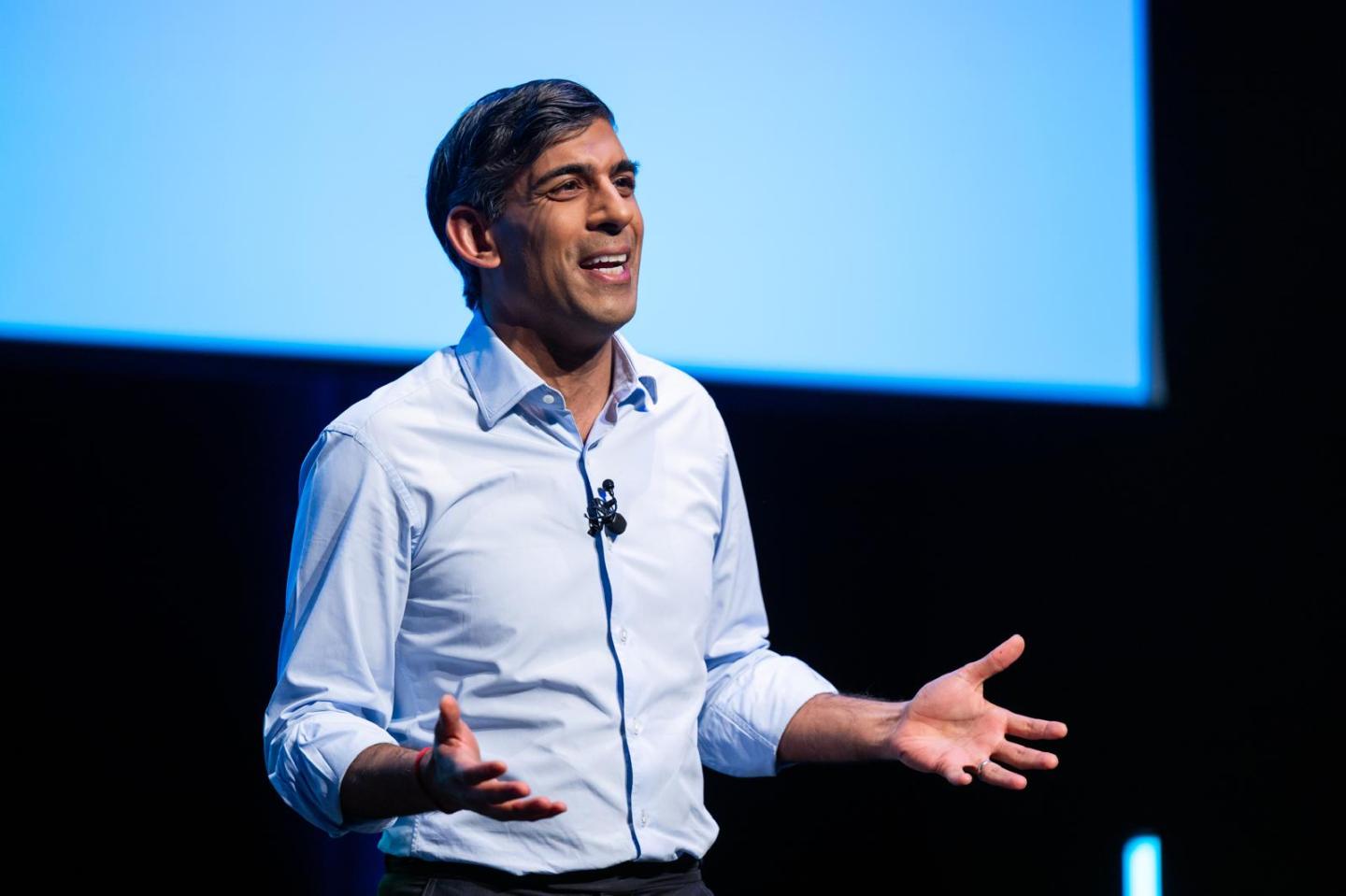
Rishi Sunak is giving advice to CEOs on AI. Here are his golden rules
By Kamal AhmedMarch 25, 2026
8 hours ago
retirement
CommentaryRetirement
Our retirement system gets a C-plus; policymakers have an opportunity to make it A grade
By Chris MahoneyMarch 25, 2026
16 hours ago
david-f
CommentaryVenture Capital
Europe has survived 3 energy shocks in 4 years. The only way out is to stop buying power from its enemies
By David FrykmanMarch 25, 2026
17 hours ago
fauci
CommentaryCOVID-19 vaccines
How COVID turned America against science — and what it will take to win it back
By David Blumenthal and James A. MoroneMarch 24, 2026
2 days ago
alex
Commentarydisruption
AI’s disruption is a choice, not a forecast
By Alex StephanyMarch 24, 2026
2 days ago
trump
Commentarynational debt
The Treasury just declared the U.S. insolvent. The media missed it
By Steve H. Hanke and David M. WalkerMarch 23, 2026
2 days ago

Most Popular

Magazine
The youngest-ever female CEO of a Fortune 500 company is fighting Trump's cuts to keep Medicaid strong
By Fortune EditorsMarch 24, 2026
2 days ago
Commentary
The Treasury just declared the U.S. insolvent. The media missed it
By Fortune EditorsMarch 23, 2026
2 days ago
Success
Palantir’s billionaire CEO says only two kinds of people will succeed in the AI era: trade workers — ‘or you’re neurodivergent’
By Fortune EditorsMarch 24, 2026
1 day ago
Success
The job market is so bad that ‘reverse recruiters’ are charging $1,500 a month just to help people look for jobs
By Fortune EditorsMarch 25, 2026
17 hours ago
Energy
Nobel laureate Paul Krugman calls it 'treason': $580 million in suspicious oil futures traded minutes before Trump's Iran reversal
By Fortune EditorsMarch 24, 2026
1 day ago
Success
JPMorgan has started monitoring the keystrokes, video calls, and meetings of its junior investment bankers—and they say it's for employee well-being
By Fortune EditorsMarch 24, 2026
1 day ago

© 2026 Fortune Media IP Limited. All Rights Reserved. Use of this site constitutes acceptance of our Terms of Use and Privacy Policy | CA Notice at Collection and Privacy Notice | Do Not Sell/Share My Personal Information
FORTUNE is a trademark of Fortune Media IP Limited, registered in the U.S. and other countries. FORTUNE may receive compensation for some links to products and services on this website. Offers may be subject to change without notice.