• Home
  • Latest
  • Fortune 500
  • Finance
  • Tech
  • Leadership
  • Lifestyle
  • Rankings
  • Multimedia

Trendingnow

1

After forcing workers back to the office, Goldman Sachs and JPMorgan Chase are now letting their staff work remotely—but only for the World Cup

2

Markets tumble worldwide as Fed resets expectations: $400 billion wiped off SpaceX stock

3

Current price of oil as of June 23, 2026

1

After forcing workers back to the office, Goldman Sachs and JPMorgan Chase are now letting their staff work remotely—but only for the World Cup

2

Markets tumble worldwide as Fed resets expectations: $400 billion wiped off SpaceX stock

3

Current price of oil as of June 23, 2026
CommentaryCorporate Governance

The Trump administration gets it right on limiting the power of proxy advisory firms such as ISS and Glass Lewis 

By
Jeffrey Sonnenfeld
Jeffrey Sonnenfeld
and
Steven Tian
Steven Tian
Down Arrow Button Icon
By
Jeffrey Sonnenfeld
Jeffrey Sonnenfeld
and
Steven Tian
Steven Tian
Down Arrow Button Icon
November 16, 2025, 9:10 AM ET
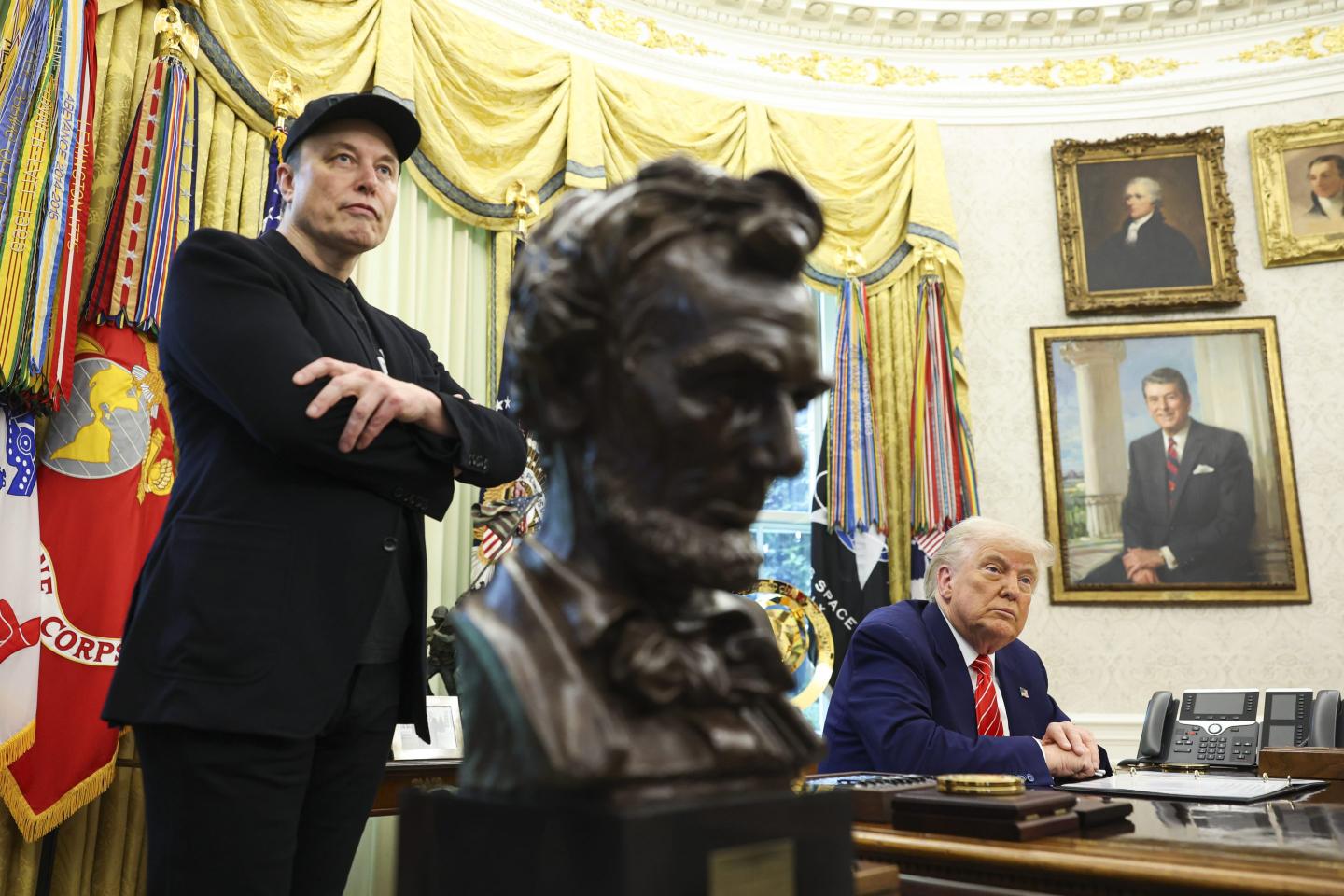
Musk, Trump
Musk called them "corporate terrorists" and the Trump administration is reportedly moving to rein in proxy advisory firms.Tom Brenner For The Washington Post via Getty Images
Add Fortune on Google for similar content.

The reporting this week that the Trump administration is moving to craft an executive order potentially limiting the power of proxy advisory firms such as ISS and Glass Lewis, along with the reported FTC investigation into whether these firms have violated antitrust laws, should be celebrated across the political spectrum. As longtime corporate governance scholars, we believe these moves are not only correct but long overdue. 

Recommended Video

For decades, far before it became popular to do so, the first author has been vocally questioning the credibility of proxy advisory firms. And he’s not alone. As Jamie Dimon incisively warned in his recent shareholder letter, “it is increasingly clear that proxy advisers have undue influence….many companies would argue that their information is frequently not balanced, not representative of the full view, and not accurate.” 

Similarly, Elon Musk blasted ISS and Glass Lewis as “corporate terrorists” after the proxy advisers attempted to usurp voting power rightfully belonging to the shareholders. Regardless of how you feel about the $1 trillion pay package that was up for shareholder approval at that time, it was noteworthy that shareholders overwhelmingly joined Musk in repudiating the proxy advisers, showing how ineffectual and problematic the proxy advisers can be. We would not use the term “terrorist,” nor would we call them “extortionist,” but we would go so far as to say that “some might say it resembles an extortion scheme!” 

Here are some of the primary reasons I’ve identified and trumpeted over decades for why the proxy advisory firms are problematic:  

  1. Rampant conflicts of interest: as the first author wrote in the Wall Street Journal in 2003, “some of the governance ratings agencies look dodgier than the companies they watchdog,” pointing out that these same ratings firms are trying to hawk consulting services to companies whose proposals they also rate, creating at least some appearance of pay to play. “This starts to resemble the protection schemes of bullies or the conflicts of auditors/consultants which governance gurus decry,” the first author wrote. “ISS directly sells advice to the institutional investors on voting their proxies while at the same time it sells advice to management on how to protect itself from these investors’ proxies.” 
  2. Outdated checklist approach reflecting superstition not fact: the proxy advisory firms are staffed by inexperienced staffers lacking governance experience or expertise, who work off unthinking checklists of highly stringent standards, even though many criteria reflect superstition rather than fact. Such key scoring dimensions as limiting CEO/director tenure; implementing a formal retirement age, or mandating the separation of the chair/CEO have little basis in empirical fact. If anything, some of the most prominent corporate scandals over the past few decades, from Enron to Worldcom to Tyco, scored highly on these spurious checklists – reflecting just how useless they really are in capturing good vs. bad governance. Ironically, sometimes it is the proxy advisers themselves who are guilty of misconduct; for example, the influential ISS analyst who recommended HP’s disastrous merger with Compaq was later found to have falsified their own credentials. 
  3. Rampant factual errors: I have been vocal in repeatedly calling out instances where the work of proxy advisory firms is so sloppy that they contain basic factual errors – which can be sadly, hugely consequential. For example, at the peak of Disney’s heated proxy fight with Nelson Peltz, I called out how one major proxy advisory firm egregiously miscalculated CEO Bob Iger’s stock performance, accidentally attributing successor Bob Chapek’s underperformance to Iger. Similarly, ISS blamed Disney for not bringing a specific individual (Mason Morfit of ValueAct) onto the board — even though that individual has repeatedly disclaimed, publicly and privately, any interest in serving on the board. 

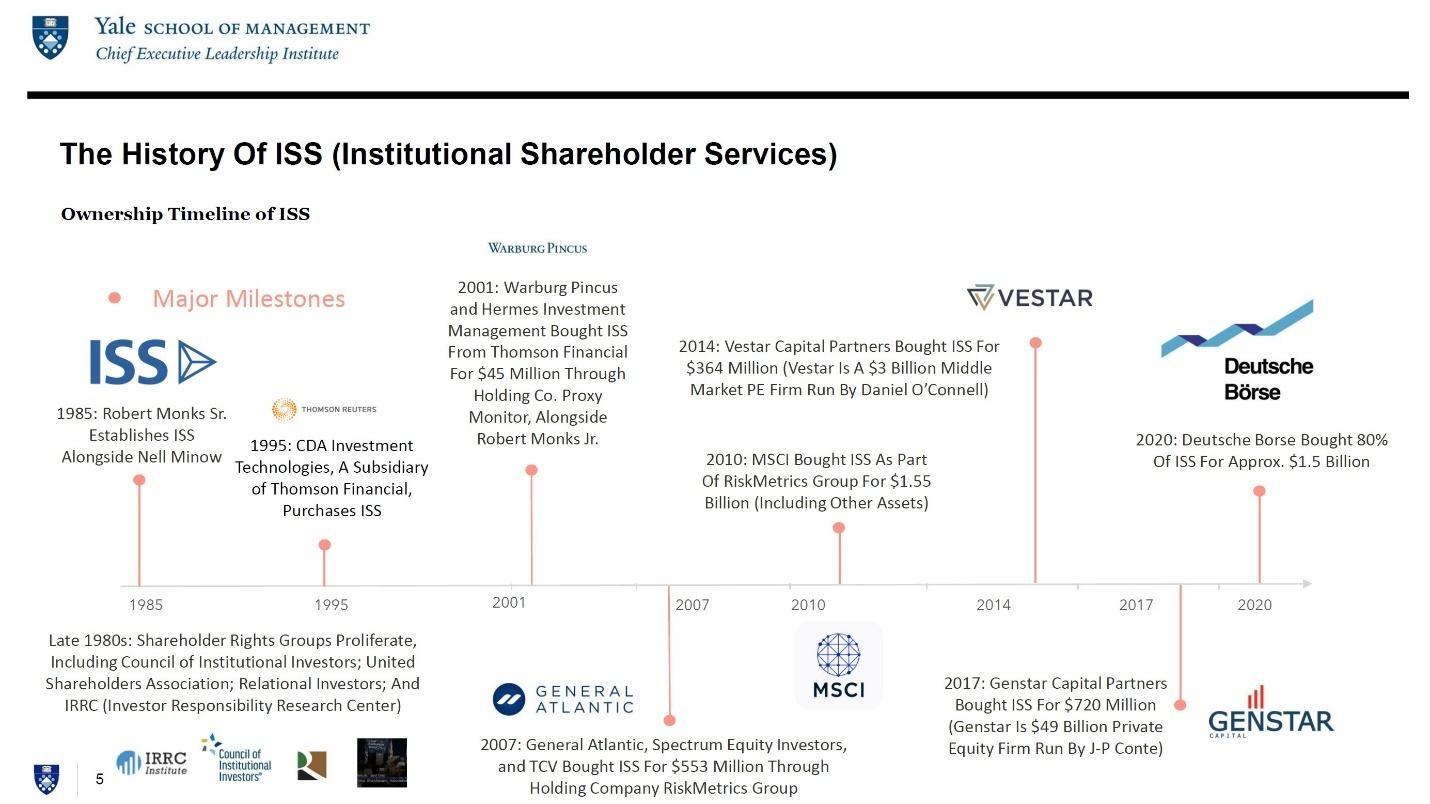
The proxy advisory firms haven’t always been all bad. The genuine, original proxy advisors, such as Nell Minow and Bob Monks, who co-founded ISS, and Ralph Whitworth of Relational Investors, pioneered the proxy advisory concept in the 1980s alongside peer shareholder rights groups such as The Council of Institutional Investors, United Shareholders Association, and the Investor Responsibility Research Center. They were at the forefront of a virtuous and necessary movement in corporate governance, bringing accountability, transparency, and shareholder value to the forefront while exposing and ending rampant corporate misconduct, cronyism and excess. 

But over time, they themselves have been overtaken by misconduct, cronyism, and excess, especially after the leading proxy advisory firms continually traded hands between a rotating cast of conflicted foreign buyers and private equity firms. ISS alone traded hands no less than eight times in the last three decades; one wonders how these proxy advisory firms are supposed to be evaluating long-term value for shareholders when their own governance seems to be a bad cross between musical chairs and hot potato.  
For too long, these proxy advisors have been a scourge in the corporate governance landscape, and the Trump administration deserves credit from across the political spectrum for acting on this critical challenge. 

The opinions expressed in Fortune.com commentary pieces are solely the views of their authors and do not necessarily reflect the opinions and beliefs of Fortune.

About the Authors
By Jeffrey Sonnenfeld

Jeffrey Sonnenfeld is the Lester Crown Professor in Management Practice and Senior Associate Dean at Yale School of Management.

See full bioRight Arrow Button Icon
By Steven Tian

Steven Tian is the director of research at the Yale Chief Executive Leadership Institute.

See full bioRight Arrow Button Icon
Add Fortune on Google for similar content.

Latest in Commentary

Finance
Lorem ipsum dolor sit amet, consectetur adipiscing elit, sed do eiusmod tempor incididunt ut labore et dolore magna aliqua. Ut enim ad minim veniam
By Fortune Editors
October 20, 2025
Finance
Lorem ipsum dolor sit amet, consectetur adipiscing elit, sed do eiusmod tempor incididunt ut labore et dolore magna aliqua. Ut enim ad minim veniam
By Fortune Editors
October 20, 2025
Finance
Lorem ipsum dolor sit amet, consectetur adipiscing elit, sed do eiusmod tempor incididunt ut labore et dolore magna aliqua. Ut enim ad minim veniam
By Fortune Editors
October 20, 2025
Finance
Lorem ipsum dolor sit amet, consectetur adipiscing elit, sed do eiusmod tempor incididunt ut labore et dolore magna aliqua. Ut enim ad minim veniam
By Fortune Editors
October 20, 2025
Finance
Lorem ipsum dolor sit amet, consectetur adipiscing elit, sed do eiusmod tempor incididunt ut labore et dolore magna aliqua. Ut enim ad minim veniam
By Fortune Editors
October 20, 2025
Finance
Lorem ipsum dolor sit amet, consectetur adipiscing elit, sed do eiusmod tempor incididunt ut labore et dolore magna aliqua. Ut enim ad minim veniam
By Fortune Editors
October 20, 2025

Most Popular

Finance
Lorem ipsum dolor sit amet, consectetur adipiscing elit, sed do eiusmod tempor incididunt ut labore et dolore magna aliqua. Ut enim ad minim veniam
By Fortune Editors
October 20, 2025
Finance
Lorem ipsum dolor sit amet, consectetur adipiscing elit, sed do eiusmod tempor incididunt ut labore et dolore magna aliqua. Ut enim ad minim veniam
By Fortune Editors
October 20, 2025
Finance
Lorem ipsum dolor sit amet, consectetur adipiscing elit, sed do eiusmod tempor incididunt ut labore et dolore magna aliqua. Ut enim ad minim veniam
By Fortune Editors
October 20, 2025
Finance
Lorem ipsum dolor sit amet, consectetur adipiscing elit, sed do eiusmod tempor incididunt ut labore et dolore magna aliqua. Ut enim ad minim veniam
By Fortune Editors
October 20, 2025
Finance
Lorem ipsum dolor sit amet, consectetur adipiscing elit, sed do eiusmod tempor incididunt ut labore et dolore magna aliqua. Ut enim ad minim veniam
By Fortune Editors
October 20, 2025
Finance
Lorem ipsum dolor sit amet, consectetur adipiscing elit, sed do eiusmod tempor incididunt ut labore et dolore magna aliqua. Ut enim ad minim veniam
By Fortune Editors
October 20, 2025
Fortune Secondary Logo
Rankings
  • 100 Best Companies
  • Fortune 500
  • Global 500
  • Fortune 500 Europe
  • Most Powerful Women
  • World's Most Admired Companies
  • See All Rankings
  • Lists Calendar
Sections
  • Finance
  • Fortune Crypto
  • Features
  • Leadership
  • Health
  • Commentary
  • Success
  • Retail
  • Mpw
  • Tech
  • Lifestyle
  • CEO Initiative
  • Asia
  • Politics
  • Conferences
  • Europe
  • Newsletters
  • Personal Finance
  • Environment
  • Magazine
  • Education
Customer Support
  • Frequently Asked Questions
  • Customer Service Portal
  • Privacy Policy
  • Terms Of Use
  • Single Issues For Purchase
  • International Print
Commercial Services
  • Advertising
  • Fortune Brand Studio
  • Fortune Analytics
  • Fortune Conferences
  • Business Development
  • Group Subscriptions
About Us
  • About Us
  • Press Center
  • Work At Fortune
  • Terms And Conditions
  • Site Map
  • About Us
  • Press Center
  • Work At Fortune
  • Terms And Conditions
  • Site Map
  • Facebook icon
  • Twitter icon
  • LinkedIn icon
  • Instagram icon
  • Pinterest icon

Jeffrey Sonnenfeld is Lester Crown Professor of Leadership Practice at the Yale School of Management and founder of the Yale Chief Executive Leadership Institute. A leadership and governance scholar, he created the world’s first school for incumbent CEOs and he has advised five U.S. presidents across political parties. Steven Tian is the research director of the Yale Chief Executive and a former analyst for Rockefeller Capital Management. He previously worked in the office of the State Department’s undersecretary for Iranian nuclear nonproliferation.


Latest in Commentary

sb
Commentaryclimate change
The climate policy triangle: why leaders can no longer choose between growth, security and sustainability
By Sebastian BuckupJune 23, 2026
10 hours ago
brett
CommentaryManagement
Middle managers aren’t going extinct—they’re evolving into something more powerful
By Brett HurtJune 23, 2026
19 hours ago
ravi
CommentaryAI agents
Yale School of Management: surveillance pricing is just the beginning. AI agents will be the real test of corporate trust
By Ravi Dhar and Jon IwataJune 23, 2026
20 hours ago
elon
CommentaryElon Musk
Elon Musk’s trillion dollars aren’t real — and that’s the point
By Douglas P. McCormickJune 23, 2026
20 hours ago
gen z
CommentaryCareers
Gen Z: if you want to succeed at work, you need to start friction-maxxing
By Michelle SobelJune 23, 2026
21 hours ago
rp
CommentaryLaw
Cooley CEO: Big Law won’t survive if it treats AI as just an efficiency tool
By Rachel ProffittJune 23, 2026
21 hours ago

Most Popular

After forcing workers back to the office, Goldman Sachs and JPMorgan Chase are now letting their staff work remotely—but only for the World Cup
Success
After forcing workers back to the office, Goldman Sachs and JPMorgan Chase are now letting their staff work remotely—but only for the World Cup
By Orianna Rosa RoyleJune 23, 2026
19 hours ago
Markets tumble worldwide as Fed resets expectations: $400 billion wiped off SpaceX stock
Banking
Markets tumble worldwide as Fed resets expectations: $400 billion wiped off SpaceX stock
By Jim EdwardsJune 23, 2026
22 hours ago
Current price of oil as of June 23, 2026
Personal Finance
Current price of oil as of June 23, 2026
By Joseph HostetlerJune 23, 2026
19 hours ago
Meet the 2 men putting New York's $300 billion pension fund in play for the first time in 20 years
Investing
Meet the 2 men putting New York's $300 billion pension fund in play for the first time in 20 years
By Nick LichtenbergJune 22, 2026
2 days ago
Former U.S. Secret Service agent says bringing your authentic self to work stifles teamwork: 'You don’t get high performers, you get sloppiness'
Success
Former U.S. Secret Service agent says bringing your authentic self to work stifles teamwork: 'You don’t get high performers, you get sloppiness'
By Sydney LakeJune 21, 2026
3 days ago
Texas and Charlotte used to build huge McMansions—now they're copying the California design tricks they once mocked
Real Estate
Texas and Charlotte used to build huge McMansions—now they're copying the California design tricks they once mocked
By Sydney LakeJune 22, 2026
2 days ago

© 2026 Fortune Media IP Limited. All Rights Reserved. Use of this site constitutes acceptance of our Terms of Use and Privacy Policy | CA Notice at Collection and Privacy Notice | Do Not Sell/Share My Personal Information
FORTUNE is a trademark of Fortune Media IP Limited, registered in the U.S. and other countries. FORTUNE may receive compensation for some links to products and services on this website. Offers may be subject to change without notice.