
The modern leader faces a leadership environment that is rapidly growing in complexity, grappling with roughly twice as many issues on a CEO’s desk as just five to seven years ago. This pressure has driven senior partners Kurt Strovink and Carolyn Dewar, co-leaders of McKinsey & Company’s CEO Practice—the firm’s top “CEO whisperers”—to empirically study the world’s top 200 corporate chiefs.
Their new book, A CEO for All Seasons, breaks down the mindsets and methods required to succeed in a role that 68% of incumbent CEOs admitted they felt “ill-prepared” for when they stepped into the shoes. While the research conducted by Strovink, Dewar, and co-authors Scott Keller and Vikram Malhotra found that these elite performers possess unique habits for challenging complacency, fostering brutal candor, and staying humble enough to keep learning.
The high-performing leaders studied in the book distinguish themselves through a pervasive “curiosity and learning mindset,” which came through in “almost every interview,” Dewar said in an interview with Fortune.
The top leaders are the first to admit they don’t know everything, Strovink told Fortune. “It wasn’t that they were superhuman. It’s that they learned faster, they were more adaptable and they had structures … institutionalized methods for being able to neutralize their excesses and capitalize on their strength and edge.”
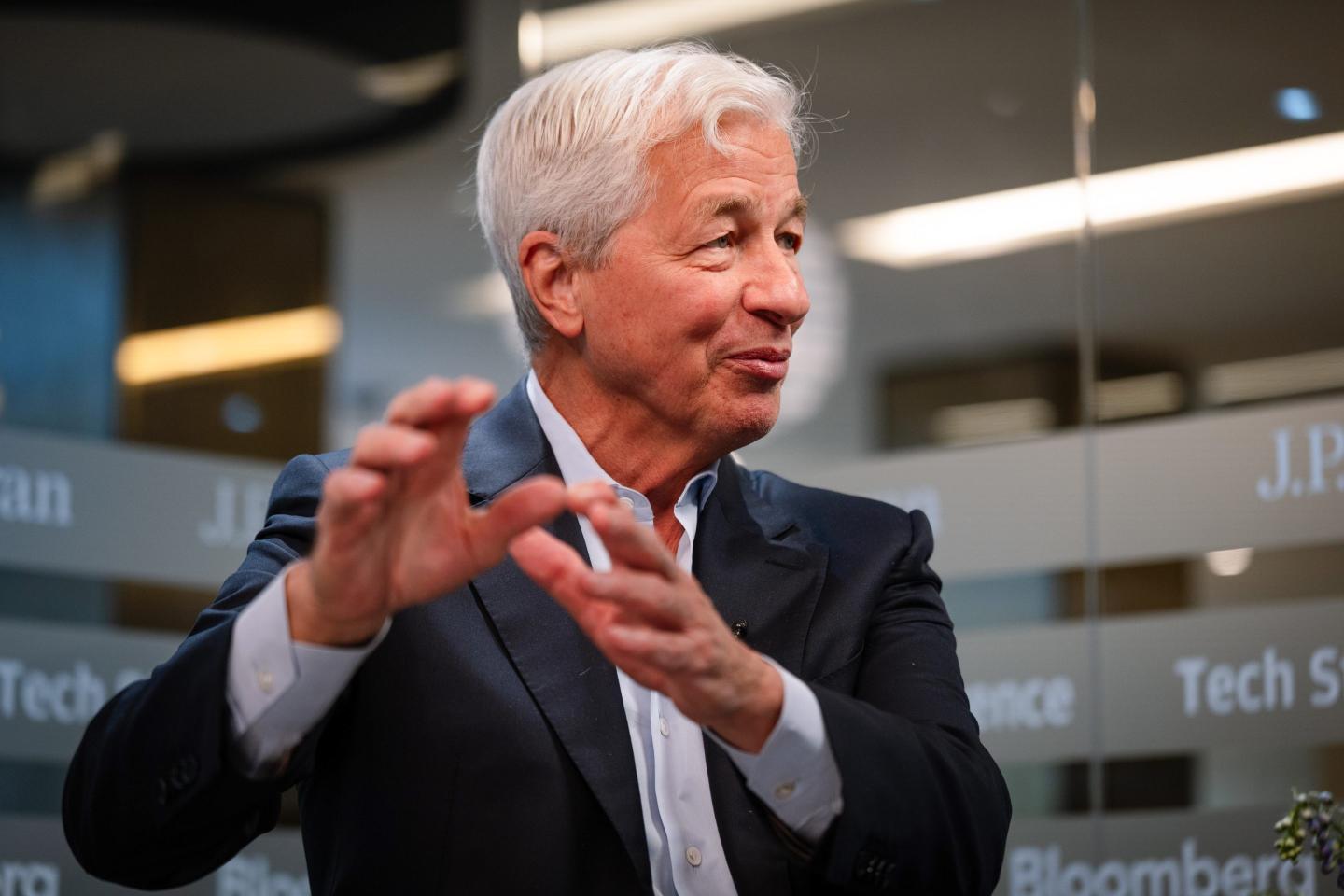
One of the most striking mandates for high-performance culture came from JPMorgan Chase CEO Jamie Dimon. As Strovink related it, Dimon tells his teams: “don’t bring your best self, bring your worst self—put the problems on the table.”
Dewar added that this isn’t meant to encourage bad behavior, but rather organizational candor. It means being “willing to share when things aren’t going well … so we can fix it.”
Strovink added that this level of discomfort is necessary, as great leaders must create conditions for “edge thinking, for candor and for confidence building over time … they put it in the room, they put it on the table and they create, and they do it in their own authentic styles.” Strovink said that good leaders have to find a way to have tough conversations that maybe wouldn’t happen under another leader, “but not have those be scarring, brutalizing experiences.”
The challenges of modern leadership
Strovink explained that advising CEOs, while a core of McKinsey’s mission stretching back nearly 100 years, has reached a new level under the CEO Practice, founded several years ago. This was partly a reflection “that the role of the CEO is becoming more and more important.” We live in an era, Strovink added, “where people are pulling down leadership and saying it’s a bad thing and nobody wants to be led. But the reality is if you’re led by an enlightened leader who’s doing it well, it’s actually a glorious thing that’s so relevant in this generation, maybe even more important than ever.”
Dewar turned to hard data, arguing that the book and the practice are both vital now because it’s frankly challenging to be a CEO. She alluded to the reporting (some of it in the pages of Fortune) about the ever-shortening tenure of the CEO, “but it turns out it’s actually quite bifurcated.” She explained that 30% of CEOs don’t make it past the first three years, and the odds of a long tenure rise significantly once that threshold is passed. She noted that private equity looks closely at this, talking about the cost of churn for a CEO. “We don’t want people churning.” Dewar cited estimates that in the S&P 500, $1 trillion in value is destroyed each year due to failed CEO transitions.
Strovink added that their research really has put a number on good leadership. The top quintile CEOs that we’ve studied, over time, create disproportionate value for their companies, for economies as a whole, for the world,” he argued, adding that McKinsey estimates that the top quintile generates 30x the economic profit of the next three quintiles combined. Leadership—and CEO talent—is “unevenly distributed,” he said.
Jim Rossman of Barclays, global head of shareholder advisory, has been tracking hedge-fund activist campaigns against publicly traded companies for decades, including CEO churn. He found in early October that CEO turnover resulting from activist campaigns was set to hit a record in 2025, exceeding the 2024 record. He told Fortune in an interview that this was making the CEO role more tenuous than ever before. “It feels like what activists have done is basically [to hold] public companies to the standards of private equity,” he said, and they view the CEO “more as an operator, not somebody who’s risen through the ranks.”
Shareholder activists have successfully enforced the strict standards of private equity ownership onto public companies, according to Rossman, holding them to quarterly performance measures focused relentlessly on maximizing efficiency and value. This contrasts sharply with the historical view of a CEO as a “local hero” or “revered figure.” Activists realized they didn’t need to take a company private the way a private-equity firm would to enforce this view, Rossman said; they could simply buy a stake and lobby the board, making the organization instantly subject to immense external pressure. “I think the CEO [churn] is directly linked to the ongoing infiltration of the private equity model in the public companies,” Rossman added.
Rossman noted that this operational focus is accelerated by technology, which provides instant information on a company’s performance relative to peers, and by the consolidation of ownership among index funds, making it easier for activists to organize support among the top ten shareholders. Consequently, new boards—themselves adopting a more private-equity-like mentality—are highly brand-conscious and quick to replace underperforming executives.
Dewar agreed with this line of thinking, saying, “if you think about how much of the economy is shifting to private equity and privately held companies, their churn rate is much higher.” She recently shared an anecdote about talking to a board member at a private equity firm, who said that 71% churn was average for them in terms of leadership turnover. This central question is why she is so passionate about leading the CEO Practice, she added: “how do we actually serve CEOs and boards and organizations to help each of those stages go well?”
Power of candor and discomfort
To survive in this high-stakes environment, McKinsey’s research found that top CEOs are adaptable, not necessarily ruthless. They succeed by embracing a “curiosity and learning mindset” and structuring discomfort into their operations.
Strovink and Dewar referred again to JPMorgan’s Dimon, who has a crucial technique for combating complacency in this relentless environment. The investment bank chief believes that every large organization has a tendency to “rest,” Strovink noted, and this requires the CEO to constantly be “catalyzing it and pushing it.” The “sociology of large organizations” means things turn incremental if a leader is complacent, he added.
This proactive discomfort is the necessary internal counterbalance to the external pressure. Michael Dell exemplifies it, Dewar noted, who fought complacency by forcing his team to imagine an attacker who understood their customers better, encouraging his company to “disrupt ourselves.” (She also noted that Dell has been disrupting himself since becoming a founder CEO at age 19.)
Dewar recalled how Microsoft CEO Satya Nadella told her the CEO Practice’s previous book, CEO Excellence, about the loneliness of the job, stemming from an “information asymmetry problem” in which he literally cannot talk to many of his colleagues about what he knows. They can’t afford to realize it. “No one else in your organization or above you, like your board or your investors, see all the pieces you see.” She said she thinks it’s vital for CEOs to have some trusted advisors, “a kitchen cabinet” of sorts.
Ultimately, the book suggests that the most successful leaders in this highly accelerated, private-equity-influenced era are those who can navigate the core duality of the role: making bold, confident decisions with incomplete information while sustaining the humility and constant learning required to meet relentless performance demands.
The authors emphasize that the goal of the book is to trace the “development of leaders through time,” including the fourth season, which sets up the next generation. Brad Smith, the former CEO of Intuit, was cited as an extraordinary example of legacy building, having had succession discussions with his board 44 times over 11 years—every single quarter. Smith is “really proud of the fact that many people who worked with him went on to be CEOs other places,” Dewar said, calling him a “sort of engine of leadership development. And I think that’s really remarkable as a leader, as part of his legacy.”
Strovink said he was particularly surprised by one, maybe counterintuitive finding: at least for the population of 200 leaders profiled in the book, the authors did not find the famous “sophomore slump” in leadership. “At least for this group, they didn’t have a sophomore slump. They were consistently getting better over time.”