• Home
  • Latest
  • Fortune 500
  • Finance
  • Tech
  • Leadership
  • Lifestyle
  • Rankings
  • Multimedia
EconomyTariffs and trade

Top Wall Street economist sees 2 ways tariffs could play out—and neither is good for the average worker

By
Eva Roytburg
Eva Roytburg
Fellow, News
Down Arrow Button Icon
By
Eva Roytburg
Eva Roytburg
Fellow, News
Down Arrow Button Icon
October 7, 2025, 3:24 PM ET
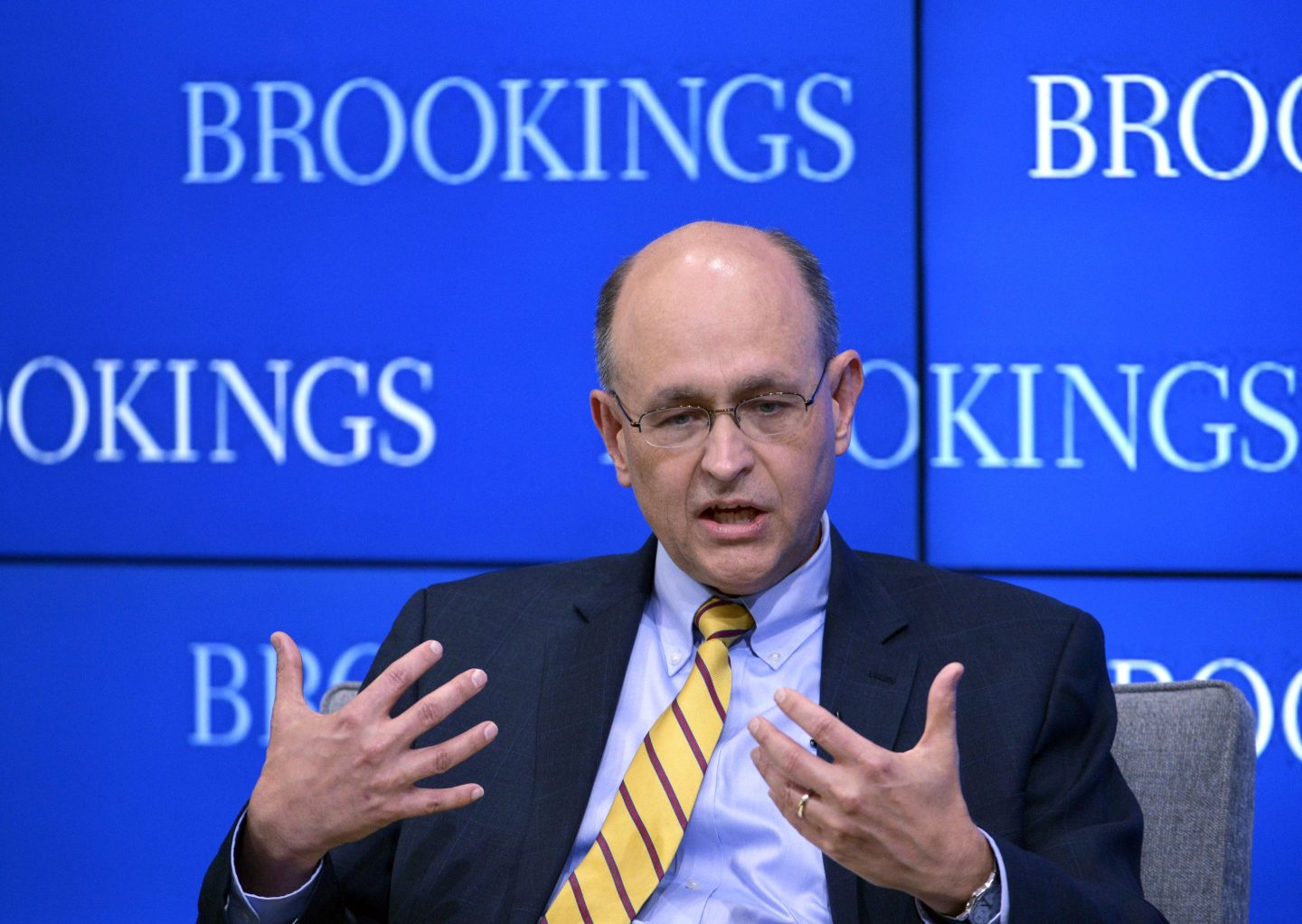
Nathan Sheets, U.S. Treasury's the former undersecretary for international affairs, speaks at a Brookings event to preview the eighth China-U.S. Strategic and Economic Dialogue, in Washington D.C., the United States, May 24, 2016.
“Firms can only absorb so much,” Nathan Sheets, Citigroup’s top economist and an Obama Treasury appointee, told Fortune. Xinhua/Yin Bogu/Getty Images

Flying between Helsinki, Prague, Milan, and Geneva to meet with clients, Nathan Sheets, Citigroup’s top economist, has a bird’s-eye view of how tariffs are reshaping the global economy.

Recommended Video

But on the ground, he warns, the consequences of President Donald Trump’s renewed tariff wars are showing up in ways that will hit regular Americans the hardest.

“We haven’t seen tariffs at these kinds of levels in the United States for many decades,” he told Fortune while en route to Zurich. “And so an implication of that is that we’re learning about how tariffs affect the economy in real time.”

Sheets, who also served in President Barack Obama’s administration as the U.S. Treasury’s top economic diplomat, estimates that U.S. consumers are currently bearing about 30% to 40% of tariff costs—but that number is poised to rise to around 60% as companies run out of room to absorb higher import prices. “Firms can only absorb so much,” he said. “They’ll need to push more through to the consumer.”

Sheets isn’t alone among Wall Street economists in arguing this. Earlier this week, Morgan Stanley’s chief U.S. economist, Michael Gapen, argued that firms have been absorbing the hit as much as they can, and tariffs have effectively been a “tax on capital,” at least so far.

That pass-through is already starting to appear in the data, Sheets added, though unevenly. Goods inflation in several categories has accelerated since the tariffs took effect earlier this year: Audio equipment is up 15%, furniture and bedding nearly 7%, and tools and hardware around 4%. 

Most of those are imported products—things that show up in your household, not your grocery cart, he said.

A slow squeeze

Sheets believes that retailers will pass through the tariff effects subtly, through key “pricing windows,” when they are already likely to be raising prices, such as during the holiday shopping season and the New Year.

Companies can afford to do that, he said, because they stocked up on inventory before tariffs were imposed and have been drawing down those cheaper supplies. But that cushion is running out. 

“We’re starting to see it,” he said. “By spring, it’ll be more visible in the data.”

The economist said firms are walking a fine line: Consumers are still “fatigued” from post-pandemic inflation and are not in the mood to tolerate another wave of price increases, but companies can’t keep eating the costs forever. 

“One thing you wouldn’t want to do is raise your price, make your customers mad, and then have the tariffs adjust downward,” he added. “So they’re judging carefully their capacity to pass it through, and the timing in which they do it.”

The manufacturing mirage

The second way tariffs could play out, Sheets warned, is through a kind of snake-eating-its-own-tail effect: hurting the same U.S. manufacturing base they’re meant to protect.

“There’s a fundamental reality here,” he said. “Wage rates in the United States are relatively high. If you’re going to use U.S. labor and pay them competitive wages, there are just certain kinds of manufacturing activities that are very difficult to do profitably.”

That, he argued, is why so many jobs shifted to China and Mexico over the past 40 years—and why tariffs may bring factories back, but in a “very capital-intensive” way: think automatons, not more workers. 

“Firms will say, ‘I can’t afford to pay U.S. wages for this activity, so I’m just going to fully automate it,’” Sheets said. You bring back production, you bring back investment—but you don’t bring back nearly as many jobs.”

Trump, on “Liberation Day,” promised to usher in a golden age of manufacturing and reshore production through his tariffs. But Sheets argues that he might have just accelerated the push to automate factories through AI and advanced robotics, which make it easier than ever to run a factory with fewer people.

“We saw this with the computer revolution,” the economist said. “Some jobs vanish, new ones emerge, but they’re not the same jobs.”

A fragile global order

Sheets said that for now, most U.S. allies are taking a “wait and see” approach rather than retaliating with their own tariffs, largely because they still depend on access to the American market.

But he warned that if more countries follow Washington’s lead and start weaponizing tariffs, the global trading system that’s defined the postwar era could begin to fracture.

He compared the situation to the early 1930s, when the Smoot-Hawley tariffs triggered widespread retaliation and a collapse in global trade that worsened the Great Depression. Back then, the world turned inward, and the result was “devastating,” he said. He cautioned that, thank goodness, other countries aren’t following the U.S. lead—so far.

Still, Sheets said he thinks there’s room to rethink—not abandon—the economic order that’s held for decades. Global leaders did so about every 40 years: In the 1940s, they came up with the IMF and the World Bank, and in the ‘80s and ‘90s the development of the WTO.

“Maybe it’s time to do more deep thinking about how we can have an effective global trading system,” he said. 
Join us at the Fortune Workplace Innovation Summit May 19–20, 2026, in Atlanta. The next era of workplace innovation is here—and the old playbook is being rewritten. At this exclusive, high-energy event, the world’s most innovative leaders will convene to explore how AI, humanity, and strategy converge to redefine, again, the future of work. Register now.
About the Author
By Eva RoytburgFellow, News

Eva is a fellow on Fortune's news desk.

See full bioRight Arrow Button Icon

Latest in Economy

Finance
Lorem ipsum dolor sit amet, consectetur adipiscing elit, sed do eiusmod tempor incididunt ut labore et dolore magna aliqua. Ut enim ad minim veniam
By Fortune Editors
October 20, 2025
Finance
Lorem ipsum dolor sit amet, consectetur adipiscing elit, sed do eiusmod tempor incididunt ut labore et dolore magna aliqua. Ut enim ad minim veniam
By Fortune Editors
October 20, 2025
Finance
Lorem ipsum dolor sit amet, consectetur adipiscing elit, sed do eiusmod tempor incididunt ut labore et dolore magna aliqua. Ut enim ad minim veniam
By Fortune Editors
October 20, 2025
Finance
Lorem ipsum dolor sit amet, consectetur adipiscing elit, sed do eiusmod tempor incididunt ut labore et dolore magna aliqua. Ut enim ad minim veniam
By Fortune Editors
October 20, 2025
Finance
Lorem ipsum dolor sit amet, consectetur adipiscing elit, sed do eiusmod tempor incididunt ut labore et dolore magna aliqua. Ut enim ad minim veniam
By Fortune Editors
October 20, 2025
Finance
Lorem ipsum dolor sit amet, consectetur adipiscing elit, sed do eiusmod tempor incididunt ut labore et dolore magna aliqua. Ut enim ad minim veniam
By Fortune Editors
October 20, 2025

Most Popular

Finance
Lorem ipsum dolor sit amet, consectetur adipiscing elit, sed do eiusmod tempor incididunt ut labore et dolore magna aliqua. Ut enim ad minim veniam
By Fortune Editors
October 20, 2025
Finance
Lorem ipsum dolor sit amet, consectetur adipiscing elit, sed do eiusmod tempor incididunt ut labore et dolore magna aliqua. Ut enim ad minim veniam
By Fortune Editors
October 20, 2025
Finance
Lorem ipsum dolor sit amet, consectetur adipiscing elit, sed do eiusmod tempor incididunt ut labore et dolore magna aliqua. Ut enim ad minim veniam
By Fortune Editors
October 20, 2025
Finance
Lorem ipsum dolor sit amet, consectetur adipiscing elit, sed do eiusmod tempor incididunt ut labore et dolore magna aliqua. Ut enim ad minim veniam
By Fortune Editors
October 20, 2025
Finance
Lorem ipsum dolor sit amet, consectetur adipiscing elit, sed do eiusmod tempor incididunt ut labore et dolore magna aliqua. Ut enim ad minim veniam
By Fortune Editors
October 20, 2025
Finance
Lorem ipsum dolor sit amet, consectetur adipiscing elit, sed do eiusmod tempor incididunt ut labore et dolore magna aliqua. Ut enim ad minim veniam
By Fortune Editors
October 20, 2025
Rankings
  • 100 Best Companies
  • Fortune 500
  • Global 500
  • Fortune 500 Europe
  • Most Powerful Women
  • Future 50
  • World’s Most Admired Companies
  • See All Rankings
Sections
  • Finance
  • Leadership
  • Success
  • Tech
  • Asia
  • Europe
  • Environment
  • Fortune Crypto
  • Health
  • Retail
  • Lifestyle
  • Politics
  • Newsletters
  • Magazine
  • Features
  • Commentary
  • Mpw
  • CEO Initiative
  • Conferences
  • Personal Finance
  • Education
Customer Support
  • Frequently Asked Questions
  • Customer Service Portal
  • Privacy Policy
  • Terms Of Use
  • Single Issues For Purchase
  • International Print
Commercial Services
  • Advertising
  • Fortune Brand Studio
  • Fortune Analytics
  • Fortune Conferences
  • Business Development
About Us
  • About Us
  • Editorial Calendar
  • Press Center
  • Work At Fortune
  • Diversity And Inclusion
  • Terms And Conditions
  • Site Map
  • Facebook icon
  • Twitter icon
  • LinkedIn icon
  • Instagram icon
  • Pinterest icon

Most Popular

placeholder alt text
Economy
Trump may have shot himself in the foot at the Fed, as Powell could stay on while Miran resigns from White House post
By Eleanor PringleFebruary 4, 2026
18 hours ago
placeholder alt text
Success
In 2026, many employers are ditching merit-based pay bumps in favor of ‘peanut butter raises’
By Emma BurleighFebruary 2, 2026
3 days ago
placeholder alt text
Investing
Tech stocks go into free fall as it dawns on traders that AI has the ability to cut revenues across the board
By Jim EdwardsFebruary 4, 2026
23 hours ago
placeholder alt text
Cybersecurity
Top AI leaders are begging people not to use Moltbook, a social media platform for AI agents: It’s a ‘disaster waiting to happen’
By Eva RoytburgFebruary 2, 2026
3 days ago
placeholder alt text
North America
Gates Foundation doubles down on foreign aid as U.S. government largely withdraws
By Thalia Beaty and The Associated PressFebruary 3, 2026
2 days ago
placeholder alt text
Politics
Peter Thiel warns the Antichrist and apocalypse are linked to the ‘end of modernity’ currently happening—and cites Greta Thunberg as a driving example
By Nick LichtenbergFebruary 4, 2026
14 hours ago

© 2026 Fortune Media IP Limited. All Rights Reserved. Use of this site constitutes acceptance of our Terms of Use and Privacy Policy | CA Notice at Collection and Privacy Notice | Do Not Sell/Share My Personal Information
FORTUNE is a trademark of Fortune Media IP Limited, registered in the U.S. and other countries. FORTUNE may receive compensation for some links to products and services on this website. Offers may be subject to change without notice.


Latest in Economy

broker
InvestingMarkets
S&P rings up 5th loss in 6 days as tech stocks drag index down, led by AMD’s 17.3% drop
By Stan Choe and The Associated PressFebruary 4, 2026
12 hours ago
AILayoffs
Pinterest cracks down on dissent, fires engineers for an internal layoff tool as AI shake-ups keep employees on edge and in line
By Marco Quiroz-GutierrezFebruary 4, 2026
13 hours ago
bessent
EconomyTariffs and trade
Scott Bessent’s ‘gotcha’ moment on Trump’s tariffs and inflation: He denies writing ‘tariffs are inflationary’ in letter to hedge fund investors
By Nick LichtenbergFebruary 4, 2026
13 hours ago
Ray Dalio, wearing a suit and sitting in a beige chair, speaks and gestures with his hand.
Investinggeopolitics
Ray Dalio warns the world is ‘on the brink’ of a capital war of weaponizing money—and gold is the best way for people to protect themselves
By Sasha RogelbergFebruary 4, 2026
14 hours ago
bezos
North AmericaMedia
Jeff Bezos’ mass layoffs at the Washington Post a ‘case study in near-instant, self-inflicted brand destruction,’ former editor says
By David Bauder and The Associated PressFebruary 4, 2026
14 hours ago
RetailPepsiCo
PepsiCo is cutting prices for snacks like Doritos by ‘up to 15%’ to appease customers pinched by the K-shaped economy
By Dave Lozo and Morning BrewFebruary 4, 2026
15 hours ago