
• Home
  • Latest
  • Fortune 500
  • Finance
  • Tech
  • Leadership
  • Lifestyle
  • Rankings
  • Multimedia

Trendingnow

1

After forcing workers back to the office, Goldman Sachs and JPMorgan Chase are now letting their staff work remotely—but only for the World Cup

2

Markets tumble worldwide as Fed resets expectations: $400 billion wiped off SpaceX stock

3

Current price of oil as of June 23, 2026

1

After forcing workers back to the office, Goldman Sachs and JPMorgan Chase are now letting their staff work remotely—but only for the World Cup

2

Markets tumble worldwide as Fed resets expectations: $400 billion wiped off SpaceX stock

3

Current price of oil as of June 23, 2026
Cybersecurity

Colleges have a new worry: ‘Ghost students’—AI powered fraud rings angling to get millions in financial aid

Amanda Gerut
By
Amanda Gerut
Amanda Gerut
News Editor, West Coast
Down Arrow Button Icon
Amanda Gerut
By
Amanda Gerut
Amanda Gerut
News Editor, West Coast
Down Arrow Button Icon
August 23, 2025, 5:00 AM ET
College classroom and seated students
Community colleges from coast to coast are bracing for a new onslaught of fake students who want a chance to steal financial aid and a freshly minted email address. skynesher via Getty Images
Add Fortune on Google for similar content.
  • Local higher-ed institutions are engaging in hand-to-hand combat to keep out fraudsters who are weaponizing AI to swarm their systems. Some are implementing new measures to keep the scammers out, from AI defense firms, to new barriers to entry, to manual application reviews.

The “ghost-student” epidemic that has been attacking California’s community college system is infesting the nation, with colleges in Arizona, Indiana, Oregon, New Jersey, and Michigan working to defend their institutions from AI-powered fraud rings trying to blend in with legitimate students heading back to school. 

Recommended Video

Synthetic or “ghost” students refers to masses of falsified or stolen identities scammers use to flood college application and enrollment portals with thousands of submissions in minutes—usually during holidays, weekends, or other times admissions staff will be bare bones. If they’re successful, the fraud rings will attempt to register the fake students for classes and apply for financial aid, often squeezing out real students who can’t get seats in the classes they need. The ghost wielders have even resorted to submitting homework through the use of AI—anything to try to keep from getting dropped from a class. Sometimes, all they’ll get away with is a college email address. But even that has value, security experts said, giving the scammers a veneer of legitimacy as a college student. A simple email address that ends in .edu allows for discounts on laptops, software, music streaming services and, critically, allows the scammers to use those student identities to fraudulently apply for jobs at companies.

The Department of Education launched a national program in June to root out identity theft at colleges and has required new identity verification steps for the Fall 2025 start of the school year. The DOE found $90 million had been disbursed to ineligible students, including $30 million that went to stolen identities of deceased individuals. 

Kiran Kodithala, founder of tech firm N2N Services and the LightLeap.AI platform that has been rolled out among colleges across the country to ward against ghost students, said the percentage of fraudulent students in California’s community college system is about 26% across 75 colleges and 1.2 million applications. Outside of California, the LightLeap system has found about one in five applications to be a ghost student. That fraud rate applies to 24 non-California colleges with roughly 340,000 applications processed this summer. 

In rural Oregon, officials at Lane Community College are bracing for the fall 2025 onslaught from ghost students, Dawn Whiting, associate dean of enrollment management, told Fortune. The college was first attacked in fall 2022 after it had just launched a new streamlined application process designed to simplify enrollment for students. That weekend, Lane saw about 1,000 applications fly through its system, which was highly unusual for a college with roughly 5,000 students. 

Whiting and her team saw the usual fraud markers—similar area codes, email addresses, and phone numbers across hundreds of applications. Whiting disabled all 1,000 or so student email addresses and required additional identity-verification measures. But the scammers pivoted. By summer 2023, the ghosts took a new approach to infiltrating the system, filling up seats in courses with no prerequisites. The college moved to implement a $25 application deposit, even though the move went against the institutional belief in being a barrier-free community resource.

But the fraudsters zig-zagged again. In summer 2024, about 300 applications flowed in all at the same time, said Whiting, and the school dropped all of them from classes. Now, Lane is weighing whether to bring in a third-party AI firm to help strengthen its defenses. Its staff is on the prowl for fraud but it isn’t made up of cybersecurity experts, noted Whiting. Admissions and faculty are mostly focused on educating students and getting them into the right classes for their career path. 

“We are open access,” said Colman Joyce, vice president of student services at Lane. “Having students go through more steps to enroll adds more barriers and we’re a community college. A number of our students are not tech savvy when they come here.”

In California, community colleges are required to accept any eligible student and there is no application fee to apply. Kodithala said there’s been debate about whether colleges in other states would see the same attack surges as California, particularly if there were additional hurdles to clear in applying, enrolling, and getting registered for classes such as an application deposit or fee. So far, it runs the gamut with or without a fee in place, he said. In schools outside of California, the rate is about 8%  to 15% fraudulent applications, Kodithala said.  

Craig Munson, Minnesota State’s chief information security officer who oversees 26 community and technical colleges and seven universities, said the state is using AI and has partnered with other schools and security consortiums to find out new tactics ghost students are using to try to infiltrate school systems. 

“Just as we leverage AI to protect ourselves, the attackers also continue to leverage it in new and interesting ways,” Munson said. “It’s sort of like an arms race. Every six months, the attackers tend to stop one way of doing things and move to a different tactic.” 

Munson and others in similar roles declined to comment on the specific fraud markers they’re seeing this fall, but the tactics of fake students a few years ago—which are no longer successful—involved made-up names, randomized email addresses that looked similar, and the same addresses and phone numbers tied to applications over and over again. The attackers have since changed gears. 

For schools, the issue is wrought with complexity. Community colleges are meant to be open-access education institutions, affordable to those looking to get an associates degree, work toward a career change, or pursue a passion. As California has grappled with the ghost student swarms, officials have debated instituting a nominal fee to add friction to the system of applying. 

Minnesota’s system includes three universities that charge a minimal application fee, four that don’t, as well as seven colleges with a fee and 19 that are free. However, Kodithala noted that adding in an application fee invites credit card and gift card fraud. Munson said he has seen the same issue in Minnesota. It also offers a false sense of security if schools believe a fraudster wouldn’t pay $15 or $25 dollars for the chance of thousands more easily, said Kodithala.

“It makes it easier for them to steal because they know that all they have to do is make a payment,” said Kodithala.

Travis Blume, vice president of student affairs and enrollment at Michigan’s Bay de Noc Community College, said the school hasn’t seen hordes of ghost students the way other schools in Michigan have, but he’s prepared if they do. And because the school has only about 2,000 students at its two locations, staff have implemented a manual application review process, he said. Any application that triggers suspicion gets an additional look and the prospective student is asked to confirm their identity through a notary or an in-person visit. 

As a leader at a community education institution, Blume struggles with the same issues of adding more friction into a system that is meant to be as accessible as possible. “Community college is about getting people in and getting them educated,” he said. 

Still, despite the vulnerability of community institutions against AI-enabled fraud schemes, experts are working to protect the financial aid available to students.

“Fraud in higher-education is something that should be looked at with all seriousness and should be part of an overall risk calculation,” said Minnesota’s Munson. “It’s important to have strong ties with both local and federal law enforcement and with information-sharing groups so that you can get appropriate threat intelligence and be flexible in your responses. As the attackers change, we need to change with them.”

Subscribe to Fortune Gulf Brief. Every Tuesday, this new newsletter delivers clear-eyed, authoritative intelligence on the deals, decisions, policies, and power shifts shaping one of the world’s most consequential regions, written for the people who need to act on it. Sign up here.
About the Author
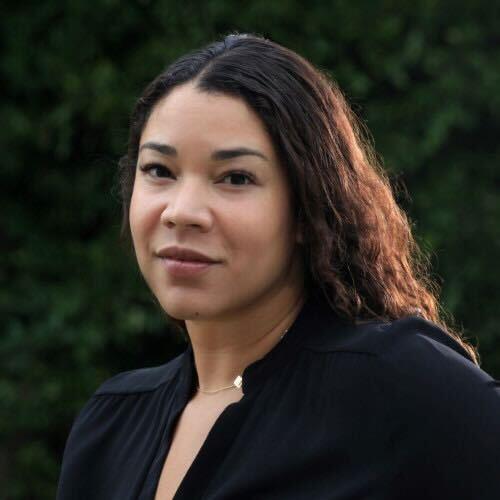
Amanda Gerut
By Amanda GerutNews Editor, West Coast

Amanda Gerut is the west coast editor at Fortune, overseeing publicly traded businesses, executive compensation, Securities and Exchange Commission regulations, and investigations.

See full bioRight Arrow Button Icon
Add Fortune on Google for similar content.

Latest in Cybersecurity

Finance
Lorem ipsum dolor sit amet, consectetur adipiscing elit, sed do eiusmod tempor incididunt ut labore et dolore magna aliqua. Ut enim ad minim veniam
By Fortune Editors
October 20, 2025
Finance
Lorem ipsum dolor sit amet, consectetur adipiscing elit, sed do eiusmod tempor incididunt ut labore et dolore magna aliqua. Ut enim ad minim veniam
By Fortune Editors
October 20, 2025
Finance
Lorem ipsum dolor sit amet, consectetur adipiscing elit, sed do eiusmod tempor incididunt ut labore et dolore magna aliqua. Ut enim ad minim veniam
By Fortune Editors
October 20, 2025
Finance
Lorem ipsum dolor sit amet, consectetur adipiscing elit, sed do eiusmod tempor incididunt ut labore et dolore magna aliqua. Ut enim ad minim veniam
By Fortune Editors
October 20, 2025
Finance
Lorem ipsum dolor sit amet, consectetur adipiscing elit, sed do eiusmod tempor incididunt ut labore et dolore magna aliqua. Ut enim ad minim veniam
By Fortune Editors
October 20, 2025
Finance
Lorem ipsum dolor sit amet, consectetur adipiscing elit, sed do eiusmod tempor incididunt ut labore et dolore magna aliqua. Ut enim ad minim veniam
By Fortune Editors
October 20, 2025

Most Popular

Finance
Lorem ipsum dolor sit amet, consectetur adipiscing elit, sed do eiusmod tempor incididunt ut labore et dolore magna aliqua. Ut enim ad minim veniam
By Fortune Editors
October 20, 2025
Finance
Lorem ipsum dolor sit amet, consectetur adipiscing elit, sed do eiusmod tempor incididunt ut labore et dolore magna aliqua. Ut enim ad minim veniam
By Fortune Editors
October 20, 2025
Finance
Lorem ipsum dolor sit amet, consectetur adipiscing elit, sed do eiusmod tempor incididunt ut labore et dolore magna aliqua. Ut enim ad minim veniam
By Fortune Editors
October 20, 2025
Finance
Lorem ipsum dolor sit amet, consectetur adipiscing elit, sed do eiusmod tempor incididunt ut labore et dolore magna aliqua. Ut enim ad minim veniam
By Fortune Editors
October 20, 2025
Finance
Lorem ipsum dolor sit amet, consectetur adipiscing elit, sed do eiusmod tempor incididunt ut labore et dolore magna aliqua. Ut enim ad minim veniam
By Fortune Editors
October 20, 2025
Finance
Lorem ipsum dolor sit amet, consectetur adipiscing elit, sed do eiusmod tempor incididunt ut labore et dolore magna aliqua. Ut enim ad minim veniam
By Fortune Editors
October 20, 2025
Fortune Secondary Logo
Rankings
  • 100 Best Companies
  • Fortune 500
  • Global 500
  • Fortune 500 Europe
  • Most Powerful Women
  • World's Most Admired Companies
  • See All Rankings
  • Lists Calendar
Sections
  • Finance
  • Fortune Crypto
  • Features
  • Leadership
  • Health
  • Commentary
  • Success
  • Retail
  • Mpw
  • Tech
  • Lifestyle
  • CEO Initiative
  • Asia
  • Politics
  • Conferences
  • Europe
  • Newsletters
  • Personal Finance
  • Environment
  • Magazine
  • Education
Customer Support
  • Frequently Asked Questions
  • Customer Service Portal
  • Privacy Policy
  • Terms Of Use
  • Single Issues For Purchase
  • International Print
Commercial Services
  • Advertising
  • Fortune Brand Studio
  • Fortune Analytics
  • Fortune Conferences
  • Business Development
  • Group Subscriptions
About Us
  • About Us
  • Press Center
  • Work At Fortune
  • Terms And Conditions
  • Site Map
  • About Us
  • Press Center
  • Work At Fortune
  • Terms And Conditions
  • Site Map
  • Facebook icon
  • Twitter icon
  • LinkedIn icon
  • Instagram icon
  • Pinterest icon

Latest in Cybersecurity

Google DeepMind CEO Demis Hassabis (left) stands on a spiral staircase next to Google DeepMind researcher John Jumper.
NewslettersEye on AI
Defections from Google DeepMind prompt questions about Alphabet’s efforts to stay at the forefront of AI
By Jeremy KahnJune 23, 2026
15 hours ago
Cursor’s 25-year-old CEO turned a Discord server into a talent pipeline to build his $60 billion SpaceX-backed AI company
AIHiring
Cursor’s 25-year-old CEO turned a Discord server into a talent pipeline to build his $60 billion SpaceX-backed AI company
By Sydney LakeJune 23, 2026
18 hours ago
ravi
CommentaryAI agents
Yale School of Management: surveillance pricing is just the beginning. AI agents will be the real test of corporate trust
By Ravi Dhar and Jon IwataJune 23, 2026
23 hours ago
SpaceX’s drop-off sees Elon Musk’s net worth fall $240 billion—roughly the same value as computing giant IBM
InvestingElon Musk
SpaceX’s drop-off sees Elon Musk’s net worth fall $240 billion—roughly the same value as computing giant IBM
By Eleanor PringleJune 23, 2026
23 hours ago
d
EnvironmentConsumer electronics
Almost 4 in 10 Americans have a ‘junk drawer’ full of their old electronics. It’s because of a very specific anxiety
By Eric Williams, Payam Saeedi, Stacey Watson and The ConversationJune 21, 2026
3 days ago
zak
CybersecuritySocial Media
The U.K. just banned social media for kids under 16. The founder of ‘safe TikTok’ says the U.S. is next
By Nick LichtenbergJune 21, 2026
3 days ago

Most Popular

After forcing workers back to the office, Goldman Sachs and JPMorgan Chase are now letting their staff work remotely—but only for the World Cup
Success
After forcing workers back to the office, Goldman Sachs and JPMorgan Chase are now letting their staff work remotely—but only for the World Cup
By Orianna Rosa RoyleJune 23, 2026
22 hours ago
Markets tumble worldwide as Fed resets expectations: $400 billion wiped off SpaceX stock
Banking
Markets tumble worldwide as Fed resets expectations: $400 billion wiped off SpaceX stock
By Jim EdwardsJune 23, 2026
1 day ago
Current price of oil as of June 23, 2026
Personal Finance
Current price of oil as of June 23, 2026
By Joseph HostetlerJune 23, 2026
21 hours ago
Meet the 2 men putting New York's $300 billion pension fund in play for the first time in 20 years
Investing
Meet the 2 men putting New York's $300 billion pension fund in play for the first time in 20 years
By Nick LichtenbergJune 22, 2026
2 days ago
Former U.S. Secret Service agent says bringing your authentic self to work stifles teamwork: 'You don’t get high performers, you get sloppiness'
Success
Former U.S. Secret Service agent says bringing your authentic self to work stifles teamwork: 'You don’t get high performers, you get sloppiness'
By Sydney LakeJune 21, 2026
3 days ago
Texas and Charlotte used to build huge McMansions—now they're copying the California design tricks they once mocked
Real Estate
Texas and Charlotte used to build huge McMansions—now they're copying the California design tricks they once mocked
By Sydney LakeJune 22, 2026
2 days ago

© 2026 Fortune Media IP Limited. All Rights Reserved. Use of this site constitutes acceptance of our Terms of Use and Privacy Policy | CA Notice at Collection and Privacy Notice | Do Not Sell/Share My Personal Information
FORTUNE is a trademark of Fortune Media IP Limited, registered in the U.S. and other countries. FORTUNE may receive compensation for some links to products and services on this website. Offers may be subject to change without notice.