• Home
  • Latest
  • Fortune 500
  • Finance
  • Tech
  • Leadership
  • Lifestyle
  • Rankings
  • Multimedia

Trendingnow

1

After forcing workers back to the office, Goldman Sachs and JPMorgan Chase are now letting their staff work remotely—but only for the World Cup

2

Markets tumble worldwide as Fed resets expectations: $400 billion wiped off SpaceX stock

3

Meet the 2 men putting New York's $300 billion pension fund in play for the first time in 20 years

1

After forcing workers back to the office, Goldman Sachs and JPMorgan Chase are now letting their staff work remotely—but only for the World Cup

2

Markets tumble worldwide as Fed resets expectations: $400 billion wiped off SpaceX stock

3

Meet the 2 men putting New York's $300 billion pension fund in play for the first time in 20 years
FinanceMarkets

The U.S. dollar’s decline has room to run, but the AI boom could stop it

By
Greg McKenna
Greg McKenna
News Fellow
Down Arrow Button Icon
By
Greg McKenna
Greg McKenna
News Fellow
Down Arrow Button Icon
June 24, 2025, 5:03 AM ET
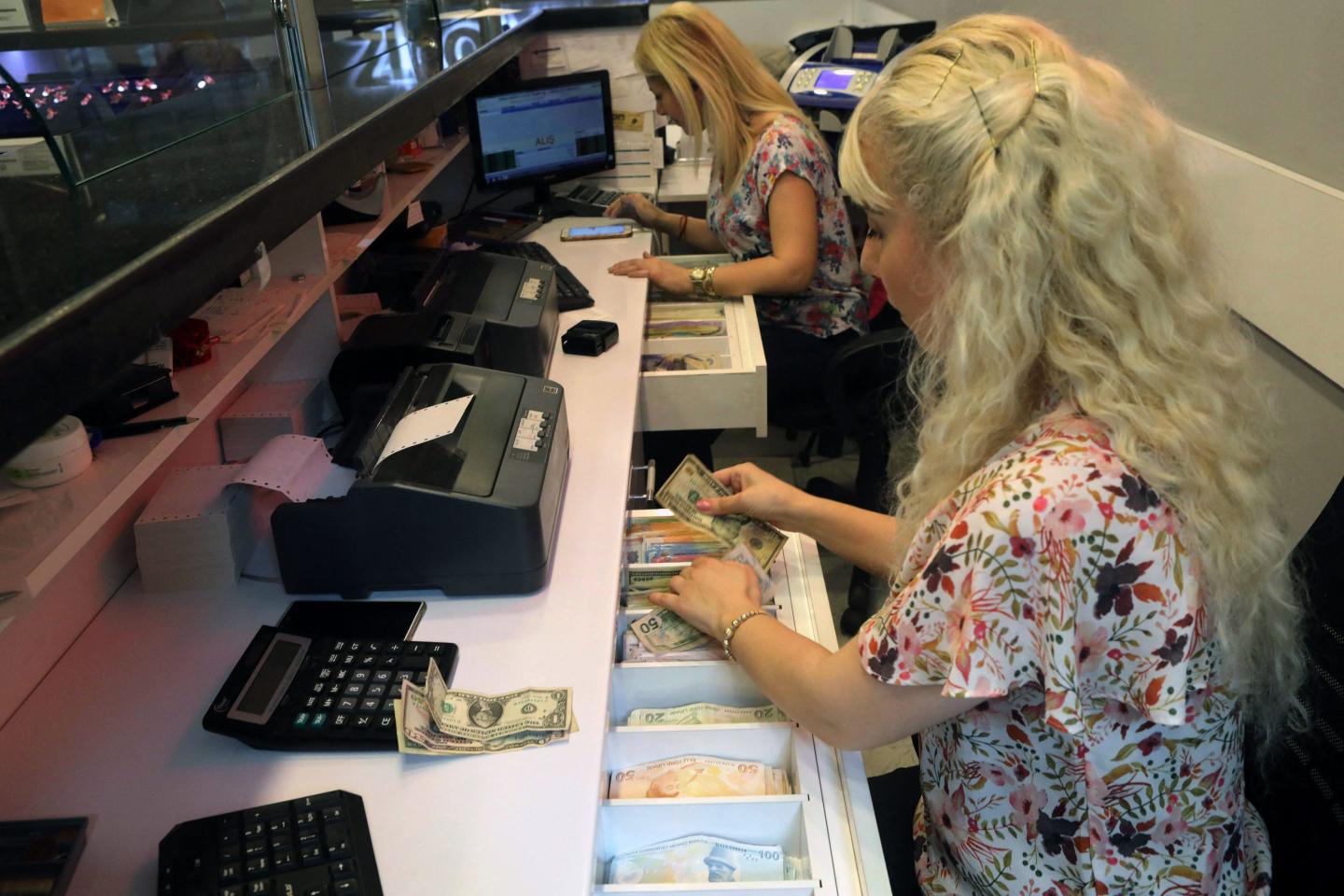
An employee in a foreign exchange office counts US dollars in front a teller's window.
Shorting the U.S. dollar has become one of the world’s most popular trades.Adem Altan—AFP/Getty Images
Add Fortune on Google for similar content.
  • Many on Wall Street believe the greenback’s decline has been a long time coming, and shorting the dollar has become one of the world’s most popular trades. Foreign equities tend to outperform U.S. stocks when the dollar is weaker, but the AI trade may continue to fuel demand for American assets.

Betting against “American exceptionalism” hasn’t paid well for over a decade. The dollar’s big drop this year might change that.

Recommended Video

Many on Wall Street—and in the White House—believe the greenback’s decline has been a long time coming. Heading into 2025, American currency had appreciated more than 50% from its lows during the Great Financial Crisis, according to J.P. Morgan Private Bank, and dollar strength helped U.S. stocks become the envy of the world.  

A weaker greenback now appears to be giving foreign equities a chance to catch up. But with America still the primary hub of the AI revolution, at least for now, U.S. assets could be primed to buck historical trends and snatch the lead right back.

Still, President Donald Trump’s chaotic tariff rollout may have ushered in a new era for the dollar. Earlier this month, it was down 10% year to date against the basket of currencies in the famous DXY index. That’s the steepest loss for the greenback in the first half of the year, per Reuters, since 1986, shortly after the U.S. and several allies had reached an agreement, known as the Plaza Accord, to devalue a wildly overpriced dollar.

And while there has been a slight recovery amid the conflict between Iran and the Israel-U.S. alliance, investors haven’t come close to making up for the exodus since “Liberation Day” in early April. That suggests the so-called Sell America trade still has legs, Bill Sterling, global strategist at GW&K Investment Management, told Fortune last week.

“In the scheme of things, there’s ample room for the dollar to decline further,” said Sterling, formerly the chief international economist at Merrill Lynch.  

If tariffs continue to weigh on America’s growth outlook, U.S. assets become less appealing. And while it doesn’t seem the dollar will be replaced as the world’s reserve currency anytime soon, it may no longer command the same amount of confidence.

Over the past few decades, Sterling noted, foreigners have funded America’s exploding deficit by purchasing U.S. assets, whether that be stocks, Treasury bonds, dollars, and the like. While the GOP’s “Big, Beautiful” spending bill doesn’t seem poised to change the national debt’s trajectory, it does include provisions set to hike taxes on foreign capital from several key trading partners.   

 “At a time when we have a deficit-to-GDP ratio of 7% and need foreign capital to help fund that deficit,” Sterling said, “to be actively considering measures to discourage capital inflows is almost a recipe for a weak dollar.”

In his view, rapid policy shifts in Washington have prompted a long-awaited correction to an overvalued dollar. He and many others point to purchasing power parity, a framework that assumes exchange rates, in the long run, should allow a given amount of money to purchase the same amount of goods and services in any country.

Popularized by the Economist’s Big Mac Index, there are plenty of reasons why this concept often doesn’t play out in the real world. Data from the International Monetary Fund showed the dollar was 105% overvalued on a purchasing power basis last year, topping previous peaks in 1985 and 2002, Sterling wrote in a recent research note.

However, such an imbalance can’t exist forever, he said, and the ball may now be rolling. According to Bank of America’s monthly fund manager survey, shorting the U.S. dollar has become one of the world’s most popular trades—but over 60% of respondents still said the greenback is overvalued.

“And once a trend gets established,” Sterling said of currency markets, “it can sometimes feed on itself.”

Will AI sustain ‘American exceptionalism’?

If the dollar’s decline persists, it will have major implications for economies around the world—and Americans’ stock portfolios.

Since the Global Financial Crisis, U.S. equities have far outperformed the rest of the world. Foreigners have responded by pumping money into America and now own 18% of the U.S. stock market, according to Apollo chief economist Torsten Sløk.

Those trends could reverse, however, if dollar weakness pushes investors to allocate more money elsewhere. When Americans purchase foreign stocks and see the greenback decline, Sterling noted, their returns can get a significant boost.  

Meanwhile, Trump-fueled trade tensions seem to be forcing both developed countries (like Germany) and emerging economies (such as China) to focus on stimulating domestic demand, he said, something equity markets tend to reward.

He pointed out how Japanese markets responded to the Plaza Accord, which caused the yen to surge dramatically against the dollar.

“That was considered kind of a hammer blow to its export industries,” he said. “But the Japanese stock market was one of the strongest markets in the world in the entire second half of the [1980s] because they brought interest rates down very aggressively.”

The comparison may be timely with several voices in the Trump administration, including Vice President JD Vance and key economic advisor Stephen Miran, previously making the case for a weaker dollar to boost the competitiveness of U.S. exports. Miran has even talked about a potential “Mar-a-Lago Accord” to orchestrate another devaluation of the greenback.

That type of deal might be unrealistic, but currency markets look like they are doing the work themselves. In the meantime, many foreign stock markets are more than weathering tariff uncertainty.

Hong Kong’s Hang Seng Index, for example, is up over 20% this year, compared with the nearly 3% gain for the S&P 500 year to date as of Monday’s close. The S&P Latin America 40, meanwhile, has quietly surged by 20%.

Sterling acknowledges a massive caveat to his argument about a weakening dollar, however. There’s plenty of optimism—perhaps well placed, he added—about the AI trade, which many believe is still in its early stages. It would be shocking if American leadership in that space disappears anytime soon, regardless of what happens with U.S. trade and economic policy.

That means investors will need plenty of dollars, preventing the greenback from falling precipitously.

“Maybe U.S. exceptionalism is still the main story in the global economy for the next five years,” he said, “even though the tariffs and all the related sort of policy measures that have diminished U.S. standing have taken us from being hyper exceptional to merely exceptional.”

But tech leadership hasn’t always guaranteed superior equity returns, especially when the dollar is relatively weak. From February 2002 to July 2011, the MSCI EAFE Index, covering large- and mid-cap companies in developed markets outside North America, nearly doubled in value, Sterling noted. The S&P trailed significantly, gaining just over 40% in that span.

About the Author
By Greg McKennaNews Fellow
LinkedIn icon

Greg McKenna is a news fellow at Fortune.

See full bioRight Arrow Button Icon
Add Fortune on Google for similar content.

Latest in Finance

Finance
Lorem ipsum dolor sit amet, consectetur adipiscing elit, sed do eiusmod tempor incididunt ut labore et dolore magna aliqua. Ut enim ad minim veniam
By Fortune Editors
October 20, 2025
Finance
Lorem ipsum dolor sit amet, consectetur adipiscing elit, sed do eiusmod tempor incididunt ut labore et dolore magna aliqua. Ut enim ad minim veniam
By Fortune Editors
October 20, 2025
Finance
Lorem ipsum dolor sit amet, consectetur adipiscing elit, sed do eiusmod tempor incididunt ut labore et dolore magna aliqua. Ut enim ad minim veniam
By Fortune Editors
October 20, 2025
Finance
Lorem ipsum dolor sit amet, consectetur adipiscing elit, sed do eiusmod tempor incididunt ut labore et dolore magna aliqua. Ut enim ad minim veniam
By Fortune Editors
October 20, 2025
Finance
Lorem ipsum dolor sit amet, consectetur adipiscing elit, sed do eiusmod tempor incididunt ut labore et dolore magna aliqua. Ut enim ad minim veniam
By Fortune Editors
October 20, 2025
Finance
Lorem ipsum dolor sit amet, consectetur adipiscing elit, sed do eiusmod tempor incididunt ut labore et dolore magna aliqua. Ut enim ad minim veniam
By Fortune Editors
October 20, 2025

Most Popular

Finance
Lorem ipsum dolor sit amet, consectetur adipiscing elit, sed do eiusmod tempor incididunt ut labore et dolore magna aliqua. Ut enim ad minim veniam
By Fortune Editors
October 20, 2025
Finance
Lorem ipsum dolor sit amet, consectetur adipiscing elit, sed do eiusmod tempor incididunt ut labore et dolore magna aliqua. Ut enim ad minim veniam
By Fortune Editors
October 20, 2025
Finance
Lorem ipsum dolor sit amet, consectetur adipiscing elit, sed do eiusmod tempor incididunt ut labore et dolore magna aliqua. Ut enim ad minim veniam
By Fortune Editors
October 20, 2025
Finance
Lorem ipsum dolor sit amet, consectetur adipiscing elit, sed do eiusmod tempor incididunt ut labore et dolore magna aliqua. Ut enim ad minim veniam
By Fortune Editors
October 20, 2025
Finance
Lorem ipsum dolor sit amet, consectetur adipiscing elit, sed do eiusmod tempor incididunt ut labore et dolore magna aliqua. Ut enim ad minim veniam
By Fortune Editors
October 20, 2025
Finance
Lorem ipsum dolor sit amet, consectetur adipiscing elit, sed do eiusmod tempor incididunt ut labore et dolore magna aliqua. Ut enim ad minim veniam
By Fortune Editors
October 20, 2025
Fortune Secondary Logo
Rankings
  • 100 Best Companies
  • Fortune 500
  • Global 500
  • Fortune 500 Europe
  • Most Powerful Women
  • World's Most Admired Companies
  • See All Rankings
  • Lists Calendar
Sections
  • Finance
  • Fortune Crypto
  • Features
  • Leadership
  • Health
  • Commentary
  • Success
  • Retail
  • Mpw
  • Tech
  • Lifestyle
  • CEO Initiative
  • Asia
  • Politics
  • Conferences
  • Europe
  • Newsletters
  • Personal Finance
  • Environment
  • Magazine
  • Education
Customer Support
  • Frequently Asked Questions
  • Customer Service Portal
  • Privacy Policy
  • Terms Of Use
  • Single Issues For Purchase
  • International Print
Commercial Services
  • Advertising
  • Fortune Brand Studio
  • Fortune Analytics
  • Fortune Conferences
  • Business Development
  • Group Subscriptions
About Us
  • About Us
  • Press Center
  • Work At Fortune
  • Terms And Conditions
  • Site Map
  • About Us
  • Press Center
  • Work At Fortune
  • Terms And Conditions
  • Site Map
  • Facebook icon
  • Twitter icon
  • LinkedIn icon
  • Instagram icon
  • Pinterest icon

Latest in Finance

MSCI delays Indonesia’s market status review until November
AsiaIndonesia
MSCI delays Indonesia’s market status review until November
By Prima Wirayani, Bernadette Toh and BloombergJune 23, 2026
2 hours ago
Amazon Prime Day isn’t a midsummer shopping event anymore. Here’s what changed in 2026
RetailAmazon
Amazon Prime Day isn’t a midsummer shopping event anymore. Here’s what changed in 2026
By Vidhi Choudhary and Retail BrewJune 23, 2026
8 hours ago
Tom and Diane Peterman pose outside their home at Black Lake on Wednesday, April 29, 2026, in Grant Township, Mich.
EnvironmentNatural disasters
FEMA told these families they weren’t in a flood zone. Then ice came through the windows
By Tammy Webber, M.K. Wildeman and The Associated PressJune 23, 2026
8 hours ago
Quantum computing stocks surge after Trump signed executive orders backing the sector
Investingquantum computing
Quantum computing stocks surge after Trump signed executive orders backing the sector
By Marco Quiroz-GutierrezJune 23, 2026
9 hours ago
Alan Greenspan testifying before the Senate Banking Committee.
BankingFederal Reserve
The man who invented the Fed’s magic trick just died. His successor is about to try it again
By Eva RoytburgJune 23, 2026
10 hours ago
data
EnergyData centers
AI’s power hunger is turning electric utilities into Wall Street growth stocks — and customers may pay the price
By Conor Harrison and The ConversationJune 23, 2026
11 hours ago

Most Popular

After forcing workers back to the office, Goldman Sachs and JPMorgan Chase are now letting their staff work remotely—but only for the World Cup
Success
After forcing workers back to the office, Goldman Sachs and JPMorgan Chase are now letting their staff work remotely—but only for the World Cup
By Orianna Rosa RoyleJune 23, 2026
17 hours ago
Markets tumble worldwide as Fed resets expectations: $400 billion wiped off SpaceX stock
Banking
Markets tumble worldwide as Fed resets expectations: $400 billion wiped off SpaceX stock
By Jim EdwardsJune 23, 2026
19 hours ago
Meet the 2 men putting New York's $300 billion pension fund in play for the first time in 20 years
Investing
Meet the 2 men putting New York's $300 billion pension fund in play for the first time in 20 years
By Nick LichtenbergJune 22, 2026
2 days ago
Current price of oil as of June 23, 2026
Personal Finance
Current price of oil as of June 23, 2026
By Joseph HostetlerJune 23, 2026
16 hours ago
Former U.S. Secret Service agent says bringing your authentic self to work stifles teamwork: 'You don’t get high performers, you get sloppiness'
Success
Former U.S. Secret Service agent says bringing your authentic self to work stifles teamwork: 'You don’t get high performers, you get sloppiness'
By Sydney LakeJune 21, 2026
3 days ago
Current price of oil as of June 22, 2026
Personal Finance
Current price of oil as of June 22, 2026
By Joseph HostetlerJune 22, 2026
2 days ago

© 2026 Fortune Media IP Limited. All Rights Reserved. Use of this site constitutes acceptance of our Terms of Use and Privacy Policy | CA Notice at Collection and Privacy Notice | Do Not Sell/Share My Personal Information
FORTUNE is a trademark of Fortune Media IP Limited, registered in the U.S. and other countries. FORTUNE may receive compensation for some links to products and services on this website. Offers may be subject to change without notice.