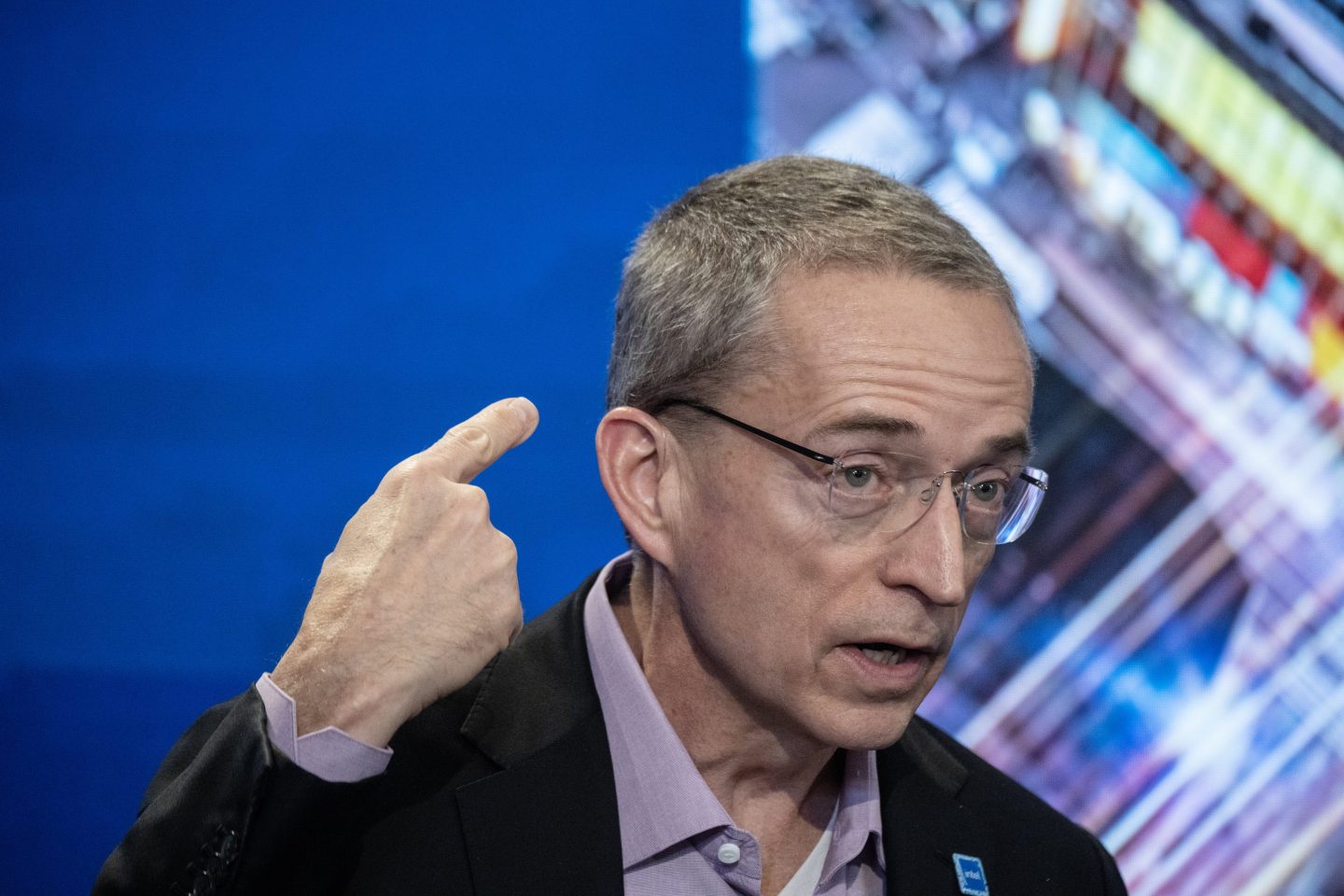
The list of mistakes and miscalculations that turned Intel from an unbeatable industry titan into its current ailing and rudderless state is a long one. But as the company seeks a path forward following the abrupt exit of its CEO this week, the fundamental problem Intel needs to resolve comes down to its very identity, and to questions about where its true strengths lie, as a chip company.
The 56-year-old semiconductor company is among the last of its kind to both design its own chips and manufacture them—a powerful combination that for years gave Intel a technological and financial edge. With changes in the market making that model less viable though, Intel has struggled to adapt. And CEO Pat Gelsinger, according to industry experts, found himself caught between competing interests, unable to sell his plan for remaking the company.
After Gelsinger abruptly “retired” on Monday, multiple outlets reported that the board had become impatient with the company’s turnaround progress and forced him out.
That decision could come to haunt Intel, analysts suggest, since the identity crisis at the heart of Intel’s challenges remains unresolved and will continue to have a big impact on the company’s business and whatever strategy it chooses to pursue.
Wall Street may have the same idea—Intel’s share price may have initially jumped on news of Gelsinger’s exit, but it fell by more than 6% on Tuesday as the implications sunk in.
“Axing Pat Gelsinger is a massive loss and could cost Intel its life,” said Claus Aasholm, an analyst at Denmark’s Semiconductor Business Intelligence consultancy.
Foundry ambitions
Plenty has gone wrong at Intel, which missed the boat on smartphones and is an also-ran in the Nvidia-dominated AI chip space. But the core issue in this affair is Intel Foundry, the company’s manufacturing arm.
When Gelsinger returned to Intel as CEO in 2021—he had served 30 years at the company before leaving in 2009 for stints at EMC (president and chief operating officer) and VMware (CEO)—the U.S. chip icon was already in trouble.
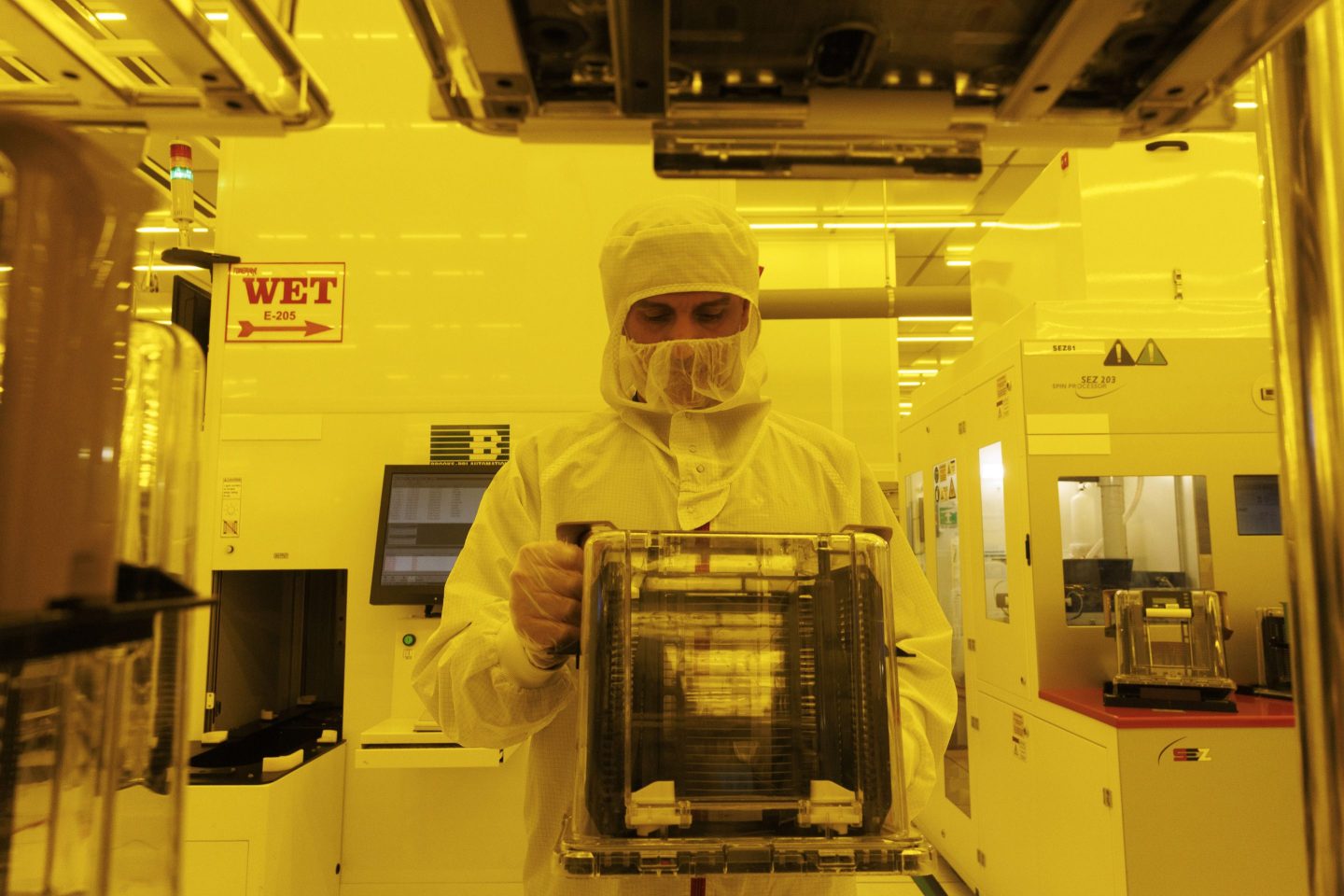
Its operating profits were slipping; rival AMD was taking market share from its PC and data center businesses; Apple had recently decided to switch from Intel’s x86-architecture processors to its own ARM-based chips for its Mac line; and Intel was struggling to upgrade its manufacturing processes to keep up with the likes of Taiwan Semiconductor Manufacturing Co. (TSMC) and Samsung. Outgoing CEO Bob Swan was a finance guy, but Gelsinger was an engineer and a much liked one at that. His return was well received inside and outside Intel.
Gelsinger’s big idea for the Intel turnaround was to build out more factories in the U.S. and Europe and to finally become a successful contract chip manufacturer, as well as designer and maker of its own processors.
This was a hugely ambitious idea for a couple of reasons. Firstly, Intel’s delays in switching to more advanced manufacturing processes were very well publicized; TSMC remained and remains the premium option. Secondly, the big clients that Intel’s contract-manufacturing business needed were understandably wary about letting their intellectual property anywhere near Intel’s own chip-design business—a trust problem that Samsung, the only big rival to TSMC in advanced chip manufacturing, has also experienced.
As a result, Gelsinger and his team had to repeatedly reorganize the company to make the separation of its two sides ever more meaningful. This culminated in September’s announcement that Intel Foundry would become an independent subsidiary business within the mothership.
Race against time
Intel this year won two notable customers for Foundry’s upcoming (and much delayed) 18A chipmaking process—both Microsoft and Amazon have signed up to have the company produce custom chips for them—but neither deal is anywhere near the scale that’s needed to make the business sustainable. The division had an operating loss of $5.8 billion in the third quarter of this year, with revenues down 8%.
However, Aasholm argues that Gelsinger displayed “masterful navigation of the political and financial landscape” in his handling of the Foundry plans, even if “Intel’s manufacturing was and is subpar.”
The erstwhile CEO’s most prominent achievement on this front was the securing of up to $7.86 billion in U.S. government funding under the CHIPS Act, the Biden administration’s big push to rebuild America’s chip-manufacturing prowess as a hedge against overreliance on Taiwan. (It was to have been $600 million more, but the sum was reduced because Intel also won a $3 billion U.S. military contract and scaled back its medium-term U.S. investment plans by 10%.)
But Gelsinger also struck two megadeals that saw external asset managers throw vast amounts of cash at key plant buildouts. In the first example, Intel and Brookfield Asset Management agreed in 2022 to jointly invest up to $30 billion in Intel’s new factories in Chandler, Ariz. A similar deal followed this year, in which Apollo Global Management put $11 billion into Intel’s new Fab 34 plant in Leixlip, Ireland. In each case, the asset manager got 49% of the joint venture and Intel retained a controlling interest of 51%.
Gelsinger “still did not have all the money, but a big chunk was in the bag,” Aasholm told Fortune.
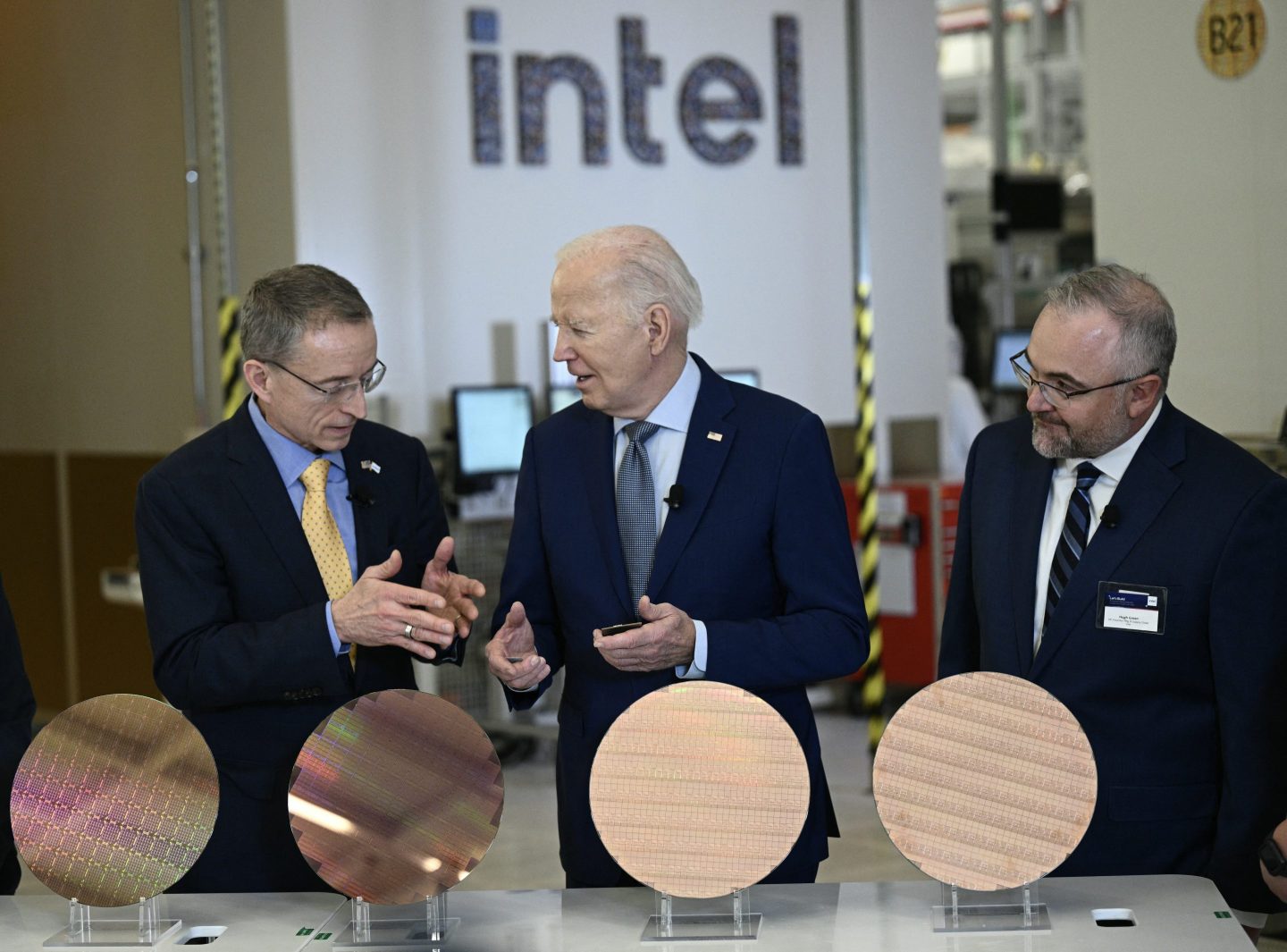
“We … believe Gelsinger has begun to right the manufacturing ship,” Citi analyst Christopher Danely wrote in a Monday note following Gelsinger’s ouster. “Intel was almost two years behind TSMC/AMD when he joined and is now poised to draw even … by the end of 2025—a remarkable feat in our opinion.”
With the 18A manufacturing process due to finally come online next year—but with Intel posting a record quarterly loss of $16.6 billion in Q3 and 15,000 workers being shown the door this year—it was as though the CEO was racing to make it over a fast-crumbling bridge.
He didn’t make it. The question now is whether Intel will.
The road ahead
There is clearly momentum behind the idea of getting rid of Foundry altogether.
Four former Intel directors advocated this route in a Fortune op-ed just weeks before Gelsinger’s defenestration. They argued that “an Intel foundry operation, inside Intel’s corporate structure, has little chance of success” because Intel has “failed to prove that it can effectively run a foundry,” and because of the aforementioned lack of trust on the part of potential clients like Nvidia and Broadcom.
“We believe it is in the best interest of Intel shareholders if the company stops trying to be a merchant foundry, and we believe the chance is higher now given Gelsinger was a champion of it,” said Citi’s Danely in his note, adding: “In our ideal world, Gelsinger would stay and foundry goes.” Bank of America’s analysts also said a breakup was now more likely.
But there are significant potential roadblocks in the way. The U.S. government erected one of them in the terms that were attached to Intel’s CHIPS Act funding: If Foundry gets spun off, and Intel loses control of it, bang goes the cash, unless the Department of Commerce has a change of heart. (Indeed, the same result would follow if a third party gained control of Intel as a whole. Qualcomm was sniffing around Intel recently but reportedly lost interest owing to the complexity of a takeover.)
Then there are those deals with the asset management companies. “With the current operating profit split, [Intel Foundry Services] is unsellable,” said Aasholm. “It cannot even be given away. The two deals with Brookfield and Apollo depend on Intel products using IFS. Intel will have to get IFS to profitability before selling it.”
Aasholm’s interpretation of Gelsinger’s ouster—he does not claim insider knowledge, and Intel declined to comment—is that the CEO fell victim to a long-running power struggle within the company. On the one side: the Client Computing Group (CCG), which handles Intel’s traditional x86 PC processor business. On the other: everyone else.
“Historically, Intel has innovated a lot but has never had the patience to go the last mile,” he said, pointing to Intel’s sale of its mobile model business to Apple in 2019, and that of its memory chip business to SK Hynix the following year. “The problem is that these initiatives always look small compared to CCG, and each was abandoned.”
One of Intel’s new interim co-CEOs is Michelle Johnston Holthaus, who has run CCG for the past couple of years. (The other is CFO David Zinsner.) “In Intel’s most recent history, CCG management has been more powerful than senior management itself. And once again, CCG won,” said Aasholm.
As for Gelsinger’s permanent replacement, both CNBC and Reuters report that Intel is looking at external candidates.
Marvell CEO Matt Murphy’s name is in the frame, as is that of Cadence Design Systems executive chair Lip-Bu Tan—who departed Intel’s board just a few months ago, leaving it without anyone with deep technical experience in chip manufacturing. Reuters reported at the time that Tan had been frustrated with the way Gelsinger’s Foundry strategy was being executed, and with internal bureaucracy and Intel’s lagging AI strategy.
“We believe Pat was the best CEO for fixing Intel’s manufacturing and prefer the company exit Foundry and keep Gelsinger,” said Danely in his note. “Now that Pat is gone, the risk increases that Intel could remain behind TSMC/AMD if the new CEO is not as well-versed in advanced semiconductor manufacturing as Pat.”