• Home
  • Latest
  • Fortune 500
  • Finance
  • Tech
  • Leadership
  • Lifestyle
  • Rankings
  • Multimedia
CommentaryHealth

Abortion went first. Contraceptives could be next—unless men step up

By
Akash Bakshi
Akash Bakshi
Down Arrow Button Icon
By
Akash Bakshi
Akash Bakshi
Down Arrow Button Icon
December 4, 2024, 4:23 PM ET
Akash Bakshi is the co-founder and CEO of YourChoice Therapeutics, which is advancing a hormone-free male birth control pill.
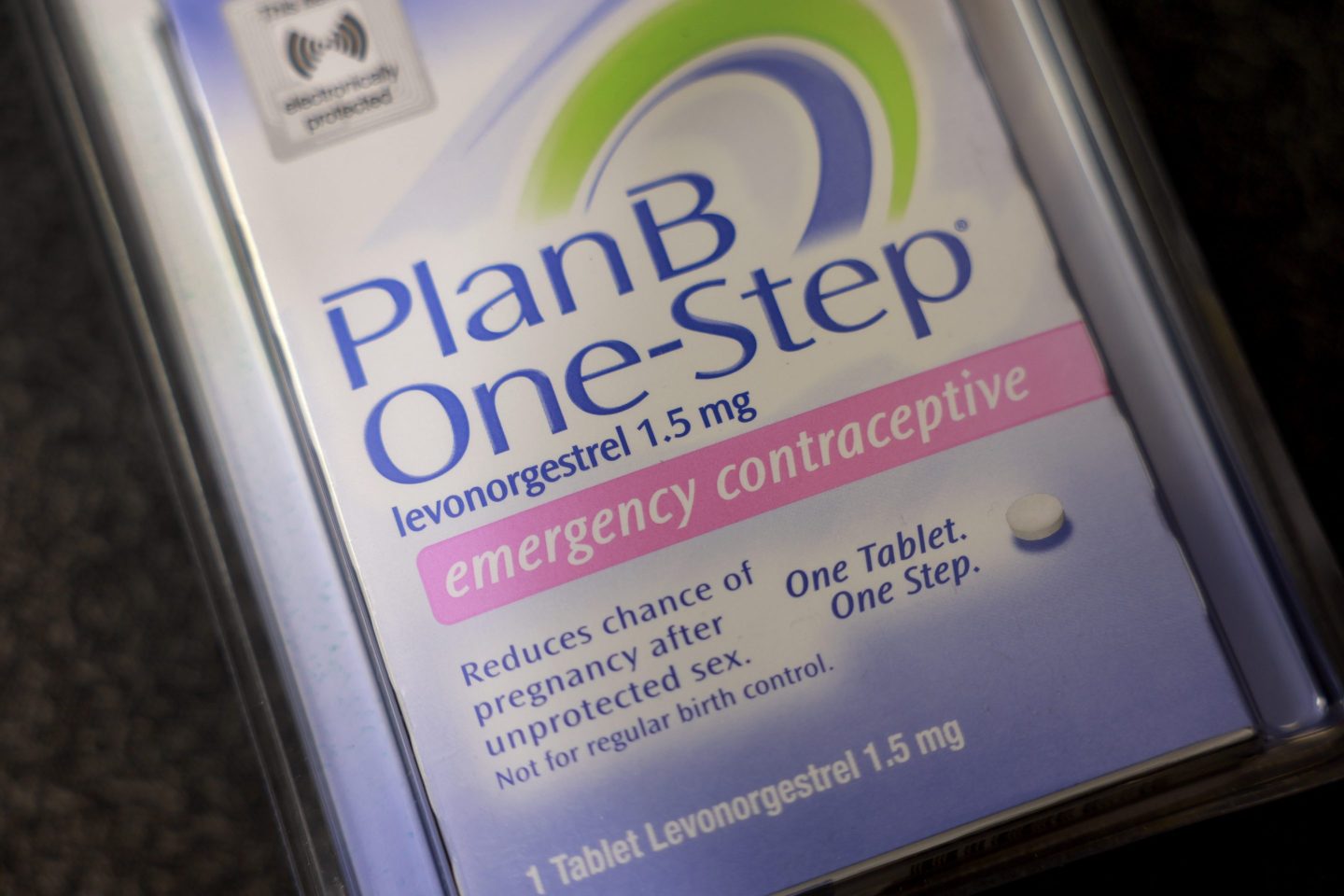
Contraceptives are in the sights of conservative lawmakers in several states.
Contraceptives are in the sights of conservative lawmakers in several states.Joe Raedle - Getty Images

When the Supreme Court ended a woman’s right to abortion in 2022, it was hard to believe access to contraceptives could follow. And yet, even before the election, legislative initiatives had begun to limit access to certain contraceptives. A Trump administration could continue this regressive path, which could suggest a slippery slope to 1960s back-alley brutality.

It’s time for men to do their part. After 70 years of research, several new male birth control options are succeeding in clinical studies. Accelerating their development could slow the ongoing assault on women’s reproductive health. But this requires a new regulatory perspective, more research funding, and a commitment to prioritizing innovation in a market that’s been stagnant for more than half a century.

Following the election, demand for birth control, abortion pills, long-term contraception, permanent contraception, and requests to replace still-effective IUDs exploded. A similar surge followed the Dobbs v. Jackson Women’s Health Organization decision, overturning Roe v. Wade. This time, fear seems more palpable. The Trump-Vance campaign’s rhetoric on abortion and contraceptive access has been inconsistent, fueling pre-existing fears. Is this fear based on facts? Is contraceptive access truly at risk? Does increased demand for vasectomies suggest men want a larger role in pregnancy prevention? Yes. Yes. And yes.

Contraceptives are under attack

Early signs show contraceptive access is indeed at risk. An archaic interpretation of the dormant Comstock Act seems blameworthy. The so-called “sexual purity” law of 1873 prohibited sending obscene materials, contraceptives, and anything that could induce abortion through the mail. (It had previously been used to stop sales of diaphragms in the 1920s. To overcome this, activist Katharine McCormick had diaphragms sewn into fur coats in France for resale in America).

Following the Dobbs case, anti-abortion activists and conservative states began reinterpreting the Act to restrict access to “the abortion pill,” (mifepristone and misoprostol), even in states where abortion is legal. Importantly, this medication accounts for safe, early pregnancy termination for two-thirds of abortion-seekers. The Justice Department under President Biden saw the Act as applying to drugs used illegally. The FDA expanded who could prescribe the abortion pill and adjusted the requirement for in-person visits to support easier access via telehealth. A Trump-Vance administration could repeal these protections and/or enforce the Comstock Act. A few local ordinances already uphold the Act, making it illegal to receive the abortion pill through the mail. 

If Comstock can be used to restrict the abortion pill, could it also be used to restrict contraceptives? Unfortunately, yes. Its enforcement would let states and local jurisdictions determine whether women could have access to contraceptives. This is already underway in Indiana and Oklahoma, where new laws reduce access to certain methods of female contraceptives based on false claims and conflations of their potential use in abortions. Reflecting a similar theme, Justice Clarence Thomas urged the Supreme Court to reconsider the 1965 decision that established the right of married couples to use contraception in his concurring opinion for the Dobbs case. 

There’s also the question of Medicaid coverage for birth control and Medicaid funding for Planned Parenthood. Reductions or restrictions could make it harder for vulnerable populations to access contraceptives. The Affordable Care Act (ACA) requires insurance plans to cover birth control without out-of-pocket costs. Changes could impact contraceptive access for tens of millions.

Men must play their part

How these potential attacks on female contraceptives play out over time is unclear. What is clear is that 46% of all pregnancies in the U.S. are unintended. Pregnancy termination is never a desirable option but if it becomes harder to access birth control, women have few alternatives. The growing scarcity of safe abortion forces unwanted parenthood or unsafe pregnancy termination. This future is already edging closer. A July 2024 JAMA study showed that self-managed abortions are increasing with women trying to end their pregnancy by using drugs or alcohol, lifting heavy objects, taking a hot bath, hitting themselves in the stomach, or inserting an object into their body.

Against this backdrop, we need a novel perspective on a problem as old as humanity. One innovation could help change things: male contraceptives. For the first time in 70 years, new male contraceptives are succeeding. And it’s about time. The female pill turns 65 next year, marking more than a half-century of the same thing: every patch, injectable, implant, and ring introduced in the past 65 years prevents pregnancy with hormones. Women are complaining, and not unfairly. Innovation in male contraception is even worse: it’s been 169 years since Charles Goodyear commercialized the modern condom. 

Government, women’s health advocates, investors and anyone who’s dissatisfied with their birth control method must prioritize innovation in contraception. Men have just three options: condoms, vasectomy and withdrawal. Researchers are testing three new male options in human studies: a hormone-free birth control pill, a “male IUD”, and a hormonal gel for dermal application. Data show there’s high demand for new contraceptives among women and men, but meeting this demand requires funding to accelerate them and promote future research. Prioritizing women beyond their ability to give birth not only means investing in reproductive health but also including men: the FDA should examine how it views risk so that men–even without the risk of childbirth–can participate in clinical studies for male contraceptives. 

Finally, consider this: if men had more birth control options, would restricting access to contraceptives be a thing? Curiously, recent anti-contraceptive rhetoric hasn’t mentioned condoms. Perhaps contraceptives would be viewed more favorably if birth control weren’t perceived as “a woman’s job.” This won’t be clear until men have more options.

More must-read commentary published by Fortune:

  • The ‘Trump bump’ has survived tariff announcements—but will it survive the good, the bad, and the unknown in his cabinet?
  • Demis Hassabis-James Manyika: AI will help us understand the very fabric of reality
  • I worked with Steve Jobs. Here’s what he’d say about today’s leadership style
  • The real reason Spain’s economy is bucking the trend of European decline

The opinions expressed in Fortune.com commentary pieces are solely the views of their authors and do not necessarily reflect the opinions and beliefs of Fortune.
Join us at the Fortune Workplace Innovation Summit May 19–20, 2026, in Atlanta. The next era of workplace innovation is here—and the old playbook is being rewritten. At this exclusive, high-energy event, the world’s most innovative leaders will convene to explore how AI, humanity, and strategy converge to redefine, again, the future of work. Register now.
About the Author
By Akash Bakshi
See full bioRight Arrow Button Icon

Latest in Commentary

Finance
Lorem ipsum dolor sit amet, consectetur adipiscing elit, sed do eiusmod tempor incididunt ut labore et dolore magna aliqua. Ut enim ad minim veniam
By Fortune Editors
October 20, 2025
Finance
Lorem ipsum dolor sit amet, consectetur adipiscing elit, sed do eiusmod tempor incididunt ut labore et dolore magna aliqua. Ut enim ad minim veniam
By Fortune Editors
October 20, 2025
Finance
Lorem ipsum dolor sit amet, consectetur adipiscing elit, sed do eiusmod tempor incididunt ut labore et dolore magna aliqua. Ut enim ad minim veniam
By Fortune Editors
October 20, 2025
Finance
Lorem ipsum dolor sit amet, consectetur adipiscing elit, sed do eiusmod tempor incididunt ut labore et dolore magna aliqua. Ut enim ad minim veniam
By Fortune Editors
October 20, 2025
Finance
Lorem ipsum dolor sit amet, consectetur adipiscing elit, sed do eiusmod tempor incididunt ut labore et dolore magna aliqua. Ut enim ad minim veniam
By Fortune Editors
October 20, 2025
Finance
Lorem ipsum dolor sit amet, consectetur adipiscing elit, sed do eiusmod tempor incididunt ut labore et dolore magna aliqua. Ut enim ad minim veniam
By Fortune Editors
October 20, 2025

Most Popular

Finance
Lorem ipsum dolor sit amet, consectetur adipiscing elit, sed do eiusmod tempor incididunt ut labore et dolore magna aliqua. Ut enim ad minim veniam
By Fortune Editors
October 20, 2025
Finance
Lorem ipsum dolor sit amet, consectetur adipiscing elit, sed do eiusmod tempor incididunt ut labore et dolore magna aliqua. Ut enim ad minim veniam
By Fortune Editors
October 20, 2025
Finance
Lorem ipsum dolor sit amet, consectetur adipiscing elit, sed do eiusmod tempor incididunt ut labore et dolore magna aliqua. Ut enim ad minim veniam
By Fortune Editors
October 20, 2025
Finance
Lorem ipsum dolor sit amet, consectetur adipiscing elit, sed do eiusmod tempor incididunt ut labore et dolore magna aliqua. Ut enim ad minim veniam
By Fortune Editors
October 20, 2025
Finance
Lorem ipsum dolor sit amet, consectetur adipiscing elit, sed do eiusmod tempor incididunt ut labore et dolore magna aliqua. Ut enim ad minim veniam
By Fortune Editors
October 20, 2025
Finance
Lorem ipsum dolor sit amet, consectetur adipiscing elit, sed do eiusmod tempor incididunt ut labore et dolore magna aliqua. Ut enim ad minim veniam
By Fortune Editors
October 20, 2025
Fortune Secondary Logo
Rankings
  • 100 Best Companies
  • Fortune 500
  • Global 500
  • Fortune 500 Europe
  • Most Powerful Women
  • Future 50
  • World’s Most Admired Companies
  • See All Rankings
Sections
  • Finance
  • Fortune Crypto
  • Features
  • Leadership
  • Health
  • Commentary
  • Success
  • Retail
  • Mpw
  • Tech
  • Lifestyle
  • CEO Initiative
  • Asia
  • Politics
  • Conferences
  • Europe
  • Newsletters
  • Personal Finance
  • Environment
  • Magazine
  • Education
Customer Support
  • Frequently Asked Questions
  • Customer Service Portal
  • Privacy Policy
  • Terms Of Use
  • Single Issues For Purchase
  • International Print
Commercial Services
  • Advertising
  • Fortune Brand Studio
  • Fortune Analytics
  • Fortune Conferences
  • Business Development
  • Group Subscriptions
About Us
  • About Us
  • Editorial Calendar
  • Press Center
  • Work At Fortune
  • Diversity And Inclusion
  • Terms And Conditions
  • Site Map
  • About Us
  • Editorial Calendar
  • Press Center
  • Work At Fortune
  • Diversity And Inclusion
  • Terms And Conditions
  • Site Map
  • Facebook icon
  • Twitter icon
  • LinkedIn icon
  • Instagram icon
  • Pinterest icon

Latest in Commentary

EuropeLetter from London
Rishi Sunak is giving advice to CEOs on AI. Here are his golden rules
By Kamal AhmedMarch 25, 2026
3 hours ago
retirement
CommentaryRetirement
Our retirement system gets a C-plus; policymakers have an opportunity to make it A grade
By Chris MahoneyMarch 25, 2026
11 hours ago
david-f
CommentaryVenture Capital
Europe has survived 3 energy shocks in 4 years. The only way out is to stop buying power from its enemies
By David FrykmanMarch 25, 2026
12 hours ago
fauci
CommentaryCOVID-19 vaccines
How COVID turned America against science — and what it will take to win it back
By David Blumenthal and James A. MoroneMarch 24, 2026
1 day ago
alex
Commentarydisruption
AI’s disruption is a choice, not a forecast
By Alex StephanyMarch 24, 2026
1 day ago
trump
Commentarynational debt
The Treasury just declared the U.S. insolvent. The media missed it
By Steve H. Hanke and David M. WalkerMarch 23, 2026
2 days ago

Most Popular

Magazine
The youngest-ever female CEO of a Fortune 500 company is fighting Trump's cuts to keep Medicaid strong
By Fortune EditorsMarch 24, 2026
1 day ago
Commentary
The Treasury just declared the U.S. insolvent. The media missed it
By Fortune EditorsMarch 23, 2026
2 days ago
Success
Palantir’s billionaire CEO says only two kinds of people will succeed in the AI era: trade workers — ‘or you’re neurodivergent’
By Fortune EditorsMarch 24, 2026
1 day ago
Energy
Nobel laureate Paul Krugman calls it 'treason': $580 million in suspicious oil futures traded minutes before Trump's Iran reversal
By Fortune EditorsMarch 24, 2026
1 day ago
Success
JPMorgan has started monitoring the keystrokes, video calls, and meetings of its junior investment bankers—and they say it's for employee well-being
By Fortune EditorsMarch 24, 2026
1 day ago
Success
The job market is so bad that ‘reverse recruiters’ are charging $1,500 a month just to help people look for jobs
By Fortune EditorsMarch 25, 2026
12 hours ago

© 2026 Fortune Media IP Limited. All Rights Reserved. Use of this site constitutes acceptance of our Terms of Use and Privacy Policy | CA Notice at Collection and Privacy Notice | Do Not Sell/Share My Personal Information
FORTUNE is a trademark of Fortune Media IP Limited, registered in the U.S. and other countries. FORTUNE may receive compensation for some links to products and services on this website. Offers may be subject to change without notice.