• Home
  • Latest
  • Fortune 500
  • Finance
  • Tech
  • Leadership
  • Lifestyle
  • Rankings
  • Multimedia
CommentaryTech

Xockets board member: Our case against Nvidia and Microsoft is about the future of American innovation

By
Robert Shapiro
Robert Shapiro
Down Arrow Button Icon
By
Robert Shapiro
Robert Shapiro
Down Arrow Button Icon
November 19, 2024, 1:16 PM ET
Robert Shapiro is chairman of Sonecon and a board member of Xockets. He served as Under Secretary of Commerce for Economic Affairs in the Bill Clinton administration.
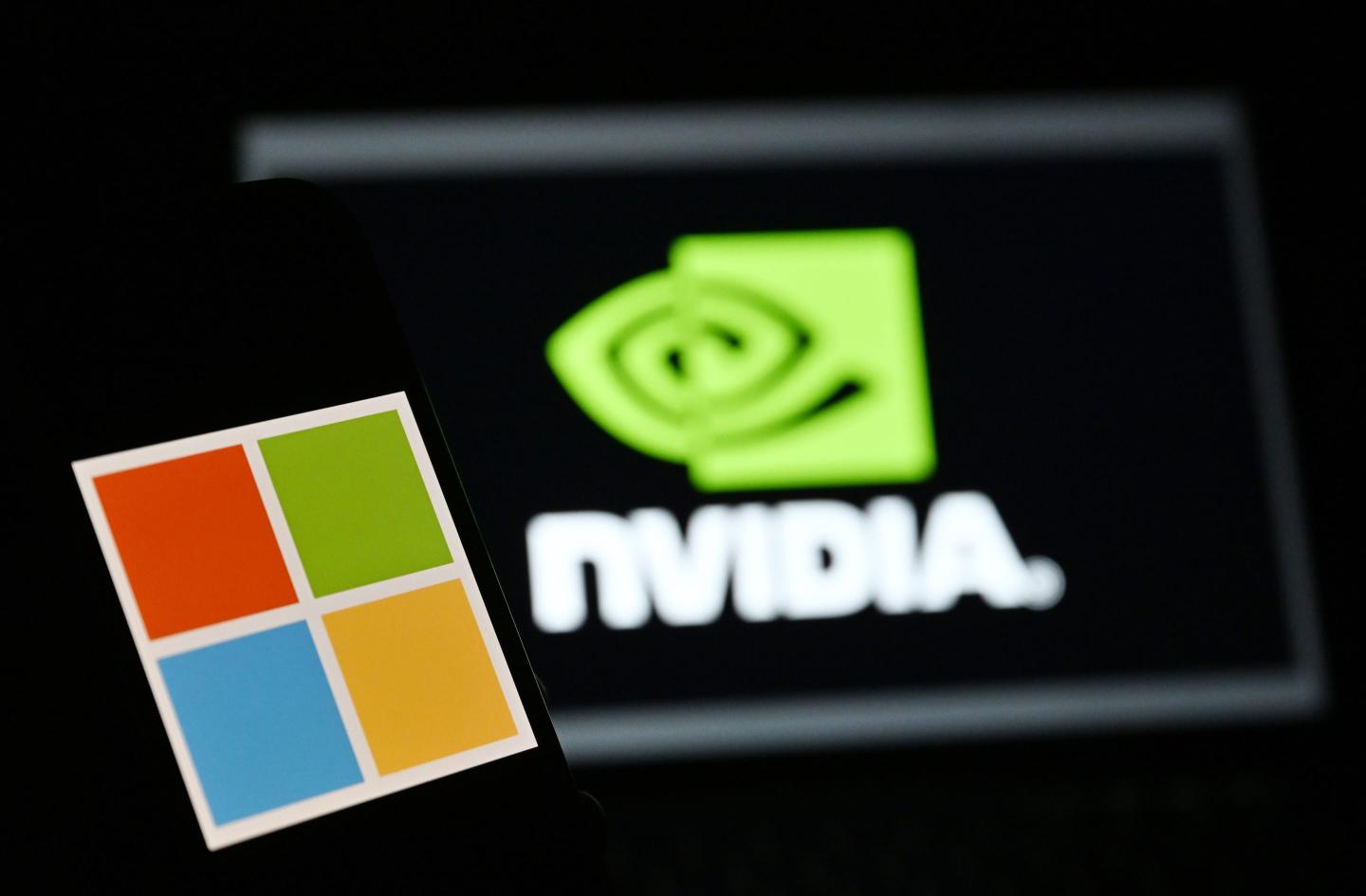
Xockets have accused Nvidia and Microsoft of patent infringement.
Xockets have accused Nvidia and Microsoft of patent infringement. Rasit Aydogan—Anadolu/Getty Images

Capital and labor are the blood and body of the U.S. economy, and their value rests substantially on continuing innovation. Since the 1950s, economists have measured the impact of innovations and other factors on gains in U.S. growth and productivity. A recent analysis found that one to two-thirds of those gains can be properly attributed to innovations, a far larger share than from increases in the capital stock and improvements in the skills and education of workers. 

Today, however, the nation’s economic progress is at risk. Giant corporations that dominate their respective markets have come up with ways to appropriate valuable innovations created by startups and small companies. This new process of capturing the innovations of others erodes the incentives for creative, entrepreneurial people to figure out how to turn their new ideas into new products and technologies—and degrades the economic conditions and ecosystem that support and promote innovation.

Innovation doesn’t happen by chance. It requires sustained investments in research and development and a political and economic environment that supports startups and new investments. It also requires strict legal protection and enforcement of the property rights to the innovation.

That protection is so important to the country’s long-term progress that it’s in the Constitution: Article 1, Section 8, grants Congress the specific authority to “promote the progress of science and useful arts, by securing for limited times to authors and inventors the exclusive right to their respective writings and discoveries.”

Accordingly, Congress has enacted patent laws to secure the innovator’s exclusive right from infringement and, if she chooses, to sell or license that right to others in return for a share of the economic benefits arising from the innovation.

For the past generation, innovative telecommunications and information technologies have transformed virtually all U.S. industries. At the same time, the process of developing new technologies and other products has changed as the tech industry has become highly concentrated.

Nvidia, Apple, Microsoft, and Alphabet are the four largest companies in the economy, with a combined market cap of more than $12 trillion—or the equivalent of 44% of GDP last year. Managing their enormous operations and markets demands most of their resources and attention. However, to maintain and increase their enormous value, giant companies have to continue to innovate. In response, their recent innovations have largely been conceived and initially developed by startups and young companies that patent the new ideas and then seek to sell them or themselves and their exclusive rights to large companies.

This process of innovation creation and development can be very efficient. The innovators focus on the risky process of developing something new on a small scale in hopes of very large rewards for selling their ideas to large companies that can bear the costs to finish the development and produce the new technology at scale. This system rests ultimately on protecting the small innovator’s intellectual property rights, since without those rights, there are no rewards.

What happens when a large company that depends on innovating but does little of it itself ignores the actual innovator’s rights? The innovator can sue, but that entails a very protracted and expensive legal process that pits a small startup or young company against a behemoth corporation that often dominates the marketplace. It’s David versus Goliath, and Goliath has the weapons to overwhelm David.

Legal and economic observers of this severe imbalance have identified the increasing use of what’s known as “efficient infringement.” That’s what happens when giant S&P 500 companies deliberately infringe on the patents of small innovators by appropriating their innovative ideas without notice or payment. It’s called “efficient” infringement because the big infringer has calculated that it costs less to wear down an innovator by exhausting its resources and patience in a protracted legal struggle than to license or purchase the patents. 

Efficient infringers also know that the law and many of the courts that adjudicate these disputes have shifted in ways that strongly favor Goliath. A small innovator’s most powerful recourse to protect its patent rights is an injunction to enjoin alleged infringers from using the patents while the dispute is adjudicated. In recent years, however, such injunctions have become rare. Without the existential threat of an injunction to protect the small innovator’s exclusive property rights, the Goliath companies are in practice incentivized to ignore them.

And even when a large corporate infringer loses the disputes, other changes in the rules that used to govern these cases have led to damage awards much smaller than the actual economic losses suffered by the innovator, much less a fair share of the actual economic benefits achieved by the infringer.

A high-profile case filed recently that involves one of the foundational technologies for artificial intelligence could illustrate these corrosive dynamics for everyone to consider. It involves a startup of which I am a board member, called Xockets, that more than a decade ago developed and patented the basic DPU chip that enables big data AI operations. Xockets is now suing Nvidia, the world’s largest maker of DPU chips, and its customer Microsoft, for infringing our patents on the very technology that has powered Nvidia’s meteoric rise to become the world’s largest company, worth over $3.4 trillion.

Xockets’s case is that Nvidia and Microsoft are committing efficient infringement by appropriating the small innovator’s patent-protected DPU chip and then joining together in boycotting Xockets’s efforts to sell or license its exclusive rights for a fair price. Most notably here, David has pulled together the resources to take on this Goliath, and the court is considering enjoining Nvidia from using the DPU chip in question. The case could become an object lesson for giant companies that consider taking advantage of small companies that create brilliant breakthroughs. (Nvidia and Microsoft did not respond to a request to make a statement about the points raised in this article. Microsoft has argued in court that our claim does not meet the threshold for an injunction.)

The outcome of our case could be a sobering lesson for young technologists. Going forward, the ownership of their breakthrough innovations could depend on whether the world’s largest and richest companies, intent on becoming yet larger and richer, will deign to recognize the property rights of innovators and pay to use their breakthroughs. If that’s the outcome, economic logic teaches that there will be fewer breakthroughs in the future and fewer investors willing to invest in innovations—and the productivity gains and income progress of most Americans will continue to suffer.

More must-read commentary published by Fortune:

  • Shell’s Pyrrhic victory may well set the stage for more corporate climate accountability
  • Demis Hassabis-James Manyika: AI will help us understand the very fabric of reality
  • British fintech founder who moved to U.S.: U.K. tech’s problem isn’t taxes—it’s ambition
  • The next wave of AI won’t be driven by LLMs. Here’s what investors should focus on instead

The opinions expressed in Fortune.com commentary pieces are solely the views of their authors and do not necessarily reflect the opinions and beliefs of Fortune.

Join us at the Fortune Workplace Innovation Summit May 19–20, 2026, in Atlanta. The next era of workplace innovation is here—and the old playbook is being rewritten. At this exclusive, high-energy event, the world’s most innovative leaders will convene to explore how AI, humanity, and strategy converge to redefine, again, the future of work. Register now.
About the Author
By Robert Shapiro
See full bioRight Arrow Button Icon

Latest in Commentary

Finance
Lorem ipsum dolor sit amet, consectetur adipiscing elit, sed do eiusmod tempor incididunt ut labore et dolore magna aliqua. Ut enim ad minim veniam
By Fortune Editors
October 20, 2025
Finance
Lorem ipsum dolor sit amet, consectetur adipiscing elit, sed do eiusmod tempor incididunt ut labore et dolore magna aliqua. Ut enim ad minim veniam
By Fortune Editors
October 20, 2025
Finance
Lorem ipsum dolor sit amet, consectetur adipiscing elit, sed do eiusmod tempor incididunt ut labore et dolore magna aliqua. Ut enim ad minim veniam
By Fortune Editors
October 20, 2025
Finance
Lorem ipsum dolor sit amet, consectetur adipiscing elit, sed do eiusmod tempor incididunt ut labore et dolore magna aliqua. Ut enim ad minim veniam
By Fortune Editors
October 20, 2025
Finance
Lorem ipsum dolor sit amet, consectetur adipiscing elit, sed do eiusmod tempor incididunt ut labore et dolore magna aliqua. Ut enim ad minim veniam
By Fortune Editors
October 20, 2025
Finance
Lorem ipsum dolor sit amet, consectetur adipiscing elit, sed do eiusmod tempor incididunt ut labore et dolore magna aliqua. Ut enim ad minim veniam
By Fortune Editors
October 20, 2025

Most Popular

Finance
Lorem ipsum dolor sit amet, consectetur adipiscing elit, sed do eiusmod tempor incididunt ut labore et dolore magna aliqua. Ut enim ad minim veniam
By Fortune Editors
October 20, 2025
Finance
Lorem ipsum dolor sit amet, consectetur adipiscing elit, sed do eiusmod tempor incididunt ut labore et dolore magna aliqua. Ut enim ad minim veniam
By Fortune Editors
October 20, 2025
Finance
Lorem ipsum dolor sit amet, consectetur adipiscing elit, sed do eiusmod tempor incididunt ut labore et dolore magna aliqua. Ut enim ad minim veniam
By Fortune Editors
October 20, 2025
Finance
Lorem ipsum dolor sit amet, consectetur adipiscing elit, sed do eiusmod tempor incididunt ut labore et dolore magna aliqua. Ut enim ad minim veniam
By Fortune Editors
October 20, 2025
Finance
Lorem ipsum dolor sit amet, consectetur adipiscing elit, sed do eiusmod tempor incididunt ut labore et dolore magna aliqua. Ut enim ad minim veniam
By Fortune Editors
October 20, 2025
Finance
Lorem ipsum dolor sit amet, consectetur adipiscing elit, sed do eiusmod tempor incididunt ut labore et dolore magna aliqua. Ut enim ad minim veniam
By Fortune Editors
October 20, 2025
Fortune Secondary Logo
Rankings
  • 100 Best Companies
  • Fortune 500
  • Global 500
  • Fortune 500 Europe
  • Most Powerful Women
  • World's Most Admired Companies
  • See All Rankings
  • Lists Calendar
Sections
  • Finance
  • Fortune Crypto
  • Features
  • Leadership
  • Health
  • Commentary
  • Success
  • Retail
  • Mpw
  • Tech
  • Lifestyle
  • CEO Initiative
  • Asia
  • Politics
  • Conferences
  • Europe
  • Newsletters
  • Personal Finance
  • Environment
  • Magazine
  • Education
Customer Support
  • Frequently Asked Questions
  • Customer Service Portal
  • Privacy Policy
  • Terms Of Use
  • Single Issues For Purchase
  • International Print
Commercial Services
  • Advertising
  • Fortune Brand Studio
  • Fortune Analytics
  • Fortune Conferences
  • Business Development
  • Group Subscriptions
About Us
  • About Us
  • Press Center
  • Work At Fortune
  • Terms And Conditions
  • Site Map
  • About Us
  • Press Center
  • Work At Fortune
  • Terms And Conditions
  • Site Map
  • Facebook icon
  • Twitter icon
  • LinkedIn icon
  • Instagram icon
  • Pinterest icon

Latest in Commentary

drew
CommentaryDefense
I helped build the Pentagon’s AI transformation. Corporate America is making every mistake we almost made
By Drew CukorMay 11, 2026
13 minutes ago
250
Commentary250 Years of Innovation
America’s true innovation advantage: we don’t just invent technologies — we reinvent how innovation works
By David H. HsuMay 11, 2026
13 minutes ago
The Strait of Hormuz crisis shows energy security is now a boardroom issue
Commentaryoil and gas
The Strait of Hormuz crisis shows energy security is now a boardroom issue
By Victor NianMay 10, 2026
17 hours ago
trump
CommentaryWhite House
Trump thinks he’s flying to Beijing with leverage. China spent 6 years making sure he doesn’t have any
By Steve H. HankeMay 10, 2026
1 day ago
joaquin
Commentary250 Years of Innovation
Johnson & Johnson CEO: America’s innovation advantage starts with health 
By Joaquin DuatoMay 9, 2026
2 days ago
reed
CommentaryRetirement
Tim Cook and Reed Hastings just showed every CEO how to leave gracefully
By Paul HardartMay 9, 2026
2 days ago

Most Popular

‘This is the way’: Elon Musk endorses Warren Buffett’s famed 5-minute plan to fix the national debt
Economy
‘This is the way’: Elon Musk endorses Warren Buffett’s famed 5-minute plan to fix the national debt
By Jacqueline MunisMay 10, 2026
1 day ago
OpenAI CEO Sam Altman says Gen Z and millennials are using ChatGPT like a 'life advisor'—but college students might be one step ahead
Tech
OpenAI CEO Sam Altman says Gen Z and millennials are using ChatGPT like a 'life advisor'—but college students might be one step ahead
By Sydney LakeMay 10, 2026
1 day ago
'Employers are increasingly turning to degree and GPA' in hiring: Recruiters retreat from ‘talent is everywhere,’ double down on top colleges
Future of Work
'Employers are increasingly turning to degree and GPA' in hiring: Recruiters retreat from ‘talent is everywhere,’ double down on top colleges
By Jake AngeloMay 9, 2026
2 days ago
Red flag test: former CEO explains why he rejects job candidates who say they can start right away
Success
Red flag test: former CEO explains why he rejects job candidates who say they can start right away
By Orianna Rosa RoyleMay 9, 2026
2 days ago
Trump thinks he's flying to Beijing with leverage. China spent 6 years making sure he doesn't have any
Commentary
Trump thinks he's flying to Beijing with leverage. China spent 6 years making sure he doesn't have any
By Steve H. HankeMay 10, 2026
1 day ago
Ted Cruz says the quiet part out loud: Trump accounts are Social Security personal accounts as GOP senator reveals 'dirty little secret'
Politics
Ted Cruz says the quiet part out loud: Trump accounts are Social Security personal accounts as GOP senator reveals 'dirty little secret'
By Jason MaMay 9, 2026
2 days ago

© 2026 Fortune Media IP Limited. All Rights Reserved. Use of this site constitutes acceptance of our Terms of Use and Privacy Policy | CA Notice at Collection and Privacy Notice | Do Not Sell/Share My Personal Information
FORTUNE is a trademark of Fortune Media IP Limited, registered in the U.S. and other countries. FORTUNE may receive compensation for some links to products and services on this website. Offers may be subject to change without notice.