• Home
  • Latest
  • Fortune 500
  • Finance
  • Tech
  • Leadership
  • Lifestyle
  • Rankings
  • Multimedia

Trendingnow

1

After forcing workers back to the office, Goldman Sachs and JPMorgan Chase are now letting their staff work remotely—but only for the World Cup

2

Markets tumble worldwide as Fed resets expectations: $400 billion wiped off SpaceX stock

3

The Pentagon said Iran War costs $29 billion,but the real cost is closer to $200 billion—and counting

1

After forcing workers back to the office, Goldman Sachs and JPMorgan Chase are now letting their staff work remotely—but only for the World Cup

2

Markets tumble worldwide as Fed resets expectations: $400 billion wiped off SpaceX stock

3

The Pentagon said Iran War costs $29 billion,but the real cost is closer to $200 billion—and counting
CommentaryEnvironment

The world has only deployed 10% of the climate technologies it needs to achieve net zero, new research by McKinsey shows

By
Chris Bradley
Chris Bradley
,
Mekala Krishnan
Mekala Krishnan
, and
Humayun Tai
Humayun Tai
Down Arrow Button Icon
By
Chris Bradley
Chris Bradley
,
Mekala Krishnan
Mekala Krishnan
, and
Humayun Tai
Humayun Tai
Down Arrow Button Icon
November 15, 2024, 10:33 AM ET
Chris Bradley is a senior partner at McKinsey & Company and a director of the McKinsey Global Institute. Mekala Krishnan is a partner at the McKinsey Global Institute. Humayun Tai is a McKinsey senior partner and leader of McKinsey's Global Energy and Materials Practice.
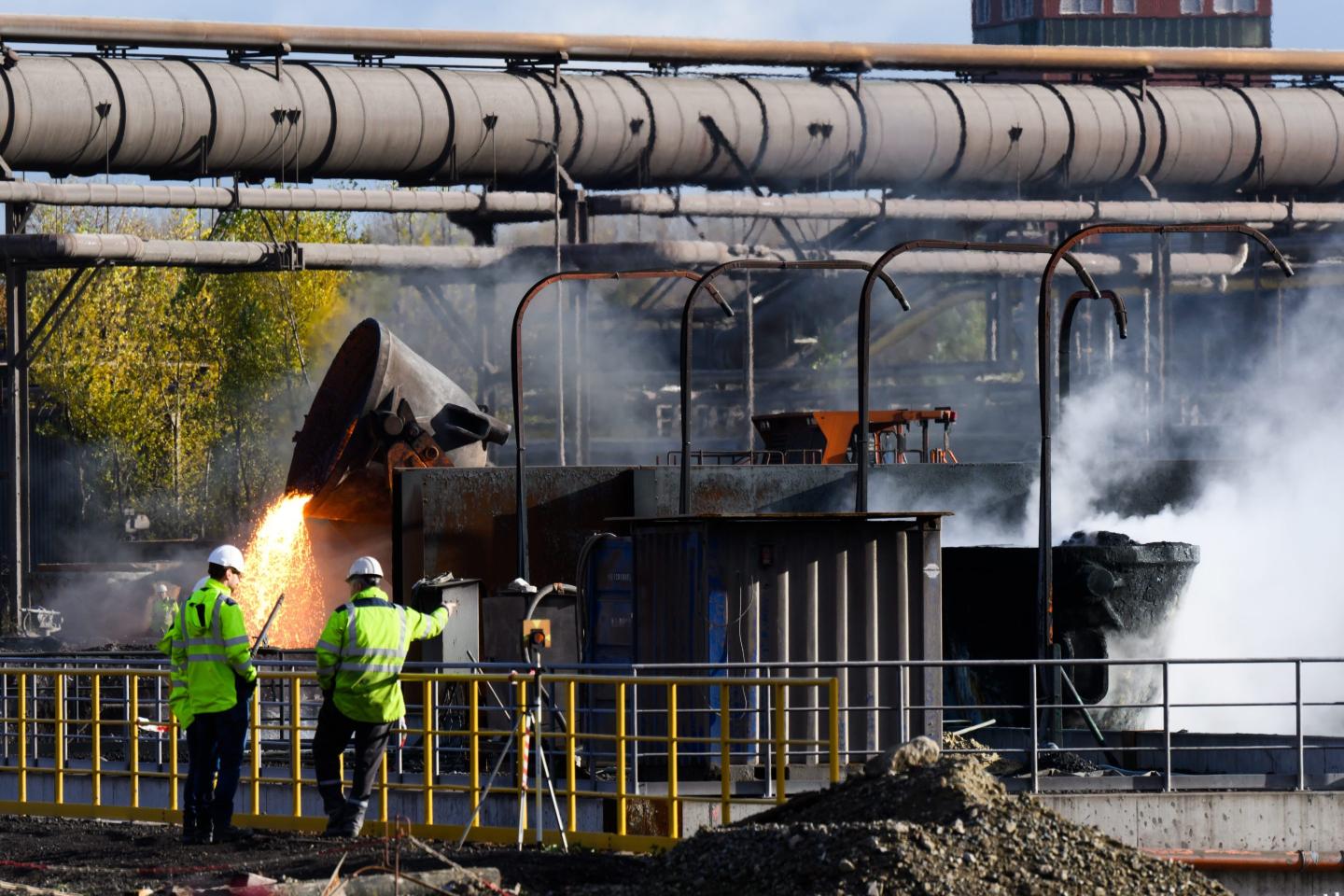
A low-CO2 steelmaking project in Germany. Steel is among the "big four" industrial materials that are difficult to abate.
A low-CO2 steelmaking project in Germany. Steel is among the "big four" industrial materials that are difficult to abate.Julian Stratenschulte - picture alliance - Getty Images
Add Fortune on Google for similar content.

Despite the momentum of recent years, the fact remains that the energy transition is only in its infancy. Roughly halfway through what has been called climate’s decisive decade, and in the face of rising global uncertainties, it is time for a pragmatic reality check to understand where are we really, and what it will take to get the rest of the job done.

By our count, only about 10% of the low-emissions technologies needed by 2050 to meet global climate commitments are in place. Achieving the rest of the transition requires confronting the reality that the energy transition is at its core a colossal transformation of the physical world. 

Today’s energy system is vast and complex, encompassing around 60,000 power plants, oil and gas pipelines that extend a distance equivalent to the moon and back—twice, over a billion vehicles, and the annual production of billions of tonnes of essential materials like steel and cement. All of this comes together to effectively deliver the needs of modern society, albeit while contributing to 85% of global carbon dioxide (CO2) emissions and in a highly inefficient fashion—about two-thirds of energy is wasted.

The world therefore needs a blueprint for physically transforming this complex colossus on the basis of which effective policies, incentives, and investments can be made. We have done just that—and identified 25 physical challenges related to the performance of low-emissions technologies and what it will take to deploy them.

The good news? Meaningful progress has been achieved on 13 challenges, such as enhancing the range of passenger battery EVs and the effectiveness of heat pumps in cold conditions. For these, making progress means continuing the momentum and removing constraints to their deployment. However, 12 challenges are particularly demanding—and 40 to 60% of the CO2 emissions of the energy system cannot be abated unless they are tackled.

Two of the “demanding dozen” are in the power system, the epicenter of the energy transition. First, solar and wind are highly effective power generators, but as their share in the electricity generation mix rises, the system will need to cope with periods without enough sunshine or wind. This requires more and new forms of storage, more interconnections between grids, backup generation, and flexibility on the demand side. But all of these solutions have execution challenges and some have hardly been deployed. Second, while rich countries can tack wind and solar on top of existing generation capacity, emerging systems lack this foundational capacity—and this is also where access to electricity needs to grow the most. 

Mobility has two demanding challenges: Battery weight limits the payload that long-haul, heavy-duty electric trucks can carry and their range. And nearly all ships and airplanes still run on fossil fuels.

Four challenges relate to producing the “big four” industrial materials—steel, cement, plastics, and ammonia. Their production process requires fossil fuels to generate high-temperature heat, and often uses them as an input. These are industrial areas where there is almost no low-emissions primary production yet.

Two challenges stem from hydrogen. Despite being described as the “Swiss army knife” of the transition, hydrogen is voluminous, flammable, leaky, and needs a lot of energy to convert back and forth into useable forms, often making it less energy-efficient than other options. And there is a huge scaling challenge: Multiplying electrolyzer capacity by a factor of thousands and extending the length of hydrogen pipelines.

The final two challenges involve eliminating residual carbon dioxide through capturing point-source carbon and direct carbon removal, both of which are energy-intensive and technically challenging.

For business leaders and policymakers, tackling the “demanding dozen” will hinge on addressing three main difficulties: substantial technological performance gaps, nascent progress thus far, and therefore scant track record of execution (both of which also contribute to their high costs), and deep interlinkages between the demanding dozen themselves, which means that none of these challenges can be solved in isolation.

Making progress on these technologies will, of course, take collaboration. It will also take reimagining the very art of the possible. To overcome these inherent difficulties, it will be essential to push the technological frontier. But the system will also need to be redesigned to change how technologies mesh together and the ways energy itself is used. Examples include creating flexible demand for power in vehicles, buildings, and industry to manage periods when renewable energy is not available or replacing cement and plastics with different materials in some uses.

Reducing emissions is critical to ensure the world meets the goals enshrined in the Paris Agreement, but it is a monumental task. The only way to give the goal of net zero a real chance is to understand the physical challenges—what we call the “hard stuff”—and use that knowledge to execute well.

More must-read commentary published by Fortune:

  • Shell’s Pyrrhic victory may well set the stage for more corporate climate accountability
  • Americans paid $100B since 2008 to access their own money. I am petitioning the Fed to end this racket
  • British fintech founder who moved to U.S.: U.K. tech’s problem isn’t taxes—it’s ambition
  • The next wave of AI won’t be driven by LLMs. Here’s what investors should focus on instead

The opinions expressed in Fortune.com commentary pieces are solely the views of their authors and do not necessarily reflect the opinions and beliefs of Fortune.

About the Authors
By Chris Bradley
See full bioRight Arrow Button Icon
By Mekala Krishnan
See full bioRight Arrow Button Icon
By Humayun Tai
See full bioRight Arrow Button Icon
Add Fortune on Google for similar content.

Latest in Commentary

Finance
Lorem ipsum dolor sit amet, consectetur adipiscing elit, sed do eiusmod tempor incididunt ut labore et dolore magna aliqua. Ut enim ad minim veniam
By Fortune Editors
October 20, 2025
Finance
Lorem ipsum dolor sit amet, consectetur adipiscing elit, sed do eiusmod tempor incididunt ut labore et dolore magna aliqua. Ut enim ad minim veniam
By Fortune Editors
October 20, 2025
Finance
Lorem ipsum dolor sit amet, consectetur adipiscing elit, sed do eiusmod tempor incididunt ut labore et dolore magna aliqua. Ut enim ad minim veniam
By Fortune Editors
October 20, 2025
Finance
Lorem ipsum dolor sit amet, consectetur adipiscing elit, sed do eiusmod tempor incididunt ut labore et dolore magna aliqua. Ut enim ad minim veniam
By Fortune Editors
October 20, 2025
Finance
Lorem ipsum dolor sit amet, consectetur adipiscing elit, sed do eiusmod tempor incididunt ut labore et dolore magna aliqua. Ut enim ad minim veniam
By Fortune Editors
October 20, 2025
Finance
Lorem ipsum dolor sit amet, consectetur adipiscing elit, sed do eiusmod tempor incididunt ut labore et dolore magna aliqua. Ut enim ad minim veniam
By Fortune Editors
October 20, 2025

Most Popular

Finance
Lorem ipsum dolor sit amet, consectetur adipiscing elit, sed do eiusmod tempor incididunt ut labore et dolore magna aliqua. Ut enim ad minim veniam
By Fortune Editors
October 20, 2025
Finance
Lorem ipsum dolor sit amet, consectetur adipiscing elit, sed do eiusmod tempor incididunt ut labore et dolore magna aliqua. Ut enim ad minim veniam
By Fortune Editors
October 20, 2025
Finance
Lorem ipsum dolor sit amet, consectetur adipiscing elit, sed do eiusmod tempor incididunt ut labore et dolore magna aliqua. Ut enim ad minim veniam
By Fortune Editors
October 20, 2025
Finance
Lorem ipsum dolor sit amet, consectetur adipiscing elit, sed do eiusmod tempor incididunt ut labore et dolore magna aliqua. Ut enim ad minim veniam
By Fortune Editors
October 20, 2025
Finance
Lorem ipsum dolor sit amet, consectetur adipiscing elit, sed do eiusmod tempor incididunt ut labore et dolore magna aliqua. Ut enim ad minim veniam
By Fortune Editors
October 20, 2025
Finance
Lorem ipsum dolor sit amet, consectetur adipiscing elit, sed do eiusmod tempor incididunt ut labore et dolore magna aliqua. Ut enim ad minim veniam
By Fortune Editors
October 20, 2025
Fortune Secondary Logo
Rankings
  • 100 Best Companies
  • Fortune 500
  • Global 500
  • Fortune 500 Europe
  • Most Powerful Women
  • World's Most Admired Companies
  • See All Rankings
  • Lists Calendar
Sections
  • Finance
  • Fortune Crypto
  • Features
  • Leadership
  • Health
  • Commentary
  • Success
  • Retail
  • Mpw
  • Tech
  • Lifestyle
  • CEO Initiative
  • Asia
  • Politics
  • Conferences
  • Europe
  • Newsletters
  • Personal Finance
  • Environment
  • Magazine
  • Education
Customer Support
  • Frequently Asked Questions
  • Customer Service Portal
  • Privacy Policy
  • Terms Of Use
  • Single Issues For Purchase
  • International Print
Commercial Services
  • Advertising
  • Fortune Brand Studio
  • Fortune Analytics
  • Fortune Conferences
  • Business Development
  • Group Subscriptions
About Us
  • About Us
  • Press Center
  • Work At Fortune
  • Terms And Conditions
  • Site Map
  • About Us
  • Press Center
  • Work At Fortune
  • Terms And Conditions
  • Site Map
  • Facebook icon
  • Twitter icon
  • LinkedIn icon
  • Instagram icon
  • Pinterest icon

Latest in Commentary

t
CommentaryWhite House
Trump mistakes the bully pulpit for bullying leadership — history’s villains were never heroes
By Jeffrey Sonnenfeld and Steven TianJune 24, 2026
2 hours ago
mg
CommentaryHealth
The ‘tech neck’ time bomb: why 43 million young Americans could cripple U.S. health care within a generation
By Michael GerlingJune 24, 2026
2 hours ago
sb
Commentaryclimate change
The climate policy triangle: why leaders can no longer choose between growth, security and sustainability
By Sebastian BuckupJune 23, 2026
16 hours ago
brett
CommentaryManagement
Middle managers aren’t going extinct—they’re evolving into something more powerful
By Brett HurtJune 23, 2026
1 day ago
ravi
CommentaryAI agents
Yale School of Management: surveillance pricing is just the beginning. AI agents will be the real test of corporate trust
By Ravi Dhar and Jon IwataJune 23, 2026
1 day ago
elon
CommentaryElon Musk
Elon Musk’s trillion dollars aren’t real — and that’s the point
By Douglas P. McCormickJune 23, 2026
1 day ago

Most Popular

After forcing workers back to the office, Goldman Sachs and JPMorgan Chase are now letting their staff work remotely—but only for the World Cup
Success
After forcing workers back to the office, Goldman Sachs and JPMorgan Chase are now letting their staff work remotely—but only for the World Cup
By Orianna Rosa RoyleJune 23, 2026
1 day ago
Markets tumble worldwide as Fed resets expectations: $400 billion wiped off SpaceX stock
Banking
Markets tumble worldwide as Fed resets expectations: $400 billion wiped off SpaceX stock
By Jim EdwardsJune 23, 2026
1 day ago
The Pentagon said Iran War costs $29 billion,but the real cost is closer to $200 billion—and counting
Economy
The Pentagon said Iran War costs $29 billion,but the real cost is closer to $200 billion—and counting
By Jacqueline MunisJune 24, 2026
7 hours ago
Current price of oil as of June 23, 2026
Personal Finance
Current price of oil as of June 23, 2026
By Joseph HostetlerJune 23, 2026
1 day ago
Texas and Charlotte used to build huge McMansions—now they're copying the California design tricks they once mocked
Real Estate
Texas and Charlotte used to build huge McMansions—now they're copying the California design tricks they once mocked
By Sydney LakeJune 22, 2026
2 days ago
Current price of gold as of June 23, 2026
Personal Finance
Current price of gold as of June 23, 2026
By Danny BakstJune 23, 2026
1 day ago

© 2026 Fortune Media IP Limited. All Rights Reserved. Use of this site constitutes acceptance of our Terms of Use and Privacy Policy | CA Notice at Collection and Privacy Notice | Do Not Sell/Share My Personal Information
FORTUNE is a trademark of Fortune Media IP Limited, registered in the U.S. and other countries. FORTUNE may receive compensation for some links to products and services on this website. Offers may be subject to change without notice.