• Home
  • Latest
  • Fortune 500
  • Finance
  • Tech
  • Leadership
  • Lifestyle
  • Rankings
  • Multimedia

Trendingnow

1

After forcing workers back to the office, Goldman Sachs and JPMorgan Chase are now letting their staff work remotely—but only for the World Cup

2

The Pentagon said Iran War costs $29 billion, but the real cost is closer to $200 billion—and counting

3

Markets tumble worldwide as Fed resets expectations: $400 billion wiped off SpaceX stock

1

After forcing workers back to the office, Goldman Sachs and JPMorgan Chase are now letting their staff work remotely—but only for the World Cup

2

The Pentagon said Iran War costs $29 billion, but the real cost is closer to $200 billion—and counting

3

Markets tumble worldwide as Fed resets expectations: $400 billion wiped off SpaceX stock
CommentaryLeadership

Tim Walz’s leadership resonates with my country’s Viking Code. Here’s why that matters

By
Anders Indset
Anders Indset
Down Arrow Button Icon
By
Anders Indset
Anders Indset
Down Arrow Button Icon
October 1, 2024, 11:55 AM ET

Anders Indset, aka Norway's "business philosopher," is author of The Viking Code: The Art and Science of Norwegian Success, the latest of his many books.

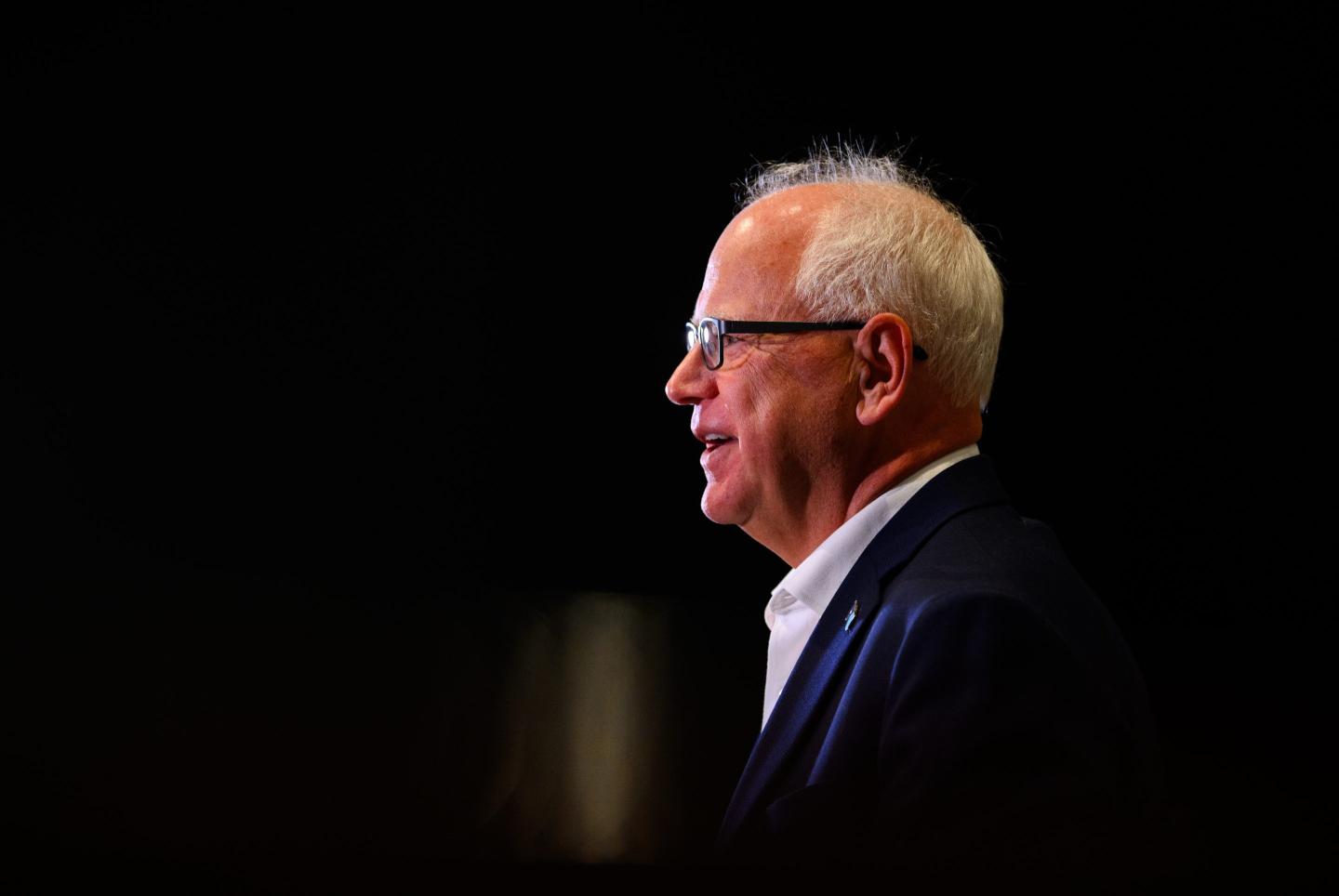
Tim Walz.
Tim Walz.Stephen Maturen/Getty Images
Add Fortune on Google for similar content.

I recently visited my parents, both well into their seventies, at their cozy Norwegian home, in the village where I grew up, Røros. I found myself surrounded by an open landscape that seems to hold the wisdom of centuries. A normal Wednesday, with perfect weather outside to stay inside. I had planned to take a few days off to write and enjoy some me-time, but my 8-year-old daughter and her cousin were running around, filling the house with the kind of chaos only youthful energy can bring. Meanwhile, my mother, juggling grandchildren and dinner preparations, suddenly had to take off for a Dugnad.

Dugnad. The word holds a special place in Norwegian culture, embodying the spirit of communal effort, volunteerism, and collective responsibility. Even at their age, my parents wouldn’t dream of missing a Dugnad, not even when the house is filled with visiting family. To them, and to many Norwegians, Dugnad isn’t just an event—it’s a way of life, a declaration of belonging, and an expression of interdependence that goes back generations. As I watched my parents prepare to contribute their time and energy to a community project, it struck me that this deep-rooted cultural practice holds lessons far beyond our small village. It might just be the key to solving some of the most pressing challenges facing America today.                       

The Viking Code: A heritage of dynamic equilibrium

Dugnad is more than just a communal task; it’s a manifestation of a cultural ethos baked into “the Viking Code”—a set of values that has guided Norwegian society for centuries and for me has become a blueprint for creating a vital society where high-performance individualism can flourish together with a strong sense of collectivism. While Norwegians are fiercely independent and value personal freedom, there’s an equally strong commitment to the common good. Dugnad is where these two forces meet.

In Norway, Dugnad can take many forms: cleaning up a local park, painting a community center, or even helping a neighbor with their roof. It’s never about grand gestures but rather about everyone doing their part, however small. The beauty of Dugnad lies in its simplicity and its ability to unite people from all walks of life in a shared purpose. It’s a practice that has kept Norwegian communities resilient and cohesive, even in the face of external pressures and internal differences.

The American paradox: Individualism vs. collectivism

In contrast, American culture has long celebrated the rugged individualist, the self-made person who pulls themselves up by their bootstraps. This ethos has driven innovation and prosperity, but it has also fostered division and a sense of isolation, particularly in times of crisis. The challenges of the 21st century—global pandemics, climate change, economic inequality—require a level of collective action that American society is struggling to achieve.

But in Minnesota, a state with deep Norwegian roots, Governor Tim Walz’s leadership style resonates with the spirit of Dugnad and the core of the Viking Code. His background as a teacher and his approach to governance emphasize collaboration, shared responsibility, and a deep connection to community—principles that echo the Norwegian tradition of Dugnad.

While Kamala Harris represents a historic and progressive vision for America, her running mate embodies a quieter but equally powerful potential for change. His leadership is rooted in the very essence of what makes Minnesota, and by extension Norwegian-American communities, unique: a commitment to collective well-being that does not diminish individual rights but enhances them.

Dugnad as a Declaration of Interdependence

America is at a crossroads. The polarization and fragmentation we see today are symptoms of a deeper issue: the tension between individualism and the need for collective action. But what if this tension could be resolved? What if America embraced a new “Declaration of Interdependence,” modeled on the principles of Dugnad?

Imagine a country where communities come together regularly across parties to address local issues—where volunteering isn’t just an occasional activity but a regular, expected part of life. Imagine corporations adopting these principles, encouraging employees to contribute to community projects as part of their work culture. Imagine a political system where leaders prioritize the common good over partisan gain.

What may sound like a utopian fantasy are the principles of Dugnad that have been successfully implemented in Norway for generations. Tim Walz makes a plea for such community spirit that can be adapted to fit the unique contours of American society, providing a framework for addressing everything from economic inequality to environmental sustainability.

The Viking Code and America’s future

As what has been coined a pivotal moment in American history approaches, the lessons from Norway can serve as guiding philosophy for life. The spirit of Dugnad and the Viking Code offer a path forward for America—a way to bridge the divide between individualism and collectivism, to create a high-performance culture rooted in shared values. It’s a vision of a society where personal freedom is not only preserved but enriched by a deep commitment to the common good.

America has the opportunity to return to the path of such a legacy—one that future generations will look back on with pride. But it will require a shift in thinking, a willingness to embrace interdependence as a strength rather than a weakness. It will require a new declaration, one that honors the individual while committing to the collective.

It will require American Dugnad.

Read more:

  • Tim Walz’s net worth is less than the average American’s
  • In Tim Walz, Kamala Harris gets a labor champion who can still appeal to critical heartland voters
  • Tim Walz’s record governing Minnesota showcases a wish list of progressive priorities
  • Tim Walz says he sleeps ‘just fine’ with F’s from the NRA

The opinions expressed in Fortune.com commentary pieces are solely the views of their authors and do not necessarily reflect the opinions and beliefs of Fortune.

About the Author
By Anders Indset
See full bioRight Arrow Button Icon
Add Fortune on Google for similar content.

Latest in Commentary

Finance
Lorem ipsum dolor sit amet, consectetur adipiscing elit, sed do eiusmod tempor incididunt ut labore et dolore magna aliqua. Ut enim ad minim veniam
By Fortune Editors
October 20, 2025
Finance
Lorem ipsum dolor sit amet, consectetur adipiscing elit, sed do eiusmod tempor incididunt ut labore et dolore magna aliqua. Ut enim ad minim veniam
By Fortune Editors
October 20, 2025
Finance
Lorem ipsum dolor sit amet, consectetur adipiscing elit, sed do eiusmod tempor incididunt ut labore et dolore magna aliqua. Ut enim ad minim veniam
By Fortune Editors
October 20, 2025
Finance
Lorem ipsum dolor sit amet, consectetur adipiscing elit, sed do eiusmod tempor incididunt ut labore et dolore magna aliqua. Ut enim ad minim veniam
By Fortune Editors
October 20, 2025
Finance
Lorem ipsum dolor sit amet, consectetur adipiscing elit, sed do eiusmod tempor incididunt ut labore et dolore magna aliqua. Ut enim ad minim veniam
By Fortune Editors
October 20, 2025
Finance
Lorem ipsum dolor sit amet, consectetur adipiscing elit, sed do eiusmod tempor incididunt ut labore et dolore magna aliqua. Ut enim ad minim veniam
By Fortune Editors
October 20, 2025

Most Popular

Finance
Lorem ipsum dolor sit amet, consectetur adipiscing elit, sed do eiusmod tempor incididunt ut labore et dolore magna aliqua. Ut enim ad minim veniam
By Fortune Editors
October 20, 2025
Finance
Lorem ipsum dolor sit amet, consectetur adipiscing elit, sed do eiusmod tempor incididunt ut labore et dolore magna aliqua. Ut enim ad minim veniam
By Fortune Editors
October 20, 2025
Finance
Lorem ipsum dolor sit amet, consectetur adipiscing elit, sed do eiusmod tempor incididunt ut labore et dolore magna aliqua. Ut enim ad minim veniam
By Fortune Editors
October 20, 2025
Finance
Lorem ipsum dolor sit amet, consectetur adipiscing elit, sed do eiusmod tempor incididunt ut labore et dolore magna aliqua. Ut enim ad minim veniam
By Fortune Editors
October 20, 2025
Finance
Lorem ipsum dolor sit amet, consectetur adipiscing elit, sed do eiusmod tempor incididunt ut labore et dolore magna aliqua. Ut enim ad minim veniam
By Fortune Editors
October 20, 2025
Finance
Lorem ipsum dolor sit amet, consectetur adipiscing elit, sed do eiusmod tempor incididunt ut labore et dolore magna aliqua. Ut enim ad minim veniam
By Fortune Editors
October 20, 2025
Fortune Secondary Logo
Rankings
  • 100 Best Companies
  • Fortune 500
  • Global 500
  • Fortune 500 Europe
  • Most Powerful Women
  • World's Most Admired Companies
  • See All Rankings
  • Lists Calendar
Sections
  • Finance
  • Fortune Crypto
  • Features
  • Leadership
  • Health
  • Commentary
  • Success
  • Retail
  • Mpw
  • Tech
  • Lifestyle
  • CEO Initiative
  • Asia
  • Politics
  • Conferences
  • Europe
  • Newsletters
  • Personal Finance
  • Environment
  • Magazine
  • Education
Customer Support
  • Frequently Asked Questions
  • Customer Service Portal
  • Privacy Policy
  • Terms Of Use
  • Single Issues For Purchase
  • International Print
Commercial Services
  • Advertising
  • Fortune Brand Studio
  • Fortune Analytics
  • Fortune Conferences
  • Business Development
  • Group Subscriptions
About Us
  • About Us
  • Press Center
  • Work At Fortune
  • Terms And Conditions
  • Site Map
  • About Us
  • Press Center
  • Work At Fortune
  • Terms And Conditions
  • Site Map
  • Facebook icon
  • Twitter icon
  • LinkedIn icon
  • Instagram icon
  • Pinterest icon

Latest in Commentary

steve
Commentary250 Years of Innovation
Steve Case: America was built by entrepreneurs. Here’s how we keep that edge for the next 250 years
By Steve CaseJune 24, 2026
5 hours ago
t
CommentaryWhite House
Trump mistakes the bully pulpit for bullying leadership — history’s villains were never heroes
By Jeffrey Sonnenfeld and Steven TianJune 24, 2026
5 hours ago
mg
CommentaryHealth
The ‘tech neck’ time bomb: why 43 million young Americans could cripple U.S. health care within a generation
By Michael GerlingJune 24, 2026
6 hours ago
sb
Commentaryclimate change
The climate policy triangle: why leaders can no longer choose between growth, security and sustainability
By Sebastian BuckupJune 23, 2026
20 hours ago
brett
CommentaryManagement
Middle managers aren’t going extinct—they’re evolving into something more powerful
By Brett HurtJune 23, 2026
1 day ago
ravi
CommentaryAI agents
Yale School of Management: surveillance pricing is just the beginning. AI agents will be the real test of corporate trust
By Ravi Dhar and Jon IwataJune 23, 2026
1 day ago

Most Popular

After forcing workers back to the office, Goldman Sachs and JPMorgan Chase are now letting their staff work remotely—but only for the World Cup
Success
After forcing workers back to the office, Goldman Sachs and JPMorgan Chase are now letting their staff work remotely—but only for the World Cup
By Orianna Rosa RoyleJune 23, 2026
1 day ago
The Pentagon said Iran War costs $29 billion, but the real cost is closer to $200 billion—and counting
Economy
The Pentagon said Iran War costs $29 billion, but the real cost is closer to $200 billion—and counting
By Jacqueline MunisJune 24, 2026
10 hours ago
Markets tumble worldwide as Fed resets expectations: $400 billion wiped off SpaceX stock
Banking
Markets tumble worldwide as Fed resets expectations: $400 billion wiped off SpaceX stock
By Jim EdwardsJune 23, 2026
1 day ago
Current price of oil as of June 23, 2026
Personal Finance
Current price of oil as of June 23, 2026
By Joseph HostetlerJune 23, 2026
1 day ago
Current price of gold as of June 23, 2026
Personal Finance
Current price of gold as of June 23, 2026
By Danny BakstJune 23, 2026
1 day ago
Texas and Charlotte used to build huge McMansions—now they're copying the California design tricks they once mocked
Real Estate
Texas and Charlotte used to build huge McMansions—now they're copying the California design tricks they once mocked
By Sydney LakeJune 22, 2026
2 days ago

© 2026 Fortune Media IP Limited. All Rights Reserved. Use of this site constitutes acceptance of our Terms of Use and Privacy Policy | CA Notice at Collection and Privacy Notice | Do Not Sell/Share My Personal Information
FORTUNE is a trademark of Fortune Media IP Limited, registered in the U.S. and other countries. FORTUNE may receive compensation for some links to products and services on this website. Offers may be subject to change without notice.