• Home
  • Latest
  • Fortune 500
  • Finance
  • Tech
  • Leadership
  • Lifestyle
  • Rankings
  • Multimedia

Trendingnow

1

After forcing workers back to the office, Goldman Sachs and JPMorgan Chase are now letting their staff work remotely—but only for the World Cup

2

The Pentagon said Iran War costs $29 billion, but the real cost is closer to $200 billion—and counting

3

Current price of oil as of June 23, 2026

1

After forcing workers back to the office, Goldman Sachs and JPMorgan Chase are now letting their staff work remotely—but only for the World Cup

2

The Pentagon said Iran War costs $29 billion, but the real cost is closer to $200 billion—and counting

3

Current price of oil as of June 23, 2026
CommentaryTech

Mining hasn’t evolved in decades. The U.S. must reinvent it as China tightens its grip on critical minerals

By
Nathan Ratledge
Nathan Ratledge
Down Arrow Button Icon
By
Nathan Ratledge
Nathan Ratledge
Down Arrow Button Icon
September 24, 2024, 9:15 AM ET
Nathan Ratledge is the founder and CEO of Alta Resource Technologies, a next-generation mineral separation company.
American students shun mining, which they view as outdated and environmentally destructive. In contrast, the China University of Mining and Technology alone enrolls more mining engineering students than all U.S. universities combined.
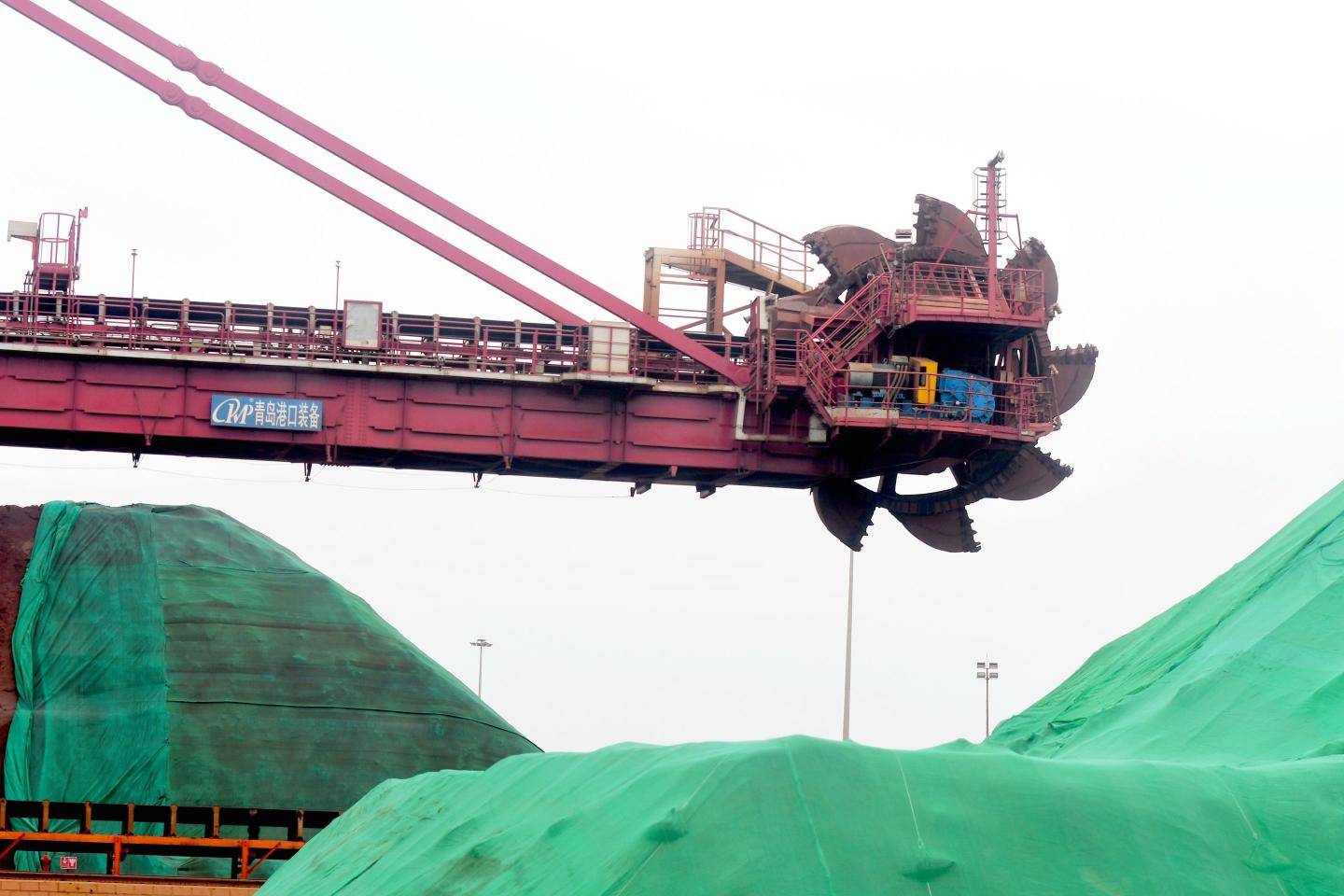
American students shun mining, which they view as outdated and environmentally destructive. In contrast, the China University of Mining and Technology alone enrolls more mining engineering students than all U.S. universities combined.Costfoto - NurPhoto - Getty Images
Add Fortune on Google for similar content.

Over the past year, China has tightened its grip on the global supply of nearly 20 critical minerals by placing restrictions on gallium, rare earths, and, most recently, antimony. These actions, which Beijing has justified with opaque references to national security concerns, underscore a troubling reality: China’s dominance over essential resources gives it tremendous power to weaponize its market position against the United States and its allies.

The impact is already being felt. Prices for gallium, a crucial component of semiconductors and solar panels, roughly doubled in Europe after China began imposing export curbs in mid-2023. The same fate could await the market for antimony, which is used in flame retardants, batteries, and defense applications like night-vision goggles and nuclear weapons. With demand for these building blocks of the modern economy skyrocketing as the world races to electrify transportation, digitize industry, and fortify defense capabilities, the prospect of crippling shortages looms large.

Yet the United States remains heavily reliant on imports, especially from China, for many of these essential materials. The past year’s developments suggest Beijing is increasingly willing to exploit this reliance to further its geopolitical agenda and outmaneuver the West. If we fail to act, we risk ceding control over the very foundation of our technological future to our greatest rival.

To secure our technological future, we must urgently develop domestic sources of critical minerals. However, traditional mining methods are often environmentally destructive and face strong public opposition. Many mining practices have remained nearly unchanged for centuries. As one senior government official put it, Pliny the Elder would recognize most of the techniques used in today’s mines. In some cases, it’s estimated that the economic costs of air, water, and climate pollution from mineral extraction can exceed the market value of the minerals themselves.

What’s needed is a fundamental reinvention of the mining industry—one that leverages cutting-edge innovations in fields like synthetic biology, advanced materials, artificial intelligence, and chemical engineering to make mineral production cleaner, more efficient, and more sustainable. We must also diversify the supply stream by finding innovative ways to recycle critical minerals from discarded devices and industrial waste streams. By creating a circular economy for these valuable materials, we can reduce the environmental impact of mining while also bolstering our domestic supply chains. This dual approach will require a new generation of brilliant engineers and scientists who can pioneer novel extraction, processing, and recycling technologies.

Yet despite the immense potential for impact and generational wealth creation, mining is failing to attract top talent in the United States. Many American students perceive the industry as old-fashioned and ecologically damaging, opting instead for fields like biotech, artificial intelligence, or carbon removal. In stark contrast, China’s mining education pipeline is thriving: The China University of Mining and Technology alone enrolls more mining engineering students than all U.S. universities combined.

To close this alarming gap, we must redefine mining as a frontier for technological disruption and a key enabler of the clean energy transition. Attracting a new generation of brilliant minds to reimagine mineral production won’t just yield massive financial rewards for American companies. It will bolster U.S. manufacturing, create skilled jobs, accelerate climate change mitigation, and strengthen our geopolitical position. Ceding leadership in this critical field is a luxury we simply cannot afford.

Washington has begun to recognize the urgency of the challenge, with the Pentagon expanding the National Defense Stockpile to include critical minerals and the Department of Energy launching new initiatives to catalyze private-sector innovation in this space. However, we need an all-of-society effort: Industry, academia, and policymakers must work in concert to build a world-leading, environmentally responsible mining sector for the 21st century.

To attract top talent, universities should follow the lead of Stanford and the Colorado School of Mines by expanding mining and minerals engineering programs, with a focus on state-of-the-art technology and environmental stewardship. Investors and major industrial consumers of critical minerals, from automakers to defense contractors, should actively support and fund promising startups working to remake the mining industry. And policymakers at all levels should prioritize permitting reform, investment in research and development, and workforce development to accelerate the responsible domestic production of critical minerals.

By reimagining mining for the digital age, we can create a cleaner, more secure, and more prosperous future—one in which America is no longer at the mercy of foreign powers for the critical minerals that underpin our national security and power our economy. Realizing this vision will require the brightest minds of a new generation to see mining not as a relic of the past but as a vanguard industry where they can apply their talents to solve one of the greatest challenges of our time. The race is on, and we can’t afford to lose.

More must-read commentary published by Fortune:

  • Inflation, housing, immigration, taxes: The Harris-Walz economic policy scorecard
  • The ‘sustainability recession’ will end soon—and not by choice
  • AI development is being hijacked by Big Tech and rich nations, UN report warns
  • The most underrated leadership skill, according to Jake Sullivan

The opinions expressed in Fortune.com commentary pieces are solely the views of their authors and do not necessarily reflect the opinions and beliefs of Fortune.

About the Author
By Nathan Ratledge
See full bioRight Arrow Button Icon
Add Fortune on Google for similar content.

Latest in Commentary

Finance
Lorem ipsum dolor sit amet, consectetur adipiscing elit, sed do eiusmod tempor incididunt ut labore et dolore magna aliqua. Ut enim ad minim veniam
By Fortune Editors
October 20, 2025
Finance
Lorem ipsum dolor sit amet, consectetur adipiscing elit, sed do eiusmod tempor incididunt ut labore et dolore magna aliqua. Ut enim ad minim veniam
By Fortune Editors
October 20, 2025
Finance
Lorem ipsum dolor sit amet, consectetur adipiscing elit, sed do eiusmod tempor incididunt ut labore et dolore magna aliqua. Ut enim ad minim veniam
By Fortune Editors
October 20, 2025
Finance
Lorem ipsum dolor sit amet, consectetur adipiscing elit, sed do eiusmod tempor incididunt ut labore et dolore magna aliqua. Ut enim ad minim veniam
By Fortune Editors
October 20, 2025
Finance
Lorem ipsum dolor sit amet, consectetur adipiscing elit, sed do eiusmod tempor incididunt ut labore et dolore magna aliqua. Ut enim ad minim veniam
By Fortune Editors
October 20, 2025
Finance
Lorem ipsum dolor sit amet, consectetur adipiscing elit, sed do eiusmod tempor incididunt ut labore et dolore magna aliqua. Ut enim ad minim veniam
By Fortune Editors
October 20, 2025

Most Popular

Finance
Lorem ipsum dolor sit amet, consectetur adipiscing elit, sed do eiusmod tempor incididunt ut labore et dolore magna aliqua. Ut enim ad minim veniam
By Fortune Editors
October 20, 2025
Finance
Lorem ipsum dolor sit amet, consectetur adipiscing elit, sed do eiusmod tempor incididunt ut labore et dolore magna aliqua. Ut enim ad minim veniam
By Fortune Editors
October 20, 2025
Finance
Lorem ipsum dolor sit amet, consectetur adipiscing elit, sed do eiusmod tempor incididunt ut labore et dolore magna aliqua. Ut enim ad minim veniam
By Fortune Editors
October 20, 2025
Finance
Lorem ipsum dolor sit amet, consectetur adipiscing elit, sed do eiusmod tempor incididunt ut labore et dolore magna aliqua. Ut enim ad minim veniam
By Fortune Editors
October 20, 2025
Finance
Lorem ipsum dolor sit amet, consectetur adipiscing elit, sed do eiusmod tempor incididunt ut labore et dolore magna aliqua. Ut enim ad minim veniam
By Fortune Editors
October 20, 2025
Finance
Lorem ipsum dolor sit amet, consectetur adipiscing elit, sed do eiusmod tempor incididunt ut labore et dolore magna aliqua. Ut enim ad minim veniam
By Fortune Editors
October 20, 2025
Fortune Secondary Logo
Rankings
  • 100 Best Companies
  • Fortune 500
  • Global 500
  • Fortune 500 Europe
  • Most Powerful Women
  • World's Most Admired Companies
  • See All Rankings
  • Lists Calendar
Sections
  • Finance
  • Fortune Crypto
  • Features
  • Leadership
  • Health
  • Commentary
  • Success
  • Retail
  • Mpw
  • Tech
  • Lifestyle
  • CEO Initiative
  • Asia
  • Politics
  • Conferences
  • Europe
  • Newsletters
  • Personal Finance
  • Environment
  • Magazine
  • Education
Customer Support
  • Frequently Asked Questions
  • Customer Service Portal
  • Privacy Policy
  • Terms Of Use
  • Single Issues For Purchase
  • International Print
Commercial Services
  • Advertising
  • Fortune Brand Studio
  • Fortune Analytics
  • Fortune Conferences
  • Business Development
  • Group Subscriptions
About Us
  • About Us
  • Press Center
  • Work At Fortune
  • Terms And Conditions
  • Site Map
  • About Us
  • Press Center
  • Work At Fortune
  • Terms And Conditions
  • Site Map
  • Facebook icon
  • Twitter icon
  • LinkedIn icon
  • Instagram icon
  • Pinterest icon

Latest in Commentary

steve
Commentary250 Years of Innovation
Steve Case: America was built by entrepreneurs. Here’s how we keep that edge for the next 250 years
By Steve CaseJune 24, 2026
8 hours ago
t
CommentaryWhite House
Trump mistakes the bully pulpit for bullying leadership — history’s villains were never heroes
By Jeffrey Sonnenfeld and Steven TianJune 24, 2026
8 hours ago
mg
CommentaryHealth
The ‘tech neck’ time bomb: why 43 million young Americans could cripple U.S. health care within a generation
By Michael GerlingJune 24, 2026
9 hours ago
sb
Commentaryclimate change
The climate policy triangle: why leaders can no longer choose between growth, security and sustainability
By Sebastian BuckupJune 23, 2026
23 hours ago
brett
CommentaryManagement
Middle managers aren’t going extinct—they’re evolving into something more powerful
By Brett HurtJune 23, 2026
1 day ago
ravi
CommentaryAI agents
Yale School of Management: surveillance pricing is just the beginning. AI agents will be the real test of corporate trust
By Ravi Dhar and Jon IwataJune 23, 2026
1 day ago

Most Popular

After forcing workers back to the office, Goldman Sachs and JPMorgan Chase are now letting their staff work remotely—but only for the World Cup
Success
After forcing workers back to the office, Goldman Sachs and JPMorgan Chase are now letting their staff work remotely—but only for the World Cup
By Orianna Rosa RoyleJune 23, 2026
1 day ago
The Pentagon said Iran War costs $29 billion, but the real cost is closer to $200 billion—and counting
Economy
The Pentagon said Iran War costs $29 billion, but the real cost is closer to $200 billion—and counting
By Jacqueline MunisJune 24, 2026
13 hours ago
Current price of oil as of June 23, 2026
Personal Finance
Current price of oil as of June 23, 2026
By Joseph HostetlerJune 23, 2026
1 day ago
Current price of gold as of June 23, 2026
Personal Finance
Current price of gold as of June 23, 2026
By Danny BakstJune 23, 2026
1 day ago
Texas and Charlotte used to build huge McMansions—now they're copying the California design tricks they once mocked
Real Estate
Texas and Charlotte used to build huge McMansions—now they're copying the California design tricks they once mocked
By Sydney LakeJune 22, 2026
2 days ago
Markets tumble worldwide as Fed resets expectations: $400 billion wiped off SpaceX stock
Banking
Markets tumble worldwide as Fed resets expectations: $400 billion wiped off SpaceX stock
By Jim EdwardsJune 23, 2026
1 day ago

© 2026 Fortune Media IP Limited. All Rights Reserved. Use of this site constitutes acceptance of our Terms of Use and Privacy Policy | CA Notice at Collection and Privacy Notice | Do Not Sell/Share My Personal Information
FORTUNE is a trademark of Fortune Media IP Limited, registered in the U.S. and other countries. FORTUNE may receive compensation for some links to products and services on this website. Offers may be subject to change without notice.