• Home
  • Latest
  • Fortune 500
  • Finance
  • Tech
  • Leadership
  • Lifestyle
  • Rankings
  • Multimedia
CommentaryPolitics

Everyday Americans pay the price for the bipartisan consensus on protectionist trade policies

By
Pinar Çebi Wilber
Pinar Çebi Wilber
Down Arrow Button Icon
By
Pinar Çebi Wilber
Pinar Çebi Wilber
Down Arrow Button Icon
September 19, 2024, 6:31 AM ET
Pinar Çebi Wilber, PhD, is the chief economist and executive VP of the American Council for Capital Formation.
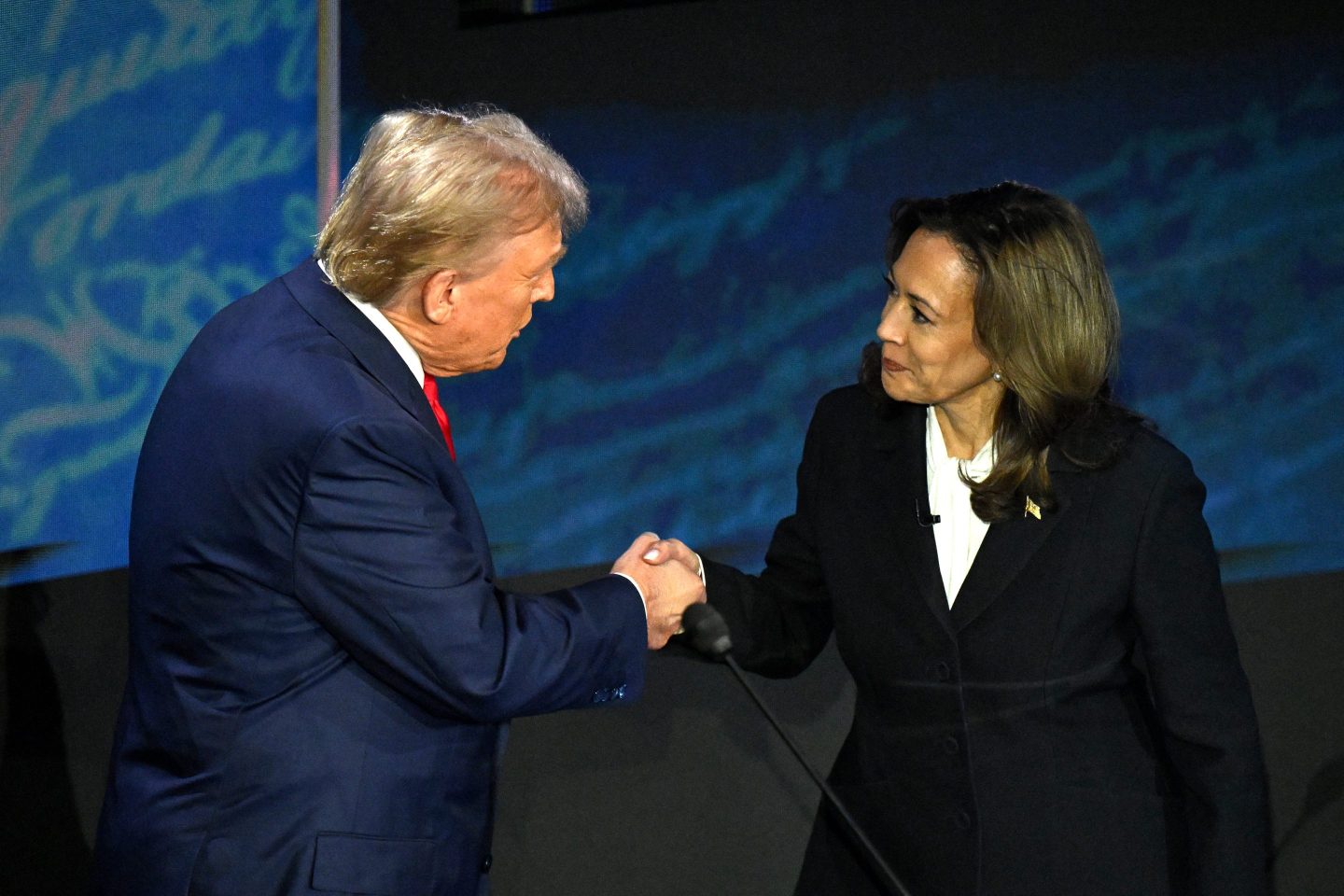
U.S. Vice President and Democratic presidential candidate Kamala Harris shakes hands with former U.S. President and Republican presidential candidate Donald Trump during the presidential debate at the National Constitution Center in Philadelphia on Sep. 10.
U.S. Vice President and Democratic presidential candidate Kamala Harris shakes hands with former U.S. President and Republican presidential candidate Donald Trump during the presidential debate at the National Constitution Center in Philadelphia on Sep. 10.Saul Loeb—AFP/Getty Images

As the 2024 presidential election takes shape, policymakers around the world are planning for the next U.S. president and the ramifications of his or her policies for each country’s future. The only presidential debate between the two candidates gave us a flavor of some of their potential economic policies—but there is one area where the current rhetoric paints a grim picture: international trade.

The first Trump presidency upended U.S. trade policy by using every potential policy lever to shift the longstanding position of the U.S. on free trade into a more nationalist and populist platform. The brain trust formed by Ambassador Robert Lighthizer and trade advisor Peter Navarro led the fight against China, introduced tariffs on key U.S. allies, and opened renegotiations on the longstanding NAFTA agreement. These policies aimed at countering the growing presence of China and creating an industrial policy to bring back U.S. industries that were seen to have been eroded by international competition.

This unilateral policy position did not stop there: Former President Donald Trump also basically managed to paralyze the World Trade Organization (WTO) by blocking all appointments to its appellate body, the organization’s arbiter on trade disputes.

There is little change in course

While this overall hawkish stance was applauded by nationalists, economic research quantifying the impact of various trade policies, especially the U.S.-China trade war painted a bleak picture. Studies showed that most of the tariffs have fallen on domestic consumers and importers, with some estimates quantifying the impact as a decrease in U.S. real income by $1.4 billion per month by the end of 2018. Another study by Federal Reserve economists showed that when investment and capital accumulation are factored into the economic models, the impact on gross domestic product (GDP) is larger on the U.S. economy than on the Chinese economy: a loss of GDP of 1.3% versus 0.7%.

When President Biden took the helm of the economy, most of these trade policies surprisingly remained the same, albeit with less drama. The administration continued to focus on China’s unfair, non-market policies and practices, most recently increasing steel and aluminum tariffs on Chinese imports to 25%.

However, the Biden administration worked with allies such as Mexico to stop the rerouting of Chinese products through their countries. That was following tariff increases on a broad array of Chinese products in May 2024.

When it comes to the upcoming election, this protectionist bend will form the basis of trade policies, regardless of which party comes out on top. Former President Trump has doubled down on his disdain for free trade and has proposed a 10%—and sometimes 20%—across-the-board tariff on all U.S. imports.

Despite criticizing her opponent, Vice President Kamala Harris is widely projected to continue President Biden’s trade policies. The  2024 trade policy agenda of the incumbent administration focuses “on unlocking new opportunities for American workers and families—while also supporting and strengthening the middle class, driving decarbonization and sustainability, and creating good-paying jobs across the American economy.” This potentially means more targeted tariffs and various forms of domestic support for key industries. And the growing popularity of some form of carbon border-adjustment mechanism or import fees for certain energy-heavy industries among some Republican and Democrat members of Congress points to the fact that protectionism is gaining ground within policy circles.

Are tariffs the solution?

A 2024 study by David Autor and his colleagues shows that the 2018-2019 trade war between the U.S., China, and other U.S. trade partners had a negative impact on U.S. employment.

While the tariffs imposed by the U.S. did not increase or decrease jobs in targeted industries, foreign retaliatory tariffs had clear negative effects on U.S. employment, particularly in the agricultural sector. Part of this decline was addressed by new subsidies, but that puts further strain on the increasing U.S. debt.

Perhaps the most important aspect of these tariffs is how they impact low- and middle-income households, who are the first to be hurt by inflation. A 2014 study showed that a larger portion of trade benefits accrue to lower-income consumers who spend a larger share of their disposable income on heavily traded items. According to their calculations, in the extreme example of the U.S. pulling out from all international trade, the bottom 10th percentile of the income distribution would lose more than half of their purchasing power. Another study by the Minneapolis Fed staff shows that under a 10% trade cost reduction, the poorest fifth of households experience a welfare gain more than 4.5 times larger than the richest.

Given all these facts support free trade, perhaps the presidential candidates should stop following populist rhetoric and work on policies that address competitors through international cooperation and strengthening institutions, rather than falling back on nationalist policies. Yes, the current system has challenges—but more protectionism is not the answer.

More must-read commentary published by Fortune:

  • Inflation, housing, immigration, taxes: The Harris-Walz economic policy scorecard
  • The ‘sustainability recession’ will end soon—and not by choice
  • ‘Godmother of AI’ says California’s well-intended AI bill will harm the U.S. ecosystem
  • The most underrated leadership skill, according to Jake Sullivan

The opinions expressed in Fortune.com commentary pieces are solely the views of their authors and do not necessarily reflect the opinions and beliefs of Fortune.
Join us at the Fortune Workplace Innovation Summit May 19–20, 2026, in Atlanta. The next era of workplace innovation is here—and the old playbook is being rewritten. At this exclusive, high-energy event, the world’s most innovative leaders will convene to explore how AI, humanity, and strategy converge to redefine, again, the future of work. Register now.
About the Author
By Pinar Çebi Wilber
See full bioRight Arrow Button Icon

Latest in Commentary

Finance
Lorem ipsum dolor sit amet, consectetur adipiscing elit, sed do eiusmod tempor incididunt ut labore et dolore magna aliqua. Ut enim ad minim veniam
By Fortune Editors
October 20, 2025
Finance
Lorem ipsum dolor sit amet, consectetur adipiscing elit, sed do eiusmod tempor incididunt ut labore et dolore magna aliqua. Ut enim ad minim veniam
By Fortune Editors
October 20, 2025
Finance
Lorem ipsum dolor sit amet, consectetur adipiscing elit, sed do eiusmod tempor incididunt ut labore et dolore magna aliqua. Ut enim ad minim veniam
By Fortune Editors
October 20, 2025
Finance
Lorem ipsum dolor sit amet, consectetur adipiscing elit, sed do eiusmod tempor incididunt ut labore et dolore magna aliqua. Ut enim ad minim veniam
By Fortune Editors
October 20, 2025
Finance
Lorem ipsum dolor sit amet, consectetur adipiscing elit, sed do eiusmod tempor incididunt ut labore et dolore magna aliqua. Ut enim ad minim veniam
By Fortune Editors
October 20, 2025
Finance
Lorem ipsum dolor sit amet, consectetur adipiscing elit, sed do eiusmod tempor incididunt ut labore et dolore magna aliqua. Ut enim ad minim veniam
By Fortune Editors
October 20, 2025

Most Popular

Finance
Lorem ipsum dolor sit amet, consectetur adipiscing elit, sed do eiusmod tempor incididunt ut labore et dolore magna aliqua. Ut enim ad minim veniam
By Fortune Editors
October 20, 2025
Finance
Lorem ipsum dolor sit amet, consectetur adipiscing elit, sed do eiusmod tempor incididunt ut labore et dolore magna aliqua. Ut enim ad minim veniam
By Fortune Editors
October 20, 2025
Finance
Lorem ipsum dolor sit amet, consectetur adipiscing elit, sed do eiusmod tempor incididunt ut labore et dolore magna aliqua. Ut enim ad minim veniam
By Fortune Editors
October 20, 2025
Finance
Lorem ipsum dolor sit amet, consectetur adipiscing elit, sed do eiusmod tempor incididunt ut labore et dolore magna aliqua. Ut enim ad minim veniam
By Fortune Editors
October 20, 2025
Finance
Lorem ipsum dolor sit amet, consectetur adipiscing elit, sed do eiusmod tempor incididunt ut labore et dolore magna aliqua. Ut enim ad minim veniam
By Fortune Editors
October 20, 2025
Finance
Lorem ipsum dolor sit amet, consectetur adipiscing elit, sed do eiusmod tempor incididunt ut labore et dolore magna aliqua. Ut enim ad minim veniam
By Fortune Editors
October 20, 2025
Fortune Secondary Logo
Rankings
  • 100 Best Companies
  • Fortune 500
  • Global 500
  • Fortune 500 Europe
  • Most Powerful Women
  • Future 50
  • World’s Most Admired Companies
  • See All Rankings
Sections
  • Finance
  • Fortune Crypto
  • Features
  • Leadership
  • Health
  • Commentary
  • Success
  • Retail
  • Mpw
  • Tech
  • Lifestyle
  • CEO Initiative
  • Asia
  • Politics
  • Conferences
  • Europe
  • Newsletters
  • Personal Finance
  • Environment
  • Magazine
  • Education
Customer Support
  • Frequently Asked Questions
  • Customer Service Portal
  • Privacy Policy
  • Terms Of Use
  • Single Issues For Purchase
  • International Print
Commercial Services
  • Advertising
  • Fortune Brand Studio
  • Fortune Analytics
  • Fortune Conferences
  • Business Development
  • Group Subscriptions
About Us
  • About Us
  • Editorial Calendar
  • Press Center
  • Work At Fortune
  • Diversity And Inclusion
  • Terms And Conditions
  • Site Map
  • About Us
  • Editorial Calendar
  • Press Center
  • Work At Fortune
  • Diversity And Inclusion
  • Terms And Conditions
  • Site Map
  • Facebook icon
  • Twitter icon
  • LinkedIn icon
  • Instagram icon
  • Pinterest icon

Latest in Commentary

EuropeLetter from London
Rishi Sunak is giving advice to CEOs on AI. Here are his golden rules
By Kamal AhmedMarch 25, 2026
4 hours ago
retirement
CommentaryRetirement
Our retirement system gets a C-plus; policymakers have an opportunity to make it A grade
By Chris MahoneyMarch 25, 2026
12 hours ago
david-f
CommentaryVenture Capital
Europe has survived 3 energy shocks in 4 years. The only way out is to stop buying power from its enemies
By David FrykmanMarch 25, 2026
13 hours ago
fauci
CommentaryCOVID-19 vaccines
How COVID turned America against science — and what it will take to win it back
By David Blumenthal and James A. MoroneMarch 24, 2026
1 day ago
alex
Commentarydisruption
AI’s disruption is a choice, not a forecast
By Alex StephanyMarch 24, 2026
2 days ago
trump
Commentarynational debt
The Treasury just declared the U.S. insolvent. The media missed it
By Steve H. Hanke and David M. WalkerMarch 23, 2026
2 days ago

Most Popular

Magazine
The youngest-ever female CEO of a Fortune 500 company is fighting Trump's cuts to keep Medicaid strong
By Fortune EditorsMarch 24, 2026
2 days ago
Commentary
The Treasury just declared the U.S. insolvent. The media missed it
By Fortune EditorsMarch 23, 2026
2 days ago
Success
Palantir’s billionaire CEO says only two kinds of people will succeed in the AI era: trade workers — ‘or you’re neurodivergent’
By Fortune EditorsMarch 24, 2026
1 day ago
Energy
Nobel laureate Paul Krugman calls it 'treason': $580 million in suspicious oil futures traded minutes before Trump's Iran reversal
By Fortune EditorsMarch 24, 2026
1 day ago
Success
The job market is so bad that ‘reverse recruiters’ are charging $1,500 a month just to help people look for jobs
By Fortune EditorsMarch 25, 2026
13 hours ago
Success
JPMorgan has started monitoring the keystrokes, video calls, and meetings of its junior investment bankers—and they say it's for employee well-being
By Fortune EditorsMarch 24, 2026
1 day ago

© 2026 Fortune Media IP Limited. All Rights Reserved. Use of this site constitutes acceptance of our Terms of Use and Privacy Policy | CA Notice at Collection and Privacy Notice | Do Not Sell/Share My Personal Information
FORTUNE is a trademark of Fortune Media IP Limited, registered in the U.S. and other countries. FORTUNE may receive compensation for some links to products and services on this website. Offers may be subject to change without notice.