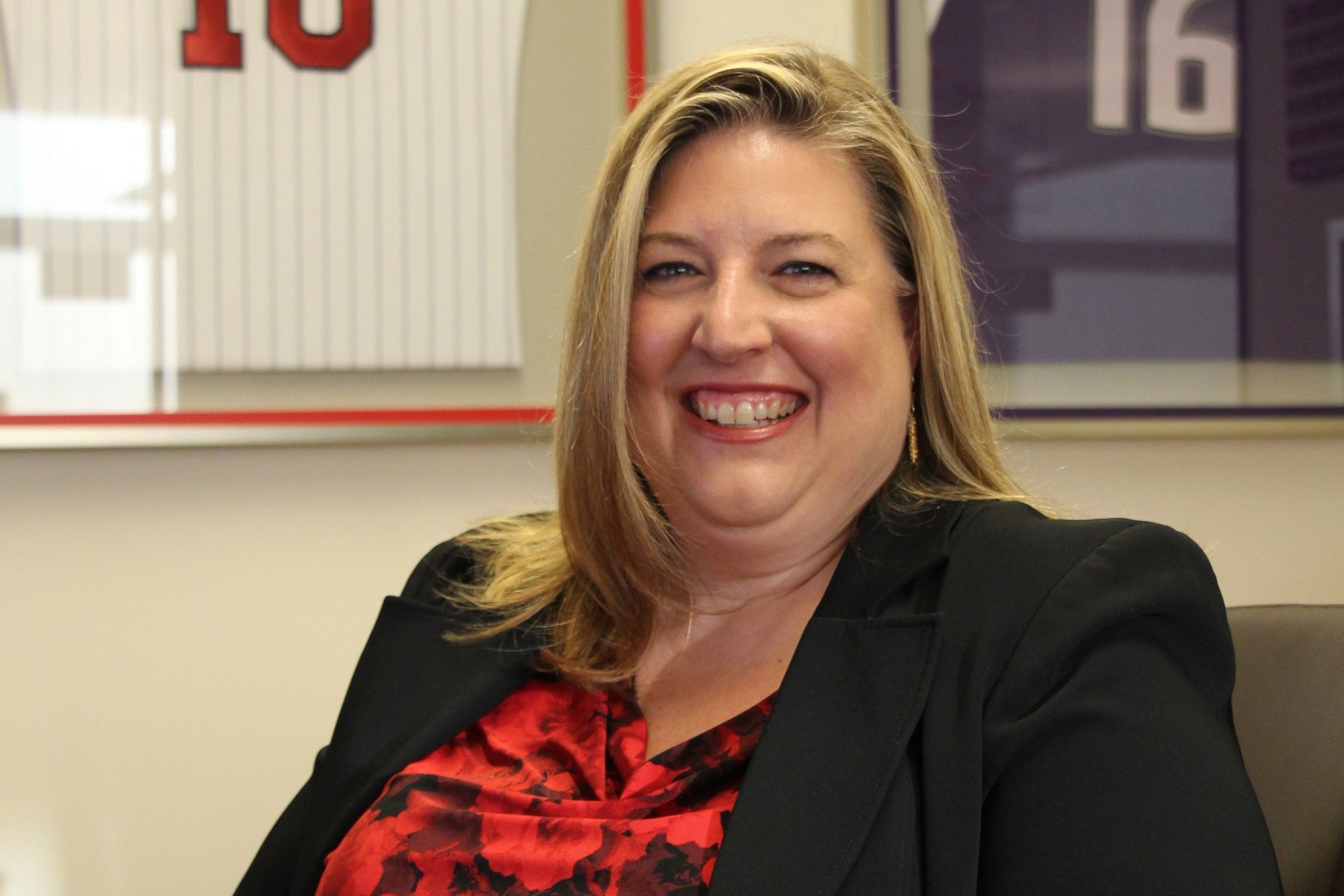
When Stacy Sonnenberg started at Goldman Sachs in 2003 one client gave her pause: the New York Yankees. As the former chief of technical services with the New York City Department of Parks and Recreation—owner of Yankee Stadium—she had served as landlord to the fabled baseball club for three years. “I called the Yankees,” she recalls, “And told them, ‘I was your landlord before, would you be okay if I became part of your banking team?’”
They accepted, and at the age of 32, Sonnenberg helped her old tenant make the financial arrangements for what would become the Yankees’ new $2.3 billion stadium. The deal was the first of more than 30 new stadium deals that helped her solidify her current title as Goldman Sachs’ global head of sports finance, including the 2010 opening of Met Life Stadium—home to the NFL’s Giants and Jets franchises—and the new Tennessee Titans stadium scheduled to open in 2027.
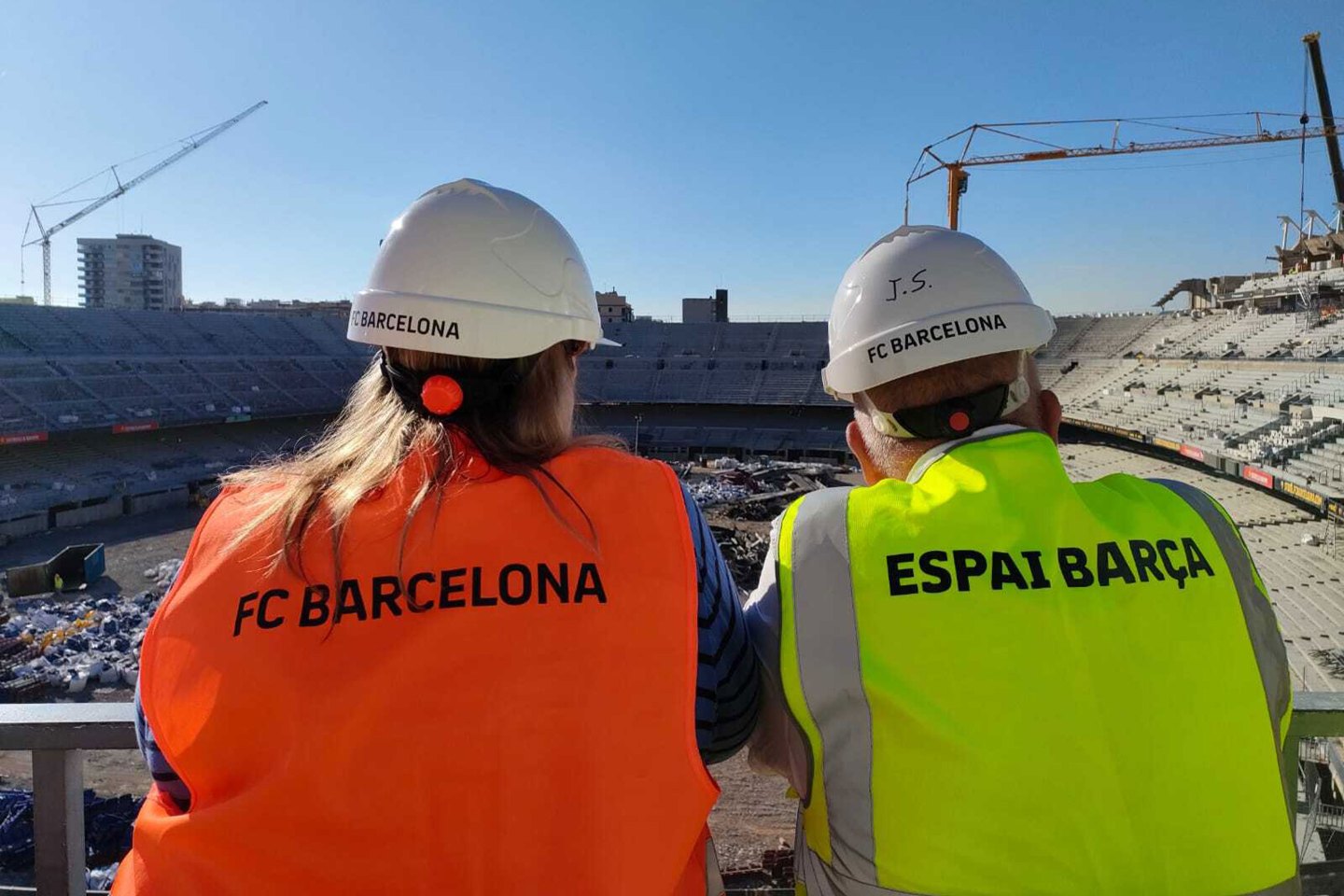
Sonnenberg says she feels a personal connection to each stadium she’s helped to build, but one in particular is top of mind these days. That stadium—FC Barcelona’s Spotify Camp Nou—is not only the home of the iconic soccer franchise, but a template for turbocharging the capital available to teams of any sport, almost anywhere in the world.
“We’re talking about this idea with NFL teams and Major League Baseball teams right now,” Sonnenberg says. “If they build new stadiums or upgrade their stadium they can generate more revenue in the building, and if they generate more revenue in the building, then they can afford to pay more for players.”
FC Barcelona’s billion-dollar problem
FC Barcelona is one of the most famous sports franchises in the world, valued in the billions, with alumni including legendary players like Lionel Messi and Diego Maradona. But in recent years, the soccer club has suffered from mismanagement.
The team has been mired in financial trouble as costs and debt servicing have for years far exceeded revenues. Amid all this, the team has committed to a $1.6 billion remodel that would add 7,000 seats to the stadium along with a museum and a new commercial mall.
In theory, the bigger stadium should mean more fans every game and, in turn, more revenue to help alleviate the club financial burden. When the team wanted to go forward with the plan, however, there was a catch: FC Barcelona’s distinct ownership structure. A portion of the team is owned by 150,000 dues-paying fans, called Socios, who refused to approve a traditional mortgage that came with the risk of losing their stadium if they had difficulty making payments.
That’s where Sonneberg came in. After running hundreds of financial models, Goldman came across an obscure Spanish rule that would allow the team to securitize what the bank calls “extraordinary revenue” in the form of future sales of tickets, food, and beverages. “We were looking to securitize contracts that were not going to exist until the stadium is built,” says Sonnenberg. “And that has not been done before.”
In practice, this means that FC Barcelona will be doing what cities like New York have long done when it comes to selling bonds backed by claims on future revenues. But instead of money from parking meters or bridge tolls, the soccer club’s creditors will have claims on sales of plates of patatas bravas and other Catalan nibbles found at Spotify Camp Nou. What matters most is that the arrangement involves no mortgage, and so the stadium is safe from foreclosure.
To bring the trust to life, FC Barcelona entered into a purchase and sale agreement with the Espai Barça Stadium Financing Trust, (formally known as the Espai Barça, Fondo de Titulización) and agreed to sell securities representing some of its rights, titles, and interests in future revenue. Twenty private placement companies, including a number of American insurance giants, bought 1.5 billion euros worth of the securities and will reap an average of more than $50 million a year annually for 23 years, paid out in five tranches.
The groundwork for the new kind of stadium financing goes back to 2009 when the Union of European Football Associations (UEFA) created the Financial Fair Play rules that tied teams’ spending to what they earned—a way to limit the influence of win-at-all-cost billionaires whose spending could disrupt competitive balance. Building new stadiums—and renovating the old—has proven one of the most popular ways to grow in this new business paradigm.
It’s no coincidence that long-sighted insurance giants are among the investors backing the stadium financing trust. Such steady, slow growth investments have long been the bastion of stodgy companies like Met Life and New York Life. But faster-paced, private equity investors are increasingly looking to hedge their bets with longer-term exposure, according to Sonnenberg.
She cites PE firm Apollo’s recent acquisition of insurance upstart Athene as an example of the strategy in action, and as recently as 2021, broader private equity investment in insurance companies hit an all-time high, according to S&P Global. Since her clients are the stadiums, not the private equity firms, her job is to keep interest rates low.
“If I do my job well,” she says, “it’s not an attractive investment unless they have a life insurance company that they can invest through. And we’re starting to see more of that.”
From swimming pools to stadiums
Growing up in the 1980s, in the suburbs outside of Chicago, Sonnenberg and her brother and sister used to race their bikes to the local swimming pool. After playing until sunset, they’d swing by the local five-and-dime candy store to buy a treat. Those memories never left her. “I actually went to the parks department because I have a passion for our public swimming pools,” she says.
After she earned a degree in civil engineering from MIT, the New York City Parks and Recreation department asked her to find a better way to finance repairs to the city’s pools. Her solution, drawing on lessons gleaned from specially designed contracts the Department of Environmental Protection used to quickly fix broken water mains, earned her the respect to get her biggest job yet.
That same year, she was assigned the Yankees, who since a renovation in the 1970s had been playing in the old Yankees Stadium with a temporary certificate of occupancy. A year later she was done. “I started working on the project at the end of 1995 and we got it in 1996,” she says. “After 23 years without a certificate of occupancy.”
Such an auspicious start in city government suggests Sonnenberg might have followed in the path of Robert Moses, another parks developer who used his uncanny ability to unstop government bureaucracy to become the “Power Broker,” as described in Robert Caro’s 1974 biography.
Instead, in 2001, the rising infrastructure star accepted an offer to study at the Harvard Business School. While being recruited to the public sector and infrastructure office—where she still works—she met Goldmans Sachs’ future CEO David Solomon. She learned that her former employer, New York City Parks and Recreation, was working with Goldman Sachs to finance the New Yankee stadium.
“I’d come full circle,” she says, laughing. “Suddenly my career made sense.”
Today, Sonnenberg leads Goldman Sachs’ global sports finance team, which sits in the public sector and infrastructure office, chaired by Goldman veteran Greg Carey. She says stadium financing is “the heart and soul” of her work, and most recently she helped close a $750 million financing round for the new Titans stadium.
Since the successful FC Barcelona experiment, Goldman Sachs is looking for other jurisdictions with the securities infrastructure that can support the model. Last year, she booked a deal with Lyon, France’s soccer team, that mixes current and future revenues, and Goldman has started shopping the future revenue model throughout Europe and anywhere securities regulations allow.
The arrival of FC Barcelona–inspired financing models also comes at a time that the $42 billion American sports industry has fully recovered from its pandemic doldrums, and as American family offices and private equity firms seek a cut of the industry. Both Goldman and Sonnenberg will stay busy for the foreseeable future.
“These buildings become destinations and places people have shared experiences together that you can’t replicate at home,” she says. “Stadiums are fundamental to our humanity, and there’s a reason we’ve been building them for thousands of years. We crave that shared experience.”