• Home
  • Latest
  • Fortune 500
  • Finance
  • Tech
  • Leadership
  • Lifestyle
  • Rankings
  • Multimedia

Trendingnow

1

MacKenzie Scott alone accounted for one-third of America's $19.2 billion in megagifts last year

2

Now worth $200 million, Sarah Jessica Parker credits being ‘one of eight kids that struggled financially’ for her hunger, ambition, and work ethic

3

Philanthropy leader at Warren Buffett and Bill Gates’ Giving Pledge says children of billionaires are pushing them to give their wealth away faster

1

MacKenzie Scott alone accounted for one-third of America's $19.2 billion in megagifts last year

2

Now worth $200 million, Sarah Jessica Parker credits being ‘one of eight kids that struggled financially’ for her hunger, ambition, and work ethic

3

Philanthropy leader at Warren Buffett and Bill Gates’ Giving Pledge says children of billionaires are pushing them to give their wealth away faster
LeadershipSports

The 98th percentile isn’t good enough—and 3 other lessons high-performing business leaders can learn from the Olympics

Geoff Colvin
By
Geoff Colvin
Geoff Colvin
Senior Editor-at-Large
Down Arrow Button Icon
Geoff Colvin
By
Geoff Colvin
Geoff Colvin
Senior Editor-at-Large
Down Arrow Button Icon
August 3, 2024, 7:00 AM ET
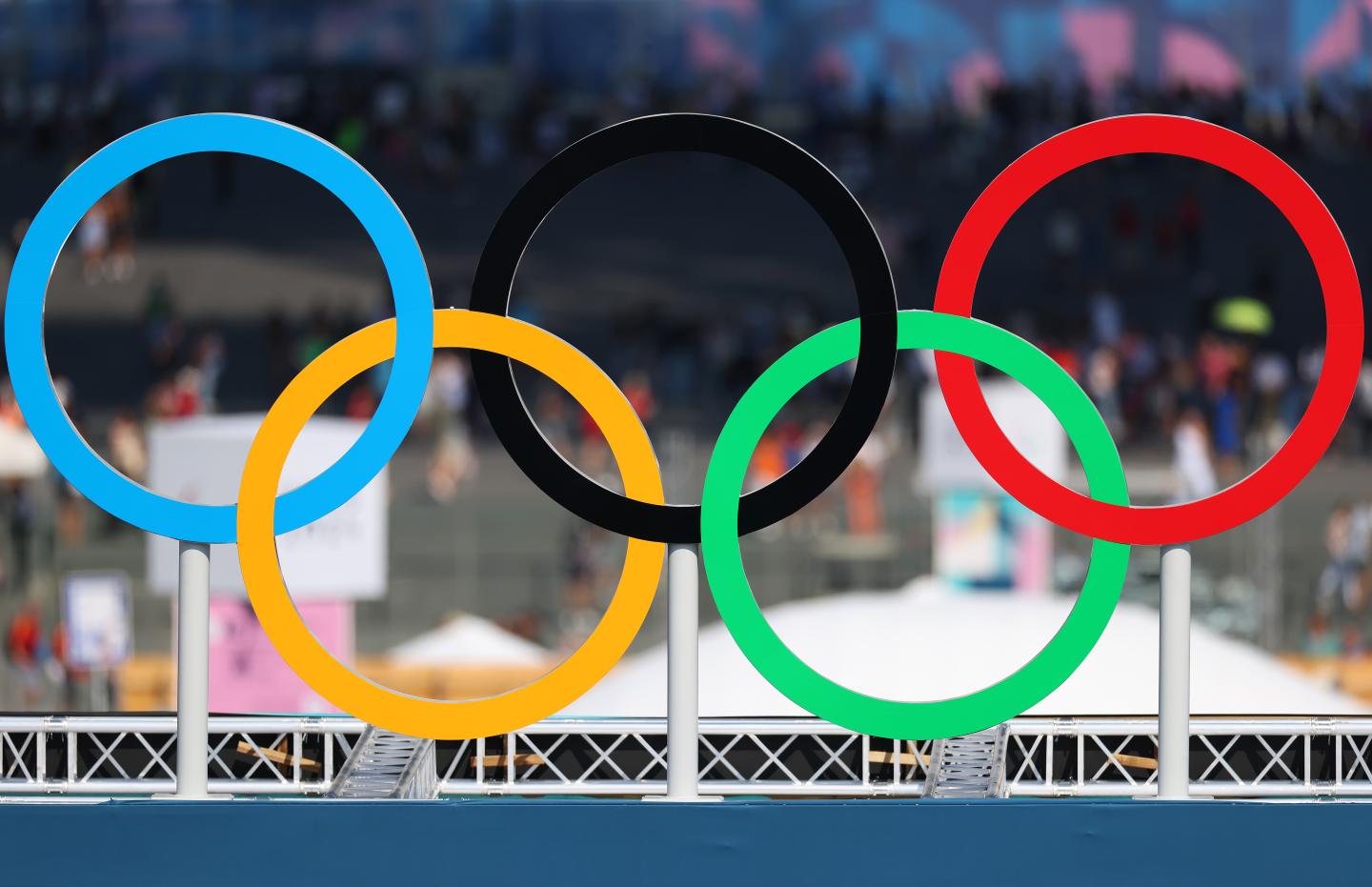
The Olympics offer a bevy of business lessons.
Add Fortune on Google for similar content.

Sports clarify the truths—especially the competitive truths—of being human. That’s why the Olympics are irresistible. In microcosm, within bounded place and time, people do what we do at work, teaming with comrades to reach goals while powerful opponents try to thwart us. Even better, all the people in the Olympics are practically superhuman. Who wouldn’t want to study the lessons we can distill from this spectacle?

Recommended Video

So—four business lessons from the Olympics:

The 98th percentile isn’t good enough. Companies love to claim their products, services, and competencies are world class, but are they really? The Paris Olympics demonstrate how staggeringly difficult it is to be among the world’s very best. Consider swimming. In the men’s 400-meter freestyle, Germany’s Lukas Martens won the gold with a time of 3:41.78. South Korea’s Kim Woo-Min took the bronze with 3:42.50. The difference between gold medal and no medal was 0.3%.

Or consider the women’s quadruple sculls final—four-rower boats racing for 2,000 meters. The U.K. team trailed the Netherlands team for 1,999 meters, then pulled ahead on the final meter, winning by 0.15 seconds. Germany got the bronze. The difference between gold medal and no medal was 0.9%.        

Many business leaders are claiming their companies will “bring home the gold” this year. That’s great, but remember that many excellent competitors went to the Paris Olympics and were 98% or 99% as good as the best—and brought home nothing. By all means try to bring home the gold, but don’t delude yourself about how hard it is.

Standards keep rising In the 1896 Olympics, a Greek runner named Spyridon Louis won the marathon with a time of 2:58:50 (two hours 58 minutes 50 seconds). Today that would be a ho-hum time at a high school track meet; the current high school record is 2:22:51.

After the 1908 Olympics, “officials almost prohibited the double somersault in dives because they believed these dives were dangerous, and no human would ever be able to control them,” said human performance authority Anders Ericsson. Today Olympic divers rarely do a double somersault because it’s too easy.

In Paris the preeminent standard-raiser now is Simone Biles, who led the U.S. women’s gymnastics team to a gold medal and won the individual all-around gold in part by doing moves that no one else in the world can do. There’s no telling how long it will take competitors to catch up.

The analogy to business is obvious, but that doesn’t stop business leaders from ignoring it. Microsoft ridiculed Apple’s iPhone because it introduced a touchscreen rather than a keyboard; Microsoft’s own phone business crashed and burned. MySpace predated Facebook but didn’t keep up with Facebook’s innovations. Kodak pioneered digital photography but couldn’t foresee its eventual dominance.

Myopic companies can hang on for years. Olympic athletes can’t. Those who fall behind even a little are eliminated ruthlessly—a reminder for business leaders, if they dare to see it.

Teams have stars Exhibit A in Paris is of course Biles and the U.S. women’s gymnastics team. In the Olympics, the stars are visible to everyone, and she will be famous and lauded for years to come. In companies, stars aren’t always treated like stars. A manager once told me, “It disrupts the team. How can you have one guy next to another guy who’s making 50% more?” But that reasoning is a big problem.

To see why, look at professional sports teams. The dominant team in Major League Baseball over the past decade is the Los Angeles Dodgers. One of its highest paid players, Tyler Glasnow, is a pitcher whose average annual pay is $27.3 million. Another pitcher, Gavin Stone, is one of the lowest paid Dodgers, with average annual pay of $742,500. Two guys with the same job, and one gets paid 37 times more than the other. Somehow the Dodgers’ team unity is not destroyed—quite the contrary.

Every team has stars, and everyone on the team knows who they are. Many corporate teams try to suppress that reality. Winning athletic teams—whether professional or in the Olympics—embrace it.

A great team is not the same as a group of great performers. In past Olympics, U.S. baseball and basketball teams humiliated themselves by getting trampled in sports that America invented. In the six Olympics that have included baseball (1992 – 2008 plus 2020), teams of U.S. all-stars won exactly once (2000). The 2004 U.S. Olympic basketball team, consisting entirely of NBA millionaires, finished third behind Argentina and Italy, and along the way lost to Puerto Rico and—wait for it—Lithuania. Today’s U.S. basketball team in Paris looks strong so far, with playoffs ahead.

Dream teams can fail in business just as in sports. Think of Long-Term Capital Management, a firm that included Wall Street legends and Nobel Prize-winning financial economists but still failed spectacularly.

For team-building wisdom, recall the most inspiring U.S. Olympic team ever, the 1980 hockey team that beat the Soviets at Lake Placid. Professional players weren’t eligible back then, though the Soviet players, in their 20s and 30s, were the equivalent of pros. Forced to choose from college players, coach Herb Brooks wanted to build a team on personal chemistry combined with extremely intensive practice. In the story’s movie version, Brooks’s assistant looks at the coach’s roster and objects that he has left out many of the country’s best college players. To which Brooks responds with the essential anti-Dream-Team philosophy: “I’m not lookin’ for the best players, Craig. I’m lookin’ for the right players.”

Amid all the excitement of the Olympics, don’t be surprised if you stumble upon a bit of profundity as well.

About the Author
Geoff Colvin
By Geoff ColvinSenior Editor-at-Large
LinkedIn iconTwitter icon

Geoff Colvin is a senior editor-at-large at Fortune, covering leadership, globalization, wealth creation, the infotech revolution, and related issues.

See full bioRight Arrow Button Icon
Add Fortune on Google for similar content.

Latest in Leadership

Finance
Lorem ipsum dolor sit amet, consectetur adipiscing elit, sed do eiusmod tempor incididunt ut labore et dolore magna aliqua. Ut enim ad minim veniam
By Fortune Editors
October 20, 2025
Finance
Lorem ipsum dolor sit amet, consectetur adipiscing elit, sed do eiusmod tempor incididunt ut labore et dolore magna aliqua. Ut enim ad minim veniam
By Fortune Editors
October 20, 2025
Finance
Lorem ipsum dolor sit amet, consectetur adipiscing elit, sed do eiusmod tempor incididunt ut labore et dolore magna aliqua. Ut enim ad minim veniam
By Fortune Editors
October 20, 2025
Finance
Lorem ipsum dolor sit amet, consectetur adipiscing elit, sed do eiusmod tempor incididunt ut labore et dolore magna aliqua. Ut enim ad minim veniam
By Fortune Editors
October 20, 2025
Finance
Lorem ipsum dolor sit amet, consectetur adipiscing elit, sed do eiusmod tempor incididunt ut labore et dolore magna aliqua. Ut enim ad minim veniam
By Fortune Editors
October 20, 2025
Finance
Lorem ipsum dolor sit amet, consectetur adipiscing elit, sed do eiusmod tempor incididunt ut labore et dolore magna aliqua. Ut enim ad minim veniam
By Fortune Editors
October 20, 2025

Most Popular

Finance
Lorem ipsum dolor sit amet, consectetur adipiscing elit, sed do eiusmod tempor incididunt ut labore et dolore magna aliqua. Ut enim ad minim veniam
By Fortune Editors
October 20, 2025
Finance
Lorem ipsum dolor sit amet, consectetur adipiscing elit, sed do eiusmod tempor incididunt ut labore et dolore magna aliqua. Ut enim ad minim veniam
By Fortune Editors
October 20, 2025
Finance
Lorem ipsum dolor sit amet, consectetur adipiscing elit, sed do eiusmod tempor incididunt ut labore et dolore magna aliqua. Ut enim ad minim veniam
By Fortune Editors
October 20, 2025
Finance
Lorem ipsum dolor sit amet, consectetur adipiscing elit, sed do eiusmod tempor incididunt ut labore et dolore magna aliqua. Ut enim ad minim veniam
By Fortune Editors
October 20, 2025
Finance
Lorem ipsum dolor sit amet, consectetur adipiscing elit, sed do eiusmod tempor incididunt ut labore et dolore magna aliqua. Ut enim ad minim veniam
By Fortune Editors
October 20, 2025
Finance
Lorem ipsum dolor sit amet, consectetur adipiscing elit, sed do eiusmod tempor incididunt ut labore et dolore magna aliqua. Ut enim ad minim veniam
By Fortune Editors
October 20, 2025
Fortune Secondary Logo
Rankings
  • 100 Best Companies
  • Fortune 500
  • Global 500
  • Fortune 500 Europe
  • Most Powerful Women
  • World's Most Admired Companies
  • See All Rankings
  • Lists Calendar
Sections
  • Finance
  • Fortune Crypto
  • Features
  • Leadership
  • Health
  • Commentary
  • Success
  • Retail
  • Mpw
  • Tech
  • Lifestyle
  • CEO Initiative
  • Asia
  • Politics
  • Conferences
  • Europe
  • Newsletters
  • Personal Finance
  • Environment
  • Magazine
  • Education
Customer Support
  • Frequently Asked Questions
  • Customer Service Portal
  • Privacy Policy
  • Terms Of Use
  • Single Issues For Purchase
  • International Print
Commercial Services
  • Advertising
  • Fortune Brand Studio
  • Fortune Analytics
  • Fortune Conferences
  • Business Development
  • Group Subscriptions
About Us
  • About Us
  • Press Center
  • Work At Fortune
  • Terms And Conditions
  • Site Map
  • About Us
  • Press Center
  • Work At Fortune
  • Terms And Conditions
  • Site Map
  • Facebook icon
  • Twitter icon
  • LinkedIn icon
  • Instagram icon
  • Pinterest icon

Latest in Leadership

erik
AIJobs
‘It’s not going away’: The Stanford economist who called the AI entry-level jobs crisis early has the receipts
By Nick LichtenbergJune 27, 2026
47 minutes ago
Robert Shiller, professor of economics at Yale University
AIEconomics
Nobel laureate economist warns AI jobs apocalypse fears could become a self-fulfilling prophesy
By Eva RoytburgJune 27, 2026
2 hours ago
dr
Commentarydisruption
The uncertainty paradox: believe it or not, today’s massive uncertainty creates the best conditions for disruptive growth
By James G. Naples, Wendy K. Smith and Scott D. AnthonyJune 27, 2026
3 hours ago
One in 10 Gen Zers want their boss to be replaced by AI—they’re already being polite to ChatGPT just in case
SuccessGen Z
One in 10 Gen Zers want their boss to be replaced by AI—they’re already being polite to ChatGPT just in case
By Orianna Rosa RoyleJune 27, 2026
4 hours ago
Photo of Elon Musk
C-SuiteElon Musk
‘Don’t look at the résumé’: Elon Musk admits he’s ‘fallen prey’ to flashy credentials and says conversation matters most when hiring
By Jacqueline MunisJune 27, 2026
4 hours ago
young workers talking at their desks
SuccessGen Z
Stop blaming Gen Z for resisting RTO: 71% say they want a hybrid balance—and now they’re quietly leading the office comeback
By Sydney LakeJune 27, 2026
4 hours ago

Most Popular

MacKenzie Scott alone accounted for one-third of America's $19.2 billion in megagifts last year
Success
MacKenzie Scott alone accounted for one-third of America's $19.2 billion in megagifts last year
By Sydney LakeJune 25, 2026
2 days ago
Now worth $200 million, Sarah Jessica Parker credits being ‘one of eight kids that struggled financially’ for her hunger, ambition, and work ethic
Success
Now worth $200 million, Sarah Jessica Parker credits being ‘one of eight kids that struggled financially’ for her hunger, ambition, and work ethic
By Orianna Rosa RoyleJune 24, 2026
3 days ago
Philanthropy leader at Warren Buffett and Bill Gates’ Giving Pledge says children of billionaires are pushing them to give their wealth away faster
Success
Philanthropy leader at Warren Buffett and Bill Gates’ Giving Pledge says children of billionaires are pushing them to give their wealth away faster
By Preston ForeJune 27, 2026
4 hours ago
Current price of oil as of June 26, 2026
Personal Finance
Current price of oil as of June 26, 2026
By Joseph HostetlerJune 26, 2026
1 day ago
Ray Dalio says the U.S. just had its 'Suez moment'—and history says what comes next could end an empire
Economy
Ray Dalio says the U.S. just had its 'Suez moment'—and history says what comes next could end an empire
By Nick LichtenbergJune 26, 2026
1 day ago
The bond market knows something about the $39 trillion national debt that Washington doesn’t
Economy
The bond market knows something about the $39 trillion national debt that Washington doesn’t
By Eva RoytburgJune 25, 2026
2 days ago

© 2026 Fortune Media IP Limited. All Rights Reserved. Use of this site constitutes acceptance of our Terms of Use and Privacy Policy | CA Notice at Collection and Privacy Notice | Do Not Sell/Share My Personal Information
FORTUNE is a trademark of Fortune Media IP Limited, registered in the U.S. and other countries. FORTUNE may receive compensation for some links to products and services on this website. Offers may be subject to change without notice.