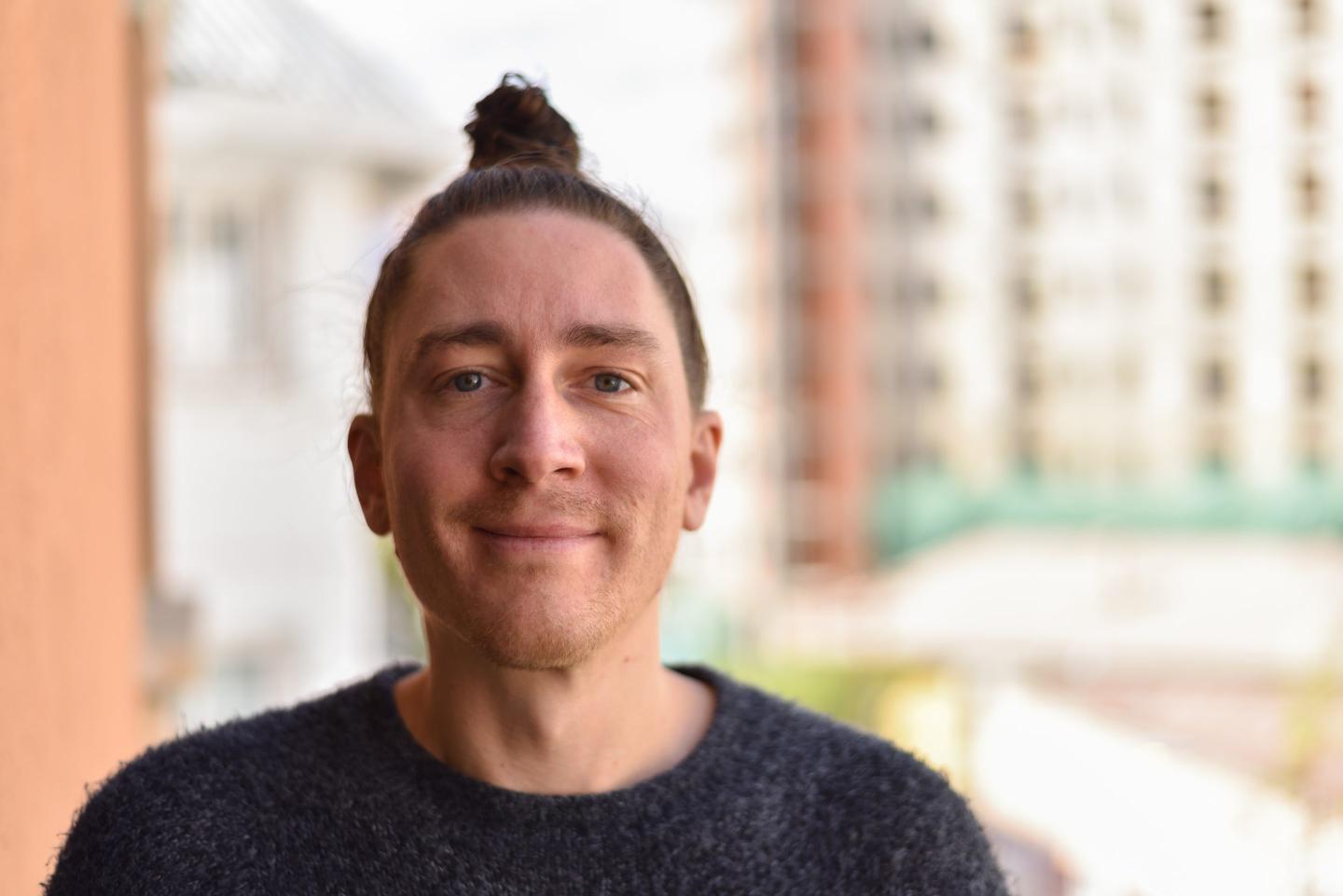
As a writer and photographer, the implications of AI-generated content are at least twofold for me. I’m not all that concerned about the impact this disruptive technology might have on my own work though. I have created my personal creative language that the machine simply does not speak. What I am worried about are tectonic societal shifts that could wipe out livelihoods, professions, industries, and democratic pillars overnight.
Don’t worry, I am not prophesizing The End and do not demonize artificial intelligence. But I do think that we need to take the AI debate from public discourse to action as soon as possible. We are not on the cusp of a tidal wave—we are deep-sea-deep in it, and there is no rowing back.
Recently, I entered my work Flamingone (below) into the AI category of 1839 Awards, a prestigious international photo competition. The twist: The picture of a seemingly headless flamingo is as real as the belly scratch the bird is busy with, neck tucked below the torso. I thought if I could win over the award’s high-profile jury with my entry, I would prove that human-made content has not lost its relevance, that Mother Nature and her human interpreters can still beat the machine, and that creativity and emotion are more than just a string of digits.
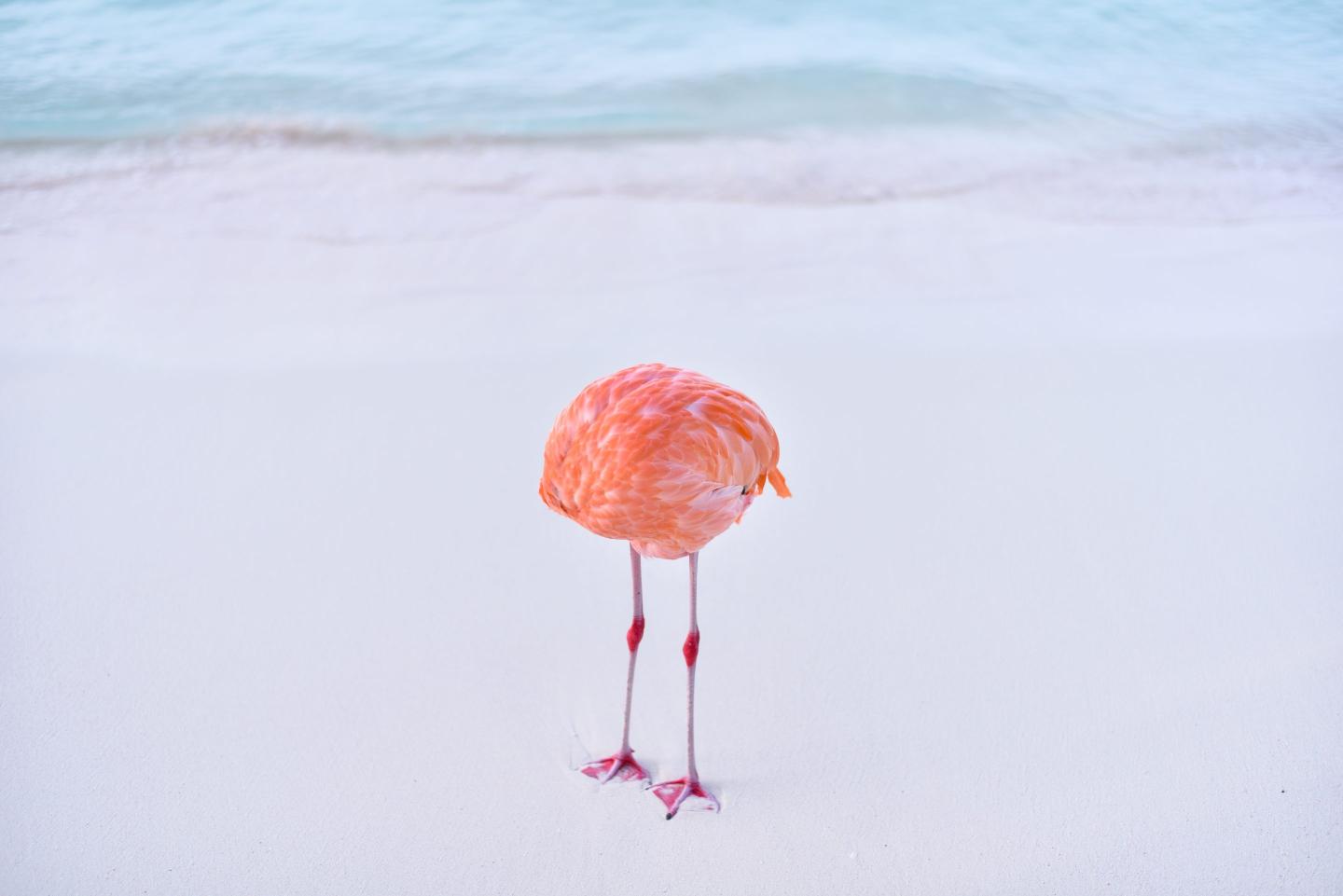
The jury shortlisted my photo alongside a handful of “real” AI-generated images, which put it in the running for two awards: the jury’s decision and a public vote. In the end, it convinced both the jury and the audience, last week winning the people’s choice award and finishing among the jury’s winners. The picture, as far as I know, is the first real photo to win an AI award.
Point made. Now what?
What’s real and what’s really not
Of course, I felt bad about leading the jury astray, but I thought of them as professionals who might find that this jab at AI and its ethical implications outweighs the ethical implications of deceiving the viewer—which, of course is ironic because that is what AI does. And that’s how this twisted plot started in the first place: In recent years, several AI-generated photos made international headlines by winning photo competitions in which they were not supposed to compete, highlighting the technology’s rapidly increasing capacities.
Somewhere between those headlines, it occurred to me that I could twist the story inside down and upside out the way only a human could and would. Someone might even say that AI gave me the idea, but then someone else should quickly reply that it was the humans behind those machines, using them like visual ventriloquists. The fact that it did convince a jury of industry professionals—including members of the New York Times, Phaidon Press, Getty Images, Centre Pompidou in Paris, Christie’s, and Maddox Gallery—is telling of a few things, and I hope in this very order:
- That nature still outdoes the machine.
- That our brains are not yet attuned to the new normal.
- That AI imagery has become indistinguishable from depictions of reality.
The first one should go without saying. Let me address the other two.
I think the jury is not to blame here. The fact that they didn’t pick up on my little stunt doesn’t speak to a lack of expertise, but to the existence of psychological biases. They were simply not prepared for anybody entering a real photo into the AI category because they didn’t expect it. Why would they?
But that’s the thing: In the same vein, we, as a society, are nowhere near prepared to question every image, audio file, or video we come across, because historically we didn’t have to. And maybe we shouldn’t. Maybe that would be sad, to question everything and everyone that is not right in front of our eyes. But our critical thinking will have to race AI’s lightspeed development if we want to stay ahead of it, and that’s an individual responsibility we all share.
As for AI content that is indiscernible from the real deal, the message behind my stunt is not that different from the one Berlin-based artist Boris Eldagsen sent last year, when he won the Sony World Photo Awards’ creative category with an AI-generated image. Just that he came in from the other end. Same page, different book. We’re not ready for all of AI’s implications.
Sure, if AI is applied the right way, it could even boost creatives. It does help Eldagsen with his work. But it could also make many of them superfluous, depending on how those creatives adapt and what institutional guardrails we decide to put in place. Some creatives already leverage AI to outsource menial tasks and free up resources for their passion projects. Others might already have lost a gig here or there because their work looked superfluous to an employer in light of AI-generated content.
A lot of nuance awaits between the sensationalized black-and-white scenarios. For instance, a cash-strapped startup reluctant to hire a graphic designer can use AI to get a free company logo. But that graphic designer just lost a gig. And maybe that same startup lets AI generate a generic stock image for its blog, which costs a stock photographer a paycheck. Then again, that stock photographer might have already switched to AI to produce their content much cheaper. It’s complex. The slope becomes slippery once we start talking about less generic content that deceives the viewer intentionally or unintentionally. Something AI will likely never be able to replace, for instance, are real photos of a newsworthy event. It can, however, produce fake photos to make up news that never happened outside a CPU.
Will AI do more good or harm?
Technology isn’t inherently good or bad. It isn’t inherently anything. The way humans apply it makes it one thing or another. If we hadn’t dropped the atomic bomb on Hiroshima and had used it instead to deter an asteroid approaching Earth, we might have called it something like the Holy Bomb. In its potential to advance humanity or wreak havoc, AI is no different from many other technologies.
But where we lagged behind with its disruptive predecessor social media, we should get ahead of the change this time around. Don’t get me wrong, I love change. My whole life is change. But change calls for adaptation. When social media turned the internet upside down, it started out by connecting people all over the world and facilitating revolutions like the Arab Spring. Great! But it wasn’t long before it became instrumental to spreading fake news that hurt elections and democracies.
AI has the potential to make all that look like a kid’s prank, putting a weapon of mass-misinformation into the hands of anyone who wants it—no background check required. If we want the ability to flag AI-generated content, we’ll probably need to tag it. The onus would be on governments and the private sector, and almost as important as the civil and individual responsibility of critical thinking and questioning the apparently obvious. We’ll have to educate young people to do this.
Reaction to my stunt and what it means
With AI-generated content remodeling the digital landscape while sparking ever-fiercer debates about its implications for the future of content and the creators behind it—including artists, journalists, and graphic designers—my shenanigan hit a nerve. News outlets all over the world picked up the story, and good old social media amplified it. The overwhelmingly positive reactions have, well, overwhelmed me. There has been tremendous support for the idea and the statement behind it, but none has surprised and humbled me more than the reaction I received from the award organizers themselves.
After I revealed the true nature of Flamingone to them—and after they disqualified the entry out of fairness to contestants with actual AI images—cofounder and director Lily Fierman reached out with an email and remarked that she appreciates the powerful message and that it was an important and timely statement.
“We hope this will bring awareness (and a message of hope) to many photographers worried about AI,” she wrote.
As for me, I hope that my win was also a win for the many creatives out there, or really for anyone worried about AI. This technology is here to stay, so I hope we can adapt in ways—and adopt it in ways—that are beneficial for all.
More must-read commentary published by Fortune:
- AI’s ability to write for us—and our inability to resist The Button—will spark a crisis of meaning
- AI regulation isn’t happening fast enough—and for Gen Zers like me our future is on the line
- Sam Altman warned OpenAI will ‘steamroll’ AI startups. I run one. Here’s why I’m not worried
- AI changes not just the ‘how’ but also the ‘who’ of work—and that’s reshaping fields
The opinions expressed in Fortune.com commentary pieces are solely the views of their authors and do not necessarily reflect the opinions and beliefs of Fortune.