• Home
  • Latest
  • Fortune 500
  • Finance
  • Tech
  • Leadership
  • Lifestyle
  • Rankings
  • Multimedia

Trendingnow

1

After forcing workers back to the office, Goldman Sachs and JPMorgan Chase are now letting their staff work remotely—but only for the World Cup

2

Markets tumble worldwide as Fed resets expectations: $400 billion wiped off SpaceX stock

3

Current price of oil as of June 23, 2026

1

After forcing workers back to the office, Goldman Sachs and JPMorgan Chase are now letting their staff work remotely—but only for the World Cup

2

Markets tumble worldwide as Fed resets expectations: $400 billion wiped off SpaceX stock

3

Current price of oil as of June 23, 2026
Environmentelectrical grid

Why you should care about—and fear—America’s aging energy grid

By
Dylan Sloan
Dylan Sloan
Down Arrow Button Icon
By
Dylan Sloan
Dylan Sloan
Down Arrow Button Icon
May 19, 2024, 9:13 AM ET
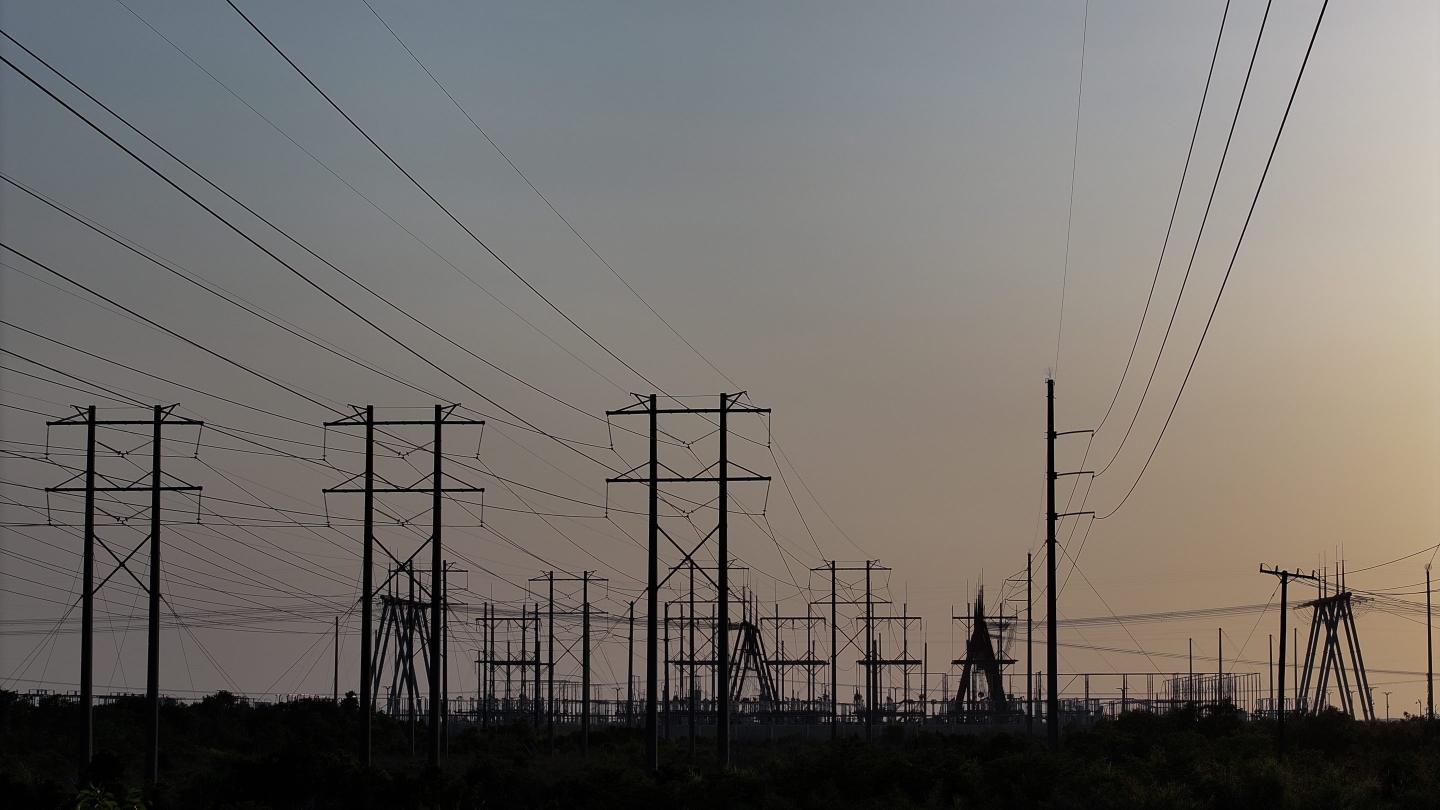
Power cables over a field.
The power grid is built on 50-year old infrastructure, and it's struggling to meet the capacity demands of emerging technologies including EVs and AI data centers. Experts hope new regulations will help fix it.Joe Raedle—Getty Images
Add Fortune on Google for similar content.

We’re in the early stages of an electricity boom. From renewables, to AI, to electric vehicles, the green transition’s most vital sectors all need electricity, and far more of it than ever before. 

Recommended Video

As these technologies expand, massive increases in power consumption across the country are exposing deep weaknesses in the grid, the sprawling network of thousands of power plants and some 500,000 miles of power cables that provide electricity to millions of homes and businesses across the country. 

The grid’s magnitude is rivaled only by its complexity—It’s been called “the most complicated machine ever built.” It also isn’t one uniform, national system: The Lower 48 is divvied up by a patchwork of 10 independent operators, some of whom work with each other and some of whom don’t, which are governed by local, state, and federal laws all at once. 

Most of the grid’s central infrastructure—the actual wires and electrical transformers that move electricity from point A to point B—is half a century old, and wholly unequipped to handle what’s shaping up to be a generational surge in power demand. Everyone’s playing catch-up.

“We’ve got a huge surge in demand for electricity coming,” Neil Chatterjee, the former chair of the Federal Energy Regulatory Commission (FERC), the federal agency that regulates electricity transmission and pricing, told Fortune. “In order to meet that demand, while maintaining reliability and affordability—and also while decarbonizing—we just need to build a lot more transmission. And it’s been too difficult to do.”

Transmission: The grid’s forgotten foundation

Even as flashy energy generation projects—including wind farms, solar arrays, and nuclear plants—have attracted over half a trillion dollars in the past three years, per White House estimates, there’s nothing even close to that amount of money allocated for the electrical plumbing that keeps the grid going. 

“A lot of our transmission infrastructure is aging—the bulk of it is 50 to 60 years old,” Romany Webb, deputy director of Columbia University’s Sabin Center for Climate Change Law, told Fortune. “That’s creating challenges in terms of the energy transition…we haven’t, in an effective way, continued to upgrade and expand the grid to meet evolving challenges.”

In broad terms, there are two components of the U.S. grid: Generation and transmission. You’re likely more familiar with generation: Over 10,000 power plants across the country convert energy in the form of coal or oil (or, increasingly, renewable inputs including wind and solar) and convert it to electricity. But most homes, offices, and factories aren’t located right next to power plants, so we rely on miles of transmission cables to move electricity to where it’s needed. A rise in renewable energy has underscored that dynamic—solar panels are most effective in the Sun Belt, for example, requiring long power lines to move that electricity to consumers across the country who live in cloudier areas.

That’s where things get complicated. Moving electricity over long distances means you need big companies to manage distribution across entire regions. The U.S. has ten regional grid operators, most of which talk to each other—but that’s not true everywhere. Texas’ grid, for example, is an island, completely disconnected from the rest of the country. That made headlines in February 2021, when its grid was unable to handle an extreme winter storm and couldn’t borrow any extra power from its neighbors, leading to massive blackouts and almost $200 billion in property damage.

In some ways, the grid’s fragmented structure is a product of its roots. “We’re evolving from an industry that started out with 3,000 small, isolated utilities that were serving their local electricity consumers with local generation. But for today’s economies, what you really need are long-distance, high-capacity lines,” Rob Gramlich, president of energy sector consulting firm Grid Strategies LLC, told Fortune. “We’ve been struggling with our old structure while trying to meet these new needs.”

In large part due to its technical complexity, the energy grid doesn’t get nearly as much attention as other areas in the energy space: Power cables don’t have the futuristic flair of nuclear fusion or solar farms, and the high geopolitical drama of the oil industry is a lot more exciting than the bureaucracy of building new grid infrastructure. But as it becomes clear that the grid will be a crucial bottleneck to bringing new AI, EV, and renewable energy projects online, grid transmission is finally getting its moment in the popular—and political—spotlight. That has both costs and benefits.

New rules, new challenges

On Monday, after years of work behind the scenes, FERC voted to approve a long-awaited final rule that’s expected to drastically reduce hurdles to getting new transmission capacity online and free up space to increase grid capacity to meet demand: in the most basic terms, just stringing up more power cables.

“I’ve been working on these policy issues since 2003. For 20-plus years, I’ve watched FERC punt to Congress and Congress back off from these really complex, wonky, technical questions. Somebody’s got to step up and make a bold decision every once in a while and break some china,” Chatterjee, who’s currently a senior advisor at D.C. law firm Hogan Lovells, said. “[FERC] made a tough call, and they’re going to get a ton of heat for it…But the reality is, somebody had to pull this band-aid off and make the tough calls.”

Transmission upgrades are tough projects to sell on two fronts. Nobody’s denying that upgrading the 50-year-old power cables the grid is built on is vital; they’re simply not equipped to handle the capacity emerging technologies will require. But building transmission infrastructure is a political minefield that’s faced near-constant opposition from parties including competing power companies, NIMBY landowners, and partisan lawmakers. Some recent transmission projects have been stuck in limbo for close to two decades.

Perhaps the biggest obstacle to grid upgrades is the weird, disjointed government of the grid itself, where competing priorities from private operators, federal and state lawmakers, and regulatory agencies have kneecapped many proposals that cross state lines and involve multiple stakeholders who don’t play nice together.

“The split authority over transmission between the federal government and the states has certainly created some challenges,” Webb said. “As we’ve looked to move to a more regional-based grid, which has all sorts of benefits in terms of supporting decarbonisation and improving resilience, state-by-state [authority] becomes a real challenge when you’re looking at building large, long interstate transmission lines.”

That question—of states’ role in funding transmission lines that cross multiple regions—has emerged as a political flashpoint in recent years. Some Republican politicians have slammed proposals that would have their taxpayers shoulder the load of transmission upgrades linked to renewable projects they don’t support; some Democratic opponents argue increasing capacity will help reduce rates and blackouts. Insiders insist the grid is one area where politics don’t belong.

“These days, anything can become partisan,” Gramlich said. “It’d be a big irony if transmission policy was led by Republicans 20 years ago, and now seems to be led by Democrats, got stuck in that partisan frame…The FERC rule that was issued [Monday] is really for economics and reliability. There’s really no reason that should get a different answer from red states versus blue states, or Republicans versus Democrats.”

As power demand starts to push the grid to its breaking point, pressure to modernize and upgrade transmission infrastructure will only increase—politics be damned.
“With more consumption, there will be more of a sense of urgency,” Sierra Club senior strategy advisor Jeremy Fisher told Fortune. “As the capacity comes online to meet some of the AI-induced load requirements, there will be some hard decisions.”

Subscribe to Fortune Gulf Brief. Every Tuesday, this new newsletter delivers clear-eyed, authoritative intelligence on the deals, decisions, policies, and power shifts shaping one of the world’s most consequential regions, written for the people who need to act on it. Sign up here.
About the Author
By Dylan Sloan
See full bioRight Arrow Button Icon
Add Fortune on Google for similar content.

Latest in Environment

Finance
Lorem ipsum dolor sit amet, consectetur adipiscing elit, sed do eiusmod tempor incididunt ut labore et dolore magna aliqua. Ut enim ad minim veniam
By Fortune Editors
October 20, 2025
Finance
Lorem ipsum dolor sit amet, consectetur adipiscing elit, sed do eiusmod tempor incididunt ut labore et dolore magna aliqua. Ut enim ad minim veniam
By Fortune Editors
October 20, 2025
Finance
Lorem ipsum dolor sit amet, consectetur adipiscing elit, sed do eiusmod tempor incididunt ut labore et dolore magna aliqua. Ut enim ad minim veniam
By Fortune Editors
October 20, 2025
Finance
Lorem ipsum dolor sit amet, consectetur adipiscing elit, sed do eiusmod tempor incididunt ut labore et dolore magna aliqua. Ut enim ad minim veniam
By Fortune Editors
October 20, 2025
Finance
Lorem ipsum dolor sit amet, consectetur adipiscing elit, sed do eiusmod tempor incididunt ut labore et dolore magna aliqua. Ut enim ad minim veniam
By Fortune Editors
October 20, 2025
Finance
Lorem ipsum dolor sit amet, consectetur adipiscing elit, sed do eiusmod tempor incididunt ut labore et dolore magna aliqua. Ut enim ad minim veniam
By Fortune Editors
October 20, 2025

Most Popular

Finance
Lorem ipsum dolor sit amet, consectetur adipiscing elit, sed do eiusmod tempor incididunt ut labore et dolore magna aliqua. Ut enim ad minim veniam
By Fortune Editors
October 20, 2025
Finance
Lorem ipsum dolor sit amet, consectetur adipiscing elit, sed do eiusmod tempor incididunt ut labore et dolore magna aliqua. Ut enim ad minim veniam
By Fortune Editors
October 20, 2025
Finance
Lorem ipsum dolor sit amet, consectetur adipiscing elit, sed do eiusmod tempor incididunt ut labore et dolore magna aliqua. Ut enim ad minim veniam
By Fortune Editors
October 20, 2025
Finance
Lorem ipsum dolor sit amet, consectetur adipiscing elit, sed do eiusmod tempor incididunt ut labore et dolore magna aliqua. Ut enim ad minim veniam
By Fortune Editors
October 20, 2025
Finance
Lorem ipsum dolor sit amet, consectetur adipiscing elit, sed do eiusmod tempor incididunt ut labore et dolore magna aliqua. Ut enim ad minim veniam
By Fortune Editors
October 20, 2025
Finance
Lorem ipsum dolor sit amet, consectetur adipiscing elit, sed do eiusmod tempor incididunt ut labore et dolore magna aliqua. Ut enim ad minim veniam
By Fortune Editors
October 20, 2025
Fortune Secondary Logo
Rankings
  • 100 Best Companies
  • Fortune 500
  • Global 500
  • Fortune 500 Europe
  • Most Powerful Women
  • World's Most Admired Companies
  • See All Rankings
  • Lists Calendar
Sections
  • Finance
  • Fortune Crypto
  • Features
  • Leadership
  • Health
  • Commentary
  • Success
  • Retail
  • Mpw
  • Tech
  • Lifestyle
  • CEO Initiative
  • Asia
  • Politics
  • Conferences
  • Europe
  • Newsletters
  • Personal Finance
  • Environment
  • Magazine
  • Education
Customer Support
  • Frequently Asked Questions
  • Customer Service Portal
  • Privacy Policy
  • Terms Of Use
  • Single Issues For Purchase
  • International Print
Commercial Services
  • Advertising
  • Fortune Brand Studio
  • Fortune Analytics
  • Fortune Conferences
  • Business Development
  • Group Subscriptions
About Us
  • About Us
  • Press Center
  • Work At Fortune
  • Terms And Conditions
  • Site Map
  • About Us
  • Press Center
  • Work At Fortune
  • Terms And Conditions
  • Site Map
  • Facebook icon
  • Twitter icon
  • LinkedIn icon
  • Instagram icon
  • Pinterest icon

Latest in Environment

sb
Commentaryclimate change
The climate policy triangle: why leaders can no longer choose between growth, security and sustainability
By Sebastian BuckupJune 23, 2026
12 hours ago
Tom and Diane Peterman pose outside their home at Black Lake on Wednesday, April 29, 2026, in Grant Township, Mich.
EnvironmentNatural disasters
FEMA told these families they weren’t in a flood zone. Then ice came through the windows
By Tammy Webber, M.K. Wildeman and The Associated PressJune 23, 2026
13 hours ago
Woman hides from the sun in front of Big Ben in London
EconomyEurope
‘London isn’t just calling—it’s cooking.’ Europe’s largest economies face over $600 billion in heat-driven losses by 2030
By Tristan BoveJune 23, 2026
16 hours ago
fr
EnvironmentUnited Kingdom
France rues widespread lack of air conditioning as country roasts under 104-degree heat wave
By Samuel Petrequin and The Associated PressJune 23, 2026
19 hours ago
un
EnvironmentData centers
‘It is time to come clean’: UN Secretary General calls out AI companies on their climate impact
By Alexa St. John and The Associated PressJune 23, 2026
19 hours ago
data
EnvironmentData centers
40 mayors join global movement to push back against data centers. Can collective bargaining work?
By Jennifer McDermott, Anton L. Delgado and The Associated PressJune 23, 2026
19 hours ago

Most Popular

After forcing workers back to the office, Goldman Sachs and JPMorgan Chase are now letting their staff work remotely—but only for the World Cup
Success
After forcing workers back to the office, Goldman Sachs and JPMorgan Chase are now letting their staff work remotely—but only for the World Cup
By Orianna Rosa RoyleJune 23, 2026
21 hours ago
Markets tumble worldwide as Fed resets expectations: $400 billion wiped off SpaceX stock
Banking
Markets tumble worldwide as Fed resets expectations: $400 billion wiped off SpaceX stock
By Jim EdwardsJune 23, 2026
23 hours ago
Current price of oil as of June 23, 2026
Personal Finance
Current price of oil as of June 23, 2026
By Joseph HostetlerJune 23, 2026
21 hours ago
Meet the 2 men putting New York's $300 billion pension fund in play for the first time in 20 years
Investing
Meet the 2 men putting New York's $300 billion pension fund in play for the first time in 20 years
By Nick LichtenbergJune 22, 2026
2 days ago
Former U.S. Secret Service agent says bringing your authentic self to work stifles teamwork: 'You don’t get high performers, you get sloppiness'
Success
Former U.S. Secret Service agent says bringing your authentic self to work stifles teamwork: 'You don’t get high performers, you get sloppiness'
By Sydney LakeJune 21, 2026
3 days ago
Texas and Charlotte used to build huge McMansions—now they're copying the California design tricks they once mocked
Real Estate
Texas and Charlotte used to build huge McMansions—now they're copying the California design tricks they once mocked
By Sydney LakeJune 22, 2026
2 days ago

© 2026 Fortune Media IP Limited. All Rights Reserved. Use of this site constitutes acceptance of our Terms of Use and Privacy Policy | CA Notice at Collection and Privacy Notice | Do Not Sell/Share My Personal Information
FORTUNE is a trademark of Fortune Media IP Limited, registered in the U.S. and other countries. FORTUNE may receive compensation for some links to products and services on this website. Offers may be subject to change without notice.