• Home
  • Latest
  • Fortune 500
  • Finance
  • Tech
  • Leadership
  • Lifestyle
  • Rankings
  • Multimedia

Trendingnow

1

The Pentagon said Iran War costs $29 billion, but the real cost is closer to $200 billion—and counting

2

After forcing workers back to the office, Goldman Sachs and JPMorgan Chase are now letting their staff work remotely—but only for the World Cup

3

Now worth $200 million, Sarah Jessica Parker credits being ‘one of eight kids that struggled financially’ for her hunger, ambition, and work ethic

1

The Pentagon said Iran War costs $29 billion, but the real cost is closer to $200 billion—and counting

2

After forcing workers back to the office, Goldman Sachs and JPMorgan Chase are now letting their staff work remotely—but only for the World Cup

3

Now worth $200 million, Sarah Jessica Parker credits being ‘one of eight kids that struggled financially’ for her hunger, ambition, and work ethic
CommentaryTech

H1-B visas are the lifeblood of U.S. tech innovation–and the shortcut to semiconductor supremacy

By
Mishita Mehra
Mishita Mehra
,
Hewei Shen
Hewei Shen
, and
Federico Mandelman
Federico Mandelman
Down Arrow Button Icon
By
Mishita Mehra
Mishita Mehra
,
Hewei Shen
Hewei Shen
, and
Federico Mandelman
Federico Mandelman
Down Arrow Button Icon
April 23, 2024, 5:47 AM ET
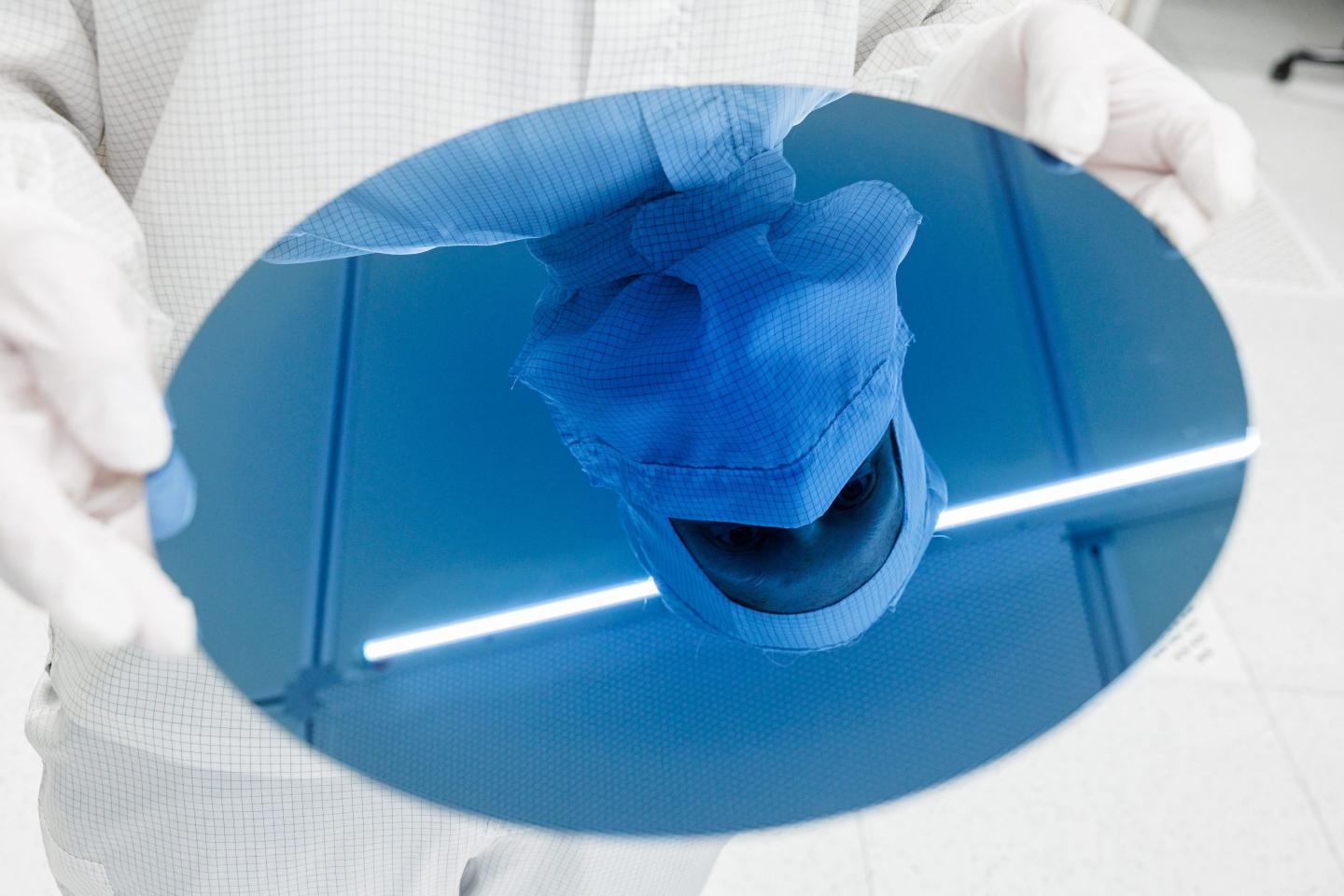
America's plans for chips domestic manufacturing are being delayed by a shortage of skilled workers.
America's plans for chips domestic manufacturing are being delayed by a shortage of skilled workers.JENS SCHLUETER - AFP - Getty Images
Add Fortune on Google for similar content.

In December, Samsung delayed a Texas-based chip manufacturing facility’s start date. In January, the Taiwanese chip manufacturing company TSMC pushed back one of its planned Arizona plants. The reason? Workforce shortages. Two years after the U.S. passed legislation providing $280 billion over the next decade to spur the development of its semiconductors industry, such delays represent significant hiccups in America’s plan to boost our ability to build advanced computer chips.

The U.S. has provided significant investments and support for chip manufacturers in financial terms. However, you need more than financing to run a business. An often-overlooked reform to boost manufacturing in the high-tech sector is expanding skilled immigration. Our new research on the largest skilled immigration program in the U.S., the H-1B visa, suggests it is one of the missing pieces in successfully bringing more high-tech manufacturing within our borders. 

It’s no surprise that there’s a need for additional workers who understand chip manufacturing. Consultants have projected hundreds of thousands of missing workers. This number grows to 1.4 million by 2030.

In the case of TSMC, this workforce shortage has been well-reported as a concern for more than two years ago. Lacking workers with the right training was reemphasized in their January announcement of the delay. 

The same factor is at play in the case of Samsung’s plant delays. Samsung joined with the University of Texas in 2023 to create a “talent pipeline” for the state’s semiconductor industry.

These kinds of investments in domestic talent will certainly be one part of the solution to the skilled workforce shortage. To this end, the CHIPS and Sciences Act provides hundreds of millions in support for workforce development. These are commonsense investments in the U.S.’s domestic workforce. 

However, training takes time. The U.S. needs to bring in workers ready to work today if it is serious about jumpstarting chip manufacturing. 

Measuring the effect of H1-B visa holders on U.S. tech

This is where our new study comes into play. We are the first to examine the impact of skilled immigration policy reforms on young firms in the high-tech sector. Using data for which firms received an H-1B visa in fiscal years 2014 and 2015, we can see the effects that skilled immigration has on high-tech firms and their success.

For example, we find that firms that secured all of the foreign workers that they requested in a given year are more likely to survive in the next 5 years. On average, they have a 2.6 percentage point higher chance of survival compared to firms that received none of their requested H-1B visas. We see a stronger effect for younger firms, where chances of survival are higher by 3.5 percentage points.

This may seem like a small difference, but it has important consequences. It keeps the entire tech sector lean and fit. Our quantitative results predict that the increased business dynamism that follows the removal of current major H-1B policy-induced frictions would increase aggregate high-tech output by 26% and average firm productivity by 0.4%.

By promoting the success of young firms, immigration refreshes tech companies’ competitiveness and dynamism. Our model’s mechanisms suggest that higher young firm survival caused by lowering H-1B hiring frictions constrains the survival of less productive and older firms.

Furthermore, our results indicate that mitigating current frictions in skilled immigration policies has significant implications for increasing output and average firm productivity in the high-tech sector. That is, if we make it easier for U.S. companies to hire skilled talent no matter where they are from, we will make the U.S. economy stronger.

Based on our model mechanisms, measures that streamline the process for young firms can benefit the economy. At the simplest level, policymakers can capitalize on our research findings by streamlining access to skilled workers through the H-1B program by increasing the number of visas available, simplifying application procedures, reducing application fees, and/or making the transition for international students to work easier.

Our research is new, but we are not the first to point out that the U.S. needs to think of immigration as a tool for supporting homegrown innovation. Just a few months ago, Adam Ozimek and Connor O’Brien of the Economic Innovation Group proposed a “chipmakers visa” to support chipmaking in the U.S. More than a decade ago, a 2011 report from the Government Accountability Office pointed out that small firms often struggled when they did not receive the H-1B visas they requested and suggested that changes be made to improve the program. 

The reality is that the H-1B program is the primary pathway for accessing foreign skilled labor in the U.S. today. Yet its stringent regulations frustrate companies, limiting their ability to grow and innovate in the country. The moves to train U.S. workers for these roles are vital–but the spark that will light the fire of success just might be a change to U.S. immigration policies.

Mishita Mehra, Hewei Shen, and Federico Mandelman are co-authors of the Center for Growth and Opportunity paper, Skilled Immigration Frictions as a Barrier for Young Firms.

More must-read commentary published by Fortune:

  • Rihanna’s ‘Fenty effect’ could teach AI developers about inclusivity and fighting bias
  • AI’s ability to write for us—and our inability to resist ‘The Button’—will spark a crisis of meaning in creative work
  • Our entire approach to summer internships is broken—and many students don’t stand a chance

The opinions expressed in Fortune.com commentary pieces are solely the views of their authors and do not necessarily reflect the opinions and beliefs of Fortune.

About the Authors
By Mishita Mehra
See full bioRight Arrow Button Icon
By Hewei Shen
See full bioRight Arrow Button Icon
By Federico Mandelman
See full bioRight Arrow Button Icon
Add Fortune on Google for similar content.

Latest in Commentary

Finance
Lorem ipsum dolor sit amet, consectetur adipiscing elit, sed do eiusmod tempor incididunt ut labore et dolore magna aliqua. Ut enim ad minim veniam
By Fortune Editors
October 20, 2025
Finance
Lorem ipsum dolor sit amet, consectetur adipiscing elit, sed do eiusmod tempor incididunt ut labore et dolore magna aliqua. Ut enim ad minim veniam
By Fortune Editors
October 20, 2025
Finance
Lorem ipsum dolor sit amet, consectetur adipiscing elit, sed do eiusmod tempor incididunt ut labore et dolore magna aliqua. Ut enim ad minim veniam
By Fortune Editors
October 20, 2025
Finance
Lorem ipsum dolor sit amet, consectetur adipiscing elit, sed do eiusmod tempor incididunt ut labore et dolore magna aliqua. Ut enim ad minim veniam
By Fortune Editors
October 20, 2025
Finance
Lorem ipsum dolor sit amet, consectetur adipiscing elit, sed do eiusmod tempor incididunt ut labore et dolore magna aliqua. Ut enim ad minim veniam
By Fortune Editors
October 20, 2025
Finance
Lorem ipsum dolor sit amet, consectetur adipiscing elit, sed do eiusmod tempor incididunt ut labore et dolore magna aliqua. Ut enim ad minim veniam
By Fortune Editors
October 20, 2025

Most Popular

Finance
Lorem ipsum dolor sit amet, consectetur adipiscing elit, sed do eiusmod tempor incididunt ut labore et dolore magna aliqua. Ut enim ad minim veniam
By Fortune Editors
October 20, 2025
Finance
Lorem ipsum dolor sit amet, consectetur adipiscing elit, sed do eiusmod tempor incididunt ut labore et dolore magna aliqua. Ut enim ad minim veniam
By Fortune Editors
October 20, 2025
Finance
Lorem ipsum dolor sit amet, consectetur adipiscing elit, sed do eiusmod tempor incididunt ut labore et dolore magna aliqua. Ut enim ad minim veniam
By Fortune Editors
October 20, 2025
Finance
Lorem ipsum dolor sit amet, consectetur adipiscing elit, sed do eiusmod tempor incididunt ut labore et dolore magna aliqua. Ut enim ad minim veniam
By Fortune Editors
October 20, 2025
Finance
Lorem ipsum dolor sit amet, consectetur adipiscing elit, sed do eiusmod tempor incididunt ut labore et dolore magna aliqua. Ut enim ad minim veniam
By Fortune Editors
October 20, 2025
Finance
Lorem ipsum dolor sit amet, consectetur adipiscing elit, sed do eiusmod tempor incididunt ut labore et dolore magna aliqua. Ut enim ad minim veniam
By Fortune Editors
October 20, 2025
Fortune Secondary Logo
Rankings
  • 100 Best Companies
  • Fortune 500
  • Global 500
  • Fortune 500 Europe
  • Most Powerful Women
  • World's Most Admired Companies
  • See All Rankings
  • Lists Calendar
Sections
  • Finance
  • Fortune Crypto
  • Features
  • Leadership
  • Health
  • Commentary
  • Success
  • Retail
  • Mpw
  • Tech
  • Lifestyle
  • CEO Initiative
  • Asia
  • Politics
  • Conferences
  • Europe
  • Newsletters
  • Personal Finance
  • Environment
  • Magazine
  • Education
Customer Support
  • Frequently Asked Questions
  • Customer Service Portal
  • Privacy Policy
  • Terms Of Use
  • Single Issues For Purchase
  • International Print
Commercial Services
  • Advertising
  • Fortune Brand Studio
  • Fortune Analytics
  • Fortune Conferences
  • Business Development
  • Group Subscriptions
About Us
  • About Us
  • Press Center
  • Work At Fortune
  • Terms And Conditions
  • Site Map
  • About Us
  • Press Center
  • Work At Fortune
  • Terms And Conditions
  • Site Map
  • Facebook icon
  • Twitter icon
  • LinkedIn icon
  • Instagram icon
  • Pinterest icon

Latest in Commentary

Asia’s defense boom is rewiring the global arms supply chain
Commentaryarms, weapons, and defense
Asia’s defense boom is rewiring the global arms supply chain
By Chris OberoiJune 24, 2026
8 hours ago
steve
Commentary250 Years of Innovation
Steve Case: America was built by entrepreneurs. Here’s how we keep that edge for the next 250 years
By Steve CaseJune 24, 2026
17 hours ago
t
CommentaryWhite House
Trump mistakes the bully pulpit for bullying leadership — history’s villains were never heroes
By Jeffrey Sonnenfeld and Steven TianJune 24, 2026
17 hours ago
mg
CommentaryHealth
The ‘tech neck’ time bomb: why 43 million young Americans could cripple U.S. health care within a generation
By Michael GerlingJune 24, 2026
18 hours ago
sb
Commentaryclimate change
The climate policy triangle: why leaders can no longer choose between growth, security and sustainability
By Sebastian BuckupJune 23, 2026
1 day ago
brett
CommentaryManagement
Middle managers aren’t going extinct—they’re evolving into something more powerful
By Brett HurtJune 23, 2026
2 days ago

Most Popular

The Pentagon said Iran War costs $29 billion, but the real cost is closer to $200 billion—and counting
Economy
The Pentagon said Iran War costs $29 billion, but the real cost is closer to $200 billion—and counting
By Jacqueline MunisJune 24, 2026
22 hours ago
After forcing workers back to the office, Goldman Sachs and JPMorgan Chase are now letting their staff work remotely—but only for the World Cup
Success
After forcing workers back to the office, Goldman Sachs and JPMorgan Chase are now letting their staff work remotely—but only for the World Cup
By Orianna Rosa RoyleJune 23, 2026
2 days ago
Now worth $200 million, Sarah Jessica Parker credits being ‘one of eight kids that struggled financially’ for her hunger, ambition, and work ethic
Success
Now worth $200 million, Sarah Jessica Parker credits being ‘one of eight kids that struggled financially’ for her hunger, ambition, and work ethic
By Orianna Rosa RoyleJune 24, 2026
22 hours ago
Amazon's record Prime Day masks a darker truth: Americans are spending more and getting less
Retail
Amazon's record Prime Day masks a darker truth: Americans are spending more and getting less
By Nick LichtenbergJune 24, 2026
14 hours ago
Ray Dalio just finished a 10-day trip to China. He says global leaders know America ‘doesn’t have what it takes to fight to maintain its empire’
Asia
Ray Dalio just finished a 10-day trip to China. He says global leaders know America ‘doesn’t have what it takes to fight to maintain its empire’
By Nick LichtenbergJune 24, 2026
16 hours ago
Current price of gold as of June 23, 2026
Personal Finance
Current price of gold as of June 23, 2026
By Danny BakstJune 23, 2026
2 days ago

© 2026 Fortune Media IP Limited. All Rights Reserved. Use of this site constitutes acceptance of our Terms of Use and Privacy Policy | CA Notice at Collection and Privacy Notice | Do Not Sell/Share My Personal Information
FORTUNE is a trademark of Fortune Media IP Limited, registered in the U.S. and other countries. FORTUNE may receive compensation for some links to products and services on this website. Offers may be subject to change without notice.