
• Home
  • Latest
  • Fortune 500
  • Finance
  • Tech
  • Leadership
  • Lifestyle
  • Rankings
  • Multimedia

Trendingnow

1

Philanthropy leader at Warren Buffett and Bill Gates’ Giving Pledge says children of billionaires are pushing them to give their wealth away faster

2

MacKenzie Scott alone accounted for one-third of America's $19.2 billion in megagifts last year

3

Now worth $200 million, Sarah Jessica Parker credits being ‘one of eight kids that struggled financially’ for her hunger, ambition, and work ethic

1

Philanthropy leader at Warren Buffett and Bill Gates’ Giving Pledge says children of billionaires are pushing them to give their wealth away faster

2

MacKenzie Scott alone accounted for one-third of America's $19.2 billion in megagifts last year

3

Now worth $200 million, Sarah Jessica Parker credits being ‘one of eight kids that struggled financially’ for her hunger, ambition, and work ethic
FinanceU.S. debt

America will be left with ‘severe, irreversible scars’ if national debt goes unchecked. Now, a blockbuster report warns the bill is higher than believed, hitting $141T by 2054

Eleanor Pringle
By
Eleanor Pringle
Eleanor Pringle
Senior Reporter, Economics and Markets
Down Arrow Button Icon
Eleanor Pringle
By
Eleanor Pringle
Eleanor Pringle
Senior Reporter, Economics and Markets
Down Arrow Button Icon
April 1, 2024, 7:35 AM ET
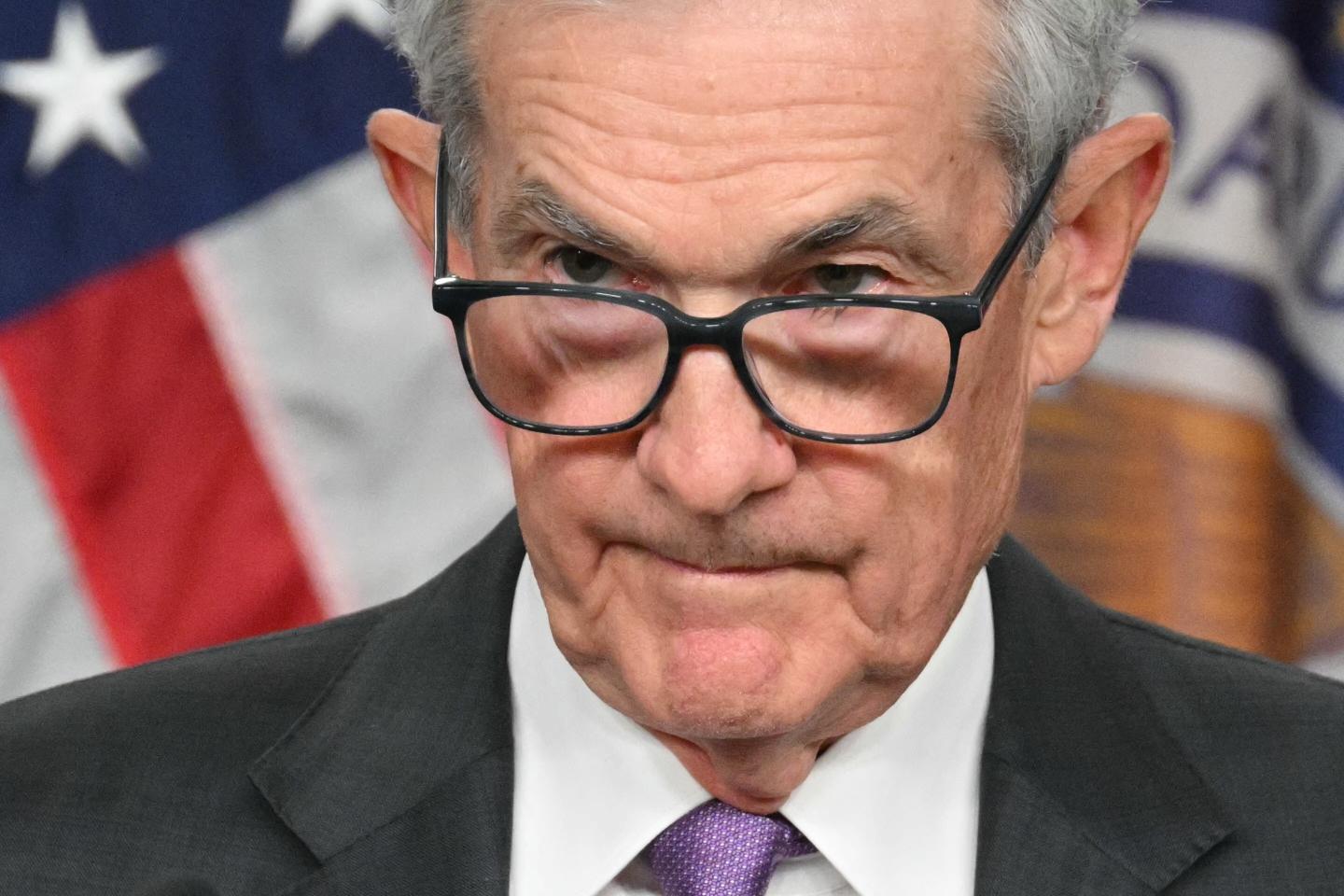
US Federal Reserve Chairman Jerome Powell
Fed Chairman Jerome Powell is one of the individuals growing increasingly concerned about the levels of U.S. public debt. MANDEL NGAN—AFP/Getty Images
Add Fortune on Google for similar content.

National debt is fast becoming the thorn in the side of the American economy that nobody wants to extract—and it will continue to cause damage, sending the U.S. into financial crisis and 10 years of stagnation.

Recommended Video

That is increasingly the opinion of a growing number of experts who are sounding the alarm over the pace at which the U.S. government is gathering debt. More important, they fear this debt will mean the country will not be able to afford necessary borrowing in the future, in addition to the funds needed to service existing debt.

Among the ranks of those in the concerned camp are Fed Chairman Jerome Powell, JPMorgan Chase CEO Jamie Dimon, Bank of America CEO Brian Moynihan, BlackRock CEO Larry Fink, and Wharton vice dean Joao Gomes.

Their outlook is evidenced by a March report from the Congressional Budget Office (CBO). The CBO estimates that by 2054 public debt will represent 166% of GDP, reaching $141.1 trillion.

Currently the nation’s $34 trillion debt is approximately 99% of GDP and, according to the CBO, will steadily increase over the next 30 years. In the near term, the CBO expects debt as a percentage of GDP to exceed the record peak of the Second World War by 2029.

This mounting debt, the CBO writes, “would slow economic growth, push up interest payments to foreign holders of U.S. debt, and pose significant risks to the fiscal and economic outlook; it could also cause lawmakers to feel more constrained in their policy choices.”

The report goes on to add that the likelihood of a financial crisis is increasing as a result of growing debt, something which would cause interest rates to spike and, if paired with higher inflation, “could erode confidence in the U.S. dollar as the dominant international reserve currency.”

The outlook from the U.S. Government Accountability office (GAO) isn’t much better. A report released last month said the government is facing an “unsustainable” fiscal path that poses a “serious” threat to economic, security, and social issues if unaddressed.

The GAO advises Congress to make “difficult budgetary and policy decisions to address the key drivers of federal debt and change the government’s fiscal path,” adding: “The sooner actions are taken to change the long-term fiscal path, the less drastic they will need to be.”

As evidence of a fantastically complex fallout piles up, one might assume it will take an equally complicated approach to prevent it. Economists say that’s not the case—but that’s only if they believe it’s an issue at all. The hardest problem is precisely that: getting enough people to listen.

A sudden reckoning

Wharton’s Gomes has been making his concerns about the level of national debt known for some time now, and last week—following an interview with Fortune—he sat before the U.S. Senate Committee on the Budget and warned them of a train wreck ahead.

The vice dean of research at the University of Pennsylvania’s Wharton School previously argued too few high-profile individuals were taking the matter seriously, but as an up-and-coming economist he felt compelled to step away from the pack to sound the alarm.

“The coming fiscal crisis will be triggered by a sudden loss of confidence by the general public in the federal government’s finances and on those tasked with managing them,” Gomes told chairman Sheldon Whitehouse and ranking member Chuck Grassley. “The projected path for the U.S. federal debt makes this … inevitable in the not too distant future.”

Among the fallouts from the crisis professor Gomes foresees is a sharp decline in the value of the dollar as interest rates spiral higher. He also believes inflation will spike as the government is forced to roll back on social programs to wrestle the deficit under control.

“These measures would have a further devastating effect in the economy, leading to a decade-long stagnation,” Gomes explained. “Given our projected demographic challenges, many older, and marginally attached, workers are likely to leave the labor force never to return again.”

‘Changing this future is not that difficult’

Professor Gomes outlines two well-known options to rebalance the variables: increase growth or cut spending. The former is by far the most preferable, Gomes said, but it wouldn’t accelerate quickly enough to do the job.

Even then, “the required fiscal correction is not drastic,” he added. “We certainly do not need to repay any part of the outstanding debt to prevent a crisis. In fact, government debt can continue to grow steadily over time without posing an immediate threat to the nation’s fiscal solvency—as long as the yearly deficits are not excessive.”

A fiscal adjustment of around 1.4% of GDP—or $400 billion—spread over two or three years would nip the issue in the bud, Gomes estimates.

However without a course correction a fiscal crisis is likely to occur in 2030, said Gomes, or as early as 2025 if the next administration rolls out an “expensive fiscal package that relies on implausibly rosy economic assumptions.”

Regardless, warns Gomes: “Its consequences will be severe and leave lasting—probably irreversible—scars on our economy and society.”

Redoing the math

Economists are increasingly revising the bill future generations will have to foot in order to pay for the fiscal outlays of governments way back when. However, that comes with a major caveat: a global pandemic.

For example, in 2019 the CBO projected U.S. public debt by 2049 would be 144% of GDP; by March’s estimate that figure stands at more than 150%.

However the ratio—and corresponding forecasted debt figure—does fluctuate depending on whom you ask. Even the CBO as recently as September 2023 projected the figure to be higher—estimating an 153% debt-to-GDP ratio by 2053.

The GAO puts debt at 200% of GDP by 2050, while the Penn Wharton Budget Model projects 190% of the size of the economy by the same year.

Balance is not the goal

Like Wharton’s Gomes, Russell Price, chief economist at financial services firm Ameriprise Financial, is growing increasingly nervous about national debt while also fielding more questions on the topic from retail investors.

The expert at the Minneapolis-based company—which has $1.4 trillion in assets under management—added the goal is not to balance the books from one year to the next: “Given the high deficits that we’re spending right now, if we did that in a very short period of time it would cause more economic pain than it would displace.”

Price also sought to unpack intergenerational criticism that high levels of spending now will unfairly burden workers of the future. While Social Security as we know it only exists because of higher taxes paid by employees in the 1980s, Price outlined, a great deal of spending will be needed in the future to support an aging population.

As a result, younger workers have a vested interest in making sure whatever spending is agreed upon now is worth their investment in the future. Price explained: “The one thing I point out to retail clients is the debt is never expected to be paid off in full, but the burden of higher interest expense … is where future generations are going to see the value in how much they paid on the promises that were enacted so many years before.”

The other side of the debate

Other, more optimistic, economists believe a crisis as a result of government debt isn’t in the cards, as fiscal stimulus should lead to higher productivity and hence, to a rise in GDP.

Columbia University professor Brett House is a specialist in macroeconomics and international finance, and falls into the cohort of experts who aren’t losing sleep over national debt.

House reasoned the recent run-up in debt because of the pandemic is an example of how fiscal stimulus can lead to productivity—after all, Q2, Q3, and Q4 2023 all saw productivity increases of more than 3% compared with the prior quarter, according to the Bureau for Labor Statistics.

Indeed, GDP growth in the U.S. since the pandemic has outstripped every other G7 nation—up 7.4% in the latest quarter when compared with Q4 2019. Meanwhile the G7 sits at 4.7% with the EU struggling behind at 3.4%.

“Public debt is justified if it is invested in productivity-enhancing measures that will ensure the economy generates growth that’s required to finance that debt,” House told Fortune.

“Clearly a lot depends on what happens in the wake of the November election,” he added. “On the current trajectory that we’re on right now, I do not see a high probability of financial stress or substantial inflation in the U.S.”

While House acknowledged that a debt-to-GDP ratio above 100% would be dangerous for most countries, he added: “The United States is not most countries. It issues all of its debt in U.S. dollars and consistently, when we see the world in political or financial crisis, money flows into U.S. Treasuries and the bond market as a safe store of value. Because the U.S. issues all of its debt in U.S. dollars it always has the possibility of finding additional buyers for its debt.”

While economists disagree on how much of an issue national debt will be, they do agree on one thing: that the public needs to be involved.

“People who represent labor, people who represent average working people, need to be deeply engaged in these conversations,” House said, “because the cuts will most likely fall on them.”

About the Author
Eleanor Pringle
By Eleanor PringleSenior Reporter, Economics and Markets
LinkedIn icon

Eleanor Pringle is an award-winning senior reporter at Fortune covering news, the economy, and personal finance. Eleanor previously worked as a business correspondent and news editor in regional news in the U.K. She completed her journalism training with the Press Association after earning a degree from the University of East Anglia.

See full bioRight Arrow Button Icon
Add Fortune on Google for similar content.

Latest in Finance

Finance
Lorem ipsum dolor sit amet, consectetur adipiscing elit, sed do eiusmod tempor incididunt ut labore et dolore magna aliqua. Ut enim ad minim veniam
By Fortune Editors
October 20, 2025
Finance
Lorem ipsum dolor sit amet, consectetur adipiscing elit, sed do eiusmod tempor incididunt ut labore et dolore magna aliqua. Ut enim ad minim veniam
By Fortune Editors
October 20, 2025
Finance
Lorem ipsum dolor sit amet, consectetur adipiscing elit, sed do eiusmod tempor incididunt ut labore et dolore magna aliqua. Ut enim ad minim veniam
By Fortune Editors
October 20, 2025
Finance
Lorem ipsum dolor sit amet, consectetur adipiscing elit, sed do eiusmod tempor incididunt ut labore et dolore magna aliqua. Ut enim ad minim veniam
By Fortune Editors
October 20, 2025
Finance
Lorem ipsum dolor sit amet, consectetur adipiscing elit, sed do eiusmod tempor incididunt ut labore et dolore magna aliqua. Ut enim ad minim veniam
By Fortune Editors
October 20, 2025
Finance
Lorem ipsum dolor sit amet, consectetur adipiscing elit, sed do eiusmod tempor incididunt ut labore et dolore magna aliqua. Ut enim ad minim veniam
By Fortune Editors
October 20, 2025

Most Popular

Finance
Lorem ipsum dolor sit amet, consectetur adipiscing elit, sed do eiusmod tempor incididunt ut labore et dolore magna aliqua. Ut enim ad minim veniam
By Fortune Editors
October 20, 2025
Finance
Lorem ipsum dolor sit amet, consectetur adipiscing elit, sed do eiusmod tempor incididunt ut labore et dolore magna aliqua. Ut enim ad minim veniam
By Fortune Editors
October 20, 2025
Finance
Lorem ipsum dolor sit amet, consectetur adipiscing elit, sed do eiusmod tempor incididunt ut labore et dolore magna aliqua. Ut enim ad minim veniam
By Fortune Editors
October 20, 2025
Finance
Lorem ipsum dolor sit amet, consectetur adipiscing elit, sed do eiusmod tempor incididunt ut labore et dolore magna aliqua. Ut enim ad minim veniam
By Fortune Editors
October 20, 2025
Finance
Lorem ipsum dolor sit amet, consectetur adipiscing elit, sed do eiusmod tempor incididunt ut labore et dolore magna aliqua. Ut enim ad minim veniam
By Fortune Editors
October 20, 2025
Finance
Lorem ipsum dolor sit amet, consectetur adipiscing elit, sed do eiusmod tempor incididunt ut labore et dolore magna aliqua. Ut enim ad minim veniam
By Fortune Editors
October 20, 2025
Fortune Secondary Logo
Rankings
  • 100 Best Companies
  • Fortune 500
  • Global 500
  • Fortune 500 Europe
  • Most Powerful Women
  • World's Most Admired Companies
  • See All Rankings
  • Lists Calendar
Sections
  • Finance
  • Fortune Crypto
  • Features
  • Leadership
  • Health
  • Commentary
  • Success
  • Retail
  • Mpw
  • Tech
  • Lifestyle
  • CEO Initiative
  • Asia
  • Politics
  • Conferences
  • Europe
  • Newsletters
  • Personal Finance
  • Environment
  • Magazine
  • Education
Customer Support
  • Frequently Asked Questions
  • Customer Service Portal
  • Privacy Policy
  • Terms Of Use
  • Single Issues For Purchase
  • International Print
Commercial Services
  • Advertising
  • Fortune Brand Studio
  • Fortune Analytics
  • Fortune Conferences
  • Business Development
  • Group Subscriptions
About Us
  • About Us
  • Press Center
  • Work At Fortune
  • Terms And Conditions
  • Site Map
  • About Us
  • Press Center
  • Work At Fortune
  • Terms And Conditions
  • Site Map
  • Facebook icon
  • Twitter icon
  • LinkedIn icon
  • Instagram icon
  • Pinterest icon

Latest in Finance

Forget the ceasefire — The U.S. and Iran are still locked in combat over the Strait of Hormuz as Tehran tries to shut down a competing route
Middle EastIran
Forget the ceasefire — The U.S. and Iran are still locked in combat over the Strait of Hormuz as Tehran tries to shut down a competing route
By Jason MaJune 27, 2026
6 hours ago
The contrarian view for Fed rate cuts: Payrolls will weaken, inflation will plunge, and Kevin Warsh was ‘largely performative’ in his hawkishness
EconomyFederal Reserve
The contrarian view for Fed rate cuts: Payrolls will weaken, inflation will plunge, and Kevin Warsh was ‘largely performative’ in his hawkishness
By Jason MaJune 27, 2026
6 hours ago
Atlanta Fed chief selection delay gives Warsh a say
BankingFederal Reserve
Atlanta Fed chief selection delay gives Warsh a say
By Jonnelle Marte, Saleha Mohsin and BloombergJune 27, 2026
14 hours ago
SpaceX, Charter discussed mobile phone partnership in U.S.
North Americaspace
SpaceX, Charter discussed mobile phone partnership in U.S.
By Kelcee Griffis and BloombergJune 27, 2026
14 hours ago
S&P keeps U.S. sovereign rating at AA+ with stable outlook
EconomyDebt
S&P keeps U.S. sovereign rating at AA+ with stable outlook
By Michael Mackenzie and BloombergJune 27, 2026
14 hours ago
erik
AIJobs
‘It’s not going away’: The Stanford economist who called the AI entry-level jobs crisis early has the receipts
By Nick LichtenbergJune 27, 2026
15 hours ago

Most Popular

Philanthropy leader at Warren Buffett and Bill Gates’ Giving Pledge says children of billionaires are pushing them to give their wealth away faster
Success
Philanthropy leader at Warren Buffett and Bill Gates’ Giving Pledge says children of billionaires are pushing them to give their wealth away faster
By Preston ForeJune 27, 2026
18 hours ago
MacKenzie Scott alone accounted for one-third of America's $19.2 billion in megagifts last year
Success
MacKenzie Scott alone accounted for one-third of America's $19.2 billion in megagifts last year
By Sydney LakeJune 25, 2026
3 days ago
Now worth $200 million, Sarah Jessica Parker credits being ‘one of eight kids that struggled financially’ for her hunger, ambition, and work ethic
Success
Now worth $200 million, Sarah Jessica Parker credits being ‘one of eight kids that struggled financially’ for her hunger, ambition, and work ethic
By Orianna Rosa RoyleJune 24, 2026
4 days ago
The 33-year-old executive Satya Nadella is trusting to fix Microsoft’s Copilot AI assistant
AI
The 33-year-old executive Satya Nadella is trusting to fix Microsoft’s Copilot AI assistant
By Sebastian HerreraJune 27, 2026
19 hours ago
The end of Putin’s regime will spring from war spending chaos, former central bank advisor says, amid military mutiny threat and fuel-shortage brawls
Europe
The end of Putin’s regime will spring from war spending chaos, former central bank advisor says, amid military mutiny threat and fuel-shortage brawls
By Jason MaJune 27, 2026
10 hours ago
Ray Dalio just finished a 10-day trip to China. He says global leaders know America ‘doesn’t have what it takes to fight to maintain its empire’
Asia
Ray Dalio just finished a 10-day trip to China. He says global leaders know America ‘doesn’t have what it takes to fight to maintain its empire’
By Nick LichtenbergJune 24, 2026
4 days ago

© 2026 Fortune Media IP Limited. All Rights Reserved. Use of this site constitutes acceptance of our Terms of Use and Privacy Policy | CA Notice at Collection and Privacy Notice | Do Not Sell/Share My Personal Information
FORTUNE is a trademark of Fortune Media IP Limited, registered in the U.S. and other countries. FORTUNE may receive compensation for some links to products and services on this website. Offers may be subject to change without notice.