• Home
  • Latest
  • Fortune 500
  • Finance
  • Tech
  • Leadership
  • Lifestyle
  • Rankings
  • Multimedia

Trendingnow

1

Now worth $200 million, Sarah Jessica Parker credits being ‘one of eight kids that struggled financially’ for her hunger, ambition, and work ethic

2

The Pentagon said Iran War costs $29 billion, but the real cost is closer to $200 billion—and counting

3

Amazon's record Prime Day masks a darker truth: Americans are spending more and getting less

1

Now worth $200 million, Sarah Jessica Parker credits being ‘one of eight kids that struggled financially’ for her hunger, ambition, and work ethic

2

The Pentagon said Iran War costs $29 billion, but the real cost is closer to $200 billion—and counting

3

Amazon's record Prime Day masks a darker truth: Americans are spending more and getting less
CommentaryGlobalization

WEF president: ‘It’s time to revitalize trade—and reverse the trend of Slowbalization’

By
Børge Brende
Børge Brende
Down Arrow Button Icon
By
Børge Brende
Børge Brende
Down Arrow Button Icon
January 15, 2024, 5:50 AM ET
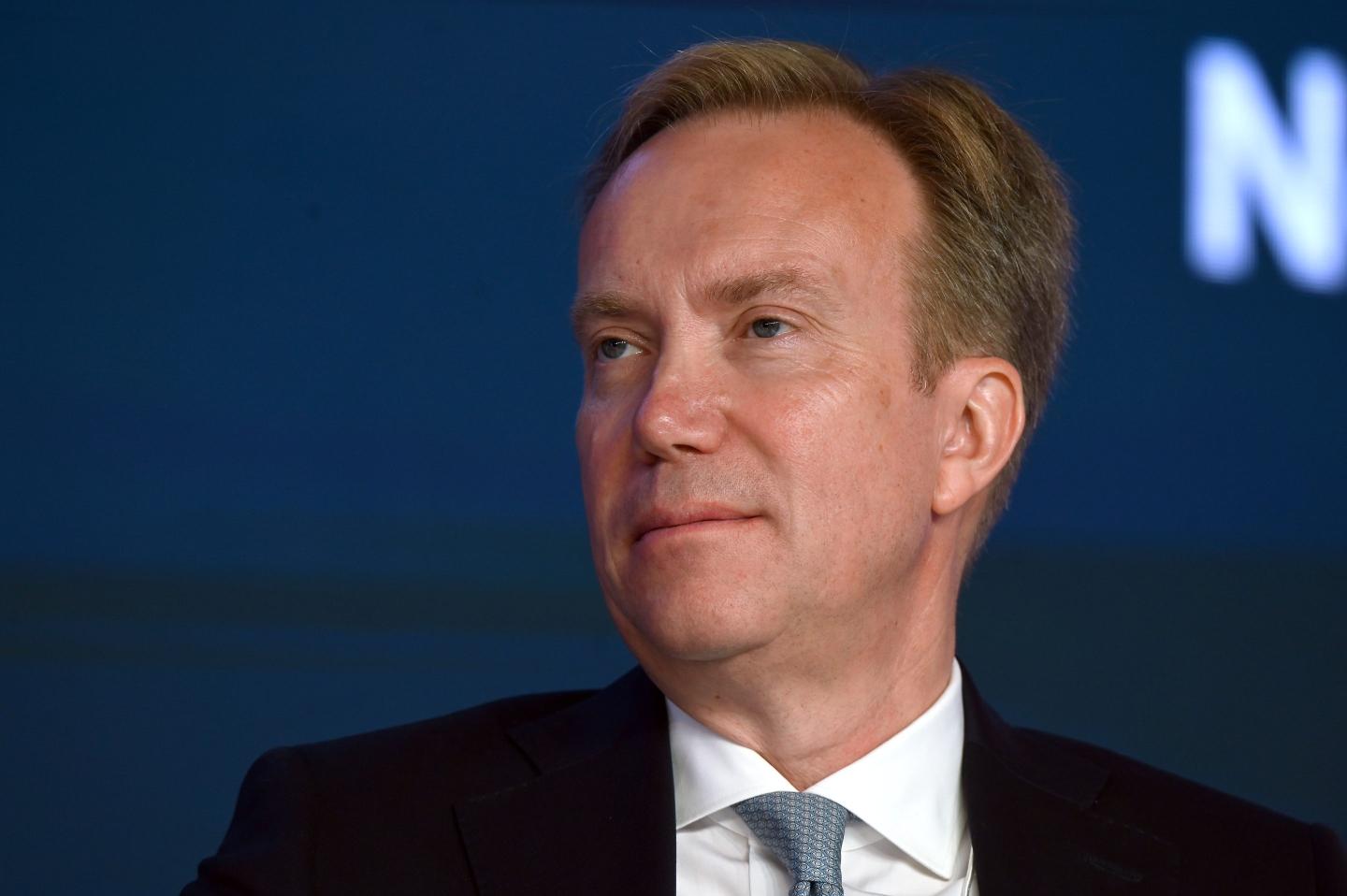
"There can be no recovery without a trade recovery," Børge Brende, president of the World Economic Forum, argues.
"There can be no recovery without a trade recovery," Børge Brende, president of the World Economic Forum, argues. Prakash Singh—Bloomberg via Getty Images
Add Fortune on Google for similar content.

Trade powers productivity. It is an engine of innovation that drives knowledge-sharing and technology upgrades. It can encourage improved governance and institutional reform. “Slowbalization” has held back trade since the mid-2000s. After the slump caused by the COVID-19 pandemic, we must again harness trade’s capacity to support growth, employment, and sustainable development.

The alternative, trade deterioration, put our current prosperity at risk. The World Trade Organization (WTO) and others have calculated that the direct cost to global output from trade fragmentation and technological decoupling could reach 8-12% in most-affected economies. U.S.-China trade skirmishes have already led to significant trade diversion and income losses. A more uncertain environment depresses economic growth by reducing consumer confidence and spending and removing firms’ reasons to invest.

The lower prices and consumer choice that come with trade help low and middle-income consumers. In advanced economies, trade is estimated to have reduced household consumption costs by two-thirds for low-income households, compared to one-quarter for high-income households. Deglobalization has potentially serious inflationary consequences.

Nonetheless, one lesson from the pandemic we must not ignore is the need for greater substitutability in inputs and increased diversification through trade. We must take “re-globalization” to heart.

Trade barriers and trade gains

Today, emerging markets play a far larger role in world trade than two decades ago. Trade in services has also seen healthy growth. Thanks to technology, trade costs in services, which have traditionally been far higher than for goods, are dropping more quickly. Still, the Organisation for Economic Co-operation and Development (OECD) reports average services trade barriers of over 170% in tariff equivalents in emerging markets and 80% in advanced economies. Services trade barriers are becoming ever more significant given structural shifts towards growing expenditure on services relative to goods.

Trade-war tariff increases aside, traditional tariff barriers to goods have become relatively minor direct impediments to trade, outside of some significant exceptions, particularly in agriculture and developing economies. However, the administrative burden of trade procedures and processes remains high. Together with shipping and logistics costs, that burden 50% higher in emerging markets compared to advanced economies.

Climate change and technological development are altering the nature of competitive advantage–and with it the political economy of trade. Trade needs to support the imperative of climate change action yet at the same time resist unhelpful protectionism. As new policies are introduced, governments need to assess their cross-border impact and cooperate to keep trade open. Trade policies are currently biased against the environment through higher tariffs and other barriers on cleaner industries.

6 trade priorities

As we approach the 13th Ministerial Conference of the WTO, six priorities should guide us:

Recognize the value of the world trading system and reaffirm the need for multilateralism. This multilateralism must be pragmatic and enable willing WTO members to move ahead in open plurilaterals and create space for broader and deeper regional trade agreements–without dismantling the inclusive approach of broad non-discrimination.

Find an equitable way through the industrial transformation needed to decarbonize the global economy and resulting from Fourth Industrial Revolution technology. The economic transition must be collaborative.

Ease the day-to-day conduct of cross-border trade, services and investment, particularly through the deployment of technology.

Given the explosion in e-commerce and digital trade, we need to build trust through transparency and effective regulation.

Social and environmental outcomes must become a more acute priority in global value chains, with regulations, incentives and corporate behaviour aligned to ensure better results for workers, communities, and nature.

A larger role for developing nations, accelerated by foreign investment and domestic reform, will not only empower more of humanity but strengthen global resilience through diversity.

The World Economic Forum’s Annual Meeting in Davos provides an opportunity for trade ministers, business, unions, and other stakeholders to agree on how to concretely advance these priorities. In preparation, trade, investment, and geopolitical dialogues have helped executives and policymakers share insights and increase joint understanding of today’s realities. Cross-industry research is highlighting the value at risk from fragmentation. In the digital trade space, regional work is helping stakeholders improve policy design to improve the trade-offs between policy interventions and resulting costs.

The Global Alliance for Trade Facilitation has now delivered over 20 public-private trade reform projects in developing countries, with initial savings exceeding $65 million. Over 1,000 local micro, small, and medium-sized enterprises have been involved, with over $10 million in direct business contributions. Similar practical reform initiatives are progressing across investment and services facilitation in several African, South Asian, and Latin American economies, including for digital foreign direct investment.

Overwhelmingly, effective solutions depend on the deployment of new technology. The TradeTech initiative is catalysing collaboration across the entrepreneurial, investor and supply chain technology ecosystem to accelerate the emergence of scalable trade innovations.

Trade, labor, and Indigenous communities are proposing legislative and business model changes to better serve workers in global supply chains and to improve access to the benefits of trade for Indigenous Peoples and disadvantaged communities. The Coalition of Trade Ministers for Climate, launched last year in Davos, promises to help countries put in place green trade policies and spur green investment and responsible circular trade.

There can be no recovery without a trade recovery. Trade tensions threaten growth. Over the last 30 years, trade has been a critical engine of prosperity. Retooled for the future, trade can serve society and revitalize the global economy.

Børge Brende is the president of the World Economic Forum. This article was published as part of the World Economic Forum Annual Meeting 2024 discussions.

The opinions expressed in Fortune.com commentary pieces are solely the views of their authors and do not necessarily reflect the opinions and beliefs of Fortune.

About the Author
By Børge Brende
See full bioRight Arrow Button Icon
Add Fortune on Google for similar content.

Latest in Commentary

Finance
Lorem ipsum dolor sit amet, consectetur adipiscing elit, sed do eiusmod tempor incididunt ut labore et dolore magna aliqua. Ut enim ad minim veniam
By Fortune Editors
October 20, 2025
Finance
Lorem ipsum dolor sit amet, consectetur adipiscing elit, sed do eiusmod tempor incididunt ut labore et dolore magna aliqua. Ut enim ad minim veniam
By Fortune Editors
October 20, 2025
Finance
Lorem ipsum dolor sit amet, consectetur adipiscing elit, sed do eiusmod tempor incididunt ut labore et dolore magna aliqua. Ut enim ad minim veniam
By Fortune Editors
October 20, 2025
Finance
Lorem ipsum dolor sit amet, consectetur adipiscing elit, sed do eiusmod tempor incididunt ut labore et dolore magna aliqua. Ut enim ad minim veniam
By Fortune Editors
October 20, 2025
Finance
Lorem ipsum dolor sit amet, consectetur adipiscing elit, sed do eiusmod tempor incididunt ut labore et dolore magna aliqua. Ut enim ad minim veniam
By Fortune Editors
October 20, 2025
Finance
Lorem ipsum dolor sit amet, consectetur adipiscing elit, sed do eiusmod tempor incididunt ut labore et dolore magna aliqua. Ut enim ad minim veniam
By Fortune Editors
October 20, 2025

Most Popular

Finance
Lorem ipsum dolor sit amet, consectetur adipiscing elit, sed do eiusmod tempor incididunt ut labore et dolore magna aliqua. Ut enim ad minim veniam
By Fortune Editors
October 20, 2025
Finance
Lorem ipsum dolor sit amet, consectetur adipiscing elit, sed do eiusmod tempor incididunt ut labore et dolore magna aliqua. Ut enim ad minim veniam
By Fortune Editors
October 20, 2025
Finance
Lorem ipsum dolor sit amet, consectetur adipiscing elit, sed do eiusmod tempor incididunt ut labore et dolore magna aliqua. Ut enim ad minim veniam
By Fortune Editors
October 20, 2025
Finance
Lorem ipsum dolor sit amet, consectetur adipiscing elit, sed do eiusmod tempor incididunt ut labore et dolore magna aliqua. Ut enim ad minim veniam
By Fortune Editors
October 20, 2025
Finance
Lorem ipsum dolor sit amet, consectetur adipiscing elit, sed do eiusmod tempor incididunt ut labore et dolore magna aliqua. Ut enim ad minim veniam
By Fortune Editors
October 20, 2025
Finance
Lorem ipsum dolor sit amet, consectetur adipiscing elit, sed do eiusmod tempor incididunt ut labore et dolore magna aliqua. Ut enim ad minim veniam
By Fortune Editors
October 20, 2025
Fortune Secondary Logo
Rankings
  • 100 Best Companies
  • Fortune 500
  • Global 500
  • Fortune 500 Europe
  • Most Powerful Women
  • World's Most Admired Companies
  • See All Rankings
  • Lists Calendar
Sections
  • Finance
  • Fortune Crypto
  • Features
  • Leadership
  • Health
  • Commentary
  • Success
  • Retail
  • Mpw
  • Tech
  • Lifestyle
  • CEO Initiative
  • Asia
  • Politics
  • Conferences
  • Europe
  • Newsletters
  • Personal Finance
  • Environment
  • Magazine
  • Education
Customer Support
  • Frequently Asked Questions
  • Customer Service Portal
  • Privacy Policy
  • Terms Of Use
  • Single Issues For Purchase
  • International Print
Commercial Services
  • Advertising
  • Fortune Brand Studio
  • Fortune Analytics
  • Fortune Conferences
  • Business Development
  • Group Subscriptions
About Us
  • About Us
  • Press Center
  • Work At Fortune
  • Terms And Conditions
  • Site Map
  • About Us
  • Press Center
  • Work At Fortune
  • Terms And Conditions
  • Site Map
  • Facebook icon
  • Twitter icon
  • LinkedIn icon
  • Instagram icon
  • Pinterest icon

Latest in Commentary

nido
Commentary250 Years of Innovation
As an immigrant turned entrepreneur and college president, here is why I celebrate our nation as it turns 250
By Nido R. QubeinJune 25, 2026
47 minutes ago
Asia’s defense boom is rewiring the global arms supply chain
Commentaryarms, weapons, and defense
Asia’s defense boom is rewiring the global arms supply chain
By Chris OberoiJune 24, 2026
15 hours ago
steve
Commentary250 Years of Innovation
Steve Case: America was built by entrepreneurs. Here’s how we keep that edge for the next 250 years
By Steve CaseJune 24, 2026
24 hours ago
t
CommentaryWhite House
Trump mistakes the bully pulpit for bullying leadership — history’s villains were never heroes
By Jeffrey Sonnenfeld and Steven TianJune 24, 2026
1 day ago
mg
CommentaryHealth
The ‘tech neck’ time bomb: why 43 million young Americans could cripple U.S. health care within a generation
By Michael GerlingJune 24, 2026
1 day ago
sb
Commentaryclimate change
The climate policy triangle: why leaders can no longer choose between growth, security and sustainability
By Sebastian BuckupJune 23, 2026
2 days ago

Most Popular

Now worth $200 million, Sarah Jessica Parker credits being ‘one of eight kids that struggled financially’ for her hunger, ambition, and work ethic
Success
Now worth $200 million, Sarah Jessica Parker credits being ‘one of eight kids that struggled financially’ for her hunger, ambition, and work ethic
By Orianna Rosa RoyleJune 24, 2026
1 day ago
The Pentagon said Iran War costs $29 billion, but the real cost is closer to $200 billion—and counting
Economy
The Pentagon said Iran War costs $29 billion, but the real cost is closer to $200 billion—and counting
By Jacqueline MunisJune 24, 2026
1 day ago
Amazon's record Prime Day masks a darker truth: Americans are spending more and getting less
Retail
Amazon's record Prime Day masks a darker truth: Americans are spending more and getting less
By Nick LichtenbergJune 24, 2026
21 hours ago
Ray Dalio just finished a 10-day trip to China. He says global leaders know America ‘doesn’t have what it takes to fight to maintain its empire’
Asia
Ray Dalio just finished a 10-day trip to China. He says global leaders know America ‘doesn’t have what it takes to fight to maintain its empire’
By Nick LichtenbergJune 24, 2026
23 hours ago
After forcing workers back to the office, Goldman Sachs and JPMorgan Chase are now letting their staff work remotely—but only for the World Cup
Success
After forcing workers back to the office, Goldman Sachs and JPMorgan Chase are now letting their staff work remotely—but only for the World Cup
By Orianna Rosa RoyleJune 23, 2026
2 days ago
Trump’s international student crackdown kicked off a domino effect that could shave nearly $500 billion off the economy
Economy
Trump’s international student crackdown kicked off a domino effect that could shave nearly $500 billion off the economy
By Tristan BoveJune 24, 2026
18 hours ago

© 2026 Fortune Media IP Limited. All Rights Reserved. Use of this site constitutes acceptance of our Terms of Use and Privacy Policy | CA Notice at Collection and Privacy Notice | Do Not Sell/Share My Personal Information
FORTUNE is a trademark of Fortune Media IP Limited, registered in the U.S. and other countries. FORTUNE may receive compensation for some links to products and services on this website. Offers may be subject to change without notice.