• Home
  • Latest
  • Fortune 500
  • Finance
  • Tech
  • Leadership
  • Lifestyle
  • Rankings
  • Multimedia

Trendingnow

1

After forcing workers back to the office, Goldman Sachs and JPMorgan Chase are now letting their staff work remotely—but only for the World Cup

2

The Pentagon said Iran War costs $29 billion, but the real cost is closer to $200 billion—and counting

3

Current price of oil as of June 23, 2026

1

After forcing workers back to the office, Goldman Sachs and JPMorgan Chase are now letting their staff work remotely—but only for the World Cup

2

The Pentagon said Iran War costs $29 billion, but the real cost is closer to $200 billion—and counting

3

Current price of oil as of June 23, 2026
CommentaryLabor

The labor market will stay tight as shifting demographics keep draining the talent pool, warns multinational recruitment agency CEO

By
Sander van 't Noordende
Down Arrow Button Icon
By
Sander van 't Noordende
Down Arrow Button Icon
November 28, 2023, 7:39 AM ET
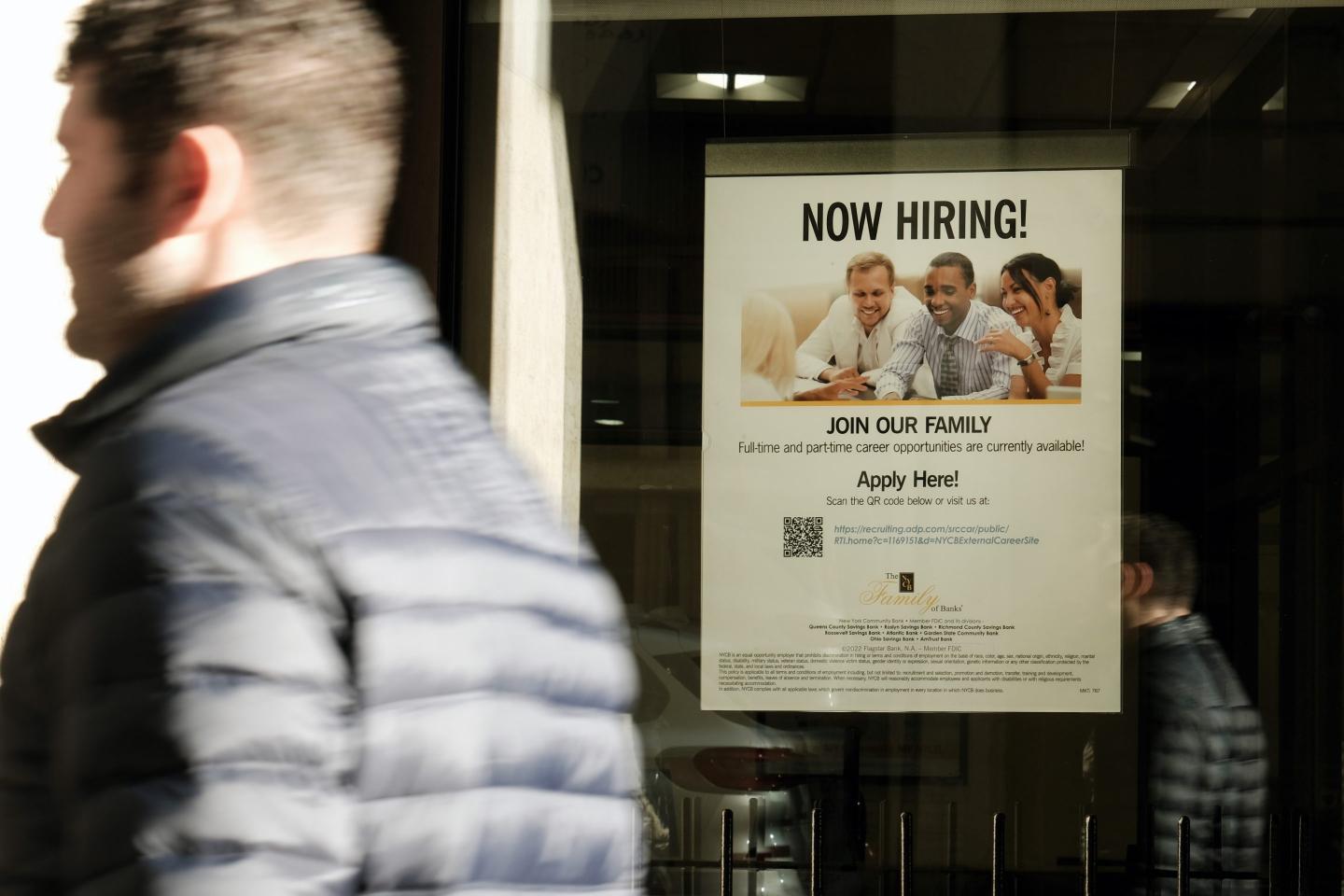
Labor shortages will remain a mainstay of developed economies, dictated by demographics.
Labor shortages will remain a mainstay of developed economies, dictated by demographics.Spencer Platt—Getty Images
Add Fortune on Google for similar content.

Across the world, many countries are facing a rapidly aging population. This, combined with declining birth rates in these markets, will lead to long-term workforce worries, and in turn, serious consequences for developed economies.

According to the World Health Organization, from 2015 to 2050, the proportion of the world’s population over 60 will nearly double from 12% to 22%. Reversing these demographics in many countries with aging populations will not be possible in the near or even medium term as these trends have been decades in the making. The sobering reality is that a structural gap in talent in many developed countries will continue to intensify in the foreseeable future.

Put simply, talent scarcity will be endemic to the labor market in the years and decades ahead. There’s going to be more work to be done by fewer people. And it is not just the number of people: there will also be a mismatch in terms of the skills that people have versus the skills that companies need in the market. The need for specialization in the labor market is arguably greater than ever.

A demographic challenge

There is no silver bullet solution for this global issue–but multi-pronged strategies –which we’ve outlined in Randstad’s new ‘Understanding Talent Scarcity’ report–can help businesses and policymakers to future-proof the workforce and bring more immediate relief to a tight labor market.

One of the issues governments must consider is how immigration policies may affect their nation’s ability to attract highly skilled talent. Such policies that severely limit access to talent pools across borders should be understood in light of potentially negative consequences.

In this context, successfully retaining and encouraging older workers to remain active will help sustain economic activities. Randstad’s research shows that close to two in five of workers aged between 55-67 would quit a job if it prevented them from enjoying their life–and that younger generations are even more likely to do so. It’s essential for leaders to create a working environment where older people can benefit from fulfillment at work, while continuing to thrive outside of it.

Both private and public sector initiatives are needed to incentivize people to hold off retirement or to work part-time, accommodating flexible schedules that complement their lifestyles. Having the option to work around other responsibilities like caring for a loved one or treating any health issues would benefit older workers and may help retain those close to retirement. Offering flexibility in terms of working location will also be key. Businesses should build each of these factors into a transitional plan for older workers’ eventual retirement.

All roads lead to AI

Elsewhere, technology, largely AI, can play a fundamental role in mitigating the talent shortages caused by an aging workforce. While AI is often portrayed as a threat to workers’ livelihoods, this technology will be critical for businesses and industries battling structural scarcity caused by the long-term impact of an aging society.

Each technological revolution has brought about waves of labor market disruption–but also opportunities for growth. Recent studies show where the use of technology is intensive, a positive correlation is detected between the exposure of the professions to AI and employment growth.

Increasing the use of AI to empower workers may help drive productivity and efficiency–and help to fill hard-to-hire-for roles. People will be able to offload repetitive, time-consuming tasks so they can focus on high-value, creative ones that add more value to their organizations. Through such efforts, companies are poised to become more efficient, innovative, and resilient amidst talent shortages caused in part by aging workforces. 

There will of course be a transitional period during which some workers will face displacement. Certain industries will be disproportionately impacted by AI automation, including industries that are not of a scientific and technological nature, such as managerial, economic, and legal occupations.

This doesn’t mean professions in these industries will disappear–but it does make it essential that the technology is rolled out fairly and in a way that creates opportunities for all workers.

Companies need to be deliberate in their approach, introducing well-designed and impactful skilling programs to ensure effective adoption. Our recent Workmonitor Pulse survey found that close to half (46%) of employees aged 55-67 believe that AI skillsets will be essential for their role, but just 8% have been offered any AI training in the last year. Businesses clearly need to do much more in this area.

The acuity of these trends and their impact on the global workforce shouldn’t be underestimated. The aging of the world’s mature economies will continue to exacerbate structural shortcomings in the labor market.

As more people reach retirement age and workforce activity rates decline among older workers, businesses and governments will have no choice but to embrace technologies such as AI, all while ensuring they are addressing the diverse needs of increasingly scarce talent.

Sander van’t Noordende is the CEO of Randstad.

More must-read commentary published by Fortune:

  • Gen Z and millennials flock to places with these attributes—key to winning the war for talent
  • Bosses thought they won the return-to-office wars by imposing rigid policies. Now they’re facing a wave of legal battles
  • A new global study shows the real reason the West is still one step ahead of Asia when it comes to the digital economy–and it’s not technological prowess
  • Melinda French Gates: ‘It’s time to change the face of power in venture capital’

The opinions expressed in Fortune.com commentary pieces are solely the views of their authors and do not necessarily reflect the opinions and beliefs of Fortune.

About the Author
By Sander van 't Noordende
See full bioRight Arrow Button Icon
Add Fortune on Google for similar content.

Latest in Commentary

Finance
Lorem ipsum dolor sit amet, consectetur adipiscing elit, sed do eiusmod tempor incididunt ut labore et dolore magna aliqua. Ut enim ad minim veniam
By Fortune Editors
October 20, 2025
Finance
Lorem ipsum dolor sit amet, consectetur adipiscing elit, sed do eiusmod tempor incididunt ut labore et dolore magna aliqua. Ut enim ad minim veniam
By Fortune Editors
October 20, 2025
Finance
Lorem ipsum dolor sit amet, consectetur adipiscing elit, sed do eiusmod tempor incididunt ut labore et dolore magna aliqua. Ut enim ad minim veniam
By Fortune Editors
October 20, 2025
Finance
Lorem ipsum dolor sit amet, consectetur adipiscing elit, sed do eiusmod tempor incididunt ut labore et dolore magna aliqua. Ut enim ad minim veniam
By Fortune Editors
October 20, 2025
Finance
Lorem ipsum dolor sit amet, consectetur adipiscing elit, sed do eiusmod tempor incididunt ut labore et dolore magna aliqua. Ut enim ad minim veniam
By Fortune Editors
October 20, 2025
Finance
Lorem ipsum dolor sit amet, consectetur adipiscing elit, sed do eiusmod tempor incididunt ut labore et dolore magna aliqua. Ut enim ad minim veniam
By Fortune Editors
October 20, 2025

Most Popular

Finance
Lorem ipsum dolor sit amet, consectetur adipiscing elit, sed do eiusmod tempor incididunt ut labore et dolore magna aliqua. Ut enim ad minim veniam
By Fortune Editors
October 20, 2025
Finance
Lorem ipsum dolor sit amet, consectetur adipiscing elit, sed do eiusmod tempor incididunt ut labore et dolore magna aliqua. Ut enim ad minim veniam
By Fortune Editors
October 20, 2025
Finance
Lorem ipsum dolor sit amet, consectetur adipiscing elit, sed do eiusmod tempor incididunt ut labore et dolore magna aliqua. Ut enim ad minim veniam
By Fortune Editors
October 20, 2025
Finance
Lorem ipsum dolor sit amet, consectetur adipiscing elit, sed do eiusmod tempor incididunt ut labore et dolore magna aliqua. Ut enim ad minim veniam
By Fortune Editors
October 20, 2025
Finance
Lorem ipsum dolor sit amet, consectetur adipiscing elit, sed do eiusmod tempor incididunt ut labore et dolore magna aliqua. Ut enim ad minim veniam
By Fortune Editors
October 20, 2025
Finance
Lorem ipsum dolor sit amet, consectetur adipiscing elit, sed do eiusmod tempor incididunt ut labore et dolore magna aliqua. Ut enim ad minim veniam
By Fortune Editors
October 20, 2025
Fortune Secondary Logo
Rankings
  • 100 Best Companies
  • Fortune 500
  • Global 500
  • Fortune 500 Europe
  • Most Powerful Women
  • World's Most Admired Companies
  • See All Rankings
  • Lists Calendar
Sections
  • Finance
  • Fortune Crypto
  • Features
  • Leadership
  • Health
  • Commentary
  • Success
  • Retail
  • Mpw
  • Tech
  • Lifestyle
  • CEO Initiative
  • Asia
  • Politics
  • Conferences
  • Europe
  • Newsletters
  • Personal Finance
  • Environment
  • Magazine
  • Education
Customer Support
  • Frequently Asked Questions
  • Customer Service Portal
  • Privacy Policy
  • Terms Of Use
  • Single Issues For Purchase
  • International Print
Commercial Services
  • Advertising
  • Fortune Brand Studio
  • Fortune Analytics
  • Fortune Conferences
  • Business Development
  • Group Subscriptions
About Us
  • About Us
  • Press Center
  • Work At Fortune
  • Terms And Conditions
  • Site Map
  • About Us
  • Press Center
  • Work At Fortune
  • Terms And Conditions
  • Site Map
  • Facebook icon
  • Twitter icon
  • LinkedIn icon
  • Instagram icon
  • Pinterest icon

Latest in Commentary

steve
Commentary250 Years of Innovation
Steve Case: America was built by entrepreneurs. Here’s how we keep that edge for the next 250 years
By Steve CaseJune 24, 2026
8 hours ago
t
CommentaryWhite House
Trump mistakes the bully pulpit for bullying leadership — history’s villains were never heroes
By Jeffrey Sonnenfeld and Steven TianJune 24, 2026
8 hours ago
mg
CommentaryHealth
The ‘tech neck’ time bomb: why 43 million young Americans could cripple U.S. health care within a generation
By Michael GerlingJune 24, 2026
9 hours ago
sb
Commentaryclimate change
The climate policy triangle: why leaders can no longer choose between growth, security and sustainability
By Sebastian BuckupJune 23, 2026
23 hours ago
brett
CommentaryManagement
Middle managers aren’t going extinct—they’re evolving into something more powerful
By Brett HurtJune 23, 2026
1 day ago
ravi
CommentaryAI agents
Yale School of Management: surveillance pricing is just the beginning. AI agents will be the real test of corporate trust
By Ravi Dhar and Jon IwataJune 23, 2026
1 day ago

Most Popular

After forcing workers back to the office, Goldman Sachs and JPMorgan Chase are now letting their staff work remotely—but only for the World Cup
Success
After forcing workers back to the office, Goldman Sachs and JPMorgan Chase are now letting their staff work remotely—but only for the World Cup
By Orianna Rosa RoyleJune 23, 2026
1 day ago
The Pentagon said Iran War costs $29 billion, but the real cost is closer to $200 billion—and counting
Economy
The Pentagon said Iran War costs $29 billion, but the real cost is closer to $200 billion—and counting
By Jacqueline MunisJune 24, 2026
13 hours ago
Current price of oil as of June 23, 2026
Personal Finance
Current price of oil as of June 23, 2026
By Joseph HostetlerJune 23, 2026
1 day ago
Current price of gold as of June 23, 2026
Personal Finance
Current price of gold as of June 23, 2026
By Danny BakstJune 23, 2026
1 day ago
Texas and Charlotte used to build huge McMansions—now they're copying the California design tricks they once mocked
Real Estate
Texas and Charlotte used to build huge McMansions—now they're copying the California design tricks they once mocked
By Sydney LakeJune 22, 2026
2 days ago
Markets tumble worldwide as Fed resets expectations: $400 billion wiped off SpaceX stock
Banking
Markets tumble worldwide as Fed resets expectations: $400 billion wiped off SpaceX stock
By Jim EdwardsJune 23, 2026
1 day ago

© 2026 Fortune Media IP Limited. All Rights Reserved. Use of this site constitutes acceptance of our Terms of Use and Privacy Policy | CA Notice at Collection and Privacy Notice | Do Not Sell/Share My Personal Information
FORTUNE is a trademark of Fortune Media IP Limited, registered in the U.S. and other countries. FORTUNE may receive compensation for some links to products and services on this website. Offers may be subject to change without notice.