• Home
  • Latest
  • Fortune 500
  • Finance
  • Tech
  • Leadership
  • Lifestyle
  • Rankings
  • Multimedia
SuccessLabor

Why the UAW’s tough bargaining stance is working and how Shawn Fain caught Detroit ‘flat-footed,’ according to an auto labor history scholar

By
Marick Masters
Marick Masters
and
The Conversation
The Conversation
Down Arrow Button Icon
By
Marick Masters
Marick Masters
and
The Conversation
The Conversation
Down Arrow Button Icon
October 8, 2023, 6:30 AM ET
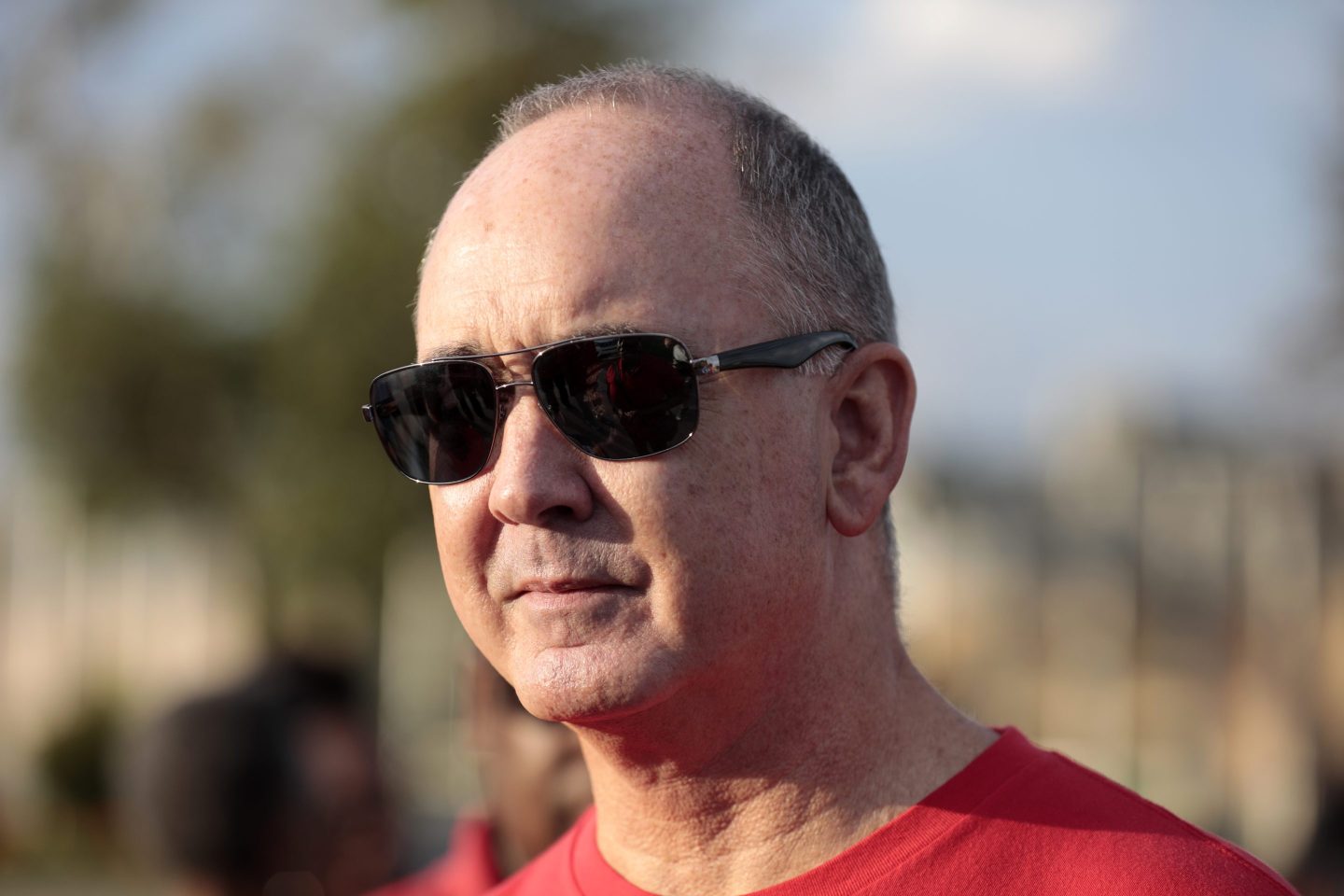
Shawn Fain
The UAW President Shawn Fain's tough bargaining stance is working.Jeff Kowalsky/Bloomberg via Getty Images

The United Auto Workers union isn’t backing down as it bargains for more compensation and better benefits in its new contracts with General Motors, Ford and Stellantis. Under the deft leadership of its president, Shawn Fain, and other officials elected in March 2023, the union has thrown the three companies off balance with a strike that began on Sept. 15 – the minute its prior contracts expired.

Recommended Video

As of Oct. 6, the number of UAW members on strike from their Big Three jobs stood at 25,000 after a gradual climb – meaning that 1 in 6 of the union’s nearly 150,000 autoworkers were on the picket lines instead of going to work.

I’m a labor and business scholar who has studied the history of UAW collective bargaining with the Detroit Three. I’ve observed that the union’s bargaining strategy has three interconnected elements that match what Harvard Program on Negotiations researchers recommend: an emphasis on substance, processes affecting interpersonal relations, and the setup – or context.

3-part strategy

Fain and his leadership team have gotten the upper hand in all three regards.

First, it framed the negotiations by publicizing its members’ demands at the very beginning of formal talks. From the start, the union has clearly argued that the automakers’ “record profits” in recent years meant that autoworkers deserve what it calls “record contracts” to compensate them for past sacrifices, such as lowering pay and reducing benefits for newer hires.

So far, it looks like the UAW is making real gains on the substance of its demands. For example, by Oct. 3, Ford was offering a 26% pay raise, up from about 15% before the strike, and the restoration of annual cost-of-living adjustments to keep up with inflation.

And on Oct. 6, Fain applauded GM’s acceptance of a key union demand: that all workers at their electric-vehicle battery manufacturing plants have the same working conditions and compensation as those who are making vehicles with internal combustion engines and transmissions. I see this as a monumental concession that signals to the other companies that it would be advisable for them to follow suit.

Second, the union unilaterally changed the bargaining process, starting with its optics. The UAW dispensed with the traditional handshake ceremonies it had previously held with auto executives to kick off contract negotiations. “There is no point in having some pomp and circumstance and some big ceremony acting like we’re working together when we’re not,” Fain told reporters in mid-July.

Instead of participating in conciliatory photo-ops, the leadership held meet-and-greets with rank-and-file UAW members at factories belonging to Ford, General Motors and Stellantis – the global automaker that makes Chrysler, Dodge and Ram vehicles – where Fain declared that the union was ready to go on strike.

More significantly in terms of its processes, the UAW is on strike for the first time against all three of the automakers, having abandoned its prior practice of targeting one company at a time. Bargaining simultaneously with all three companies effectively pits them against each other.

One way Fain is doing that is by expanding picket lines in accordance with the progress or lack thereof each of the three automakers makes in meeting the UAW’s demands. Pressure on the companies is building with rolling deadlines at which additional strike sites are announced.

This strategy has led the companies to make concessions, with the union barely having to reciprocate. Although the UAW is now seeking a 36% increase in pay, down from 46%, it has not ratcheted down many of its other demands.

Third, the union has successfully used social media to get its narrative across and to rally public support for its fight with the automakers.

Perhaps the best evidence that the union’s outreach strategy is succeeding is that Joe Biden became the first sitting president to join strikers on a picket line when he made a trip to Belleville, Michigan, on Sept. 26. Once there, Biden expressed support for the UAW’s cause.

The UAW has repeatedly accused the companies of being greedy, often by pointing to what their top executives make: The CEOs of Ford, General Motors and Stellantis each received between $21 million and $29 million in compensation in 2022.

Collaborative vs. adversarial

Research on labor-management negotiations has underscored two basic approaches to bargaining: collaborative and adversarial.

Early on, collective bargaining in the U.S. auto industry was the latter.

By the late 1970s, as the Big Three lost market share to foreign automakers, the UAW was forced into a concessionary bargaining mode. It compromised on pay and benefits to enable manufacturers to compete against nonunion employers – especially in 2007 and 2009 amid weak demand for new vehicles.

In 2023, the UAW has declared those days over.

The union is instead focused on what Walter Reuther, the UAW’s longtime leader, called “the sharing of economic abundance.”

To implement its new strategy, the union is relying on several hard-bargaining tactics: extreme demands, personal attacks, threats and warnings, rolling deadlines and holding unpredictable strikes that are the same for all three companies.

Fain himself described the union’s initial demands as “audacious.”

On top of a roughly 46% wage increase, it sought the restoration of annual cost-of-living adjustments, retiree health care and defined-benefit pensions, the elimination of separate wage tiers for longtime and newer workers and increases in profit-sharing. The UAW also sought a 32-hour work week with pay for 40 hours of labor and the restoration of jobs banks – an abolished system that paid workers at closed factories who did community service.

Some analysts have estimated that accepting all of these conditions would more than double labor costs for the three automakers.

Signs of success

I think it’s clear that the union caught the companies flat-footed in response to this unconventional approach and that the Big Three are making significant concessions in terms of raising pay for the lowest-paid workers.

At the same time, gaps do remain between the union’s demands and what the companies are offering, especially in terms of across-the-board pay increases.

For example, Ford and Stellantis have not yet agreed to the UAW’s demands regarding equal pay, benefits and job protections for electric-vehicle manufacturing workers. And there seems to be no progress toward shortening the work week to four days from five – which may have been more of an optimistic ask than a hard demand.

But with a little give-and-take, I have little doubt that the parties will resolve these matters. And despite this high-stakes dispute, I believe it’s possible for the automakers to wind up with a win if they can accentuate the common interests that bind labor and management to their shared future success.

Marick Masters is Professor of Business and Adjunct Professor of Political Science, Wayne State University.

This article is republished from The Conversation under a Creative Commons license. Read the original article.


At the Fortune Workplace Innovation Summit, Fortune 500 leaders will convene to explore the defining questions shaping the workforce of the future—delivering bold ideas, powerful connections, and actionable insights for building resilient organizations for the decade ahead. Join Fortune May 19–20 in Atlanta. Register now.
About the Authors
By Marick Masters
See full bioRight Arrow Button Icon
By The Conversation
See full bioRight Arrow Button Icon

Latest in Success

Finance
Lorem ipsum dolor sit amet, consectetur adipiscing elit, sed do eiusmod tempor incididunt ut labore et dolore magna aliqua. Ut enim ad minim veniam
By Fortune Editors
October 20, 2025
Finance
Lorem ipsum dolor sit amet, consectetur adipiscing elit, sed do eiusmod tempor incididunt ut labore et dolore magna aliqua. Ut enim ad minim veniam
By Fortune Editors
October 20, 2025
Finance
Lorem ipsum dolor sit amet, consectetur adipiscing elit, sed do eiusmod tempor incididunt ut labore et dolore magna aliqua. Ut enim ad minim veniam
By Fortune Editors
October 20, 2025
Finance
Lorem ipsum dolor sit amet, consectetur adipiscing elit, sed do eiusmod tempor incididunt ut labore et dolore magna aliqua. Ut enim ad minim veniam
By Fortune Editors
October 20, 2025
Finance
Lorem ipsum dolor sit amet, consectetur adipiscing elit, sed do eiusmod tempor incididunt ut labore et dolore magna aliqua. Ut enim ad minim veniam
By Fortune Editors
October 20, 2025
Finance
Lorem ipsum dolor sit amet, consectetur adipiscing elit, sed do eiusmod tempor incididunt ut labore et dolore magna aliqua. Ut enim ad minim veniam
By Fortune Editors
October 20, 2025

Most Popular

Finance
Lorem ipsum dolor sit amet, consectetur adipiscing elit, sed do eiusmod tempor incididunt ut labore et dolore magna aliqua. Ut enim ad minim veniam
By Fortune Editors
October 20, 2025
Finance
Lorem ipsum dolor sit amet, consectetur adipiscing elit, sed do eiusmod tempor incididunt ut labore et dolore magna aliqua. Ut enim ad minim veniam
By Fortune Editors
October 20, 2025
Finance
Lorem ipsum dolor sit amet, consectetur adipiscing elit, sed do eiusmod tempor incididunt ut labore et dolore magna aliqua. Ut enim ad minim veniam
By Fortune Editors
October 20, 2025
Finance
Lorem ipsum dolor sit amet, consectetur adipiscing elit, sed do eiusmod tempor incididunt ut labore et dolore magna aliqua. Ut enim ad minim veniam
By Fortune Editors
October 20, 2025
Finance
Lorem ipsum dolor sit amet, consectetur adipiscing elit, sed do eiusmod tempor incididunt ut labore et dolore magna aliqua. Ut enim ad minim veniam
By Fortune Editors
October 20, 2025
Finance
Lorem ipsum dolor sit amet, consectetur adipiscing elit, sed do eiusmod tempor incididunt ut labore et dolore magna aliqua. Ut enim ad minim veniam
By Fortune Editors
October 20, 2025
Fortune Secondary Logo
Rankings
  • 100 Best Companies
  • Fortune 500
  • Global 500
  • Fortune 500 Europe
  • Most Powerful Women
  • Future 50
  • World’s Most Admired Companies
  • See All Rankings
Sections
  • Finance
  • Fortune Crypto
  • Features
  • Leadership
  • Health
  • Commentary
  • Success
  • Retail
  • Mpw
  • Tech
  • Lifestyle
  • CEO Initiative
  • Asia
  • Politics
  • Conferences
  • Europe
  • Newsletters
  • Personal Finance
  • Environment
  • Magazine
  • Education
Customer Support
  • Frequently Asked Questions
  • Customer Service Portal
  • Privacy Policy
  • Terms Of Use
  • Single Issues For Purchase
  • International Print
Commercial Services
  • Advertising
  • Fortune Brand Studio
  • Fortune Analytics
  • Fortune Conferences
  • Business Development
  • Group Subscriptions
About Us
  • About Us
  • Editorial Calendar
  • Press Center
  • Work At Fortune
  • Diversity And Inclusion
  • Terms And Conditions
  • Site Map
  • About Us
  • Editorial Calendar
  • Press Center
  • Work At Fortune
  • Diversity And Inclusion
  • Terms And Conditions
  • Site Map
  • Facebook icon
  • Twitter icon
  • LinkedIn icon
  • Instagram icon
  • Pinterest icon

Latest in Success

charles
Commentarybenefits
Your employee benefits package is a hostage situation. Here’s the proof — and the fix
By Charles Edward GehrkeMarch 28, 2026
2 hours ago
Future of WorkWorkforce
The rise of ‘social offloading’—when AI replaces your boss’s empathy
By Jacqueline MunisMarch 28, 2026
3 hours ago
SuccessColleges and Universities
As Gen Z regret ‘worthless’ degrees, this CEO sent her kid to college in London—and she’s saving over $50K-a-year. ‘It’s half the price’
By Orianna Rosa RoyleMarch 28, 2026
3 hours ago
Tom Hale, CEO of Oura
Successchief executive officer (CEO)
Gen X boss of $11 billion smart ring company Oura says being a CEO is ‘much harder’ than he thought: ‘It’s pressure, it’s stress, it’s responsibility’
By Emma BurleighMarch 27, 2026
21 hours ago
Worker welding on a ship
SuccessCareers
This AI-proof career faces a 250,000-worker shortage—now the Trump administration is trying to revive the job millennials abandoned
By Preston ForeMarch 27, 2026
21 hours ago
gen z worker
SuccessGen Z
Gen Z will give up $5,000 in pay to log off at 5—but still expects a corner office
By Jake AngeloMarch 27, 2026
23 hours ago

Most Popular

Success
Meetings are not work, says Southwest Airlines CEO—and he’s taking action by blocking his calendar every afternoon from Wednesday to Friday 
By Fortune EditorsMarch 27, 2026
1 day ago
AI
Exclusive: Anthropic acknowledges testing new AI model representing ‘step change’ in capabilities, after accidental data leak reveals its existence
By Fortune EditorsMarch 26, 2026
1 day ago
Personal Finance
Current price of gold as of March 27, 2026
By Fortune EditorsMarch 27, 2026
23 hours ago
Personal Finance
Current price of silver as of Friday, March 27, 2026
By Fortune EditorsMarch 27, 2026
23 hours ago
AI
Exclusive: Anthropic left details of an unreleased model, invite-only CEO retreat, sitting in an unsecured data trove in a significant security lapse
By Fortune EditorsMarch 26, 2026
1 day ago
Commentary
The Treasury just declared the U.S. insolvent. The media missed it
By Fortune EditorsMarch 23, 2026
5 days ago

© 2026 Fortune Media IP Limited. All Rights Reserved. Use of this site constitutes acceptance of our Terms of Use and Privacy Policy | CA Notice at Collection and Privacy Notice | Do Not Sell/Share My Personal Information
FORTUNE is a trademark of Fortune Media IP Limited, registered in the U.S. and other countries. FORTUNE may receive compensation for some links to products and services on this website. Offers may be subject to change without notice.