• Home
  • Latest
  • Fortune 500
  • Finance
  • Tech
  • Leadership
  • Lifestyle
  • Rankings
  • Multimedia
CommentaryAI

Today’s cutting-edge artificial intelligence is based on neuroscience from the ‘50s and ‘60s. Imagine what A.I. could do if it incorporates the latest breakthroughs

By
Subutai Ahmad
Subutai Ahmad
Down Arrow Button Icon
By
Subutai Ahmad
Subutai Ahmad
Down Arrow Button Icon
August 15, 2023, 8:14 AM ET
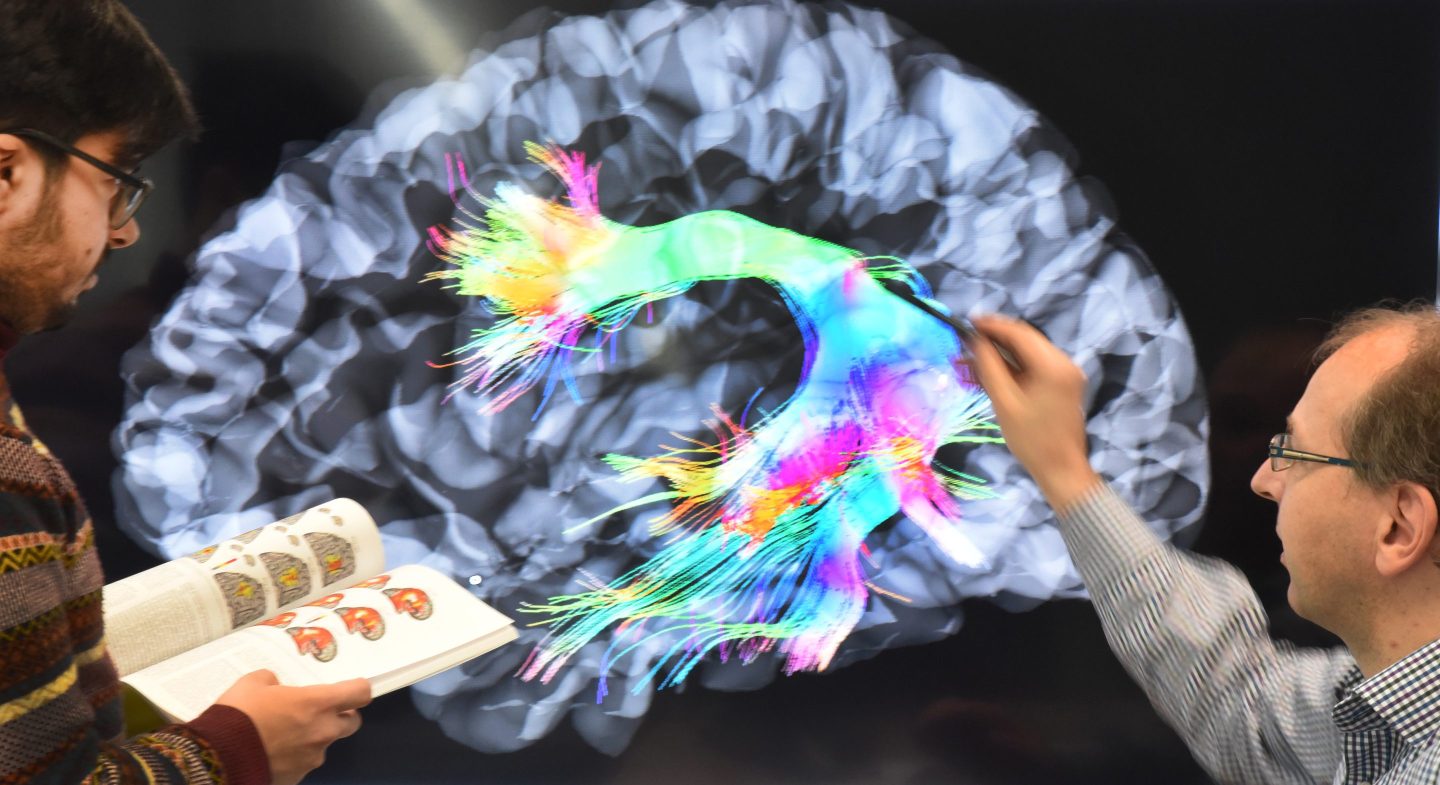
Neuroscience has made massive breakthroughs in the last 30 years that are yet to be applied to A.I.
Neuroscience has made massive breakthroughs in the last 30 years that are yet to be applied to A.I. Waltraud Grubitzsch—picture alliance/Getty Images

With all the hype surrounding ChatGPT, most people are giddy with the promise of artificial intelligence-but they are overlooking its pitfalls. If we want to have genuinely intelligent machines that understand their environments, learn continuously, and help us every day, we need to apply neuroscience to deep-learning A.I. models. Yet with a few exceptions, the two disciplines have remained surprisingly isolated for decades.

That wasn’t always the case. In the 1930s, Donald Hebb and others came up with theories of how neurons learn, inspiring the first deep-learning models. Then in the 1950s and ‘60s, David Hubel and Torsten Wiesel won the Nobel Prize for understanding how the brain’s perceptual system works. That had a big impact on convolutional neural networks, which are a big part of A.I. deep learning today.

The brain’s superpowers

While neuroscience as a field has exploded over the last 20 to 30 years, almost none of these more recent breakthroughs are evident in today’s A.I. systems. If you ask average A.I. professionals today, they’re unaware of these advances and don’t understand how recent neuroscience breakthroughs can have any impact on A.I. That must change if we want A.I. systems that can push the boundaries of science and knowledge.

For example, we now know there’s a common circuit in our brain that can be used as a template for A.I.

The human brain consumes about 20 watts of power for an average adult, or less than half the consumption of a light bulb. In January, ChatGPT consumed roughly as much electricity as 175,000 people. Given ChatGPT’s meteoric rise in adoption, it is now consuming as much electricity per month as 1,000,000 people. A paper from the University of Massachusetts Amherst states that “training a single A.I. model can emit as much carbon as five cars in their lifetimes.” Yet, this analysis pertained to only one training run. When the model is improved by training repeatedly, the energy use is vastly greater.

In addition to energy consumption, the computational resources needed to train these A.I. systems have been doubling every 3.4 months since 2012. Today, with the incredible rise in A.I. usage, it is estimated that inference costs (and power usage) are at least 10 times higher than training costs. It’s completely unsustainable.

The brain not only uses a tiny fraction of the energy used by large A.I. models, but it is also “truly” intelligent. Unlike A.I. systems, the brain can understand the structure of its environment to make complex predictions and carry out intelligent actions. And unlike A.I. models, humans learn continuously and incrementally. Conversely, code doesn’t yet truly “learn.” If an A.I. model makes a mistake today, then it will continue to repeat that mistake until it is retrained using fresh data.

How neuroscience can turbocharge A.I. performance

Despite the escalating need for cross-disciplinary collaboration, cultural differences between neuroscientists and A.I. practitioners make communication difficult. In neuroscience, experiments require a tremendous amount of detail and each finding can take two to three years’ worth of painstaking recordings, measurements, and analysis. When research papers are published, the detail often comes across as gobbledygook to A.I. professionals and computer scientists.

How can we bridge this gap? First, neuroscientists need to step back and explain their concepts from a big-picture standpoint, so their findings make sense to A.I. professionals. Second, we need more researchers with hybrid A.I.-neuroscience roles to help fill the gap between the two fields. Through interdisciplinary collaboration, A.I. researchers can gain a better understanding of how neuroscientific findings can be translated into brain-inspired A.I.

Recent breakthroughs prove that applying brain-based principles to large language models can increase efficiency and sustainability by orders of magnitude. In practice, this means mapping neuroscience-based logic to the algorithms, data structures, and architectures running the A.I. model so that it can learn quickly on very little training data, just like our brains.

Several organizations are making progress in applying brain-based principles to A.I., including government agencies, academic researchers, Intel, Google DeepMind, and small companies like Cortical.io (Cortical uses Numenta’s technology, and Numenta owns some in Cortical as part of our licensing agreement). This work is essential if we are to expand A.I. efforts while simultaneously protecting the climate as deep learning systems today move toward ever-larger models.

From the smallpox vaccine to the light bulb, almost all of humanity’s greatest breakthroughs have come from multiple contributions and interdisciplinary collaboration. That must happen with A.I. and neuroscience as well.

We need a future where A.I. systems are capable of truly interacting with scientists, helping them create and run experiments that push the boundaries of human knowledge. We need A.I. systems that genuinely enhance human capabilities, learning alongside all of us and helping us in all aspects of our lives.

Whether we like it or not, A.I. is here. We must make it sustainable and efficient by bridging the neuroscience-A.I. gap. Only then can we apply the right interdisciplinary research and commercialization, education, policies, and practices to A.I. so it can be used to improve the human condition.

Subutai Ahmad is the CEO of Numenta.

The opinions expressed in Fortune.com commentary pieces are solely the views of their authors and do not necessarily reflect the opinions and beliefs of Fortune.

More must-read commentary published by Fortune:

  • Ripple v. SEC: Why the crypto industry may have celebrated too early
  • Demand for urban real estate will be challenged for the rest of the decade. Here’s how the world’s superstar cities are projected to fare by 2030
  • ‘The Feckless 400’: These companies are still doing business in Russia–and funding Putin’s war
  • Daniel Lubetzky: ‘You can’t make big ESG commitments while failing at the basics of kindness’
Join us at the Fortune Workplace Innovation Summit May 19–20, 2026, in Atlanta. The next era of workplace innovation is here—and the old playbook is being rewritten. At this exclusive, high-energy event, the world’s most innovative leaders will convene to explore how AI, humanity, and strategy converge to redefine, again, the future of work. Register now.
About the Author
By Subutai Ahmad
See full bioRight Arrow Button Icon

Latest in Commentary

Finance
Lorem ipsum dolor sit amet, consectetur adipiscing elit, sed do eiusmod tempor incididunt ut labore et dolore magna aliqua. Ut enim ad minim veniam
By Fortune Editors
October 20, 2025
Finance
Lorem ipsum dolor sit amet, consectetur adipiscing elit, sed do eiusmod tempor incididunt ut labore et dolore magna aliqua. Ut enim ad minim veniam
By Fortune Editors
October 20, 2025
Finance
Lorem ipsum dolor sit amet, consectetur adipiscing elit, sed do eiusmod tempor incididunt ut labore et dolore magna aliqua. Ut enim ad minim veniam
By Fortune Editors
October 20, 2025
Finance
Lorem ipsum dolor sit amet, consectetur adipiscing elit, sed do eiusmod tempor incididunt ut labore et dolore magna aliqua. Ut enim ad minim veniam
By Fortune Editors
October 20, 2025
Finance
Lorem ipsum dolor sit amet, consectetur adipiscing elit, sed do eiusmod tempor incididunt ut labore et dolore magna aliqua. Ut enim ad minim veniam
By Fortune Editors
October 20, 2025
Finance
Lorem ipsum dolor sit amet, consectetur adipiscing elit, sed do eiusmod tempor incididunt ut labore et dolore magna aliqua. Ut enim ad minim veniam
By Fortune Editors
October 20, 2025

Most Popular

Finance
Lorem ipsum dolor sit amet, consectetur adipiscing elit, sed do eiusmod tempor incididunt ut labore et dolore magna aliqua. Ut enim ad minim veniam
By Fortune Editors
October 20, 2025
Finance
Lorem ipsum dolor sit amet, consectetur adipiscing elit, sed do eiusmod tempor incididunt ut labore et dolore magna aliqua. Ut enim ad minim veniam
By Fortune Editors
October 20, 2025
Finance
Lorem ipsum dolor sit amet, consectetur adipiscing elit, sed do eiusmod tempor incididunt ut labore et dolore magna aliqua. Ut enim ad minim veniam
By Fortune Editors
October 20, 2025
Finance
Lorem ipsum dolor sit amet, consectetur adipiscing elit, sed do eiusmod tempor incididunt ut labore et dolore magna aliqua. Ut enim ad minim veniam
By Fortune Editors
October 20, 2025
Finance
Lorem ipsum dolor sit amet, consectetur adipiscing elit, sed do eiusmod tempor incididunt ut labore et dolore magna aliqua. Ut enim ad minim veniam
By Fortune Editors
October 20, 2025
Finance
Lorem ipsum dolor sit amet, consectetur adipiscing elit, sed do eiusmod tempor incididunt ut labore et dolore magna aliqua. Ut enim ad minim veniam
By Fortune Editors
October 20, 2025
Fortune Secondary Logo
Rankings
  • 100 Best Companies
  • Fortune 500
  • Global 500
  • Fortune 500 Europe
  • Most Powerful Women
  • Future 50
  • World’s Most Admired Companies
  • See All Rankings
Sections
  • Finance
  • Fortune Crypto
  • Features
  • Leadership
  • Health
  • Commentary
  • Success
  • Retail
  • Mpw
  • Tech
  • Lifestyle
  • CEO Initiative
  • Asia
  • Politics
  • Conferences
  • Europe
  • Newsletters
  • Personal Finance
  • Environment
  • Magazine
  • Education
Customer Support
  • Frequently Asked Questions
  • Customer Service Portal
  • Privacy Policy
  • Terms Of Use
  • Single Issues For Purchase
  • International Print
Commercial Services
  • Advertising
  • Fortune Brand Studio
  • Fortune Analytics
  • Fortune Conferences
  • Business Development
  • Group Subscriptions
About Us
  • About Us
  • Editorial Calendar
  • Press Center
  • Work At Fortune
  • Diversity And Inclusion
  • Terms And Conditions
  • Site Map
  • About Us
  • Editorial Calendar
  • Press Center
  • Work At Fortune
  • Diversity And Inclusion
  • Terms And Conditions
  • Site Map
  • Facebook icon
  • Twitter icon
  • LinkedIn icon
  • Instagram icon
  • Pinterest icon

Latest in Commentary

EuropeLetter from London
Everyone thought Rishi Sunak would run to Silicon Valley when he lost the U.K. election. So what is he doing giving AI advice to CEOs in Birmingham, England?
By Kamal AhmedMarch 25, 2026
45 minutes ago
retirement
CommentaryRetirement
Our retirement system gets a C-plus; policymakers have an opportunity to make it A grade
By Chris MahoneyMarch 25, 2026
8 hours ago
david-f
CommentaryVenture Capital
Europe has survived 3 energy shocks in 4 years. The only way out is to stop buying power from its enemies
By David FrykmanMarch 25, 2026
9 hours ago
fauci
CommentaryCOVID-19 vaccines
How COVID turned America against science — and what it will take to win it back
By David Blumenthal and James A. MoroneMarch 24, 2026
1 day ago
alex
Commentarydisruption
AI’s disruption is a choice, not a forecast
By Alex StephanyMarch 24, 2026
1 day ago
trump
Commentarynational debt
The Treasury just declared the U.S. insolvent. The media missed it
By Steve H. Hanke and David M. WalkerMarch 23, 2026
2 days ago

Most Popular

Magazine
The youngest-ever female CEO of a Fortune 500 company is fighting Trump's cuts to keep Medicaid strong
By Fortune EditorsMarch 24, 2026
1 day ago
Commentary
The Treasury just declared the U.S. insolvent. The media missed it
By Fortune EditorsMarch 23, 2026
2 days ago
Success
Palantir’s billionaire CEO says only two kinds of people will succeed in the AI era: trade workers — ‘or you’re neurodivergent’
By Fortune EditorsMarch 24, 2026
1 day ago
Energy
Nobel laureate Paul Krugman calls it 'treason': $580 million in suspicious oil futures traded minutes before Trump's Iran reversal
By Fortune EditorsMarch 24, 2026
23 hours ago
Economy
It took 200 years for national debt to hit $1 trillion. Annual interest alone now exceeds that—a 'crushing legacy we must reverse,' says budget chair
By Fortune EditorsMarch 23, 2026
2 days ago
Personal Finance
Current price of oil as of March 24, 2026
By Fortune EditorsMarch 24, 2026
1 day ago

© 2026 Fortune Media IP Limited. All Rights Reserved. Use of this site constitutes acceptance of our Terms of Use and Privacy Policy | CA Notice at Collection and Privacy Notice | Do Not Sell/Share My Personal Information
FORTUNE is a trademark of Fortune Media IP Limited, registered in the U.S. and other countries. FORTUNE may receive compensation for some links to products and services on this website. Offers may be subject to change without notice.