When Overtime Elite held its first pro day in October 2022, its arena in Atlanta was charged with anticipation.
Families, scouts and fans gathered to witness the unveiling of the next generation of prodigious basketball talent. I watched the event on a YouTube livestream, which broadcast the players shooting, running sprints and leaping for slam dunks.
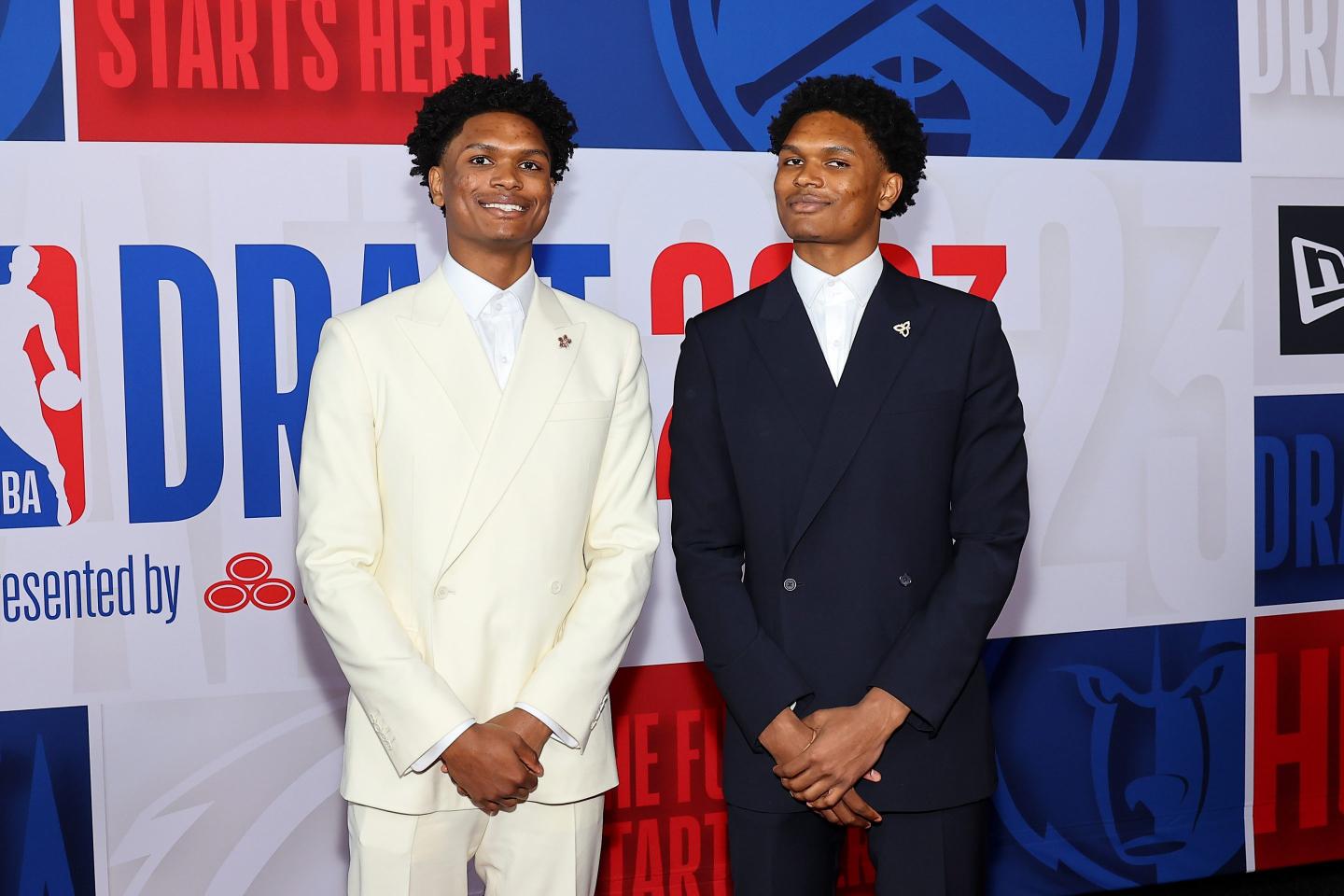
Amid the sea of prospects, it was impossible to ignore the magnetic presence of Amen and Ausar Thompson, the identical twin brothers who were just selected as the fourth and fifth picks, respectively, in the 2023 NBA draft.
The duo symbolizes the transformative potential of Overtime Elite, which offers young athletes a new path to maximize their earning potential outside of the NCAA and propel them to professional stardom.
Founded in 2021, Overtime Elite – often called OTE – functions as an accredited private high school, basketball league and media conglomerate.
It allows its student-athletes to monetize their talents, offering them two options. They can accept a $100,000 minimum salary from the school, which means they must forgo NCAA eligibility. Or they can remain amateurs so they can play in college, with the organization offering scholarships to help them pay their college tuition. OTE also acts as an arm of a media company, Overtime Sports Inc., that provides film crews to help players burnish their personal brands.
As a scholar who has explored how athletes use social media, I see a lot of potential in OTE’s unique blend of education, sports and social media.
At the same time, the organization is ultimately part of a for-profit endeavor: Its parent company, Overtime Sports Inc., earns money off video content documenting OTE team members’ daily lives, practices and gameplay. The company has also raised three separate rounds of venture capital from investors such as NBA star Kevin Durant, Amazon CEO Jeff Bezos and the rapper Drake.
This raises questions about whether OTE players, despite being handsomely compensated, are just as prone to exploitation as NCAA basketball players.
The shortcomings of NIL
The NCAA has long been criticized for exploiting its athletes.
For decades, college athletes couldn’t sign sponsorship deals or receive any form of pay, even as colleges and universities earned billions through TV deals. No matter if an athlete could barely afford food: Any student who accepted money from a business or booster could lose eligibility – which is exactly what happened to college stars such as Jeremy Bloom.
Then, in June 2021, the U.S. Supreme Court ruled that the NCAA’s restrictions on education-related benefits violated antitrust laws.
While the ruling did not directly address athletes’ profiting off their name, image and likeness – what’s known as NIL – the NCAA quickly implemented a policy that allowed athletes to sign endorsement deals, earn money through social media and get paid for being included in video games.
Despite the ability of today’s college athletes to benefit financially from NIL rules, those benefits are mostly limited to those who have existing social media clout or play for basketball and football teams at top Division I programs. Most scholarship players are still full-time students doubling as full-time contract workers for the NCAA. There’s no revenue sharing, and they’re forbidden from receiving salaries as employees of the schools they work so hard to represent.
Even before entering college, many young athletes, particularly those from low-income Black families, face additional challenges. They don’t have the means to pay for the rigorous travel demands of the club basketball circuit. They may have attended struggling high schools that don’t adequately prepare them for college coursework.
Should they make it into college, the NCAA’s rules often prioritize temporary athletic performance over long-term outcomes of its Black student-athletes. For example, in the 2023 NCAA men’s basketball tournament, 11 teams had a 30% or greater gap between the graduation rates of its white and Black basketball student-athletes.
As an academic at a university with one of the top athletic programs in the country, I’ve seen the ramifications of this system play out firsthand. Too many immensely talented athletes from low-income areas – places like my hometown of Chicago – enter college starry-eyed and brimming with hope, only to depart unprepared for a life after sports.
A new path
Sociologist Harry Edwards has consistently advocated for the creation of alternative pathways for athletes outside of the NCAA. Black student-athletes, he argues, deserve more financial and educational support than they’re receiving – and the NCAA, despite its recent NIL allowances, continues to leave those athletes with little guidance on how to leverage their rights and profit off their hard work and talent.
In that sense, OTE may be at the forefront of a seismic shift. Unlike other alternative pathways to professional basketball, such as the NBA’s developmental team, G League Ignite, there’s an emphasis on academics and life skills.
OTE is housed at its arena in Atlanta, Georgia, which doubles as a campus. Through classes and mentorship programs, the school side of the outfit works to teach its students financial literacy, nutrition, time management and entrepreneurship.
To be admitted to OTE, prospective students must go through a rigorous selection process. They’re typically scouted and identified as promising basketball players. But Overtime Elite also says it weighs the character, work ethic and academic potential of its applicants. Currently, OTE has 32 players who are actively in its program.
After viewing the pro day, I spoke with OTE’s head of academics, Maisha Middlesprigger, a former school principal from Washington, D.C.
“Our day isn’t determined by a bell,” she explained. “We focus on depth of understanding through shorter classes. … [We] tailor their learning experiences toward becoming the most compelling candidates for the [NBA] or international [competition].”
“Amen and Ausar,” she added, “epitomize individuals who were once overlooked but have blossomed.”
Schooling students in the art of self-promotion
There’s another unique element to the school. OTE’s parent company, Overtime Sports Inc., helps players create highlight clips that allow them to boost their relatively unknown profiles.
They have their lives on and off the court taped by professional camera crews. And the organization employs film editors who curate clips for athletes to post and share.
In recent research, I explored the growing importance of digital clout among today’s youth – the influence, reputation and visibility that individuals gain through social media.
I argue that the ability of young people – athletes or not – to leverage their online clout for exposure, sponsorships and endorsement deals can create new opportunities and forge new career paths in the digital economy.
In this sense, I see OTE as an important case study. The organization seems to grasp the importance of digital clout; unlike the NCAA, it actually helps players navigate content creation and their NIL rights.
Same song, new tune?
The Thompson twins could be at the forefront of a movement of athletes who decide to opt out of NCAA eligibility in favor of alternative paths.
However some argue that this new model might simply be a different flavor of the same exploitative ideologies that have plagued amateur basketball for years, with sports organizations monetizing younger players while subjecting them to contracts that still don’t reflect their actual worth.
I spoke with Adeoye Adeyemo, a former D-1 football player who’s an education professor at the University of Illinois.
He told me that developing life skills and grasping the business of sports are important, and OTE certainly prepares athletes in that sense.
But he was concerned about the ways in which they’re taught “to navigate a society that disregards their humanity and commodifies their bodies.”
“I’m sure there are intentions for an equal partnership between on-court and off-court activities,” he said. “But how does this unfold in the long run? It’s still too early to tell.”
I’m also a bit ambivalent about what will happen to the extraordinary athletes who attend OTE once they reach adulthood. They’ll be armed with years of experience carefully honing their personal brands, and they’ll know how to directly engage with their fan base.
But what happens to the players who forgo their NCAA eligibility and don’t make it big like the Thompson twins? Will those students be equipped with the life skills to manage whatever money they made while at OTE? Will they be better prepared for a career than if they had accepted a college basketball scholarship?
The NCAA’s refusal to pay its athletes has created an opening for others options. OTE is one of them. However, the extent to which it can truly offer better learning experiences, lasting mentorship and the development of critical life skills remains to be seen.
Jabari M. Evans is Assistant Professor of Race and Media, University of South Carolina.
This article is republished from The Conversation under a Creative Commons license. Read the original article.