• Home
  • Latest
  • Fortune 500
  • Finance
  • Tech
  • Leadership
  • Lifestyle
  • Rankings
  • Multimedia

Trendingnow

1

After forcing workers back to the office, Goldman Sachs and JPMorgan Chase are now letting their staff work remotely—but only for the World Cup

2

The Pentagon said Iran War costs $29 billion, but the real cost is closer to $200 billion—and counting

3

Markets tumble worldwide as Fed resets expectations: $400 billion wiped off SpaceX stock

1

After forcing workers back to the office, Goldman Sachs and JPMorgan Chase are now letting their staff work remotely—but only for the World Cup

2

The Pentagon said Iran War costs $29 billion, but the real cost is closer to $200 billion—and counting

3

Markets tumble worldwide as Fed resets expectations: $400 billion wiped off SpaceX stock
HealthScience

2 of the scientists who worked on the first ancient Swahili DNA analysis say the results weren’t African or Asian—they were both

By
The Conversation
The Conversation
Down Arrow Button Icon
By
The Conversation
The Conversation
Down Arrow Button Icon
March 30, 2023, 1:52 PM ET
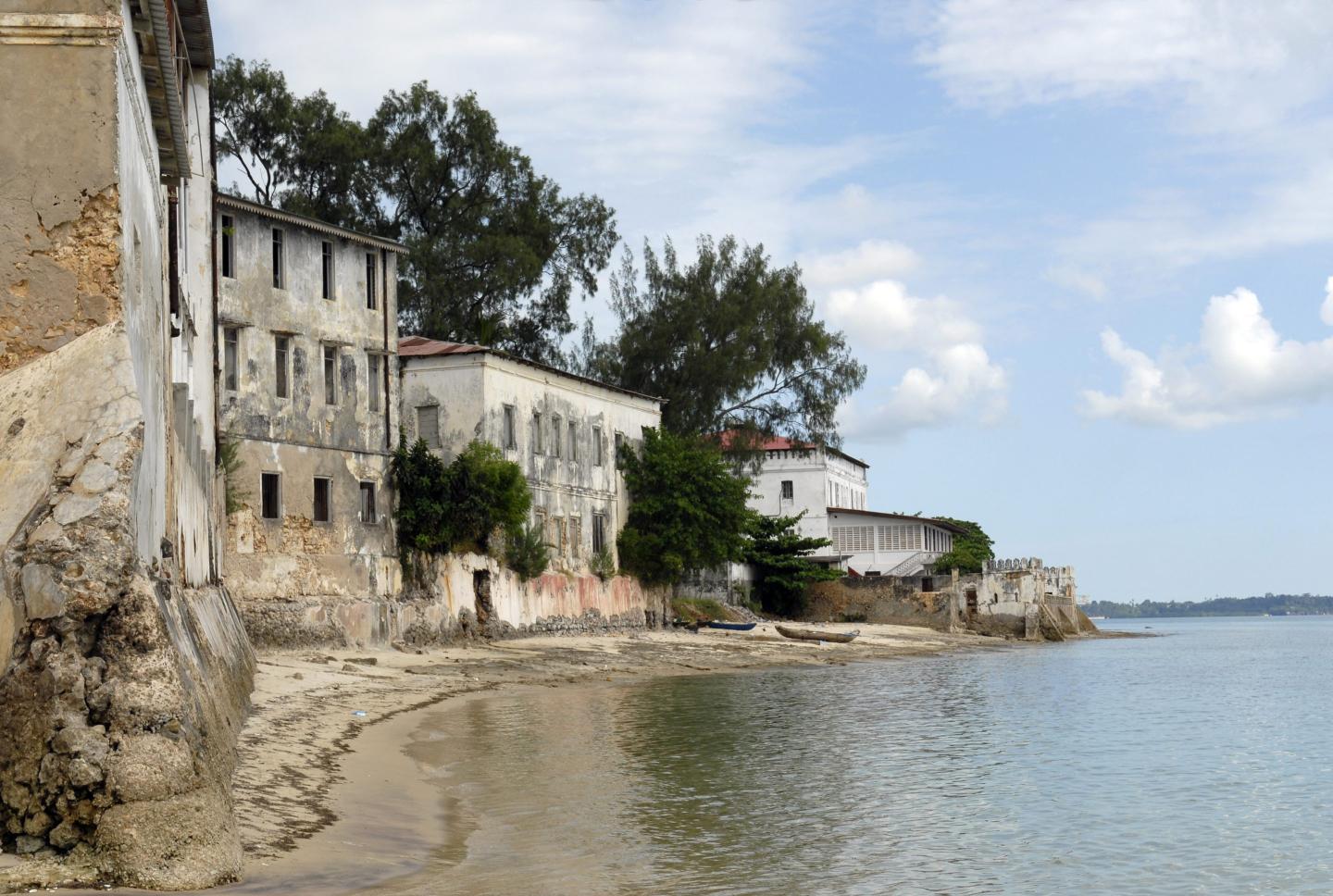
Stone Town, Zanzibar
Stone Town, or Mji Mkongwe in Swahili, is the old part of Zanzibar City, a UNESCO World Heritage Site.Jeff Overs—BBC News & Current Affairs/Getty Images
Add Fortune on Google for similar content.

The legacy of the medieval Swahili civilization is a source of extraordinary pride in East Africa, as reflected in its language being the official tongue of Kenya, Tanzania and even inland countries like Uganda and Rwanda, far from the Indian Ocean shore where the culture developed nearly two millennia ago.

Its ornate stone and coral towns hugged 2,000 miles (3,200 kilometers) of the coast, and its merchants played a linchpin role in the lucrative trade between Africa and lands across the ocean: Arabia, Persia, India, Southeast Asia and China.

By the turn of the second millennium, Swahili people embraced Islam, and some of their grand mosques still stand at the UNESCO World Heritage sites of Lamu in Kenya and Kilwa in Tanzania.

Self-governance ended following Portuguese colonization in the 1500s, with control later shifting to the Omanis (1730-1964), Germans in Tanganyika (1884-1918) and British in Kenya and Uganda (1884-1963). Following independence, coastal peoples were absorbed into the modern nation-states of Somalia, Kenya, Tanzania, Mozambique and Madagascar.

So who were the Swahili people, and where did their ancestors originally come from?

Ironically, the story of Swahili origins has been molded almost entirely by non-Swahili people, a challenge shared with many other marginalized and colonized peoples who are the modern descendants of cultures of the past with extraordinary achievements.

Working with a team of 42 colleagues, including 17 African scholars and multiple members of the Swahili community, we’ve now published the first ancient DNA sequences from peoples of the Swahili civilization. Our results do not provide simple validation for the narratives previously advanced in archaeological, historical or political circles. Instead, they contradict and complicate all of them.

Colonization affected how the story was told

Western archaeologists in the mid-20th century emphasized the connections of the medieval Swahili to Persia and Arabia, sometimes suggesting that their impressive achievements could not have been attained by Africans.

Post-colonial scholars, including one of us (Kusimba), pushed back against that view. Earlier researchers had inflated the importance of non-African influences by focusing on imported objects at Swahili sites. They minimized the vast majority of locally made materials and what they revealed about African industry and innovation.

But viewing Swahili heritage as primarily African or non-African is too simplistic; In fact, both perspectives are byproducts of colonialist biases.

The truth is that colonization of the East African coast did not end with the departure of the British in the middle of the 20th century. Many colonial institutions were inherited and perpetuated by Africans. As modern nation-states formed, with governments controlled by inland peoples, Swahili people continued to be undermined politically and economically, in some cases as much as they had been under foreign rule.

Decades of archaeological research in consultation with local people aimed to address the marginalization of communities of Swahili descent. Our team consulted oral traditions and used ethnoarchaeology and systematic surveys, along with targeted excavations of residential, industrial and cemetery locations. Working with local scholars and elders, we unearthed materials such as pottery, metal and beads; food, house and industrial remains; and imported objects such as porcelain, glass, glass beads and more. Together they revealed the complexity of Swahili everyday life and the peoples’ cosmopolitan Indian Ocean heritage.

Ancient DNA analysis was always one of the most exciting prospects. It offered the hope of using scientific methods to obtain answers to the question of how medieval people are related to earlier groups and to people today, providing a counterweight to narratives imposed from outside. Until a few years ago, this kind of analysis was a dream. But because of a technological revolution in 2010, the number of ancient humans with published genome-scale data has risen from nothing to more than 10,000 today.

Surprises in the ancient DNA

We worked with local communities to determine the best practices for treating human remains in line with traditional Muslim religious sensitivities. Cemetery excavations, sampling and reburial of human remains were carried out in one season, rather than dragging on indefinitely.

Our team generated data from more than 80 people, mostly elite individuals buried in the rich centers of the stone towns. We will need to wait for future work to understand whether their genetic inheritance differed from people without their high status.

Contradicting what we had expected, the ancestry of the people we analyzed was not largely African or Asian. Instead, these backgrounds were intertwined, each contributing about half of the DNA of the people we analyzed.

We found that Asian ancestry in the medieval individuals came largely from Persia (modern-day Iran), and that Asians and African ancestors began mixing at least 1,000 years ago. This picture is almost a perfect match to the Kilwa Chronicle, the oldest narrative told by the Swahili people themselves, and one almost all earlier scholars had dismissed as a kind of fairy tale.

Another surprise was that, mixed in with the Persians, Indians were a significant proportion of the earliest migrants. Patterns in the DNA also suggest that, after the transition to Omani control in the 18th century, Asian immigrants became increasingly Arabian. Later, there was intermarriage with people whose DNA was similar to others in Africa. As a result, some modern people who identify as Swahili have inherited relatively little DNA from medieval peoples like those we analyzed, while others have more.

One of the most revealing patterns our genetic analysis identified was that the overwhelming majority of male-line ancestors came from Asia, while female-line ancestors came from Africa. This finding must reflect a history of Persian males traveling to the coast and having children with local women.

One of us (Reich) initially hypothesized that these patterns might reflect Asian men forcibly marrying African women because similar genetic signatures in other populations are known to reflect such violent histories. But this theory does not account for what is known about the culture, and there is a more likely explanation.

Traditional Swahili society is similar to many other East African Bantu cultures in being substantially matriarchal – it places much economic and social power in the hands of women. In traditional Swahili societies even today, ownership of stone houses often passes down the female line. And there is a long recorded history of female rulers, beginning with Mwana Mkisi, ruler of Mombasa, as recorded by the Portuguese as early as the 1500s, down to Sabani binti Ngumi, ruler of Mikindani in Tanzania as late as 1886.

Our best guess is that Persian men allied with and married into elite families and adopted local customs to enable them to be more successful traders. The fact that their children passed down the language of their mothers, and that encounters with traditionally patriarchal Persians and Arabians and conversion to Islam did not change the coast’s African matriarchal traditions, confirms that this was not a simple history of African women being exploited. African women retained critical aspects of their culture and passed it down for many generations.

How do these results gleaned from ancient DNA restore heritage for the Swahili? Objective knowledge about the past has great potential to help marginalized peoples. By making it possible to challenge and overturn narratives imposed from the outside for political or economic ends, scientific research provides a meaningful and underappreciated tool for righting colonial wrongs.

Chapurukha Kusimba is Professor of Anthropology, University of South Florida and David Reich is Professor of Genetics and of Human Evolutionary Biology, Harvard University.

This article is republished from The Conversation under a Creative Commons license. Read the original article.

Subscribe to Well Adjusted, our newsletter full of simple strategies to work smarter and live better, from the Fortune Well team. Sign up today.
About the Author
By The Conversation
See full bioRight Arrow Button Icon
Add Fortune on Google for similar content.

Latest in Health

Finance
Lorem ipsum dolor sit amet, consectetur adipiscing elit, sed do eiusmod tempor incididunt ut labore et dolore magna aliqua. Ut enim ad minim veniam
By Fortune Editors
October 20, 2025
Finance
Lorem ipsum dolor sit amet, consectetur adipiscing elit, sed do eiusmod tempor incididunt ut labore et dolore magna aliqua. Ut enim ad minim veniam
By Fortune Editors
October 20, 2025
Finance
Lorem ipsum dolor sit amet, consectetur adipiscing elit, sed do eiusmod tempor incididunt ut labore et dolore magna aliqua. Ut enim ad minim veniam
By Fortune Editors
October 20, 2025
Finance
Lorem ipsum dolor sit amet, consectetur adipiscing elit, sed do eiusmod tempor incididunt ut labore et dolore magna aliqua. Ut enim ad minim veniam
By Fortune Editors
October 20, 2025
Finance
Lorem ipsum dolor sit amet, consectetur adipiscing elit, sed do eiusmod tempor incididunt ut labore et dolore magna aliqua. Ut enim ad minim veniam
By Fortune Editors
October 20, 2025
Finance
Lorem ipsum dolor sit amet, consectetur adipiscing elit, sed do eiusmod tempor incididunt ut labore et dolore magna aliqua. Ut enim ad minim veniam
By Fortune Editors
October 20, 2025

Most Popular

Finance
Lorem ipsum dolor sit amet, consectetur adipiscing elit, sed do eiusmod tempor incididunt ut labore et dolore magna aliqua. Ut enim ad minim veniam
By Fortune Editors
October 20, 2025
Finance
Lorem ipsum dolor sit amet, consectetur adipiscing elit, sed do eiusmod tempor incididunt ut labore et dolore magna aliqua. Ut enim ad minim veniam
By Fortune Editors
October 20, 2025
Finance
Lorem ipsum dolor sit amet, consectetur adipiscing elit, sed do eiusmod tempor incididunt ut labore et dolore magna aliqua. Ut enim ad minim veniam
By Fortune Editors
October 20, 2025
Finance
Lorem ipsum dolor sit amet, consectetur adipiscing elit, sed do eiusmod tempor incididunt ut labore et dolore magna aliqua. Ut enim ad minim veniam
By Fortune Editors
October 20, 2025
Finance
Lorem ipsum dolor sit amet, consectetur adipiscing elit, sed do eiusmod tempor incididunt ut labore et dolore magna aliqua. Ut enim ad minim veniam
By Fortune Editors
October 20, 2025
Finance
Lorem ipsum dolor sit amet, consectetur adipiscing elit, sed do eiusmod tempor incididunt ut labore et dolore magna aliqua. Ut enim ad minim veniam
By Fortune Editors
October 20, 2025
Fortune Secondary Logo
Rankings
  • 100 Best Companies
  • Fortune 500
  • Global 500
  • Fortune 500 Europe
  • Most Powerful Women
  • World's Most Admired Companies
  • See All Rankings
  • Lists Calendar
Sections
  • Finance
  • Fortune Crypto
  • Features
  • Leadership
  • Health
  • Commentary
  • Success
  • Retail
  • Mpw
  • Tech
  • Lifestyle
  • CEO Initiative
  • Asia
  • Politics
  • Conferences
  • Europe
  • Newsletters
  • Personal Finance
  • Environment
  • Magazine
  • Education
Customer Support
  • Frequently Asked Questions
  • Customer Service Portal
  • Privacy Policy
  • Terms Of Use
  • Single Issues For Purchase
  • International Print
Commercial Services
  • Advertising
  • Fortune Brand Studio
  • Fortune Analytics
  • Fortune Conferences
  • Business Development
  • Group Subscriptions
About Us
  • About Us
  • Press Center
  • Work At Fortune
  • Terms And Conditions
  • Site Map
  • About Us
  • Press Center
  • Work At Fortune
  • Terms And Conditions
  • Site Map
  • Facebook icon
  • Twitter icon
  • LinkedIn icon
  • Instagram icon
  • Pinterest icon

Latest in Health

mg
CommentaryHealth
The ‘tech neck’ time bomb: why 43 million young Americans could cripple U.S. health care within a generation
By Michael GerlingJune 24, 2026
6 hours ago
UPS workers process boxes in a sorting facility.
North AmericaUPS
UPS is shelling out nearly $50 million on temperature-controlled facilities to meet the booming demand for GLP-1 deliveries
By Sasha RogelbergJune 23, 2026
21 hours ago
dr
HealthCancer
The U.S. cut cancer deaths by 34% since 1991—but not in 458 rural counties
By Arthur Cosby and The ConversationJune 23, 2026
23 hours ago
Woman hides from the sun in front of Big Ben in London
EconomyEurope
‘London isn’t just calling—it’s cooking.’ Europe’s largest economies face over $600 billion in heat-driven losses by 2030
By Tristan BoveJune 23, 2026
24 hours ago
Doctor giving patient injection in volunteer clinic
HealthHealth
For the first time ever, no young women in England died of cervical cancer. In the U.S., RFK Jr.’s vaccine skepticism stalls HPV progress
By Catherina GioinoJune 23, 2026
1 day ago
heat
Environmentclimate change
Planet’s heat bill comes due as one billion more people face extreme heat stress than in the 1970s
By Alexa St. John and The Associated PressJune 22, 2026
2 days ago

Most Popular

After forcing workers back to the office, Goldman Sachs and JPMorgan Chase are now letting their staff work remotely—but only for the World Cup
Success
After forcing workers back to the office, Goldman Sachs and JPMorgan Chase are now letting their staff work remotely—but only for the World Cup
By Orianna Rosa RoyleJune 23, 2026
1 day ago
The Pentagon said Iran War costs $29 billion, but the real cost is closer to $200 billion—and counting
Economy
The Pentagon said Iran War costs $29 billion, but the real cost is closer to $200 billion—and counting
By Jacqueline MunisJune 24, 2026
10 hours ago
Markets tumble worldwide as Fed resets expectations: $400 billion wiped off SpaceX stock
Banking
Markets tumble worldwide as Fed resets expectations: $400 billion wiped off SpaceX stock
By Jim EdwardsJune 23, 2026
1 day ago
Current price of oil as of June 23, 2026
Personal Finance
Current price of oil as of June 23, 2026
By Joseph HostetlerJune 23, 2026
1 day ago
Current price of gold as of June 23, 2026
Personal Finance
Current price of gold as of June 23, 2026
By Danny BakstJune 23, 2026
1 day ago
Texas and Charlotte used to build huge McMansions—now they're copying the California design tricks they once mocked
Real Estate
Texas and Charlotte used to build huge McMansions—now they're copying the California design tricks they once mocked
By Sydney LakeJune 22, 2026
2 days ago

© 2026 Fortune Media IP Limited. All Rights Reserved. Use of this site constitutes acceptance of our Terms of Use and Privacy Policy | CA Notice at Collection and Privacy Notice | Do Not Sell/Share My Personal Information
FORTUNE is a trademark of Fortune Media IP Limited, registered in the U.S. and other countries. FORTUNE may receive compensation for some links to products and services on this website. Offers may be subject to change without notice.