• Home
  • Latest
  • Fortune 500
  • Finance
  • Tech
  • Leadership
  • Lifestyle
  • Rankings
  • Multimedia
HealthScience

From grave-robbing to unclaimed poor to donating your body after death: Here’s a look at the strange history of medical cadavers

By
Susan Lawrence
Susan Lawrence
,
Susan E. Lederer
Susan E. Lederer
, and
The Conversation
The Conversation
Down Arrow Button Icon
By
Susan Lawrence
Susan Lawrence
,
Susan E. Lederer
Susan E. Lederer
, and
The Conversation
The Conversation
Down Arrow Button Icon
March 10, 2023, 2:26 PM ET
Medical examiner
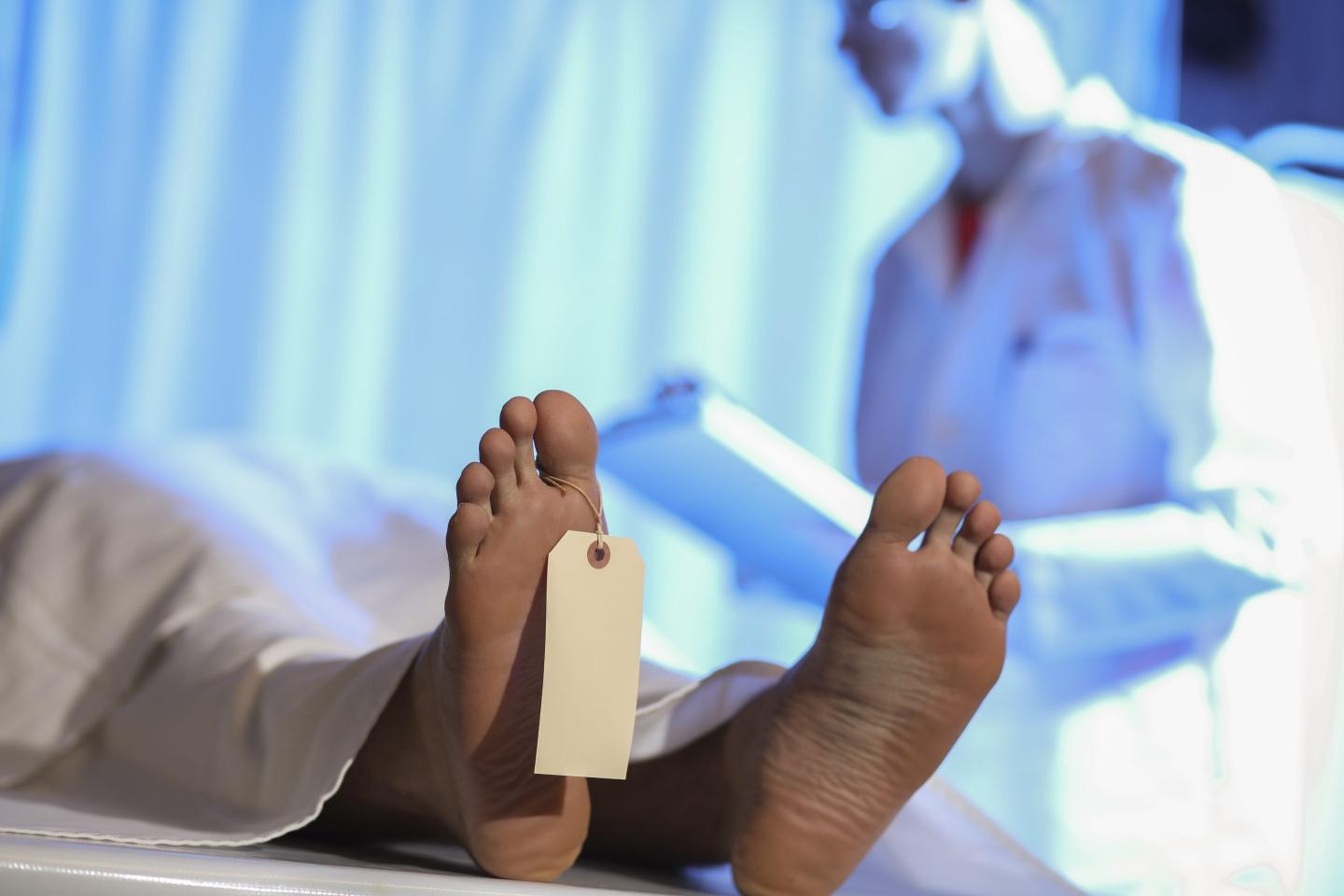
Where do medical cadavers come from?Getty Images

In 1956, Alma Merrick Helms announced that she was bound for Stanford University. But she would not be attending classes. Upon learning that there was a “special shortage of women’s bodies” for medical students, this semiretired actress had filled out forms to donate her corpse to the medical college upon her death.

As historians of medicine, we had long been familiar with the tragic tales of 18th- and 19th-century grave robbing. Medical students had to snatch unearthed bodies if they wanted corpses to dissect.

But there was little to no discussion of the thousands of Americans in the 20th century who wanted an alternative to traditional burial—those men and women who gave their bodies to medical education and research.

So we decided to research this especially physical form of philanthropy: people who literally give themselves away. We are now writing a book on this topic.

Grave-robbing and executed criminals

As more and more medical schools opened before the Civil War, the profession faced a dilemma. Doctors needed to cut open dead bodies to learn anatomy because no one wanted to be operated on by a surgeon who had only been trained by studying books.

But for most Americans, cutting up dead human beings was sacrilegious, disrespectful, and disgusting.

According to the ethos of the day, only criminals deserved such a fate after death, and judges intensified murderers’ death sentences by adding the insult of dissection after their executions. As in life, the bodies of enslaved people were also exploited in death, either consigned for dissection by their masters or robbed from their graves.

Yet there were never enough legally available bodies, so grave robbing flourished.

The unclaimed poor

To meet the medical profession’s growing demand for cadavers, Massachusetts enacted the first anatomy law. This measure, passed in 1831, made the bodies of the unclaimed poor available for dissection in medical schools and hospitals.

With more medical schools opening and grave-robbing scandals pushing politicians to act, similar legislation eventually took effect across the United States.

One of the most visible incidents occurred when the body of former Rep. John Scott Harrison, both the son and the father of U.S. presidents, involuntarily turned up on an Ohio dissecting table in 1878.

In many states, kin and friends could claim a body that would otherwise be destined for dissection, but only if they could pay burial costs.

Donated bodies

Yet not everyone shared the horror at the very idea of being dissected.

By the late 19th century a growing number of Americans were willing to let medical students cut up their bodies before eventual burial or cremation. It did not apparently frighten or disgust them.

Doctors volunteered, but so did nurses, store owners, actors, academics, factory workers and freethinkers—even prisoners about to be executed. Some were people who simply sought to avoid funeral expenses.

Other Americans hoped that doctors would use their bodies to research their diseases, while others wanted to enable “medical science to enlarge its knowledge for the good of mankind,” as George Young, a former wagon-maker, requested before he died in 1901.

Cornea transplants

By the late 1930s, advances in cornea transplant surgery made it possible for Americans to gift their eyes to restore the sight of blind and visually impaired men, women and children.

Along with World War II blood drives, heartwarming stories about corneal transplants spread a radically new understanding of corporeal generosity.

As efforts to attract donors who would pledge their eyes at death spread in the 1940s and early 1950s, so too did a new problem for anatomists: a decline in the number of unclaimed bodies.

Anatomists blamed a host of factors: rising prosperity in the postwar years; new laws that allowed county, city, and state welfare departments to bury the unclaimed; veterans’ death benefits; Social Security death benefits; and outreach by church groups and fraternal orders to take care of their poverty-stricken members.

Dear Abby and Reader’s Digest

By the mid-1950s concerns arose about cadaver shortages for anatomy classes. But media coverage of people who had chosen to donate their bodies started to sway others to follow suit. Good examples include a Dear Abby advice column published in 1958 and a Reader’s Digest article in 1961.

In 1962, Unitarian advocate Ernest Morgan published “A Manual of Simple Burial,” which promoted memorial services as alternatives to lavish funerals. He included a directory of medical schools and dental schools that accepted whole-body donations.

Journalist Jessica Mitford, in her wildly popular 1963 book that condemned the funeral industry, The American Way of Death, also endorsed that practice. She helped make giving your body to science a respectable, even noble, alternative to expensive conventional burials.

In the early 1960s, Protestant, Catholic, and Reform Jewish leaders also came out in favor of donating bodies to science.

By the late 1960s and early 1970s, some anatomy departments began to organize memorial services to acknowledge donors and provide some closure for their loved ones.

Word of such efforts further encouraged whole-body donation.

Letters of encouragement

We reviewed dozens of unpublished letters to and from donors in the 1950s to the early 1970s, in which anatomy professors encouraged potential whole-body donors to see themselves as heroically giving to medical science. Early donors frequently expressed this altruistic vision, wanting their mortal shells to participate in advancing knowledge.

By the mid-1980s, most medical and dental schools relied on donated bodies to teach anatomy, although a few unclaimed bodies still make their way today to medical schools. Technology has revolutionized anatomy teaching, as with the National Library of Medicine’s Visible Human Project, but cadavers are still needed.

Images and models cannot replace hands-on experience with the human body.

Where many Americans once regarded medical students as “butchers” for exploiting their beloved dead, contemporary students honor what some of these future doctors call their “first patients” for the precious gift they have been given.

Susan Lawrence is Profesor of History, University of Tennessee, and Susan E. Lederer is Professor of Medical History and Bioethics, University of Wisconsin-Madison.

This article is republished from The Conversation under a Creative Commons license. Read the original article.

Fortune's CFO Daily newsletter is the must-read analysis every finance professional needs to get ahead. Sign up today.

About the Authors
By Susan Lawrence
See full bioRight Arrow Button Icon
By Susan E. Lederer
See full bioRight Arrow Button Icon
By The Conversation
See full bioRight Arrow Button Icon

Latest in Health

Finance
Lorem ipsum dolor sit amet, consectetur adipiscing elit, sed do eiusmod tempor incididunt ut labore et dolore magna aliqua. Ut enim ad minim veniam
By Fortune Editors
October 20, 2025
Finance
Lorem ipsum dolor sit amet, consectetur adipiscing elit, sed do eiusmod tempor incididunt ut labore et dolore magna aliqua. Ut enim ad minim veniam
By Fortune Editors
October 20, 2025
Finance
Lorem ipsum dolor sit amet, consectetur adipiscing elit, sed do eiusmod tempor incididunt ut labore et dolore magna aliqua. Ut enim ad minim veniam
By Fortune Editors
October 20, 2025
Finance
Lorem ipsum dolor sit amet, consectetur adipiscing elit, sed do eiusmod tempor incididunt ut labore et dolore magna aliqua. Ut enim ad minim veniam
By Fortune Editors
October 20, 2025
Finance
Lorem ipsum dolor sit amet, consectetur adipiscing elit, sed do eiusmod tempor incididunt ut labore et dolore magna aliqua. Ut enim ad minim veniam
By Fortune Editors
October 20, 2025
Finance
Lorem ipsum dolor sit amet, consectetur adipiscing elit, sed do eiusmod tempor incididunt ut labore et dolore magna aliqua. Ut enim ad minim veniam
By Fortune Editors
October 20, 2025

Most Popular

Finance
Lorem ipsum dolor sit amet, consectetur adipiscing elit, sed do eiusmod tempor incididunt ut labore et dolore magna aliqua. Ut enim ad minim veniam
By Fortune Editors
October 20, 2025
Finance
Lorem ipsum dolor sit amet, consectetur adipiscing elit, sed do eiusmod tempor incididunt ut labore et dolore magna aliqua. Ut enim ad minim veniam
By Fortune Editors
October 20, 2025
Finance
Lorem ipsum dolor sit amet, consectetur adipiscing elit, sed do eiusmod tempor incididunt ut labore et dolore magna aliqua. Ut enim ad minim veniam
By Fortune Editors
October 20, 2025
Finance
Lorem ipsum dolor sit amet, consectetur adipiscing elit, sed do eiusmod tempor incididunt ut labore et dolore magna aliqua. Ut enim ad minim veniam
By Fortune Editors
October 20, 2025
Finance
Lorem ipsum dolor sit amet, consectetur adipiscing elit, sed do eiusmod tempor incididunt ut labore et dolore magna aliqua. Ut enim ad minim veniam
By Fortune Editors
October 20, 2025
Finance
Lorem ipsum dolor sit amet, consectetur adipiscing elit, sed do eiusmod tempor incididunt ut labore et dolore magna aliqua. Ut enim ad minim veniam
By Fortune Editors
October 20, 2025
Fortune Secondary Logo
Rankings
  • 100 Best Companies
  • Fortune 500
  • Global 500
  • Fortune 500 Europe
  • Most Powerful Women
  • World's Most Admired Companies
  • See All Rankings
  • Lists Calendar
Sections
  • Finance
  • Fortune Crypto
  • Features
  • Leadership
  • Health
  • Commentary
  • Success
  • Retail
  • Mpw
  • Tech
  • Lifestyle
  • CEO Initiative
  • Asia
  • Politics
  • Conferences
  • Europe
  • Newsletters
  • Personal Finance
  • Environment
  • Magazine
  • Education
Customer Support
  • Frequently Asked Questions
  • Customer Service Portal
  • Privacy Policy
  • Terms Of Use
  • Single Issues For Purchase
  • International Print
Commercial Services
  • Advertising
  • Fortune Brand Studio
  • Fortune Analytics
  • Fortune Conferences
  • Business Development
  • Group Subscriptions
About Us
  • About Us
  • Press Center
  • Work At Fortune
  • Terms And Conditions
  • Site Map
  • About Us
  • Press Center
  • Work At Fortune
  • Terms And Conditions
  • Site Map
  • Facebook icon
  • Twitter icon
  • LinkedIn icon
  • Instagram icon
  • Pinterest icon

Latest in Health

joaquin
Commentary250 Years of Innovation
Johnson & Johnson CEO: America’s innovation advantage starts with health 
By Joaquin DuatoMay 9, 2026
3 minutes ago
You’re probably safe from the Hantavirus outbreak, but here’s what you absolutely must not do, experts say
PoliticsCoronavirus
You’re probably safe from the Hantavirus outbreak, but here’s what you absolutely must not do, experts say
By Catherina GioinoMay 8, 2026
15 hours ago
The Best Online Personal Trainers of 2026: In-Depth Workout Coaching at Home
HealthDietary Supplements
The Best Online Personal Trainers of 2026: In-Depth Workout Coaching at Home
By Emily PharesMay 8, 2026
16 hours ago
naomi
Commentarymental health
Naomi Osaka: the things I didn’t do to succeed
By Naomi OsakaMay 8, 2026
1 day ago
collins
PoliticsElections
73-year-old Susan Collins has been a senator for decades. She only just disclosed a benign essential tremor
By Patrick Whittle, Kimberlee Kruesi and The Associated PressMay 7, 2026
2 days ago
Addiction, emotional distress, dread of dull tasks: AI models ‘seem to increasingly behave’ as though they’re sentient, worrying study shows
AIScience
Addiction, emotional distress, dread of dull tasks: AI models ‘seem to increasingly behave’ as though they’re sentient, worrying study shows
By Catherina GioinoMay 7, 2026
2 days ago

Most Popular

California farmers must destroy 420,000 peach trees after Del Monte closes its canneries and cancels more than $550 million in long-term contracts
North America
California farmers must destroy 420,000 peach trees after Del Monte closes its canneries and cancels more than $550 million in long-term contracts
By Sasha RogelbergMay 7, 2026
2 days ago
'Blue dot fever' plagues musicians like Post Malone, Meghan Trainor, and Zayn as a growing list of artists cancel tours due to lagging ticket sales
Arts & Entertainment
'Blue dot fever' plagues musicians like Post Malone, Meghan Trainor, and Zayn as a growing list of artists cancel tours due to lagging ticket sales
By Dave Lozo and Morning BrewMay 7, 2026
2 days ago
A Michigan farm town voted down plans for a giant OpenAI-Oracle data center. Weeks later, construction began
Magazine
A Michigan farm town voted down plans for a giant OpenAI-Oracle data center. Weeks later, construction began
By Sharon GoldmanMay 6, 2026
3 days ago
Current price of oil as of May 8, 2026
Personal Finance
Current price of oil as of May 8, 2026
By Joseph HostetlerMay 8, 2026
23 hours ago
U.S. Treasury will have to borrow $2 trillion this year just to continue functioning—more than $166 billion every month
Economy
U.S. Treasury will have to borrow $2 trillion this year just to continue functioning—more than $166 billion every month
By Eleanor PringleMay 7, 2026
2 days ago
Airbnb CEO Brian Chesky warns two types of people won’t survive the AI era: ‘pure people managers’ and workers who resist change
Success
Airbnb CEO Brian Chesky warns two types of people won’t survive the AI era: ‘pure people managers’ and workers who resist change
By Emma BurleighMay 7, 2026
2 days ago

© 2026 Fortune Media IP Limited. All Rights Reserved. Use of this site constitutes acceptance of our Terms of Use and Privacy Policy | CA Notice at Collection and Privacy Notice | Do Not Sell/Share My Personal Information
FORTUNE is a trademark of Fortune Media IP Limited, registered in the U.S. and other countries. FORTUNE may receive compensation for some links to products and services on this website. Offers may be subject to change without notice.