• Home
  • Latest
  • Fortune 500
  • Finance
  • Tech
  • Leadership
  • Lifestyle
  • Rankings
  • Multimedia

Trendingnow

1

After forcing workers back to the office, Goldman Sachs and JPMorgan Chase are now letting their staff work remotely—but only for the World Cup

2

The Pentagon said Iran War costs $29 billion, but the real cost is closer to $200 billion—and counting

3

Current price of oil as of June 23, 2026

1

After forcing workers back to the office, Goldman Sachs and JPMorgan Chase are now letting their staff work remotely—but only for the World Cup

2

The Pentagon said Iran War costs $29 billion, but the real cost is closer to $200 billion—and counting

3

Current price of oil as of June 23, 2026
Successtransit

There’s a silver-bullet solution to big cities’ remote work and transit crises, says author of ‘The Great American Transit Disaster’

By
Nicholas Dagen Bloom
and
The Conversation
The Conversation
Down Arrow Button Icon
By
Nicholas Dagen Bloom
and
The Conversation
The Conversation
Down Arrow Button Icon
March 3, 2023, 11:21 AM ET
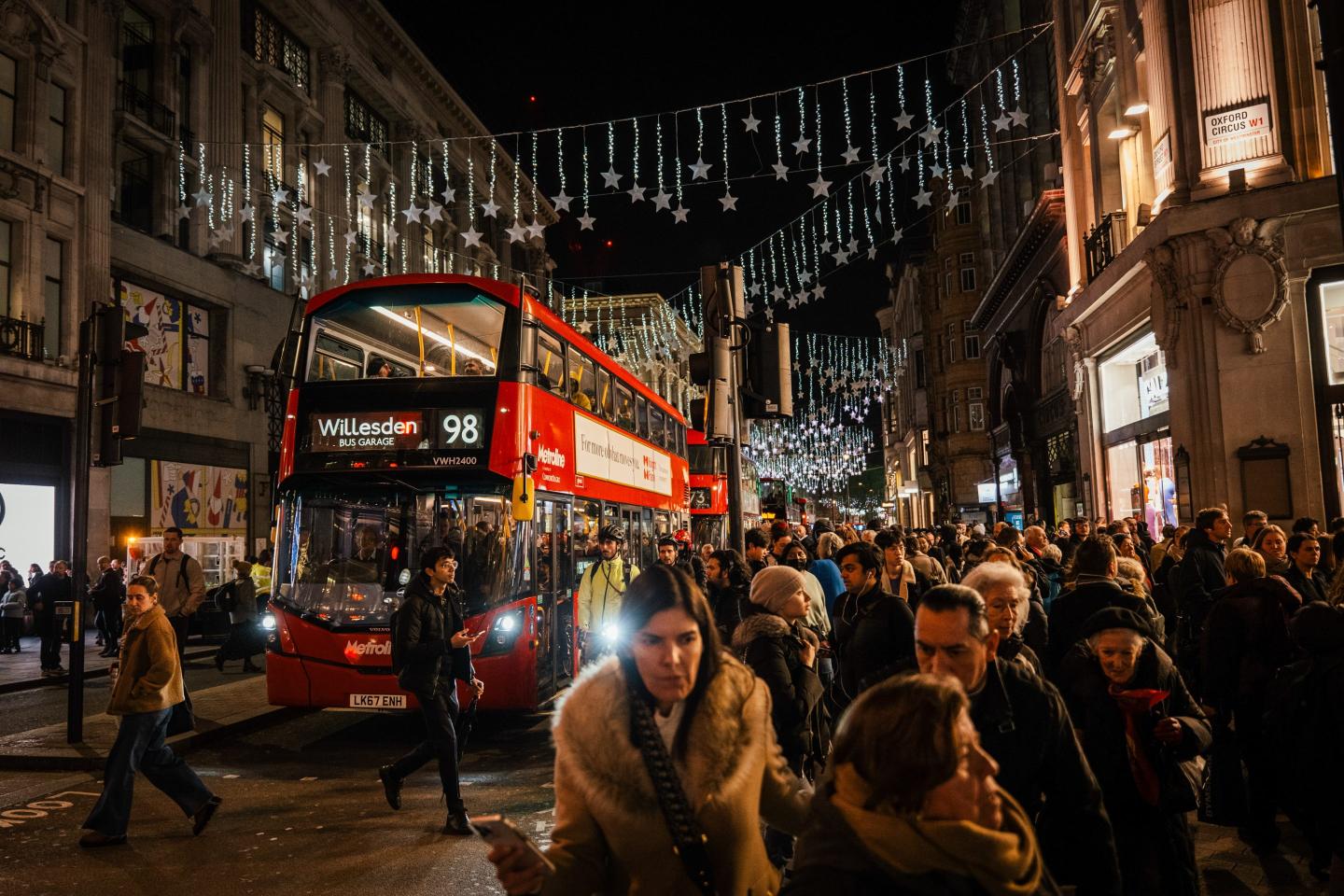
London bus
London's shopping district Oxford Street during the 2022 holiday season, with the city's famous red buses.Jose Sarmento Matos/Bloomberg via Getty Images
Add Fortune on Google for similar content.

Public transit in the U.S. is in a sorry state – aging, underfunded and losing riders, especially since the COVID-19 pandemic. Many proposed solutions focus on new technologies, like self-driving cars and flying taxis. But as a researcher in urban policy and planning, I see more near-term promise in a mode that’s been around for a century: the city bus.

Today, buses in many parts of the U.S. are old and don’t run often enough or serve all the places where people need to go. But this doesn’t reflect the bus’s true capability. Instead, as I see it, it’s the result of cities, states and federal leaders failing to subsidize a quality public service.

As I show in my new book, “The Great American Transit Disaster: A Century of Austerity, Auto-Centric Planning, and White Flight,” few U.S. politicians have focused on bus riders’ experiences over the past half-century. And many executives have lavished precious federal capital dollars on building new light, rapid and commuter rail lines, in hope of attracting suburban riders back to city centers and mass transit.

This was never a great strategy to begin with, and the pandemic-era flight of knowledge workers to home offices and hybrid schedules has left little to show for decades of rail-centric efforts. Meanwhile, countries in Europe and Latin America have out-innovated the U.S. in providing quality bus service.

But it doesn’t have to be this way. Many U.S. cities are coming around to the idea that buses are the future of public transit and are working to make that vision real. And the Bipartisan Infrastructure Law enacted in 2021 is providing billions of dollars for new buses and related facilities.

Buses as disruptors

A century ago, motorized buses were the technological wonder of their day. Rolling fast on tires over newly paved streets, buses upended urban rail transit by freeing riders from aging, crowded, screeching streetcars. In 1922, American buses carried 404 million passengers; by 1930, they were carrying 2.5 billion yearly.

At that time, transit lines were mostly privately owned. But this model was failing as riders became car drivers, new zoning laws prioritized car-friendly single-family housing and government regulators battled transit companies over fares and taxes.

Transit executives trying to eke out a profit saw buses as a way to reduce spending on track maintenance and labor costs for “two man” operated streetcars. City leaders and planners also embraced buses, which helped them justify removing streetcar tracks to make streets more navigable for cars. From the 1920s through the 1960s, nearly all U.S. streetcar lines were replaced with buses powered by either internal combustion engines or electric overhead wires.

This wasn’t just a U.S. trend. Toronto massively extended bus service across a vast metropolitan area between 1954 and 1974, using buses to feed suburban riders to a new subway system and a few remaining streetcar lines. By 1952, London’s managers had replaced streetcars with the city’s signature fleet of double-decker buses, which complemented its legendary Underground service.

Across Europe, cities relied on buses to support and complement their modernizing tram or subway networks. Political leaders provided deep subsidies to deliver better bus and rail service.

The auto-centric US path

In the U.S., however, federal investments in the same time frame focused on building a national highway system to serve private automobiles. Lacking tax subsidies, bus networks could not compete with cheap cars and government-funded highways. Aging buses and infrequent service became the default postwar reality – and those buses had to travel on local streets crowded with private cars.

Between 1945 and 1960, U.S. transit companies and agencies typically lost half or more of their riders as white Americans moved to urban fringes or suburbs and became car commuters. Bus service remained concentrated in older, central-city neighborhoods, serving a disproportionately nonwhite, low-income ridership.

Many public systems had to cut bus service year after year to balance their books. Only a few cities that were willing to provide significant operating subsidies, including San Francisco and Boston, were able to maintain better bus networks and some trolleybuses.

New, better buses

Today, there’s renewed interest in improving bus service in the U.S., inspired by innovations around the globe. The Brazilian city of Curitiba, which is well known for its innovations in urban planning, set a model in the 1970s when it adopted bus rapid transit – buses that run in dedicated lanes, with streamlined boarding systems and priority at traffic signals.

Curitiba helped popularize bi-articulated buses, which are extra-long with flexible connectors that let the buses bend around corners. These buses, which can carry large numbers of passengers, now are in wide use in Europe, Latin America and Asia.

Cities across the globe, led by London, have also aggressively expanded contactless payment systems, which speed up the boarding process. Advanced bus systems and new technologies like these flourish in regions where politicians strongly support transit as a public service.

In my view, buses are the most likely option for substantially expanding public transit ridership in the U.S. Millions of Americans need affordable public mobility for work, study, recreation and shopping. Car ownership is a financial burden that can be as serious for low-income families as the shortage of affordable housing.

The average yearly cost for U.S. households to own and operate a new car reached US$10,728 in 2022. Nor are used cars the bargain they once were. Used car prices are high, financing is often subprime and older vehicles require expensive maintenance.

Rapidly extending bus networks would be the speediest and most economical way to serve these families and grow transit ridership in the sprawling landscape of American metros. U.S. roads and highways are already maintained by the government, eliminating the need to build and maintain expensive rail lines.

There are promising domestic models even amid the pandemic ridership crisis. In the past two decades, Seattle’s Sound Transit has upgraded its bus network, aligning these improvements with increased residential density, low fares and a carefully considered light rail expansion. San Francisco and New York have developed exclusive bus lanes that move riders along popular routes at higher speeds. Indianapolis is expanding an effective bus rapid transit system. Many cities, including Denver and Boston, are investing in “better bus” upgrades that emphasize frequent service, easy transfers and better geographic coverage.

Innovations like these will only succeed long term with sufficient subsidies to maintain innovative services at reliable levels. The history of bus transit is littered with pilot programs that were abandoned on cost grounds just as they were gaining popularity. As I see it, buses don’t need to be faster or more convenient than cars to attract and retain riders – but they need to be, and can be, much better transit options than they are today.

Nicholas Dagen Bloom is Professor of Urban Policy and Planning, Hunter College.

This article is republished from The Conversation under a Creative Commons license. Read the original article.

Learn how to navigate and strengthen trust in your business with The Trust Factor, a weekly newsletter examining what leaders need to succeed. Sign up here.

About the Authors
By Nicholas Dagen Bloom
See full bioRight Arrow Button Icon
By The Conversation
See full bioRight Arrow Button Icon
Add Fortune on Google for similar content.

Latest in Success

Finance
Lorem ipsum dolor sit amet, consectetur adipiscing elit, sed do eiusmod tempor incididunt ut labore et dolore magna aliqua. Ut enim ad minim veniam
By Fortune Editors
October 20, 2025
Finance
Lorem ipsum dolor sit amet, consectetur adipiscing elit, sed do eiusmod tempor incididunt ut labore et dolore magna aliqua. Ut enim ad minim veniam
By Fortune Editors
October 20, 2025
Finance
Lorem ipsum dolor sit amet, consectetur adipiscing elit, sed do eiusmod tempor incididunt ut labore et dolore magna aliqua. Ut enim ad minim veniam
By Fortune Editors
October 20, 2025
Finance
Lorem ipsum dolor sit amet, consectetur adipiscing elit, sed do eiusmod tempor incididunt ut labore et dolore magna aliqua. Ut enim ad minim veniam
By Fortune Editors
October 20, 2025
Finance
Lorem ipsum dolor sit amet, consectetur adipiscing elit, sed do eiusmod tempor incididunt ut labore et dolore magna aliqua. Ut enim ad minim veniam
By Fortune Editors
October 20, 2025
Finance
Lorem ipsum dolor sit amet, consectetur adipiscing elit, sed do eiusmod tempor incididunt ut labore et dolore magna aliqua. Ut enim ad minim veniam
By Fortune Editors
October 20, 2025

Most Popular

Finance
Lorem ipsum dolor sit amet, consectetur adipiscing elit, sed do eiusmod tempor incididunt ut labore et dolore magna aliqua. Ut enim ad minim veniam
By Fortune Editors
October 20, 2025
Finance
Lorem ipsum dolor sit amet, consectetur adipiscing elit, sed do eiusmod tempor incididunt ut labore et dolore magna aliqua. Ut enim ad minim veniam
By Fortune Editors
October 20, 2025
Finance
Lorem ipsum dolor sit amet, consectetur adipiscing elit, sed do eiusmod tempor incididunt ut labore et dolore magna aliqua. Ut enim ad minim veniam
By Fortune Editors
October 20, 2025
Finance
Lorem ipsum dolor sit amet, consectetur adipiscing elit, sed do eiusmod tempor incididunt ut labore et dolore magna aliqua. Ut enim ad minim veniam
By Fortune Editors
October 20, 2025
Finance
Lorem ipsum dolor sit amet, consectetur adipiscing elit, sed do eiusmod tempor incididunt ut labore et dolore magna aliqua. Ut enim ad minim veniam
By Fortune Editors
October 20, 2025
Finance
Lorem ipsum dolor sit amet, consectetur adipiscing elit, sed do eiusmod tempor incididunt ut labore et dolore magna aliqua. Ut enim ad minim veniam
By Fortune Editors
October 20, 2025
Fortune Secondary Logo
Rankings
  • 100 Best Companies
  • Fortune 500
  • Global 500
  • Fortune 500 Europe
  • Most Powerful Women
  • World's Most Admired Companies
  • See All Rankings
  • Lists Calendar
Sections
  • Finance
  • Fortune Crypto
  • Features
  • Leadership
  • Health
  • Commentary
  • Success
  • Retail
  • Mpw
  • Tech
  • Lifestyle
  • CEO Initiative
  • Asia
  • Politics
  • Conferences
  • Europe
  • Newsletters
  • Personal Finance
  • Environment
  • Magazine
  • Education
Customer Support
  • Frequently Asked Questions
  • Customer Service Portal
  • Privacy Policy
  • Terms Of Use
  • Single Issues For Purchase
  • International Print
Commercial Services
  • Advertising
  • Fortune Brand Studio
  • Fortune Analytics
  • Fortune Conferences
  • Business Development
  • Group Subscriptions
About Us
  • About Us
  • Press Center
  • Work At Fortune
  • Terms And Conditions
  • Site Map
  • About Us
  • Press Center
  • Work At Fortune
  • Terms And Conditions
  • Site Map
  • Facebook icon
  • Twitter icon
  • LinkedIn icon
  • Instagram icon
  • Pinterest icon

Latest in Success

Matt Garman
Successthe future of work
Amazon exec says AI won’t wipe out white-collar jobs—and is hiring 11,000 grads and interns, and has more developers than 2 years ago to prove it
By Preston ForeJune 24, 2026
4 hours ago
t
CommentaryWhite House
Trump mistakes the bully pulpit for bullying leadership — history’s villains were never heroes
By Jeffrey Sonnenfeld and Steven TianJune 24, 2026
7 hours ago
Now worth $200 million, Sarah Jessica Parker credits being ‘one of eight kids that struggled financially’ for her hunger, ambition, and work ethic
SuccessCareer Advice
Now worth $200 million, Sarah Jessica Parker credits being ‘one of eight kids that struggled financially’ for her hunger, ambition, and work ethic
By Orianna Rosa RoyleJune 24, 2026
12 hours ago
Tesla cofounder JB Straubel’s first pitch to Elon Musk failed. Then he turned his ‘hobby’ into a $1.3 trillion success
SuccessBrainstorm Tech
Tesla cofounder JB Straubel’s first pitch to Elon Musk failed. Then he turned his ‘hobby’ into a $1.3 trillion success
By Rachel VentrescaJune 24, 2026
12 hours ago
The hidden cost of your AI rollout: burning out the high performers running it
Workplace Cultureburnout
The hidden cost of your AI rollout: burning out the high performers running it
By Mikaela Cohen and HR BrewJune 23, 2026
22 hours ago
dr
HealthCancer
The U.S. cut cancer deaths by 34% since 1991—but not in 458 rural counties
By Arthur Cosby and The ConversationJune 23, 2026
1 day ago

Most Popular

After forcing workers back to the office, Goldman Sachs and JPMorgan Chase are now letting their staff work remotely—but only for the World Cup
Success
After forcing workers back to the office, Goldman Sachs and JPMorgan Chase are now letting their staff work remotely—but only for the World Cup
By Orianna Rosa RoyleJune 23, 2026
1 day ago
The Pentagon said Iran War costs $29 billion, but the real cost is closer to $200 billion—and counting
Economy
The Pentagon said Iran War costs $29 billion, but the real cost is closer to $200 billion—and counting
By Jacqueline MunisJune 24, 2026
12 hours ago
Current price of oil as of June 23, 2026
Personal Finance
Current price of oil as of June 23, 2026
By Joseph HostetlerJune 23, 2026
1 day ago
Markets tumble worldwide as Fed resets expectations: $400 billion wiped off SpaceX stock
Banking
Markets tumble worldwide as Fed resets expectations: $400 billion wiped off SpaceX stock
By Jim EdwardsJune 23, 2026
1 day ago
Current price of gold as of June 23, 2026
Personal Finance
Current price of gold as of June 23, 2026
By Danny BakstJune 23, 2026
1 day ago
Texas and Charlotte used to build huge McMansions—now they're copying the California design tricks they once mocked
Real Estate
Texas and Charlotte used to build huge McMansions—now they're copying the California design tricks they once mocked
By Sydney LakeJune 22, 2026
2 days ago

© 2026 Fortune Media IP Limited. All Rights Reserved. Use of this site constitutes acceptance of our Terms of Use and Privacy Policy | CA Notice at Collection and Privacy Notice | Do Not Sell/Share My Personal Information
FORTUNE is a trademark of Fortune Media IP Limited, registered in the U.S. and other countries. FORTUNE may receive compensation for some links to products and services on this website. Offers may be subject to change without notice.