• Home
  • Latest
  • Fortune 500
  • Finance
  • Tech
  • Leadership
  • Lifestyle
  • Rankings
  • Multimedia
CommentaryCoronavirus

The pandemic has irreversibly changed America’s health care system. Here’s why we will all be feeling the consequences of delayed care for years to come

By
Elazer R. Edelman
Elazer R. Edelman
and
Mike Mussallem
Mike Mussallem
Down Arrow Button Icon
By
Elazer R. Edelman
Elazer R. Edelman
and
Mike Mussallem
Mike Mussallem
Down Arrow Button Icon
February 21, 2023, 6:49 AM ET
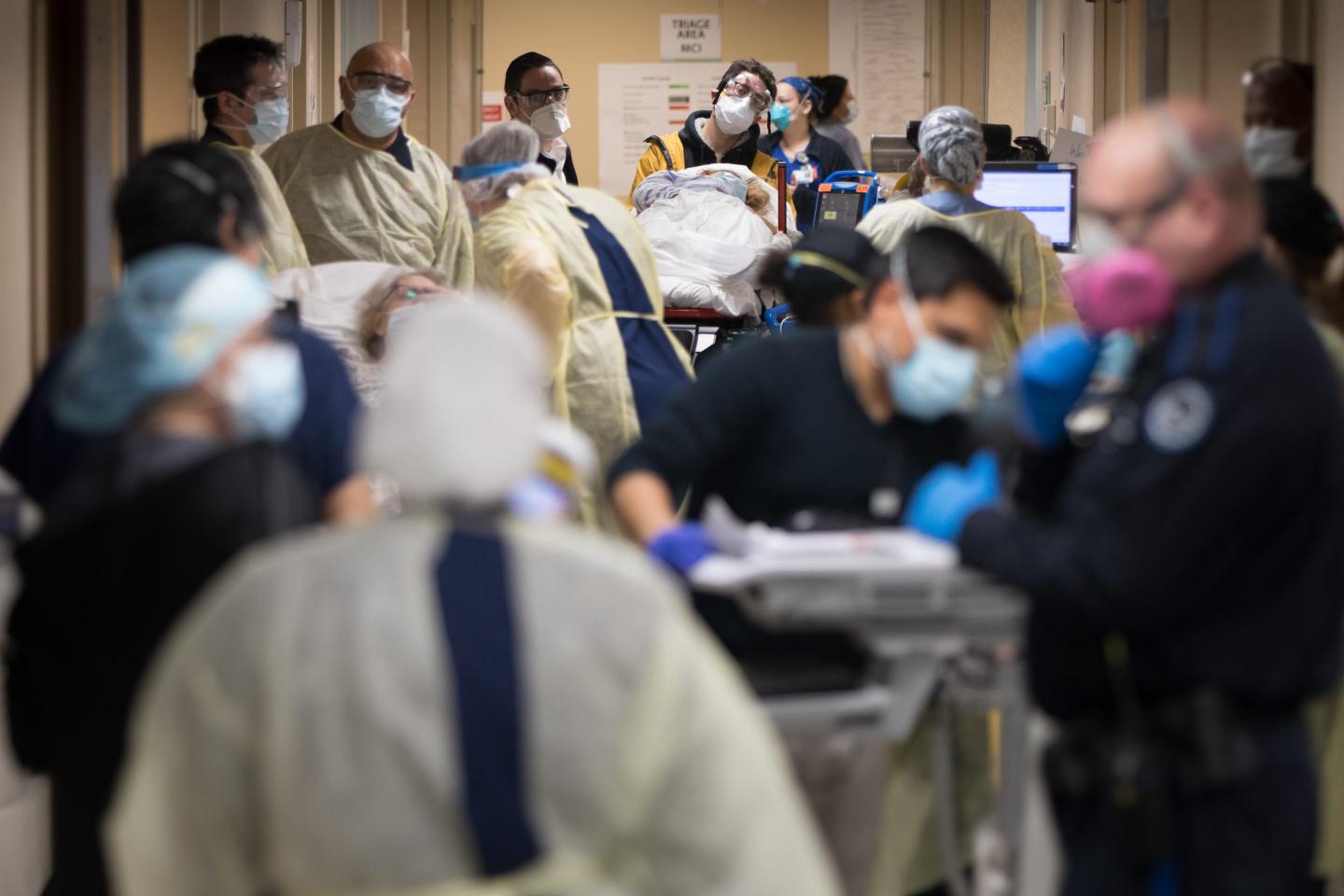
A busy emergency department at a hospital in New York state in 2020
At the height of the pandemic, hospitals were overwhelmed and delayed so-called elective surgeries. Now labor shortages and worsening health conditions are causing strain.Jeffrey Basinger—Newsday/Getty Images

The consequences of the latest wave of flu and RSV (respiratory syncytial virus) cases coupled with the ongoing spread of COVID-19 variants are starting to play out for those with long-standing medical conditions who are waiting even longer for nonemergency procedures and doctors’ visits or deferring care altogether to avoid overcrowded facilities.

This is not just an issue in the United States. In the U.K., more than 7 million people are currently on elective surgery waitlists after years of pandemic-related disruptions.

It’s an all-too-familiar tale for those of us in health care who witnessed firsthand the devastating toll of postponed checkups and procedures as hospitals conserved resources for the pressing pandemic response. A procedure’s urgency was often left to interpretation—and indefinite cancellations proved catastrophic for many.

The backlog of deferred treatment and resulting long-term health consequences, including a significant decline in overall life expectancy, will continue to impact public health for years, if not decades, much like the 1918 Spanish flu epidemic, which attacked a fifth of the world’s population and continued to affect public health for years.

Now is the time to thoughtfully and strategically reevaluate our policy approach to nonemergent medical care and surgical procedures amid health crises. We know that there are consequences to making profound policy decisions—especially in health care—and therefore we must learn and directly confront them, to better serve the ongoing needs of our patients. 

The downstream effects of deprioritizing “elective” care

It is important to understand that elective is not the same as optional. More than 90% of surgeries are considered elective, which means these are nonemergency procedures that can be scheduled in advance. Though sometimes labeled “nonessential,” these measures that range from organ transplants to cancer operations are often vital to people’s health and well-being.

We didn’t need the pandemic to tell us that delaying care can lead to dire consequences for patients. Elective surgery delays can be detrimental in both preventive and curative care, allowing disease progression or leading to premature death. In 2020, Mayo Clinic warned that halting colon cancer procedures for more than four months would result in over 30,000 fatalities, while a study from The BMJ found that an eight-week delay in breast cancer treatment increased the risk of death by 17%. After a 12-week delay, mortality rates jumped to 26%.

Research on treatment disruption for patients with aortic stenosis, a narrowing of the heart valve opening that can be deadly if not treated quickly, also showed dire outcomes. One study published in JAMA found that nearly three months after elective procedures were halted amid COVID, more than 30% of aortic stenosis patients who deferred care required emergency transcatheter aortic valve replacement (TAVR) or died.

A compounding workforce crisis

As demand for medical care amid the pandemic increased exponentially, supply simply could not keep up. Hospitals were triaging extreme patient volumes while navigating unprecedented staffing and resource shortages, adding to the cyclical set of issues straining a less-than-robust system.

A lack of funding and resources, along with rising anxiety, depression, and burnout, contributed to a mass exodus of frontline workers. More than half-a-million health care and social service employees left the industry each month in 2022 and more than a third of nurses say they’re planning to quit soon. The American Hospital Association penned a letter to the U.S. House of Representatives Energy and Commerce Committee and declared the shortages “a national emergency.” Staffing needs are as urgent as ever, with 16 million working-age Americans still struggling with long COVID-19, resulting in around $170 billion in lost wages annually. These staggering shortages and rising backlogs continue to limit the number of nonemergent procedures that can be performed.

Rethinking pandemic preparedness

Pandemics are disruptive, not only because of their direct assault on individual health but also due to the ripple effects of the policy decisions they necessitate. As we navigate the aftermath and substantial costs of COVID-19 along with this new onslaught of respiratory illnesses, it is more important than ever to reflect on the unintended consequences of restrictions imposed on health care operations. These include recalibrating to clear backlogs as quickly as possible and ensuring access to crucial, often lifesaving procedures.

As part of the health care ecosystem, we have a responsibility to patients, medical workers, and ourselves to rethink how we prioritize resources and evaluate the holistic impacts of policy on public health in response to a crisis.

Innovation is driven by evidence and the same should be true for our health care policies. It is incumbent upon us to identify timely real-world evidence to elucidate the effects of policy changes so they can be adaptive and agile enough to provide access to critical interventions and procedures. Only then can we ensure continuous care for all patients throughout the next wave—and pandemics yet to come.

Elazer R. Edelman, M.D., Ph.D., is professor of medicine at Harvard Medical School and professor of medical engineering and science at MIT. Mike Mussallem is the chairman and CEO of Edwards Lifesciences.

The opinions expressed in Fortune.com commentary pieces are solely the views of their authors and do not necessarily reflect the opinions and beliefs of Fortune.

More must-read commentary published by Fortune:

  • A soft landing is playing out—but optimism needs to be for the right reasons
  • Overconfident tech CEOs have overpaid for ‘box tickers’ and ‘taskmasters.’ Here’s why the real ‘creators’ will survive the mass layoffs
  • How the Russian economy self-immolated in the year since Putin invaded Ukraine
  • I am a DoorDash driver who’s been elected to the Colorado State House. Food delivery companies are gamifying your tips and making it harder for drivers to earn a living wage. Here’s what you can do about it
Learn how to navigate and strengthen trust in your business with The Trust Factor, a weekly newsletter examining what leaders need to succeed. Sign up here.
About the Authors
By Elazer R. Edelman
See full bioRight Arrow Button Icon
By Mike Mussallem
See full bioRight Arrow Button Icon

Latest in Commentary

Finance
Lorem ipsum dolor sit amet, consectetur adipiscing elit, sed do eiusmod tempor incididunt ut labore et dolore magna aliqua. Ut enim ad minim veniam
By Fortune Editors
October 20, 2025
Finance
Lorem ipsum dolor sit amet, consectetur adipiscing elit, sed do eiusmod tempor incididunt ut labore et dolore magna aliqua. Ut enim ad minim veniam
By Fortune Editors
October 20, 2025
Finance
Lorem ipsum dolor sit amet, consectetur adipiscing elit, sed do eiusmod tempor incididunt ut labore et dolore magna aliqua. Ut enim ad minim veniam
By Fortune Editors
October 20, 2025
Finance
Lorem ipsum dolor sit amet, consectetur adipiscing elit, sed do eiusmod tempor incididunt ut labore et dolore magna aliqua. Ut enim ad minim veniam
By Fortune Editors
October 20, 2025
Finance
Lorem ipsum dolor sit amet, consectetur adipiscing elit, sed do eiusmod tempor incididunt ut labore et dolore magna aliqua. Ut enim ad minim veniam
By Fortune Editors
October 20, 2025
Finance
Lorem ipsum dolor sit amet, consectetur adipiscing elit, sed do eiusmod tempor incididunt ut labore et dolore magna aliqua. Ut enim ad minim veniam
By Fortune Editors
October 20, 2025

Most Popular

Finance
Lorem ipsum dolor sit amet, consectetur adipiscing elit, sed do eiusmod tempor incididunt ut labore et dolore magna aliqua. Ut enim ad minim veniam
By Fortune Editors
October 20, 2025
Finance
Lorem ipsum dolor sit amet, consectetur adipiscing elit, sed do eiusmod tempor incididunt ut labore et dolore magna aliqua. Ut enim ad minim veniam
By Fortune Editors
October 20, 2025
Finance
Lorem ipsum dolor sit amet, consectetur adipiscing elit, sed do eiusmod tempor incididunt ut labore et dolore magna aliqua. Ut enim ad minim veniam
By Fortune Editors
October 20, 2025
Finance
Lorem ipsum dolor sit amet, consectetur adipiscing elit, sed do eiusmod tempor incididunt ut labore et dolore magna aliqua. Ut enim ad minim veniam
By Fortune Editors
October 20, 2025
Finance
Lorem ipsum dolor sit amet, consectetur adipiscing elit, sed do eiusmod tempor incididunt ut labore et dolore magna aliqua. Ut enim ad minim veniam
By Fortune Editors
October 20, 2025
Finance
Lorem ipsum dolor sit amet, consectetur adipiscing elit, sed do eiusmod tempor incididunt ut labore et dolore magna aliqua. Ut enim ad minim veniam
By Fortune Editors
October 20, 2025
Fortune Secondary Logo
Rankings
  • 100 Best Companies
  • Fortune 500
  • Global 500
  • Fortune 500 Europe
  • Most Powerful Women
  • World's Most Admired Companies
  • See All Rankings
  • Lists Calendar
Sections
  • Finance
  • Fortune Crypto
  • Features
  • Leadership
  • Health
  • Commentary
  • Success
  • Retail
  • Mpw
  • Tech
  • Lifestyle
  • CEO Initiative
  • Asia
  • Politics
  • Conferences
  • Europe
  • Newsletters
  • Personal Finance
  • Environment
  • Magazine
  • Education
Customer Support
  • Frequently Asked Questions
  • Customer Service Portal
  • Privacy Policy
  • Terms Of Use
  • Single Issues For Purchase
  • International Print
Commercial Services
  • Advertising
  • Fortune Brand Studio
  • Fortune Analytics
  • Fortune Conferences
  • Business Development
  • Group Subscriptions
About Us
  • About Us
  • Press Center
  • Work At Fortune
  • Terms And Conditions
  • Site Map
  • About Us
  • Press Center
  • Work At Fortune
  • Terms And Conditions
  • Site Map
  • Facebook icon
  • Twitter icon
  • LinkedIn icon
  • Instagram icon
  • Pinterest icon

Latest in Commentary

turner
CommentaryMedia
Ted Turner built the original infinite scroll. The attention economy is running on his playbook 
By Nick LichtenbergMay 12, 2026
9 hours ago
klein
CommentarySoftware
SAP CEO: the AI race is being fought in the wrong place 
By Christian KleinMay 12, 2026
15 hours ago
longevity
CommentaryLongevity
Your employees are going to live to 100. Is your benefits package ready?
By Kate Winget and Anthea Tjuanakis CoxMay 12, 2026
16 hours ago
AI strategy
CommentaryStrategy
Your company already has an AI strategy. You just didn’t choose it
By Tomas Chamorro-Premuzic, Tami Rosen and Darko LovricMay 12, 2026
17 hours ago
drew
CommentaryDefense
I helped build the Pentagon’s AI transformation. Corporate America is making every mistake we almost made
By Drew CukorMay 11, 2026
2 days ago
250
Commentary250 Years of Innovation
America’s true innovation advantage: we don’t just invent technologies — we reinvent how innovation works
By David H. HsuMay 11, 2026
2 days ago

Most Popular

Forget U.S. debt, China's total borrowing is in 'a league of its own'—much worse and deteriorating faster, analyst says
Economy
Forget U.S. debt, China's total borrowing is in 'a league of its own'—much worse and deteriorating faster, analyst says
By Jason MaMay 11, 2026
1 day ago
The Bezos family just donated $100 million to help achieve one of Mayor Zohran Mamdani’s top campaign promises
Politics
The Bezos family just donated $100 million to help achieve one of Mayor Zohran Mamdani’s top campaign promises
By Jake AngeloMay 12, 2026
8 hours ago
U.S. hotels are calling the World Cup a 'non-event' and 80% warn bookings are falling short of expectations, report finds
North America
U.S. hotels are calling the World Cup a 'non-event' and 80% warn bookings are falling short of expectations, report finds
By Sasha RogelbergMay 12, 2026
20 hours ago
Microsoft’s CFO admits she joined the tech giant without even knowing her salary—and then missed her first day of work
Success
Microsoft’s CFO admits she joined the tech giant without even knowing her salary—and then missed her first day of work
By Preston ForeMay 11, 2026
2 days ago
Nearly 50,000 Lake Tahoe residents have to find a new power source after their energy source looks to redirect lines to data centers
Travel & Leisure
Nearly 50,000 Lake Tahoe residents have to find a new power source after their energy source looks to redirect lines to data centers
By Catherina GioinoMay 12, 2026
11 hours ago
OpenAI CEO Sam Altman says Gen Z and millennials are using ChatGPT like a 'life advisor'—but college students might be one step ahead
Tech
OpenAI CEO Sam Altman says Gen Z and millennials are using ChatGPT like a 'life advisor'—but college students might be one step ahead
By Sydney LakeMay 10, 2026
3 days ago

© 2026 Fortune Media IP Limited. All Rights Reserved. Use of this site constitutes acceptance of our Terms of Use and Privacy Policy | CA Notice at Collection and Privacy Notice | Do Not Sell/Share My Personal Information
FORTUNE is a trademark of Fortune Media IP Limited, registered in the U.S. and other countries. FORTUNE may receive compensation for some links to products and services on this website. Offers may be subject to change without notice.